Category: Loyalty

  • Singapore Airlines introduces KrisPay

    Singapore Airlines introduces KrisPay

    tl;dr: don’t ever, ever convert your Krisflyer miles to KrisPay miles. EVER.

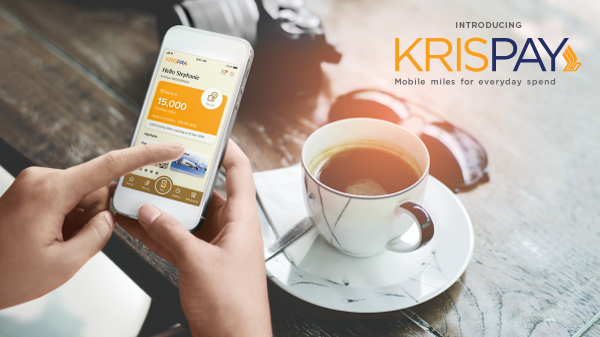
    Singapore Airlines introduced KrisPay yesterday, where Krisflyer members can use their miles to offset cash payments at a range of merchants in Singapore (lucky you, rest of the world).

    This is how the marketing email sells it:

    KrisPay is the new digital wallet that turns your KrisFlyer miles into instant purchases – right from your mobile phone, starting from as little as 15 miles. You can now use KrisPay for everyday spend such as your petrol purchases at selected Esso service stations^, M1, Challenger and many more participating merchants.

    How bad is it?

    It is… really bad. From the mechanism, to the conversion rate, to the redemption levels. Let’s look at them one by one.

    The mechanism

    First you will have to download the KrisPay app (I’ve downloaded it, so you don’t). The first bugger that annoyed the hell out of me was that the app can only be installed on iOS 11.0 or later. So if you are like me and detest updating iOSes unless absolutely necessary, this is already a sign of things to come.

    31BC9148-0D7D-4F10-90DC-E681D988FBE6

    Once you have successfully downloaded the app, you have to sign in with your KrisFlyer account.

    To use KrisPay, you will need to first convert your KrisFlyer miles to KrisPay miles. This conversion is irreversible so please do not try it.

    For the added touch of insult, the KrisPay miles are only valid for six months, as compared to three years for KrisFlyer miles. I suppose this is a feeble attempt for you to use up your soon-to-expire KrisFlyer miles if you are not intending to travel.

    And once there, you pay by scanning a special QR code at the merchants, similar to how you will use GrabPay.

    The conversion rate

    The rate is absolutely dismal, where you can use 150 miles to offset S$1. That’s 0.67 cents per mile, which is an absolute waste of your miles even if you have too much.

    Let me put this in context: a return business class ticket to Tokyo (saver award) will cost you 86,000 miles. What else can you do with 86,000 miles?

    If you decide to buy Singapore Airlines tickets and pay with your Krisflyer miles in part, 86,000 miles will offset about S$877.55.

    If you decide that your miles are not worth spending on SQ tickets (gasp!) and decide to use them on Krisshop, you can get S$688 in value.

    But, if you decide to go crazy and use that on KrisPay, you will get… S$573.33.

    What would you prefer, a return business class ticket to Tokyo or S$573.33?

    The list of merchants

    KrisPay launched with a list of 18 merchants spanning retail, food and beverages, beauty services and petrol. The upside is that they have got some pretty big names, such as Cedele, Esso and Gong Cha.

    The bad side? Roll out is pretty patchy right now. For instance, KrisPay is only accepted at 23 out of 62 Esso stations, and a very tiny three out of 11 TWG outlets.

    Also confusing are the specific terms and confusions conditions for each merchant. For instance, Esso only allows KrisPay for fuel payment, M1 doesn’t allow you to use them for prepaid cards, etc. To add salt to the wound, payment by KrisPay will render you ineligible for other promotions and discounts. So for Singapore-based customers who are so used to 10-14% discounts at Esso, you can kiss that goodbye.

    If you want the full list of merchants, click here.

    So why KrisPay?

    The loyalty proposition in Singapore has definitely heated up over the past couple of years and even airline loyalty is not spared.

    While airlines traditionally built their loyalty programme around cultivating repeat customers and rewarding their repeated patronage with free flights, the landscape has evolved to the point today where it has gotten too easy to earn miles (or points).

    This creates an increased uptake in redemptions, particularly on very lucrative routes, that will result in loss of revenue. Therefore it is in SQ’s interest to burn these points at the cheapest possible way while still retaining the overall attractiveness of the programme without having to slap on restrictive rules such as short lifetime of miles.

    It will be interesting to see what’s the uptake on KrisPay and the actual number of miles being used. I suspect the number will not be that low after all.


  • Asia Miles programme changes from 22 June 2018: What you need to know

    Asia Miles programme changes from 22 June 2018: What you need to know

    Most people will be familiar with Cathay Pacific and their loyalty programme Asia Miles as many credit cards across Asia Pacific allow you to transfer miles into the programme, which serves as a good alternative to KrisFlyer and Singapore Airlines, especially if you travel a lot on oneworld carriers.

    In particular, Asia Miles is also rather popular with some Australians given its relatively cheaper redemption rates than Qantas Frequent Flyer. Hence this change is likely to impact many members across this part of the world.

    AMHP.JPG
    Asia Miles to change earn and burn rates from 22 June 2018

    In a nutshell, here are some of the changes they will be introducing come 22 June 2018:

    Miles earned will no longer be based on distance travelled, but by distance zone, if you are travelling on Cathay Pacific and Cathay Dragon.

    Also, the exact fare class within each cabin class matters too: for the lowest fare classes, you get the least miles. Even in Premium Economy and Business, the cheapest fare class for each cabin will also get you lesser miles.

    All routes are now categorised into six different distance zones: ultra-short all the way to ultra-long. These are the same categories used by Marco Polo Club’s tier points accrual, as well as the new redemption charts (more on that below), providing more uniformity across the two programmes.

    Asia Miles Earn Chart
    Source: Asia Miles

    Asia Miles claim that members will “earn more miles on 80% of the airlines’ tickets, including to popular destinations such as Shanghai, Osaka and London.” Obviously this is written for a Hong Kong base, but let’s take a look at some of the common ones out of Singapore:

    Cabin

    Economy Premium Economy Business

    Route

    Current New Current New Current New
    Singapore- Bangkok

    878

    1800- 2000 969 2000- 2300 1098

    2500- 2700

    Singapore-
    Hong Kong

    1592

    1800- 2000 1751 2000- 2300 1990

    2500- 2700

    Singapore- Taipei

    2093

    2390- 2650 2302 2650- 3050 2616

    3310- 3580

    Singapore-
    Tokyo Narita

    3433

    3600- 4000 3776 4000- 4600 4291

    5000- 5400

    Singapore- Los Angeles

    8840

    7790- 8650 9724 8650- 9950 11050

    10810- 11680

    Singapore-
    New York

    9651

    9630- 10700 10616 10700- 14610 12064 13380- 14450

    Seems like members are generally better off for a short- to mid-haul trip out of Singapore, but not so for transpacific flights.

    If you frequent earn miles on partner airlines, the good (or bad, depending on who you are travelling with) news is that mileage earned on partner airlines remains the same.

    Asia Miles will price all redemptions as a one-way, adjusts all redemption rates

    Customers familiar wtih Asia Miles will know that it is typically cheaper to redeem a roundtrip ticket on Cathay Pacific/Dragon, but this will change come 22 June 2018.

    To simplify its redemption requirements, all redemption tickets will now be priced one-way, so a return ticket will now simply cost twice as much as two one-way tickets. Kudos to Asia Miles for being upfront in saying that long haul flights in premium cabins will now also cost more.

    AM-stdaward.jpg
    Asia Miles Standard Award Chart (source: Asia Miles)

    Also, the redemption chart is now aligned to the Marco Polo Club’s 6 categories of distances, rather than the existing 7. This is a good move because I have seen so many people being confused by the Marco Polo Club tier points earning table and the Asia Miles redemption table.

    It wasn’t clear from Asia Miles’ website, but I wrote to clarify if multi-sector itineraries (as most itineraries originating from outside of Hong Kong would be) will be priced as a sum of two sectors under the new charge, or as though its a single sector. Asia Miles confirmed in writing that it will be priced as a single sector. That means, if you are flying from Singapore to New York, it will cost you as much as flying from Hong Kong to New York. This means great value 

    Let’s compare some of the redemption rates for routes out of Singapore (one-way, in ‘000 miles) before and after the changes:

    Cabin Economy Premium Economy Business
    Route Current Standard Current Standard Current Standard
    Singapore- Bangkok 15 10 18 18 25 25
    Singapore-
    Hong Kong
    20 10 24 18 30 25
    Singapore- Taipei 20 10 24 18 30 25
    Singapore-
    Tokyo Narita
    25 22 30 30 45 45
    Singapore- Los Angeles 55 42 66 60 85 85
    Singapore-
    New York
    55 42 66 60 85 85

    (All mileage are one-way, in ‘000 miles)

    At first glance it look like you will get a better deal off almost every route (except in Business), but that’s if you only redeem one way. Now let’s take a look at redemption for a return ticket:

    Cabin Economy Premium Economy Business
    Route Current Standard Current Standard Current Standard
    Singapore- Bangkok 20 20 24 36 40 50
    Singapore-
    Hong Kong
    30 20 36 36 50 50
    Singapore- Taipei 30 20 36  36 50 50
    Singapore-
    Tokyo Narita
    45  44 54  60 80 90
    Singapore- Los Angeles 90  84 108  120 145  170
    Singapore-
    New York
    90  84 108 120 145 170

    (All mileage are one-way, in ‘000 miles)

    You will almost end up paying more for all premium classes mid- and long-haul flights. For instance, for Singapore to LA, this is at 170,000 miles return in Business (at the same level as what KrisFlyer requires), up from 145,000 miles previously.

    As a sweetener, Asia Miles has announced that they have made redemption seats more accessible, by increasing availability by 20% or more. While no one is really sure how accurate is this, a comparison of the charts do see a slight reduction in the number of miles overall.

    Asia Miles is now introducing two more levels of redemption levels – Choice & Tailor

    Obviously you should never be burning miles at these levels, but Asia Miles has now unveiled two additional levels of redemption levels with “improved availability” and also allows you to select your seat in advance. This is similar to the previous Priority Tiers 1 & 2, except that this provides a little better clarity as to what ‘perks’ these higher redemption levels accord, such as advance seat selection.

    AM-choiceaward.jpg
    Asia Miles Choice Award Chart (source: Asia Miles)

    Side note: I’m constantly amused at how seat selection is such a great tool used by airlines to encourage people to spend more money (and miles in this case).

    The skeptic in me feels that the bulk of the overall ‘improved’ award availability is going to go to the higher levels of redemption, given that at first glance Asia Miles is giving out more miles than before.

    There will be changes to partner airlines redemption rates too

    But this will be unveiled only on 22 June 2018. Based on some of the sample itineraries shown, it seems like across the board the mileage required will increase for round-trip itineraries, consistent with what it has applied for Cathay Pacific and Cathay Dragon prices.

    More to come on this on 22 June 2018.

    My take on the changes

    Overall, this change looks good at first glance, in the sense that everyone will end up earning more miles. However, with more miles flooding the market, this will also mean that the miles will lose their value over time and lead to an increase in redemption rates down the road (which is already reflected), or resulting in Standard awards being harder to find.

    Furthermore, Asia Miles is one of the few programmes (including Singapore Airlines’ KrisFlyer) that held steadfast in refusing to accord any status bonuses for Marco Polo Club elite members. Whether you are a Diamond, or a Green, you still earn the same number of miles. So this is somewhat unattractive as compared to some other programmes, such as Qantas Frequent Flyer, that awards a bonus for status holders.

    Celebrate for now, especially if you fly a lot on Cathay Pacific because you are about to get a whole lot more miles. However, if I were you I will also not hoard too many miles and try to get award availability as soon as you can – you will never know if prices will rise again.

  • SPG members alert: 2018 is your last year to earn SPG Gold with 10 stays

    SPG members alert: 2018 is your last year to earn SPG Gold with 10 stays

    2016 and 2017 were good years for me – I had status in not one, but two hotel programmes, all thanks to Marriott’s acquisition of Starwood hotels. But obviously good things don’t last.

    In what seemed like a seemingly long week for SPG, Marriott Rewards and Ritz-Carlton Rewards members, all was finally revealed early today when details of the changes to unify both programmes were announced.

    If there are five key takeaways, they are:

    • All three loyalty programmes are unified essentially with point, elite tiers and earning requirements aligned across, and you can transfer points freely from one to another, or earn elite-qualifying nights from one portfolio towards another programme. Marriott will only rebrand all three into a single programme in 2019.
    • There will be six tiers in the new programmes. For SPG, this means a new Silver Elite tier at 10 night. Gold Elite will now require 25 nights, while Platinum Elite goes for 50 nights and Platinum Premier Elite at 75 nights.
    • All elite qualifications will be made based on nights, and not stays, from 2019.
    • All SPG starpoints will be automatically tripled in August 2018 to match the ‘value’ of Marriott Rewards points.
    • Award charts across the programmes will be unified with a eight category chart, along with off-peak and peak redemption rates at each level.

    News of the announcements were leaked earlier last week (read Loyalty Lobby’s report here) and caused anxiety among many members, on and offline.

    Being an SPG Gold Preferred Guest that offered very good value for the elite membership, naturally I was worried if it was going to be tougher to requalify, given the stark difference in both programmes’ requirements (SPG required 10 stays or 25 nights for Gold, while Marriott required 50 nights).

    So what has changed for SPG members?

    Under the new programme, SPG Gold Elite will now require 25 nights (the same) rather than 10 stays, as Marriott removes the stay-based qualification. This will definitely trim many SPG Gold members as I know a majority of them does a whirlwind survey of Starwood properties in China or Thailand (where they are the cheapest) to requalify for Gold each year.

    However, Marriott will continue to honour stay-based qualification for SPG members until the end of 2018, so this is your last chance at Gold (and move one year closer to lifetime Gold Elite) if this is the normal route you take to achieve status. Note that the stay-based qualification will only apply for stays at SPG-associated hotels, so this means you can’t be staying at the (supposedly) cheaper Courtyard by Marriott and count towards your SPG Gold.

    img_0404
    You can still get your SPG Gold this year (for the last time) with 10 stays

    Alternatively, you could also choose to throw money at Marriott and work towards 25 nights at any Marriott, Starwood or Ritz Carlton properties for Gold. #justsaying.

    The update wasn’t too bad and in fact is a boon to Marriott Rewards members – Gold Elite now require only 25 nights to qualify with similar perks to what they currently would get at 50 nights.

    So what are you getting with the new Gold Elite?

    With the changes, I guess these are the changes I reckoned with the new Gold Elite:

    The only upside: More points earned per US$ spent

    Downsides:

    • Late checkout now reduced to 2pm (which is lame)
    • Welcome gift reduced to points only, with no indication how many points
    • And the fact that you need 25 stays to qualify

    compare

    While SPG Gold Preferred Guests get mapped to the new Gold Elite status, on the Marriott end, existing Marriott Rewards Gold Elite are upgraded to the new Platinum Elite while the silvers with 25 nights minimum now gets gold.

    New Marriott Chart.png
    New benefit summary table

    Earning changes

    From August 2018, all your stays across Starwood, Marriott and Ritz Carlton properties will earn a unified 10 points per US$1 spent (exceptions apply for some properties). Elite silver members will earn a 10% bonus, while elite gold and platinum members earn a 25% or 50% bonus.

    At first glance this sounds better given that SPG members currently earn 2 or 3 points per US$1 spent, and even after tripling the new deal sounds better. But until we see how the Starwood properties are mapped to the new award chart categories, this remain to be seen.

    If SPG maps the property at the same level, it will be good news for SPG members. A current category 6 hotel cost anything from 20,000 to 25,000 Starpoints to redeem, and that translates to 60,000 to 75,000 points after the August conversion. Under the new chart unveiled by Marriott, a category 6 hotel will only require 50,000 points. Even if the hotel is upgraded to the next category, members will not be worse off. But let’s wait and see how the hotels map out come August.

    awardchart.JPG
    Comparison of existing SPG award chart versus new award chart

    Lifetime elite status here to stay, but more difficult to achieve

    With the new elite silver level introduced, SPG members will now find it more difficult to achieve lifetime elite gold.

    img_0403
    New lifetime elite qualification requirements

    You will now need to achieve seven years of elite gold statuses, along with 400 nights stayed across any of the 29 brands combined. This an increase from the 5-year, 250 nights requirement.

    spglifetime.jpg
    Current SPG lifetime status requirements

    So if you haven’t already achieved lifetime Gold with SPG – too bad, it’s a further climb now. I figure that is now further out of reach given that I stay in hotels on average 10 nights a year – I might just get there when I’m 70.

    Final words

    I’m sure that many SPG loyalists saw this coming – a devaluation of their beloved programme, or a hike in the investment required to maintain it. While props to Marriott for merging both programmes and meeting halfway in terms of requirement, the impact is more real for SPG members given the increased spending required, along with the slight reduction of benefits for the programme.

    More work for less perks? Sounds like a brilliant business plan, but obviously poorer off for customers. You might be better exploring other programmes given that Gold qualification is now comparable to some other programmes.

    Having said that, given that Marriott and SPG together forms the world’s largest hotel chain, it might be a tough choice to shake them off altogether. Even with these revisions, the programme is still relatively competitive.

    For the full details of the new programme come August 2018, check it out here.