

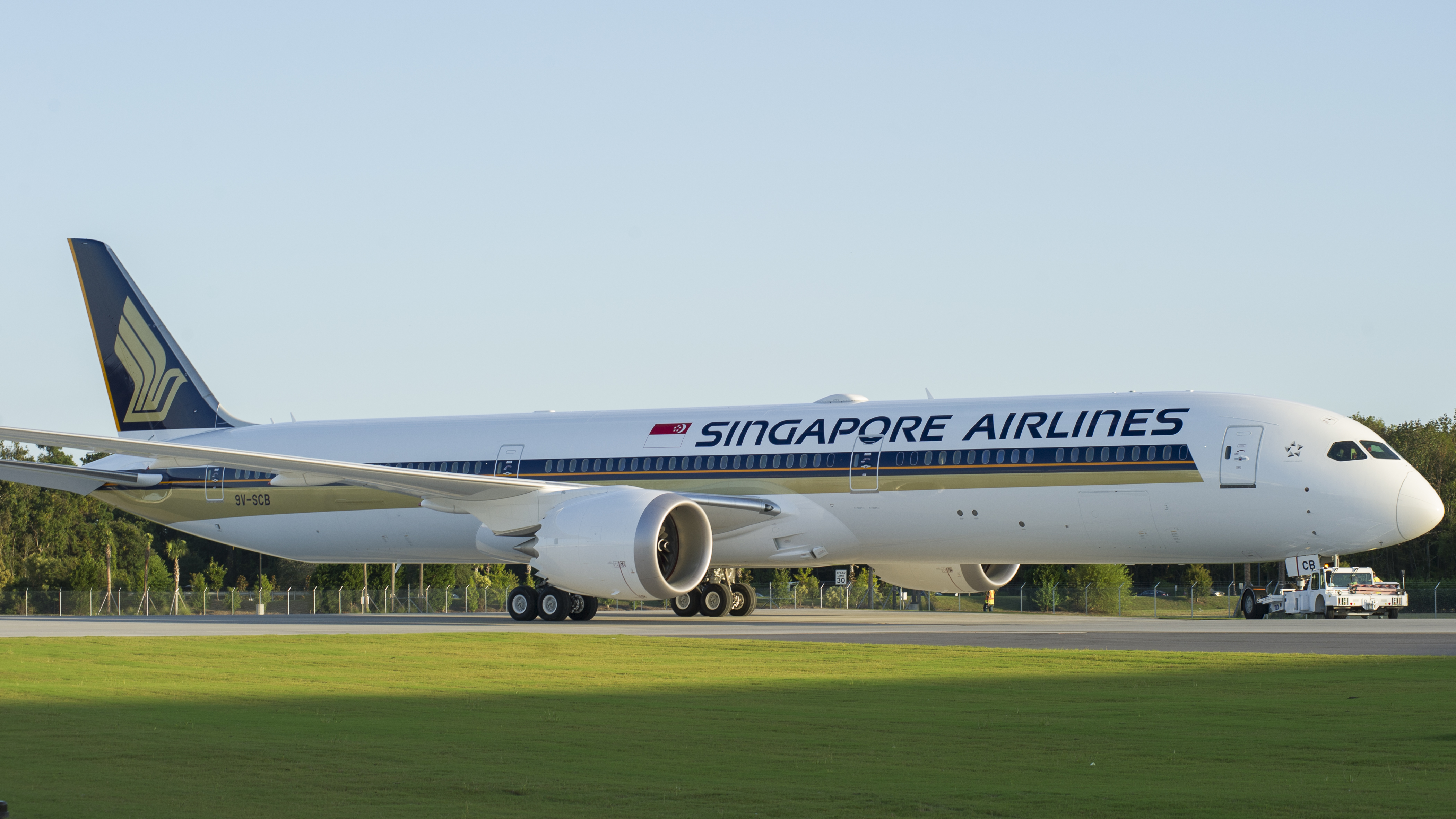
In recent months, Singapore Airlines and its low-cost subsidiary Scoot made news with some of its more innovative fifth freedom service within Europe.
Singapore Airlines first announced the resumption of its Rome service, but via Copenhagen as a tag-on service. Shortly after, Scoot announced that its original two European destination – Athens in Greece and Berlin in Germany – will be combined into a single service (Singapore-Athens-Berlin) later this month.
The move has led many industry observers say that this was a tactic for SIA to tap on the liberalisation of borders and Covid-19 controls within the EU, given that Asia Pacific was still pretty much closed up even as the rest of the world are easing restrictions as vaccination rates are going up.
Singapore Airlines’ past fifth freedom flights
As a purely international aircraft with no domestic market to tap on, Singapore Airlines has to think creatively to tap on other revenue markets. While Singapore is geographically advantaged when it comes to serving Asia Pacific as a region, it doesn’t have the same edge when it comes to connecting to some other continents that boast of larger markets, such as the Trans-Atlantic market.
Unfortunately air services agreement belong squarely in the remit of government-to-government negotiations, and most countries are highly protective of their home carriers for obvious reasons, both economic and geo-political.
As a country, Singapore is traditionally a big advocate of open skies policies, and often sought to seek the least restrictive rights to operate flights to, from and beyond third countries. It has signed open skies agreement with more than a dozen countries, allowing unlimited air services between Singapore and these countries – as well as beyond – subject to operational constraints.
Singapore Airlines have in the past famously mounted many of these fifth freedom flights, including:
- SQ1/2 – Singapore – Hong Kong, China – Los Angeles, USA
- SQ5/6 – Singapore – Taipei, Taiwan – Los Angeles, USA
- SQ25/26 – Singapore – Frankfurt, Germany – New York JFK, USA
- SQ51/52 – Singapore – Manchester, UK – Houston, USA
- SQ67/68 – Singapore – Barcelona, Italy – Sao Paulo, Brazil
and many more.

Unfortunately, fifth freedom rights are incredibly difficult to negotiate today owing to sensitivities, and there have been many instances where approvals were not given at the last minute.
Back in 2016, Singapore Airlines have sought to operate Singapore-Jakarta-Sydney, which was observed by analysts to be an underserved and attractive sector. However, the new service never took off; the launch was postponed indefinitely due to a ‘runway maintenance works’ at Jakarta’s main airport, and eventually canned.
Origins of fifth freedom services
Before long-haul jets were widely available, it was commonplace for airlines to make multiple stops along a long-haul route. For instance, right up to the 1970s, the Singapore Airlines service between Singapore and London could make up to five stops along the way, with a total journey time of close to 24 hours!

Along the way, SIA was allowed to pick up and/or drop off passengers along the way, almost akin to running a bus service. However, the rights to sell tickets between specific countries must be pre-negotiated and not a given. Where approvals are not given, this is where you see restrictions. For instance, back in the 1970s, SIA had no rights to sell tickets between Rome and Amsterdam, nor between Bombay (Mumbai today) and Bahrain, even though these were stops along the same service.
For a more in-depth understanding on fifth freedom flights, One Mile at A Time has a very good article you can check out here.
London-New York service, next?
There has been talk on several forums speculating what Singapore Airlines might do next to tap on the reopening of quarantine-free travel within the EU, and beyond.
One such routing speculated was a London Heathrow-New York JFK service, using an A380 aircraft. Singapore Airlines has earlier this week moved one of its A380 out of Alice Springs back to Singapore, and this would be consistent with hearsay plans for SIA to resume A380 service in September.
Singapore Airlines do not have any published schedules involving the A380 at the moment, but the airline has tentatively planned some routes for the superjumbo from 31 Oct, including services to London, Sydney, Beijing, Auckland, Delhi, and several more.
With load factors at an all-time low, the A380 seems like an unlikely candidate for any service out of Singapore, but this would allow Singapore Airlines to carry enough passengers from Singapore to London and New York on a single aircraft, with enough room to spare to ferry passengers between the two Transatlantic financial hubs.

Pre-pandemic, this route was one of the most – if not the most – lucrative routes in the world. Nicknamed “the Billion Dollar Route“, London-New York earned British Airways a cool US$1.2 billion between April 2018 and April 2019, the highest for any commercial air service route that year.
London-New York is also an incredibly competitive route, with only four airlines: British Airways, Virgin Atlantic, Delta and American Airlines plying the route. US’s other major carrier, United Airways, operates a daily service out of its Newark hub to London-Heathrow.
So why hasn’t any non-UK/non-US airline plied that route?
Historically, there have been several LHR-JFK services mounted by foreign carriers using fifth freedom rights. These include:
- Kuwait Airways, terminated in 2016
- Air India, terminated in 2008
- Air India (albeit between LHR and EWR, not JFK), but also terminated in 2018
- Air France, around 2008 under the EU-US Open Skies policy
- Qantas, some time in the 1970s!
The list isn’t terribly long but for good reasons.
Firstly, landing slots at London Heathrow are notoriously difficult to get. With the airport’s slots all but taken up, the only way airlines could get more slots was to buy over from slots from other airlines, sometimes at record-high prices. In 2020, Air New Zealand sold its daily slot pair at London Heathrow for a cool US$27 million, and this was not the highest ever recorded transaction for a pair of slots at LHR.
To do a fifth freedom tag-on from LHR to JFK (or vice versa), this means that a single service will require two pairs of slots for the service. For most airlines, this is a poor use of slots; two pairs of slots can be better utilised with two daily flights between LHR and their respective home markets, rather than to dip into the LHR-JFK fray.
However, London-Heathrow, like many airports, have a ‘use it or lose it’ policy when it comes to slots. Traditionally, airlines are required to operate at least 80% of their slots, otherwise they risk losing them in the following year. This policy has been waived since the pandemic hit last year, and have been last extended to cover the 2021 Northern Summer season. This creates a situation where other airlines could, in theory, at least access some of these unused slots temporarily, creating in possibilities of new players at least for a short while.
Secondly, the rights to sell tickets and carry traffic between LHR and JFK is subject to air services agreement between the carrier’s home country, United Kingdom and United States. If not in place, such negotiations typically take several years to formalise.
While many nations do have open sky policies with these two nations, the limiting factors may include capacity or flight limits on the route, or even price setting controls. This can severely reduce the attractiveness of mounting fifth freedom services on these flights.
US and UK are opened to vaccinated travellers, without quarantine
With many countries racing to vaccinate their populations, both USA and UK are now accepting vaccinated travellers with only a testing requirement and no need for isolation or quarantine upon arrival.
| What are USA and UK’s current quarantine requirements? |
|---|
| 🇺🇸 United States of America The CDC mandates a valid PCR test taken at most 3 days before your flight, and recommends another test 3-5 days after arrival in the US. In addition, each state may recommend and enforce their own quarantine requirements. Generally, most states no longer require isolation or quarantine for vaccinated travellers but still encourages unvaccinated travellers to stay home for a number of days upon arrival. CNN has a good up-to-date resource here for state requirements here. |
| 🇬🇧 United Kingdom UK classifies all countries into three lists using a ‘traffic light’ system: red, amber and green lists. Singapore belongs to the green list, which only requires a pre-departure test taken at most 72 hours before the flight and a mandatory test at most two days upon arrival. No quarantine is required for travellers from Singapore. USA is on the amber list. All travellers from the US also need to take a pre-departure test and a test upon arrival. Unvaccinated travellers must also quarantine for 10 days and take a third test on the 8th day of arrival, while vaccinated travellers are exempted from both the quarantine and 8th day testing requirements. Click here for more details. |
This makes transatlantic leisure and business travel possible again, explaining the growth in flight frequencies and load factors over the past months.
Out of the four airlines plying the route, all except Delta Airlines have mounted more than one flight a day, in a strong signal that recovery is on its way.
For instance, BA112 flying from New York JFK to London-Heathrow on 4 Aug has the following indicative seat map for 4 Aug 2021:

The blue seats are occupied, while the white seats are available, reflecting a reasonably high level of load factor even in Economy class. The loads are largely similar for other flights this week as well, resembling passenger loads close to pre-pandemic days.
Final thoughts
It is definitely interesting to see what SIA does next, especially as the airline starts bringing back its aircraft from long-term storage.
Even as Singapore deliberates its border restrictions once it reaches herd immunity level of vaccinations, we may start to see quarantine-free travel restarting, possibly beginning with some European nations. One thing for sure is that this will not be a long list of countries, so its unimaginable that this is the sole reason why SIA is bringing back to A380s at this moment.
To use the A380s effectively, SIA will be better placed to tap on other markets creatively in order to leverage high-yielding segments, and to get into pole position well ahead of its competitors.
The next couple of months will definitely see some interesting developments – so let’s see how this unfolds.

