Latest Posts

REVIEW: Gekko House – A Tribute Portfolio Collection, Superior Room

The final stop of my German run, this hotel is the first Tribute Portfolio hotel I’ve ever stayed in. While it didn’t take my breath away, the property ranks pretty high on design, and is good value for money especially for solo travellers.

In this post:
What are Tribute Portfolio Hotels?
About the hotel
Location
Checking in
The room – Superior Room
The facilities
Restaurant – Chicago Williams
Breakfast
Final thoughts

What are Tribute Portfolio Hotels?

A network of about 50 individual boutique hotels, this soft brand (as the industry calls it) is a collection of independent boutique hotels that each has its own unique styles and operating models. The Tribute Portfolio brand embraces quirky and personable properties for guests seeking unique and diverse experiences, which can be a breather for some who wish to experience smaller, quirkier hotels when they want something different that the larger chains offer.

Tribute Portfolio was first introduced by Starwood Hotels and Resorts back in 2015, and it’s kind of an answer to Marriott’s very own Autograph Collection, also another mid-tier collection of boutique hotels.

Naturally, when Marriott acquired Starwood, the mammoth group took over these properties as well in the following years. Some observers may have gambled on that Tribute Portfolio will be folded into Autograph Collection, but even up to today Marriott held true to its promise that it will keep the two separate.

Marriott has a distinct brand positioning for both soft brands: Autograph Collection Hotels are selected for their rich design and immersive stories; while Tribute Portfolio brings together characterful hotels with vibrant social scenes that create a sense of belonging for guests and locals.

Today, the portfolio remained fairly small with only about 50 boutique hotels globally, with most of them found mainly in Europe where it first began.

About the hotel

The Gekko House opened only in January 2020 – right before Covid-19 ravished the world – as part of Germany’s Gekko Group, a hospitality outfit (not to be confused with Accor’s french subsidiary Gekko Group).
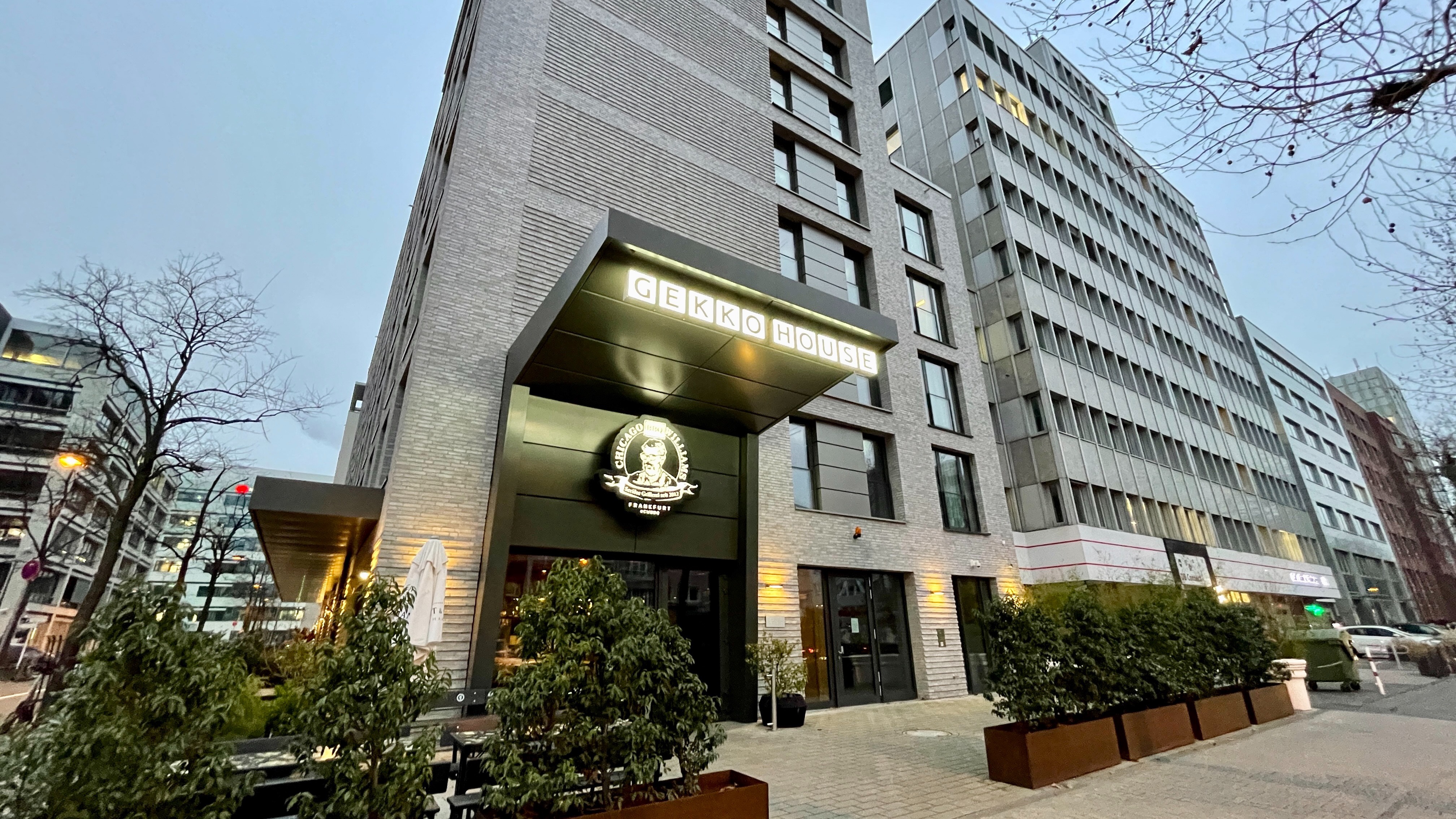
Gekko House

Gekko House is the group’s first house branded hotel. Gekko Group’s founders, Micky Rosen and Alex Urseanu, are veterans to design-led hotels, with a portfolio that includes celebrated properties like Roomers, The Pure and Gerbermühle, with a total of eight properties across Germany. The Roomers hotels in Berlin, Munich and Baden-Baden, are also Design Hotels (also a Marriott brand).

The hotel stands at 8 storeys high and comprises 128 rooms, which is fairly sizeable given the small plot of land it occupies.

The ground floor is taken up mainly by the restaurant (more on that later), while rooms decked out floors 1 through 7. The rooftop is on the eighth floor, and serves as a rooftop bar only during summer months, although you can still access it year-round.

The hotel offers seven room types:

  • Superior
  • Superior Comfort
  • Premium
  • Premium Comfort
  • Premium Comfort Twin
  • Select King
  • Junior Suite

The key difference between Superior and Premium rooms are the size of the beds: Superior rooms offer a 160cm wide Queen bed, while Premium rooms come with a 180cm wide King sized bed.

If you want twin beds, your only option is the Premium Comfort Twin, which cost about €30 more expensive than the base rooms.

If you need some fresh air in your room, the Select rooms are the only ones in the house with a balcony.

At the top end of the range is the Junior Suite, which is the only room type in the hotel that offers a bathtub. However, the industrial-looking tub is in the room itself right under the TV, so depending on your personal preference, you might want to choose another hotel if the tub matters a lot.

Junior Suite (photo: Marriott)

Location

The hotel is located in the Gallus district in Frankfurt Am Main. While somewhat near to Frankfurt Hauptbanhof, but it’s not exactly that near: two trams stops or 800m away to be exact.

Gekko House is located some 800m away from the Hauptbahnhof

Don’t let the map fool you – while it seems like it’s somewhat near the tracks and main station, the walking distance from the entrance of the station is a good 15 minutes to the hotel, or longer depending on the amount of bags you have.

Take trams 11, 14 and 21 from stops right outside the main station for two stops, and you will only be a short walk away from the hotel. Even with a single trip ticket, you are allowed a free transfer from the trains to the trams.

Checking in

Once you walk into the hotel, you will be greeted by the restaurant. The cash desk at the restaurant currently doubles up as the lobby, where all check in formalities are currently being done.
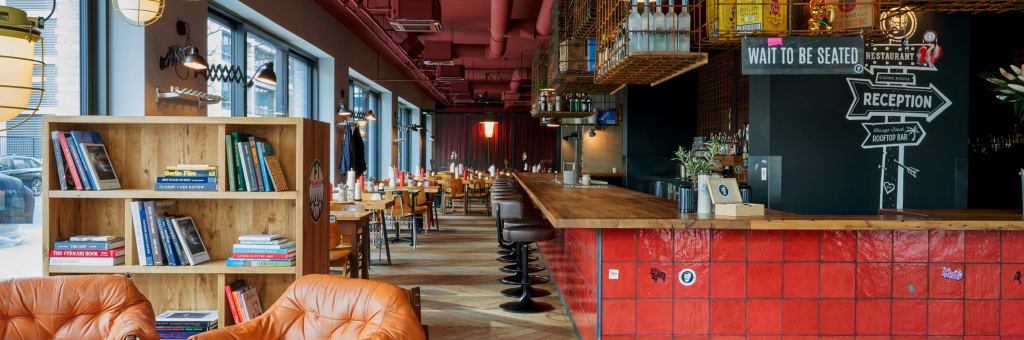
Gekko House restaurant Chicago Williams & check-in desk (photo: Marriott)

With the current Covid-19 restrictions in place, Germany imposes a 2G+ requirement for hotels. Guests who are staying for leisure are required to show proof of vaccination, plus either a booster or a valid ART test taken within the last 24 hours.

Previously, check in was supposed to be done at a separate lobby which is pocket-sized, decked out with cherry wood panelling and tapestries astride deep olive walls.

Check-in desk; now some service counters of sorts

The room

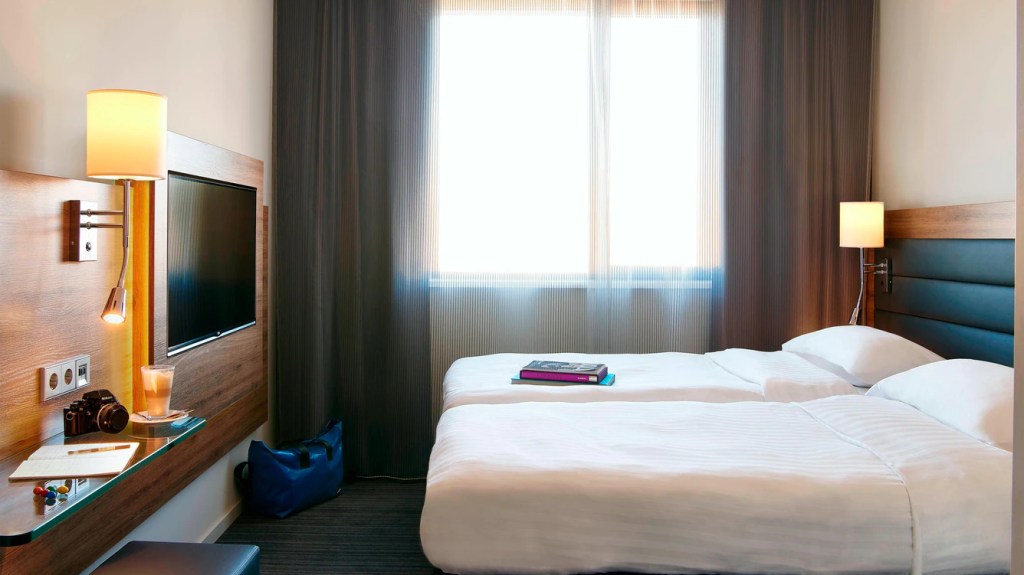
For this stay I have opted for the entry-level room – the Superior room with a queen-sized bed. Once you enter the 17 square metres room, while compact, you won’t feel claustrophobic at all; the room is rather minimalist but yet sufficient for a single person.

Superior Room

The room controls are activated by a master key near the door, you will need to insert your keycard into the holder before any of the electricals can work.
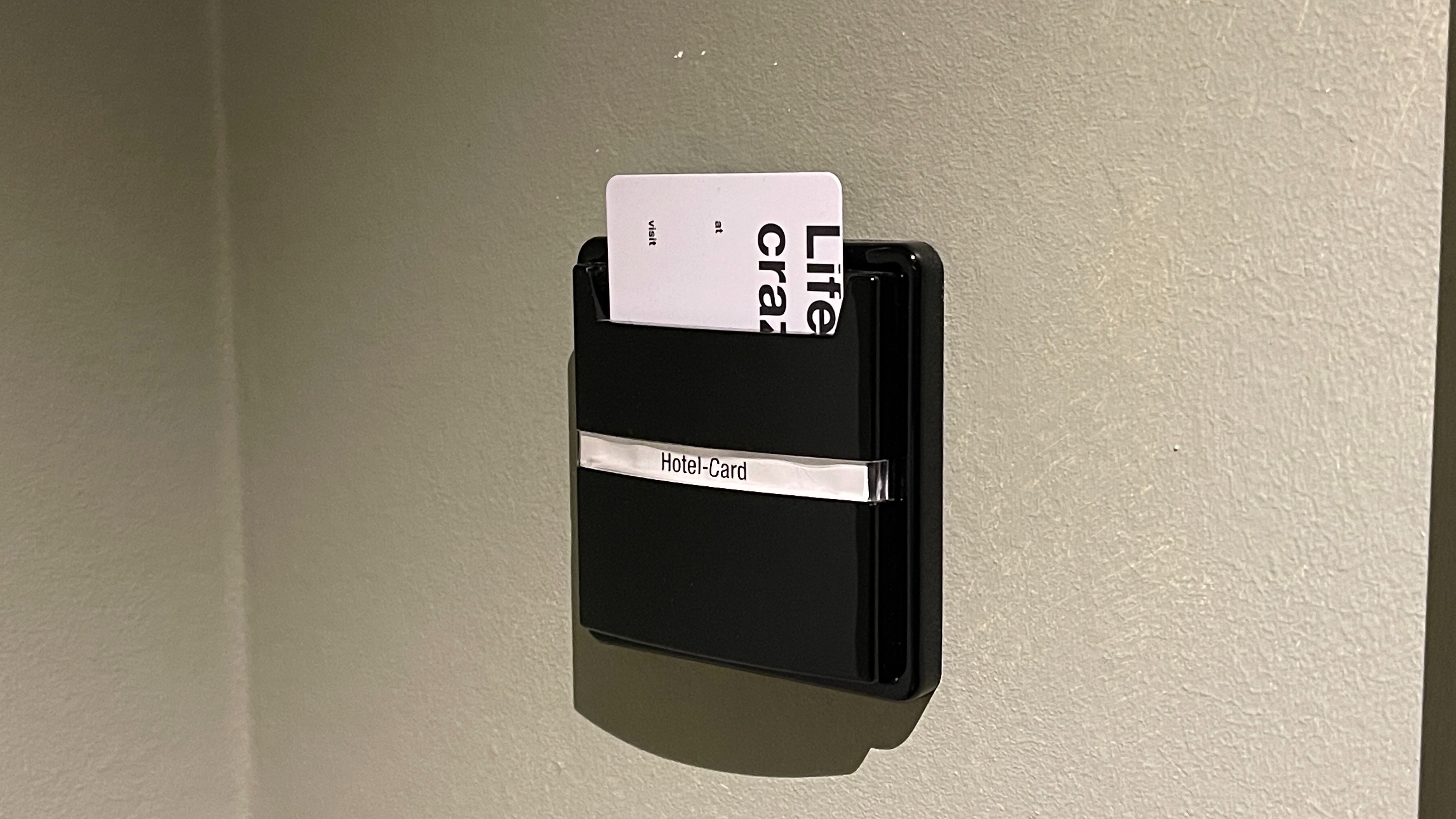
Key holder

Unfortunately the reverse is also true: the moment you take out your keycard, everything in the room goes dark. I would prefer if they had some kind of a lag of a couple of seconds before that happens.

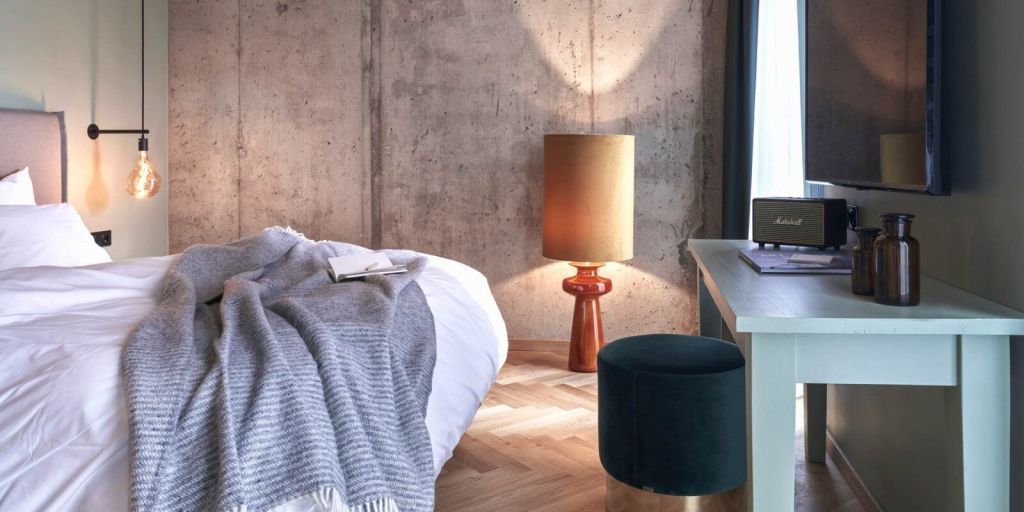
The rooms at Gekko House are designed in a grunge industrial fashion with exposed concrete walls and ceilings, in a nod to the area’s industrial character. There are whimsical touches to the room, such as the large hand-blown glass bulb lamp, representing the area’s burgeoning creative vibes.
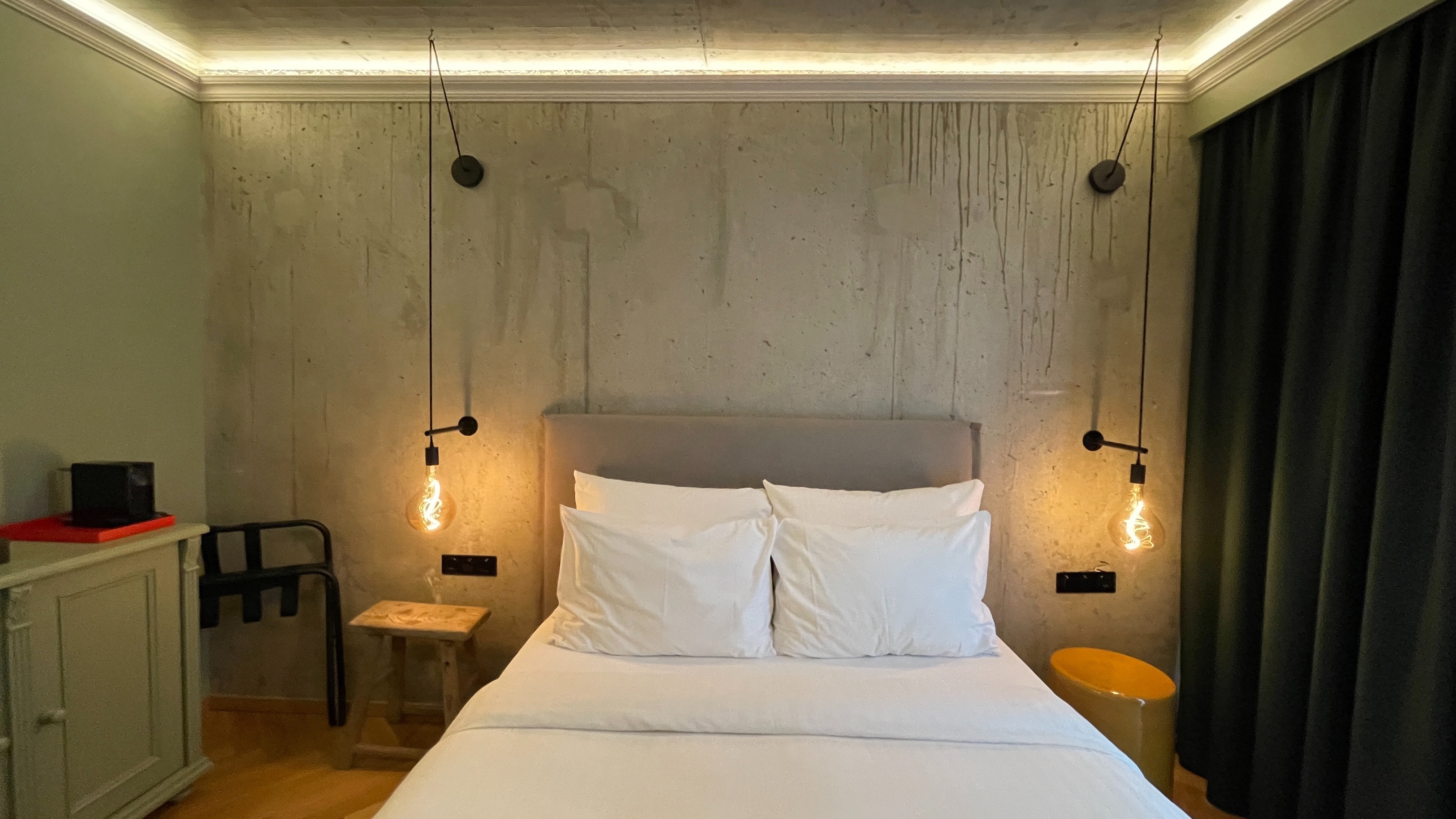
Superior Room

The queen bed is backed on a velvet bedframe, a porcelain stool on one side and a wooden stool on the other side, both doubling up as beside tables. There are also wall sockets on both sides of the bed, providing that touch of convenience that is not lost despite it being a minimalist design.

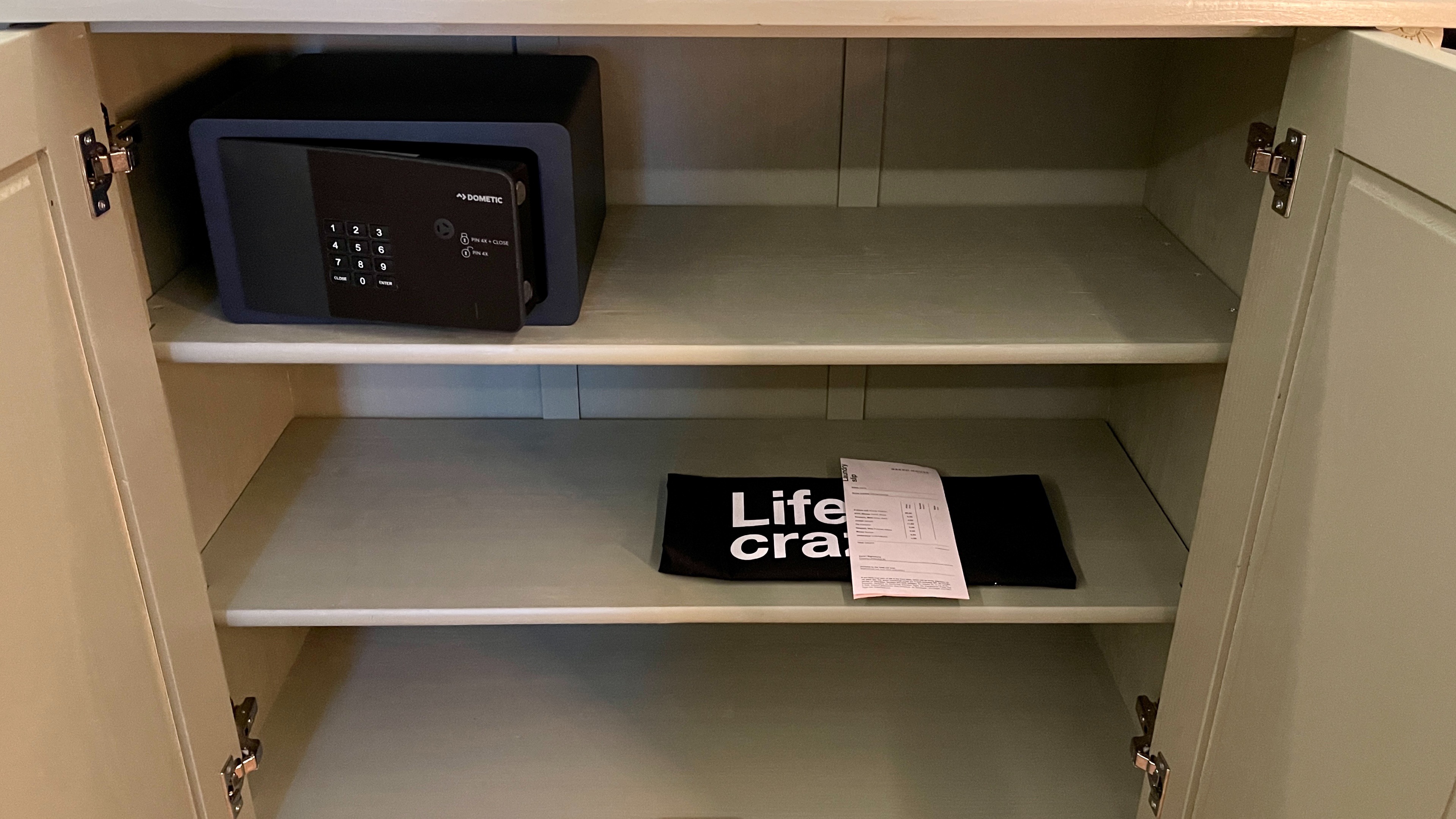
There is also a small cupboard by the side, which houses a small safe within, as well as a nespresso coffee machine atop along with several glassware.
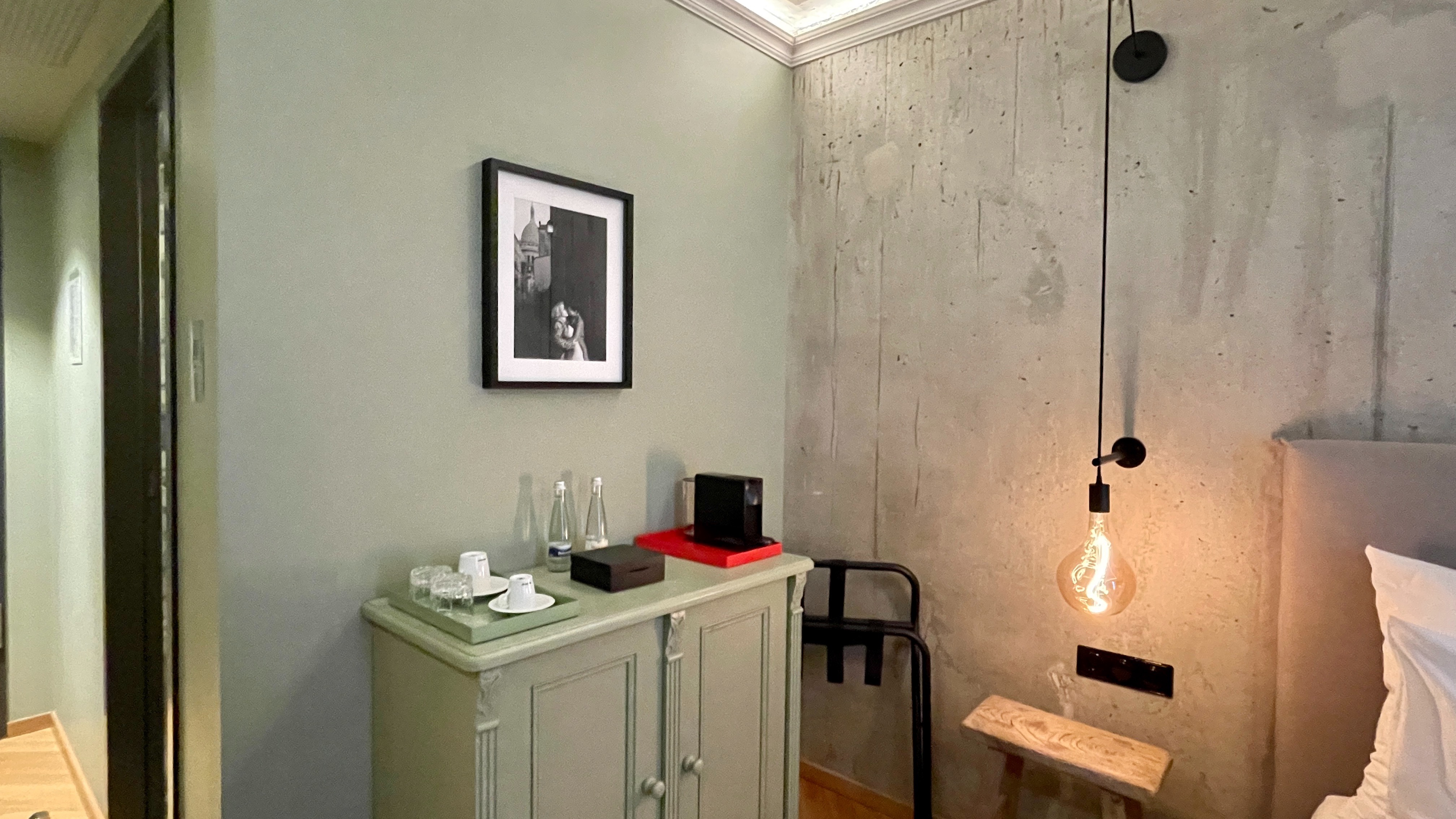
Amenity table with drinkware, coffee machine
Safe and laundry bag

Facing the bed was a wall-mounted television, with a wall-mounted television console as well as a Marshall speaker, which I appreciate for a tinkle of late night music when I wind down.

TV and speaker

The bathroom is pretty simple in its design and function as well. Standard sized standing shower, single vanity and a toilet bowl take up most of the room in the bathroom. The sink has an extended area for your own stuff, and if you need more, feel free to place them on the ledge on top.

Superior Room bathroom

Gekko House uses Grown Alchemist amenities – surprise, surprise: from Australia! – in the bathrooms. Founded by Australian brothers Keston and Jeremy Muijs in 2008, the Melbourne-based beauty brand is a skincare line that focuses on sustainable and organic ingredients.

Grown Alchemist bath amenities

The hotel uses handpump bottles fixed to the wall, so as to reduce single-use amenities that tend to get thrown away each time the room is refreshed.

Note that the hotel does not provide any other bath amenities, including dental kits or shaving kits. If you need any of those, you will have to purchase them from the Spati on the ground floor (more on this later).

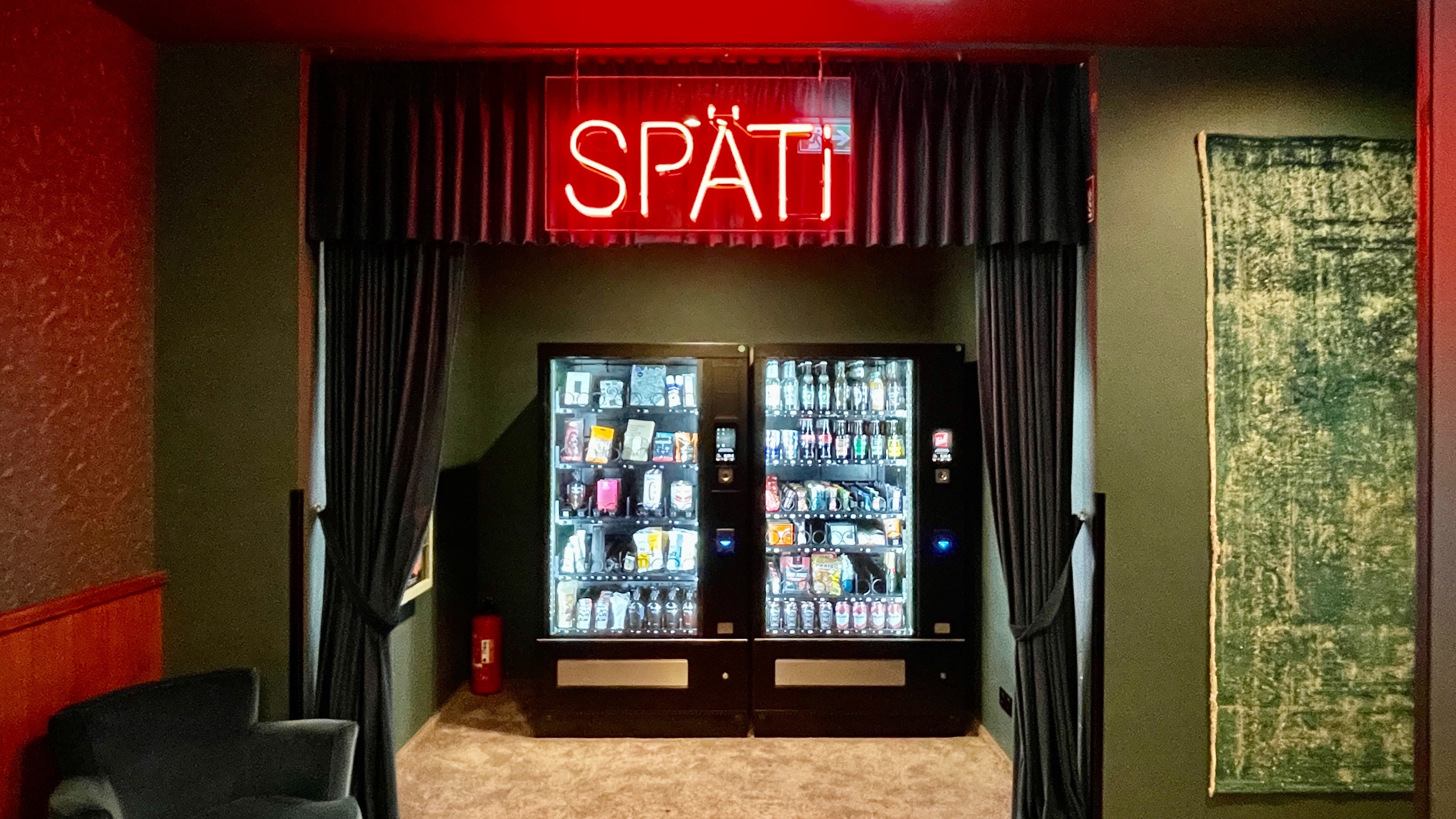
You might notice that there isn’t a mini-bar in the room, nor are there additional amenities such as toothbrush or combs in the room. Fortunately or unfortunately, this is the hotel’s ethos: by reducing these items in the room, they can keep rates low as well, and anything you need can be bought from vending machines which they lovingly call “Spati” at the lobby.
Spati

Prices at the Spati is by no means cheap. Forgot your dental kit? That’s €3. If you like the Grown Alchemist amenities and want to bring home a pump bottle, that’s €25 each.

Need some bottled water in the room? That’s €3,50 each. Beers at €4, and if you are in a mood for some bubblies, a 20cl bottle of Moet & Chandon Brut Imperial goes for a cool €22.

At these prices, you are better off picking up some of these items at the local supermarket.

There’s a small tablet that is tucked away on the lower shelf of the TV console, which serves as your handy guide to the hotel. You will find information about the hotel, including a list of the items and prices at the Spati.

In-room tablet with all you need to know

The facilities

Gekko House is kind of a bare bones hotel, with no facilities on site.

Apart from the Spati that serves as a self-service convenience corner at the hotel, there are only a small handful of common areas within the hotel for use.

The first is this small little corner near the front of the hotel, which can also be a waiting area if there’s a line for check in.

Lobby waiting area

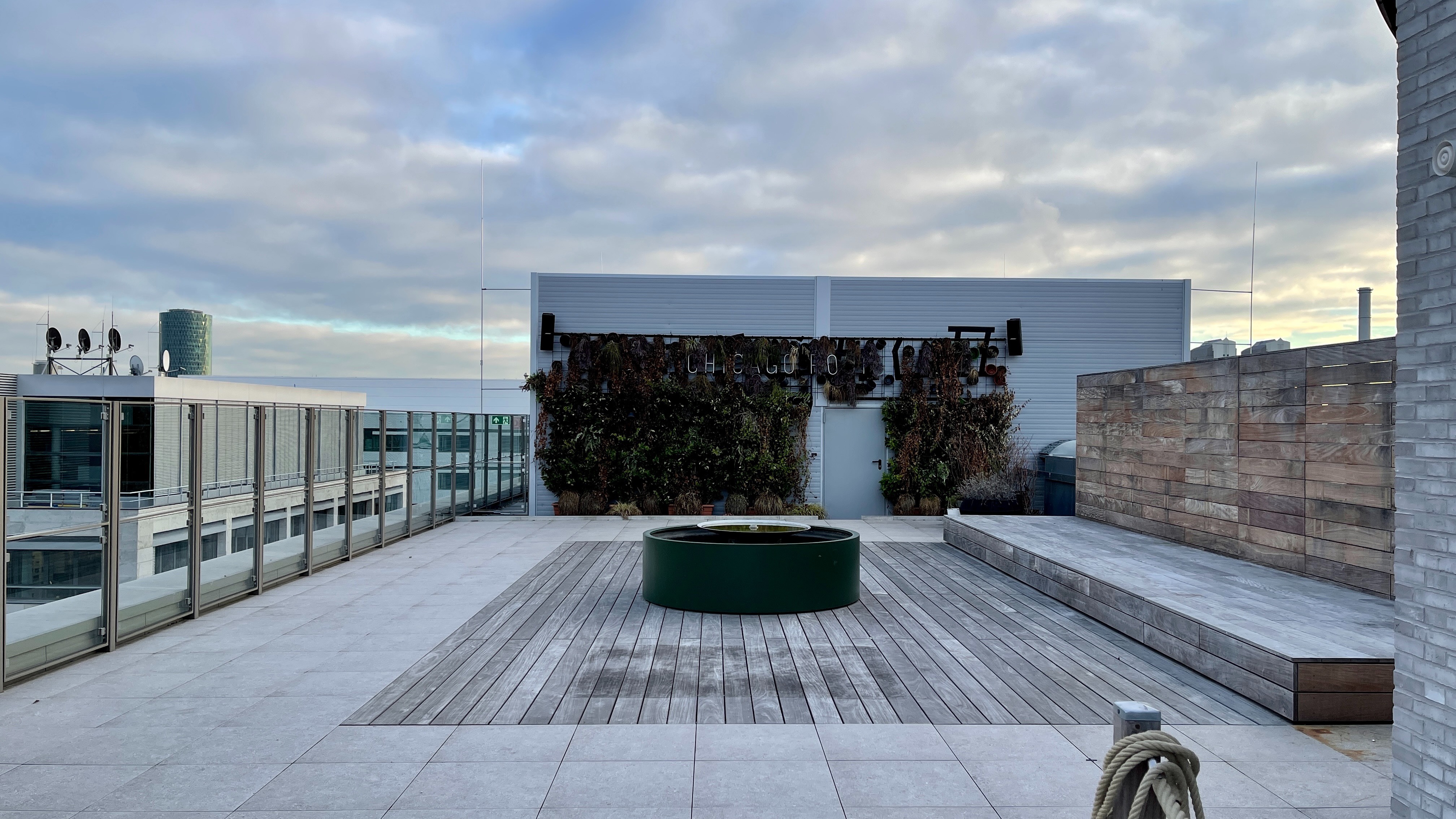
There is also a rooftop accessible via the lifts. On the warmer months this serve as a rooftop bar, but since I visited in winter, there was nothing going on at the moment.
Rooftop
Rooftop bar area

Restaurant – Chicago Williams

The signature bar and restaurant, Chicago Williams, is located at the first floor of the hotel, and is also the centrepiece of the property.

Chicago Williams restaurant

Specialising in American barbecue, Chicago Williams offers a rather simple menu where you can order grilled meats mostly by weight, except chicken where it comes either in half or full bird.

The full menu is below:

Food menu

Drinks wise, the restaurant specialises in highballs, with a selection of either standard or premium highballs to choose from. My observation is that mixed drinks in Germany tend to be relatively more expensive than beer (of course) and wine.

Drinks menu

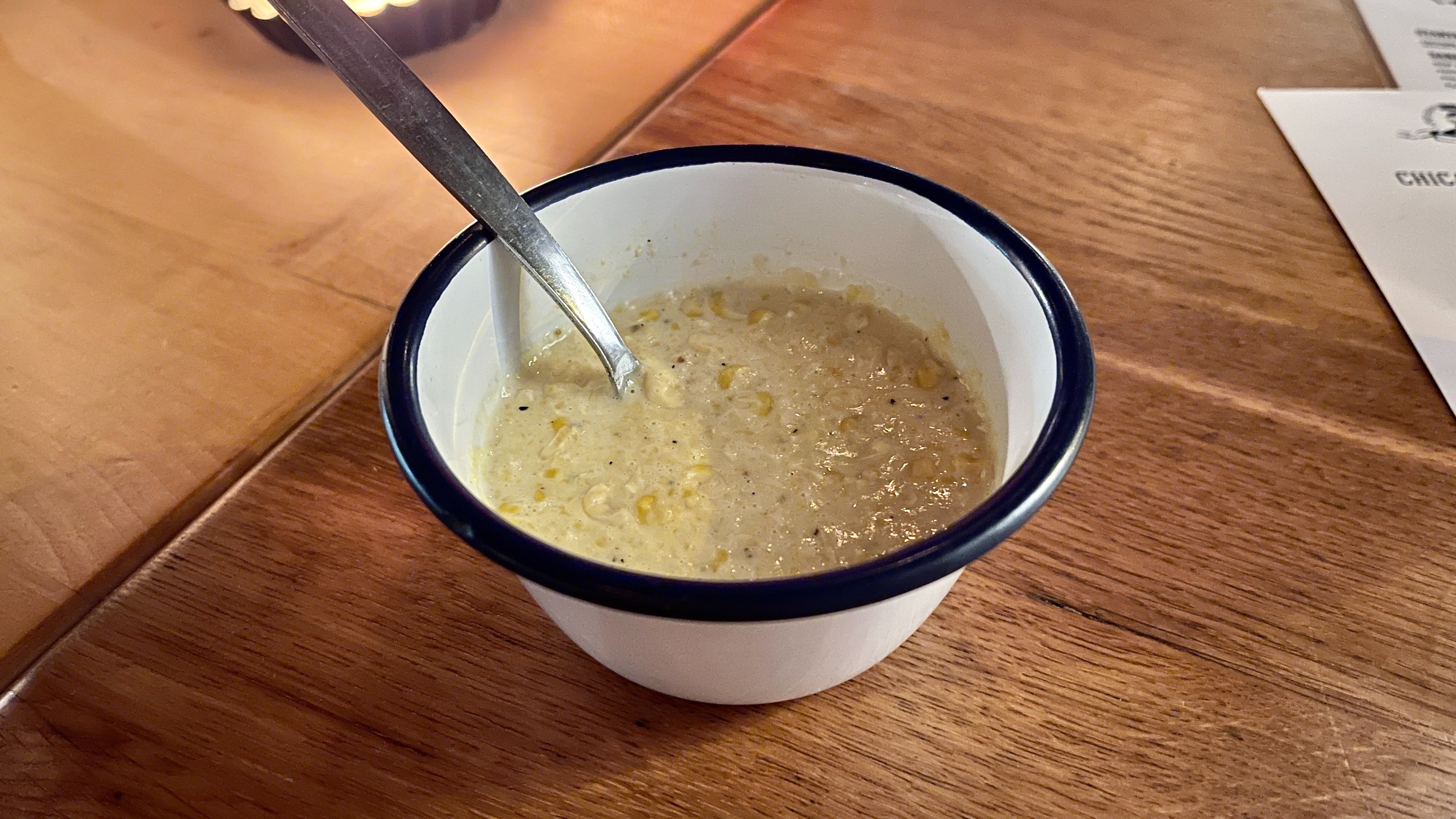
The experience starts when you first step into the restaurant. Right at the front of house is a huge pot of corn chowder, and the staff will scoop out a complimentary bowl serve it to you as they bring you to your table.
Corn chowder

I ordered a half chicken and cauliflower, as well as mac and cheese on the side. I got a glass of rose along with the meal, which turned out to be a pretty good choice.
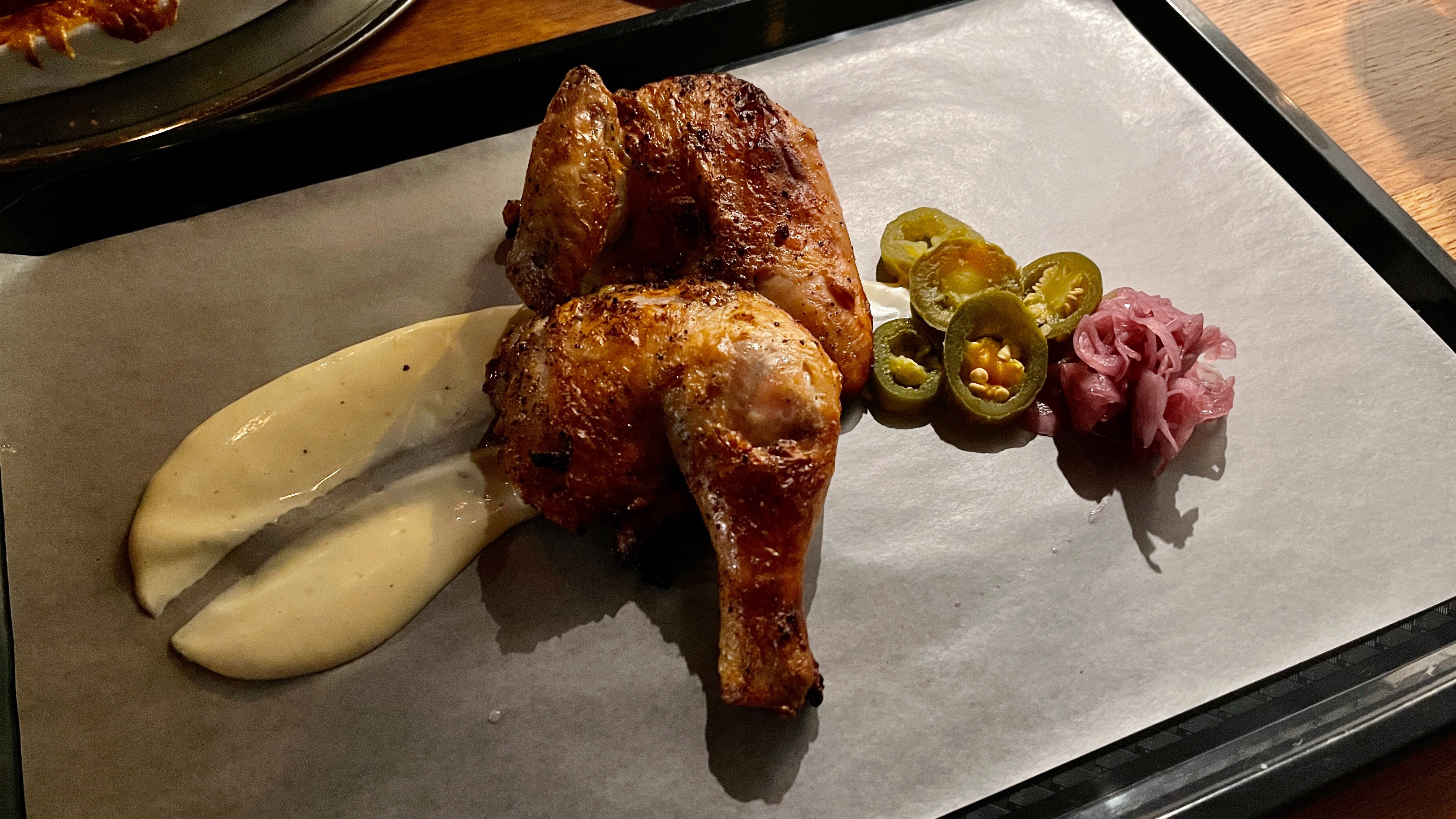
Half chicken
Mac n cheese
Grilled cauliflower

The cauliflower blew my mind a little, as I wasn’t expecting to be so flavourful. The cauliflower is both smoked and sauteed, dressed with parsley pesto and walnut oil before being topped with some spring onions.

Breakfast

As I wasn’t a Marriott Bonvoy Platinum Elite member, my room didn’t come with a complimentary breakfast. Breakfast can be added for €19 per person per day, so I didn’t book breakfast.

Breakfast Hours
Mondays to Fridays: 6.30am to 10.30am
Saturdays & Sundays: 6.30am to 12pm

However, the hotel is happy to provide complimentary coffee if you head down to ask. Coffee is dispensed from a one-touch machine.

When I was collecting coffee one morning, I managed to snap a few photos of the breakfast offering. It seemed to be a continental offering, with no hot food in sight.

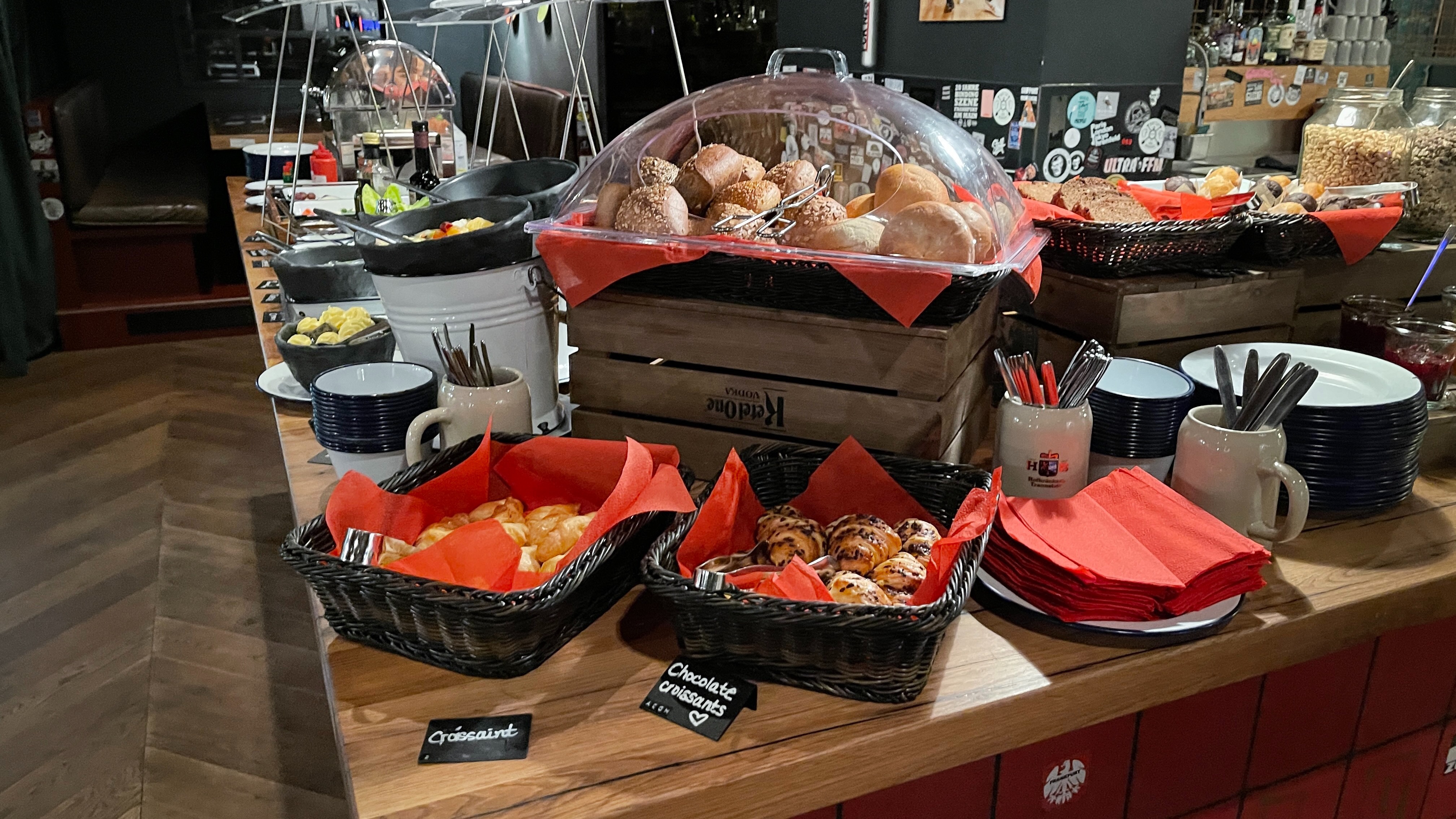
Breakfast – Cereal, bread and jams
Breakfast – pastries
Breakfast – cold cuts, salad bar
Breakfast – Fruit, juice and water

Final thoughts

Gekko House may be styled as a Tribute Portfolio independently-managed hotel with some character, but in reality it probably felt more like an upscale ‘hostel’ with individual rooms. The lack of amenities can be bothersome, but if you are on a leisure stay you really shouldn’t be staying in the hotel all that much.

While the lack of in-room amenities may bother some people, I’m pretty cool with it: I’m all for providing less in the room, and for guests to either bring their own or request (or even buy) one only if it’s necessary.

I initially thought I wouldn’t enjoy the hotel, but I soon realised it was sufficient for a solo traveller, with a good price point at well under €100 per night. The restaurant serves a great American barbecue dinner, but I’d advise against buying breakfast there, as you can get way better value for €19.
FLIGHT REVIEW: Finnair A350-900 Business Class, Helsinki – Singapore

Finland is hardly one of the top travel destinations in Europe, despite the charm of the Nordic countries in the past years. Nonetheless, long-time fans of oneworld airlines would know Finnair as a viable alternative to British Airways for transcontinental travel between Europe and Asia.

This flight came around as a surprise: I was originally booked in economy class from New York back to Singapore via Helsinki, but due to a change in plans, I had to reroute to return from Frankfurt, again via Helsinki. Fortunately or unfortunately, there were no more award availability in economy class (first time I’ve ever heard of this), but there were still available award space in business.

Booking

For this flight, I have used my Asia Miles for the seat. Finnair is a oneworld member, so there are plenty of options for redemption.

This itinerary cost me 70,000 miles, which was incredibly value for money given that a direct Singapore Airlines flight from Frankfurt to Singapore would have cost me 92,000 Krisflyer miles.

If you have points or miles in other oneworld FFPs, these are the redemption options you have between Singapore and Frankfurt. Additional fees and taxes vary between S$50 and S$160 depending on where you depart from and which programme you redeem from, with most itineraries falling under S$100.

Frequent Flyer ProgrammeBetween Singapore
and Helsinki
Between Singapore
and Frankfurt
(via HEL)
60,00060,000
70,00070,000
90,000104,500
92,750108,250
120,000150,000
Miles/Points required for one way business class award

Flight today

Finnair AY131
Helsinki (HEL) – Singapore (SIN)

13 January 2022
Depart: 11:55PM
Arrive: 5:15PM (+1 day)
Duration: 11hr 20min
Aircraft: Airbus A350-900
Seat: 8A (Business Class)

Helsinki Airport

Helsinki Airport is not a terribly big airport, but it can still be pretty disorienting for a first visit.

Helsinki Airport Terminal 2

The airport comprises two terminals, although in practice, the two terminals are linked both on the public and transit areas. The separation is clearer in the public areas, as the transit areas are seamlessly linked via a continuous walkway.

Within the public area, Terminal 1 serves all Star Alliance airlines (except Turkish Airlines), while all other airlines are in Terminal 2. Terminal 2 also serves all transcontinental services, which explains why Turkish Airlines operates out of the terminal.

Within the transit area, the demarcation is not as clear. As Finland is a Schengen country, Helsinki Airport divides the transit area into two parts, the Schengen and non-Schengen areas. Gates 5 to 36 serve Schengen flights, while gates 37 to 55 are for non-Schengen flights.

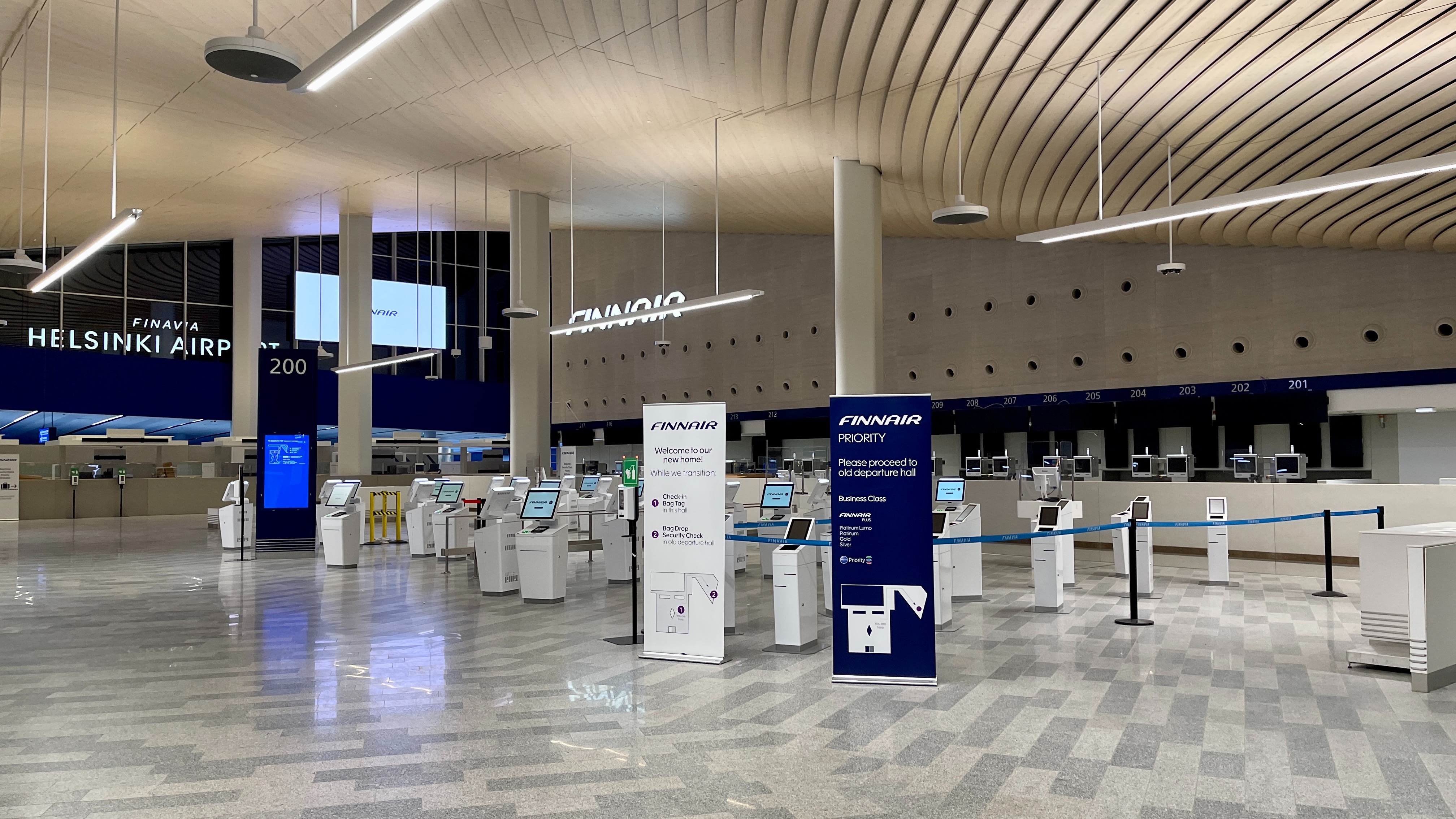
Finnair operates out of Terminal 2, which saw some expansion works back in 2019, including a larger non-Schengen area as well as new check-in and baggage facility at Terminal 2.

Transit in Helsinki

If you are transiting in Helsinki from a Schengen country, you will enter the Schengen transit area upon arrival. For those transferring to a long-haul flight, you will need to pass through passport control before making your way to your departure gate.

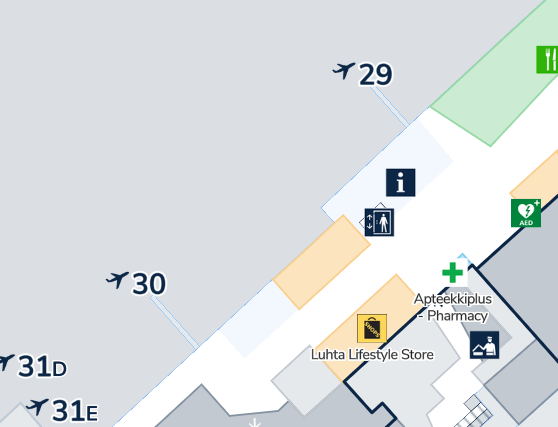
If you are doing tax refunds out of Helsinki airport, the customs office and the Global Blue counter is in a small corner before passport control, across from Gate 29.

Customs clearance office across from gate 29
Look for this little Tulli counter next to the Pharmacy

Unfortuantely, flying Finnair out of Helsinki became somewhat of a hassle during the times of Covid.

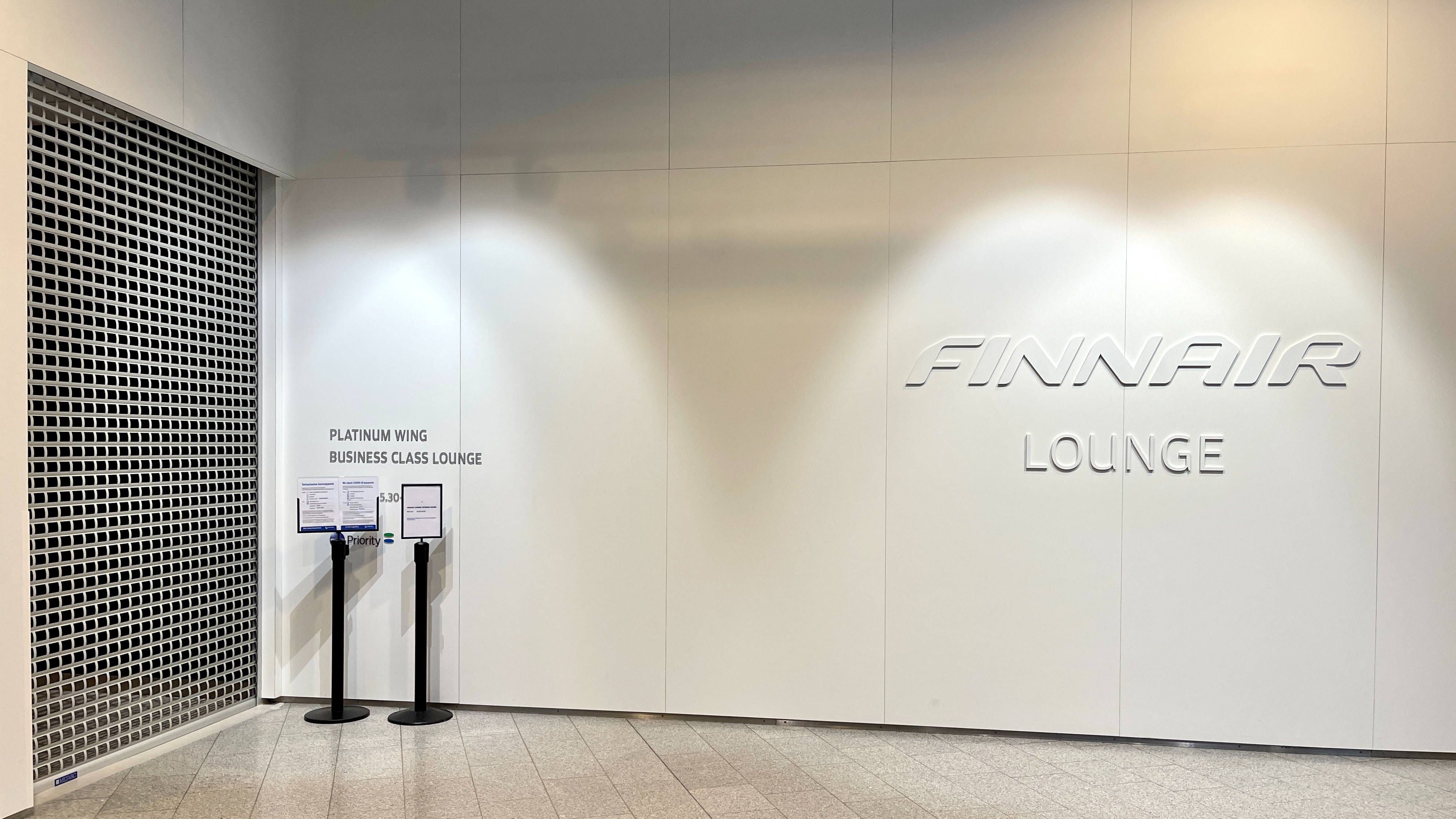
I had the most unfortunate experience when flying through Helsinki. As a result of newly implemented restrictions to curb the spread of Omicron, Finland has decided to reimpose a curfew, requiring shops and restaurants to shut at 6pm. Unfortunately, this restriction extends to the airport as well, affecting all shops, restaurants and even lounges.

Finnair Lounge – Non-schengen area

I had a pretty long layover of nine hours from my flight from Frankfurt, so I took some time earlier in the day to head into the city, expecting to come back to the airport to freshen up in the lounge. To my dismay, I found the entire airport dimmed as most shops are closed, and both lounges are also shut to passengers. Only a single restaurant within the non-Schengen area was open – for takeaways only.

What this meant was that for a 11.55pm flight, all guests had to dwell in the common areas for over six hours, with only vending machines at their disposal.

You would imagine what a relief was it for everyone when they started boarding calls!

Boarding

As a VTL flight, there are plenty of document checks that need to be completed. Finnair decided to do this at the gate, and I suspect is due to the volume of transit passengers on the flight.

Boarding gate 42

To facilitate a smooth boarding, Finnair uses one of those gates that has a sterile holding area, pretty much similar to what some airports have for US-bound flights. Document check started almost 90 minutes, and passengers are funneled into a segregated holding area to wait for boarding after having their documents checked.

If you require the use of the restrooms, you should use it before clearing the document check.

The actual boarding began about 40 minutes before the scheduled take off time. While there were group numbers printed on the boarding passes, the gate agent called for multiple groups at once to board, causing quite a big number of people heading to queue at the same time.

Boarding was through a single door, the second left door between the two business class sections. My seat for the day was 10L, which was in the second, smaller section of the business class cabin. Note that the smaller business class was after the second set of doors, so that means that all the economy class passengers will inevitably filter pass your seat if you are seated there.

The aircraft

A note about Finnair: the northern European carrier uses Airbus aircraft exclusively, plus a small fleet of Embraer 190s and ATR 72s for domestic and regional use.

Finnair operates the A350-900 as its main wide body workhorse, with 16 aircraft in its stable and another three on order. Of which, there are only two configurations: one with 12 rows of business class seats, while the other seats only 8 rows.

A350-900 business class

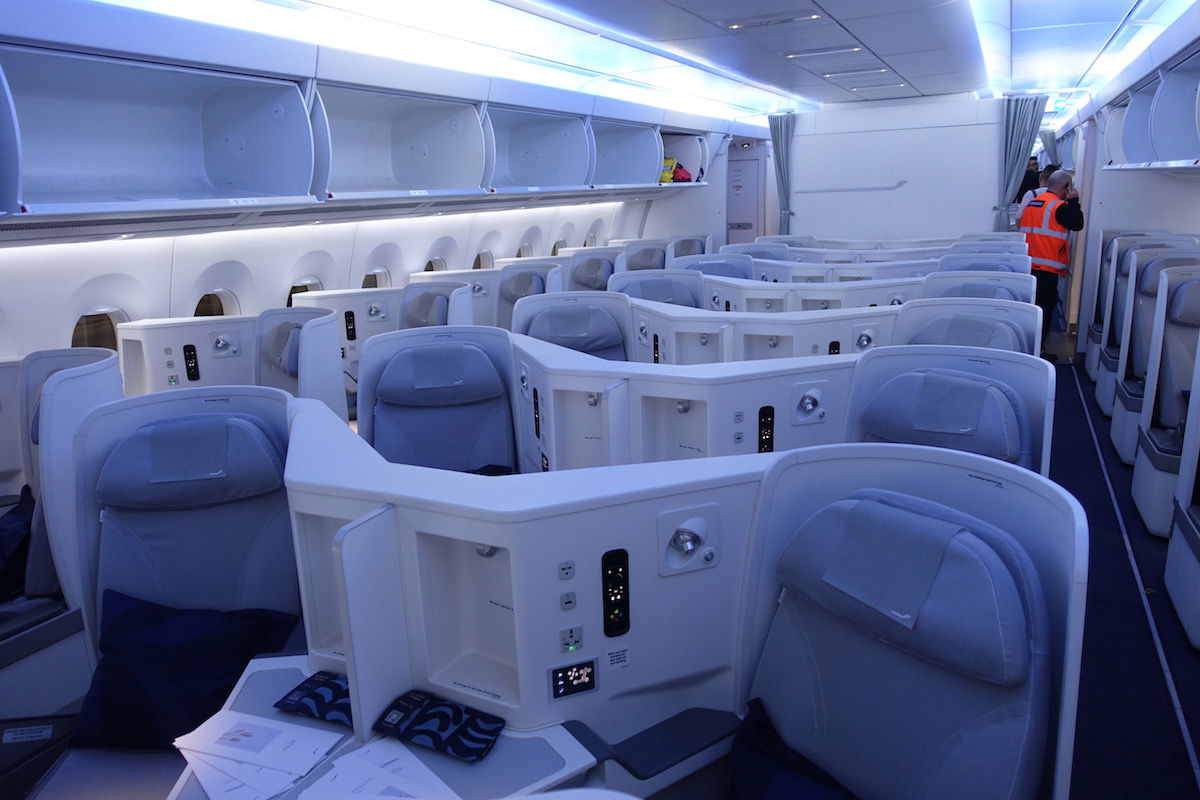
The aircraft I travelled on today was the one with 12 rows, for a total of 46 seats (row 9 is missing 2 seats).

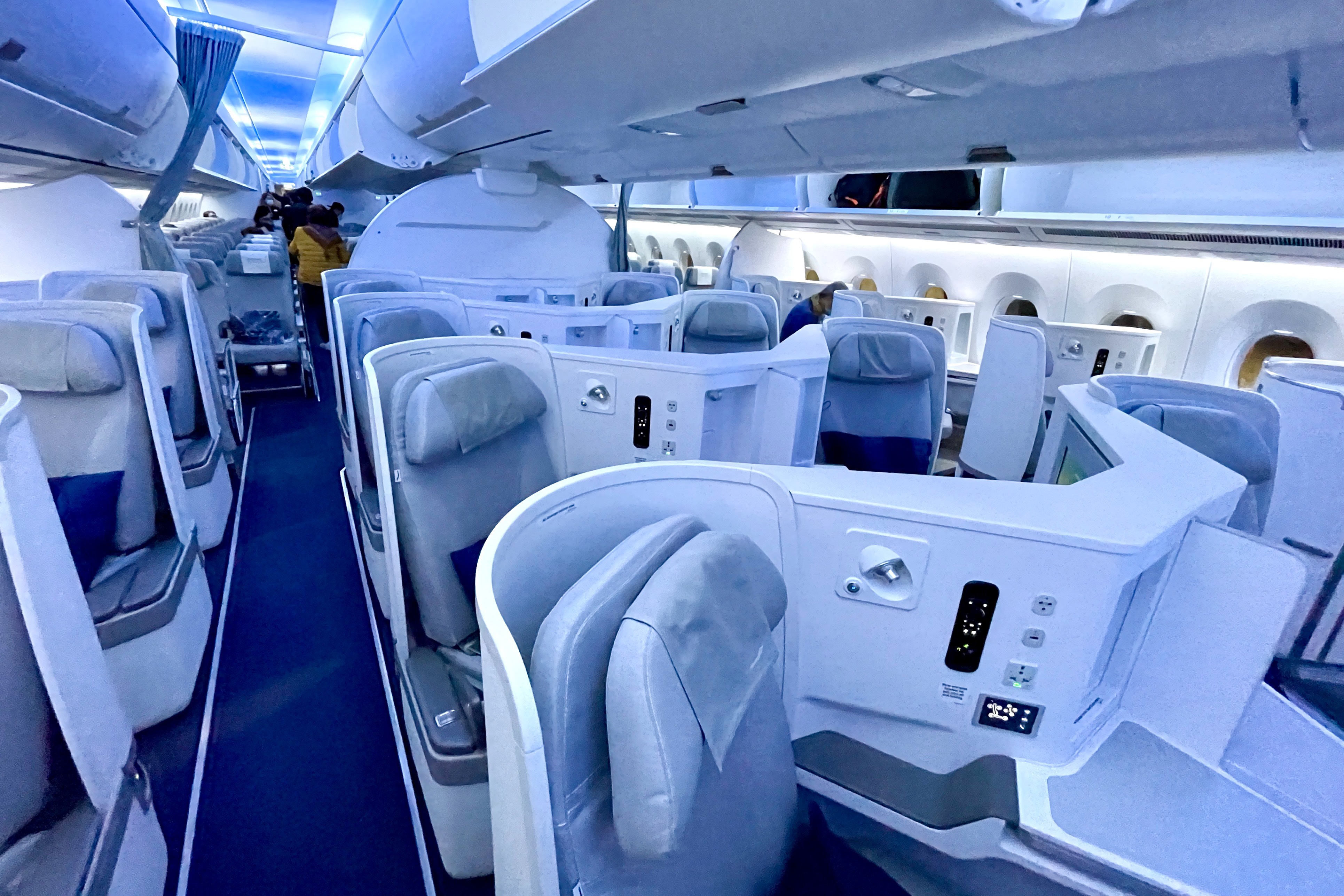
The forward cabin comprises 8 rows in a 1-2-1 reverse herringbone configuration, while the smaller business class section comprises 14 seats. Both sections are separated by a galley and lavatories, while the rear section is separated from economy class with only a partition and curtails.


The proximity to economy class may bother some people, so be sure to avoid rows 9-12 if that’s the case for you.

One other key thing to note: the forward cabin does not have any overhead compartments for the middle seats, so if you are seated there your bags will have to be stowed above the window seats. These may be cumbersome for some people, as they prefer not to have other people hovering above them mid-flight. I didn’t take a photo of the forward cabin, but you can see it from OMAAT’s photo below.

Forward cabin (photo credit: One Mile at a Time)

The rear section however has overhead storage for the middle seats, so those may be better options for those with plenty of carry-on bags.

The seat

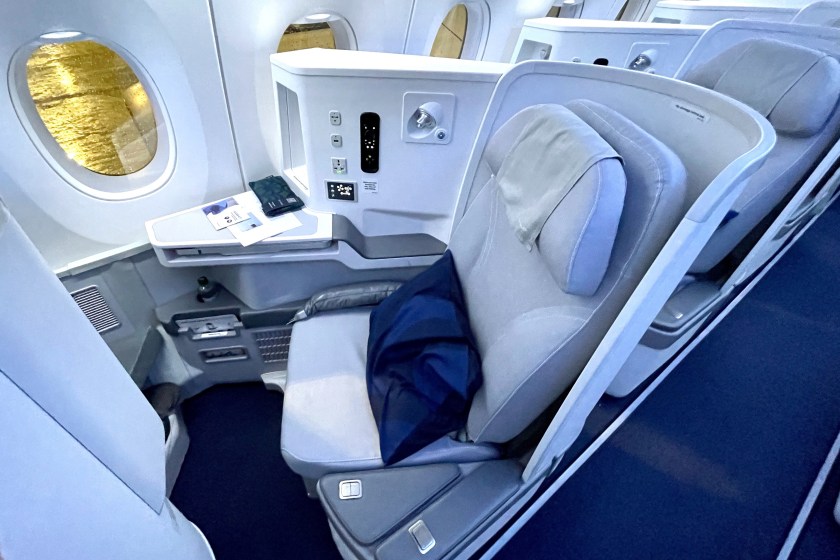
Finnair has opted for the Zodiac Cirrus seats in a reverse herringbone configuration for its business class cabin, similar to Cathay Pacific and Japan Airlines. In a 1-2-1 configuration, this means every seat gets direct aisle access, which is pretty standard today.

Finnair A350 Business Class seat

The window seats are pointed towards the windows, while the middle seats face each other. If you are placed in the middle but are travelling alone, there’s a partition you could pull up to have a little more privacy and avoid the awkward eye contact moments with your neighbour.

However, if you are travelling with a partner, these seats are your best options. Nonetheless, despite the middle two seats facing each other, you will still need to stretch forward to talk with your seat partner.

Couple seats in the middle

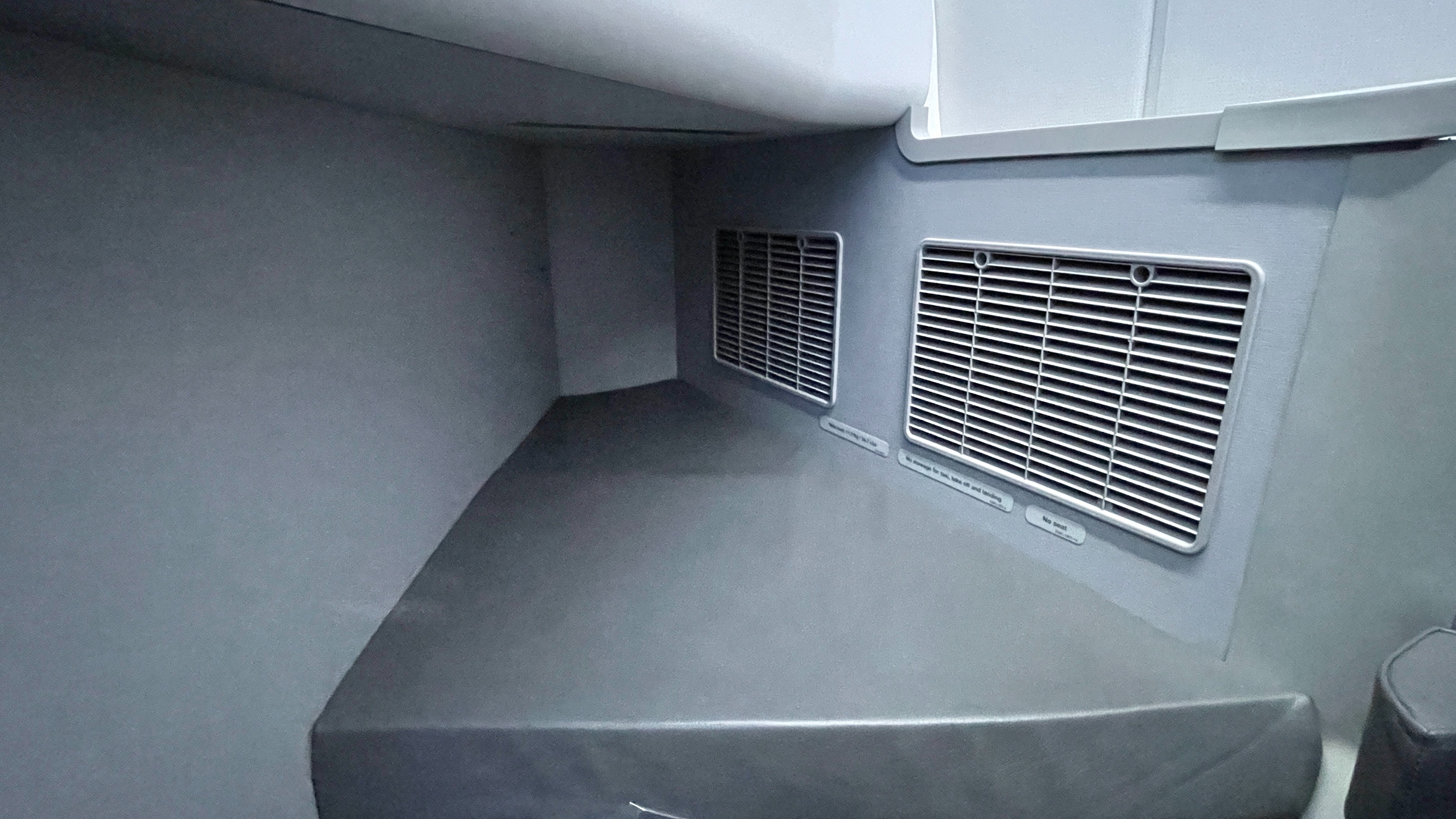
The angled seat means that your seat reclines into a footwell. Unlike the Japan Airlines version, the foot well is relatively spacious, and I had no issues having a comfortable rest throughout my flight.

Footwell

Underneath the foot well is another compartment, good for storage of your shoes during the flight. The good thing is that the seat doesn’t not have a calf rest segment, so as you recline whatever you left on the floor will not get crushed.

On the side of the seat closest to the aisle is also an adjustable armrest. During take off and landing this has to be stowed to seat level, but during the flight itself this can be brought up to your elbow level for your comfort.

Entertainment screen

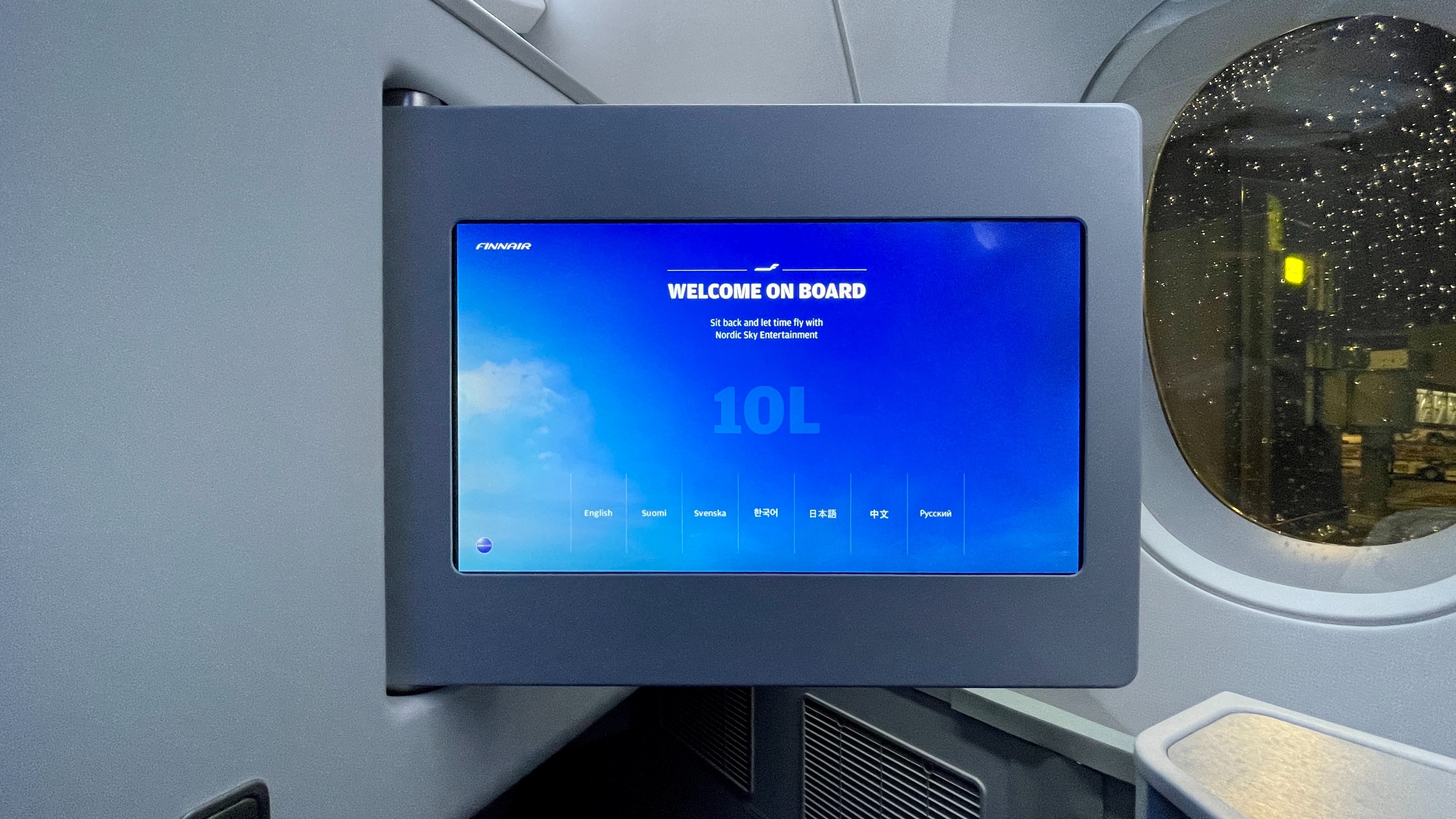
The in-flight entertainment system screen is stowed to the back of the forward seat. To use it, you will have to press a release catch, and then swivel the screen towards you. As screens need to be stowed during take-off and landing, this means that you will be unable to use the screens at all during these times, which is a significant disadvantage of this configuration.

Another way to control the screen is to use the remote control stowed to the side of the seat. Along with it you will also find the headphone jacks, a USB socket and a power socket. There’s also a reading light should you need one.

Seat controls, power sockets

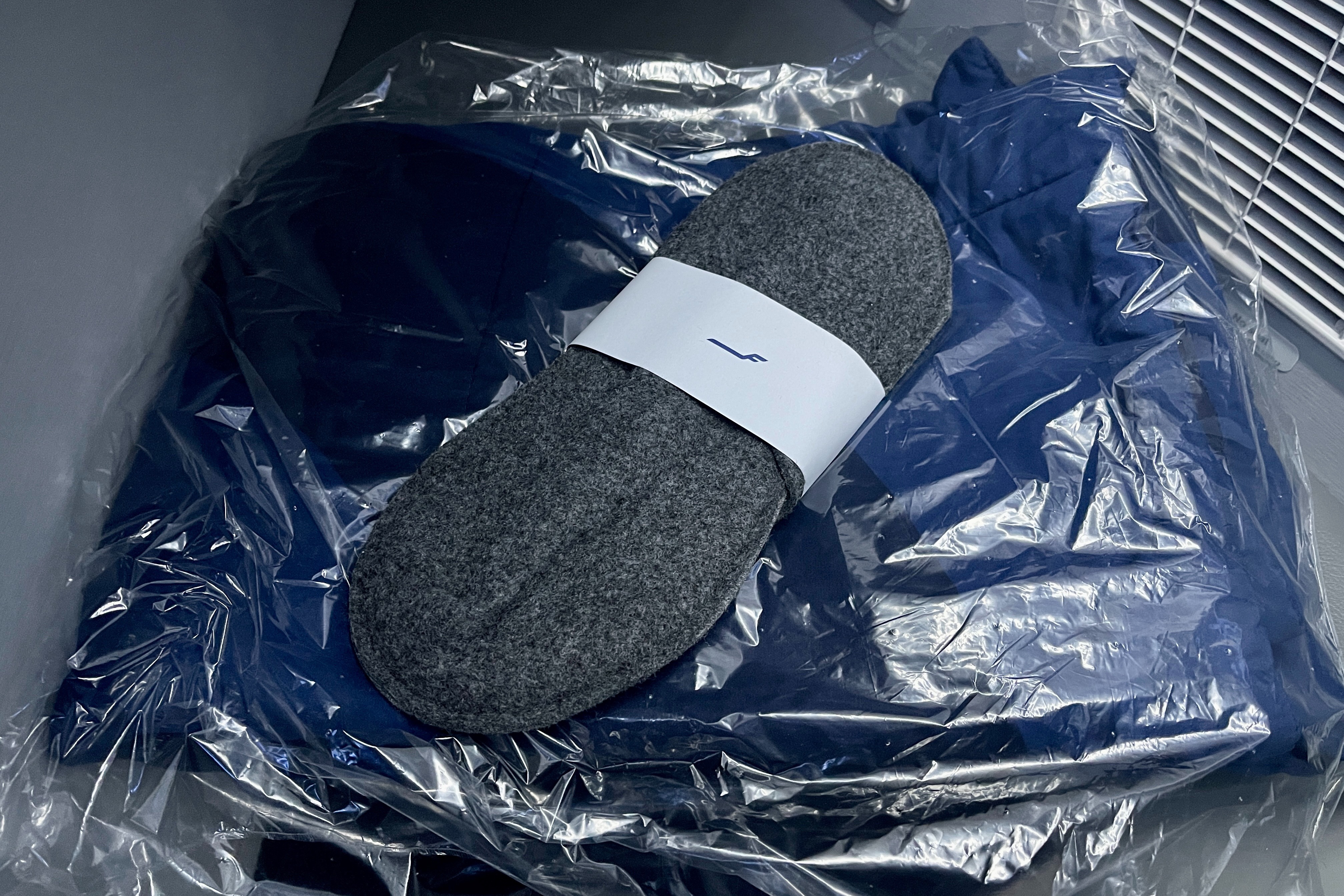
Each seat is also provided with a pair of slippers, as well as a comforter. The slippers were trending towards the thin side, but comfortable nonetheless.

Comforter and slippers

Amenity kit

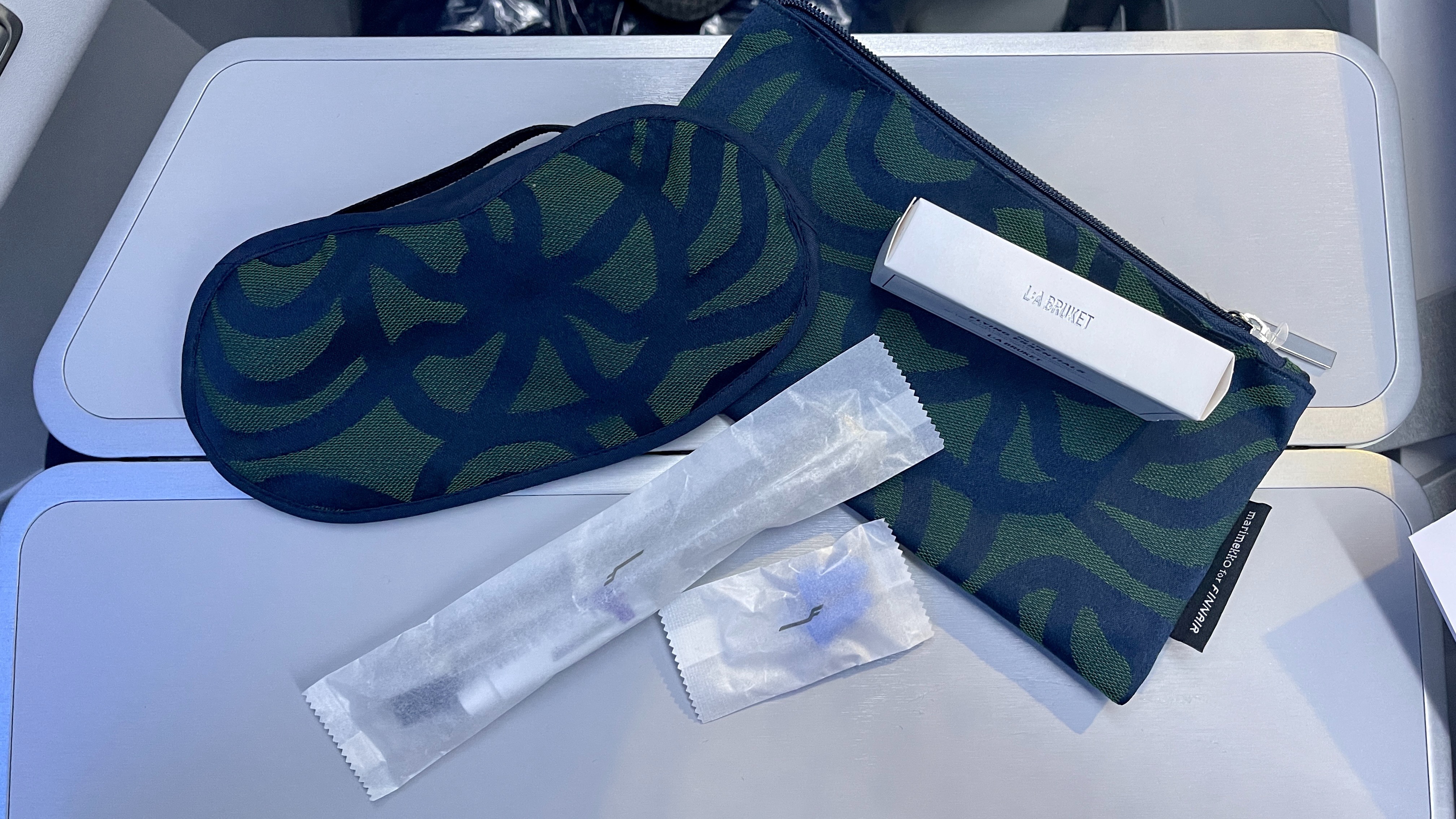
For the current season, Finnair partnered Marimekko for its amenity kit. In the kit was an eyeshade that’s of the same design as the pouch. You will also find a dental kit, ear plugs and a lip balm enclosed for your comfort during the flight.

Marimekko amenity kit

Thankfully, Finnair has moved away from the previous loud and gaudy design for its in-flight amenities and opted for a classier finish.

The meal service

One little known fact: Finnair has cabin crew based in Singapore, and uses this set of crew for flights between Helsinki and Singapore. You will be hard pressed to find Finnish speaking crew on these flights, but of course, most Finns are fluent in English so the lack of Finnish language capabilities is hardly a problem.

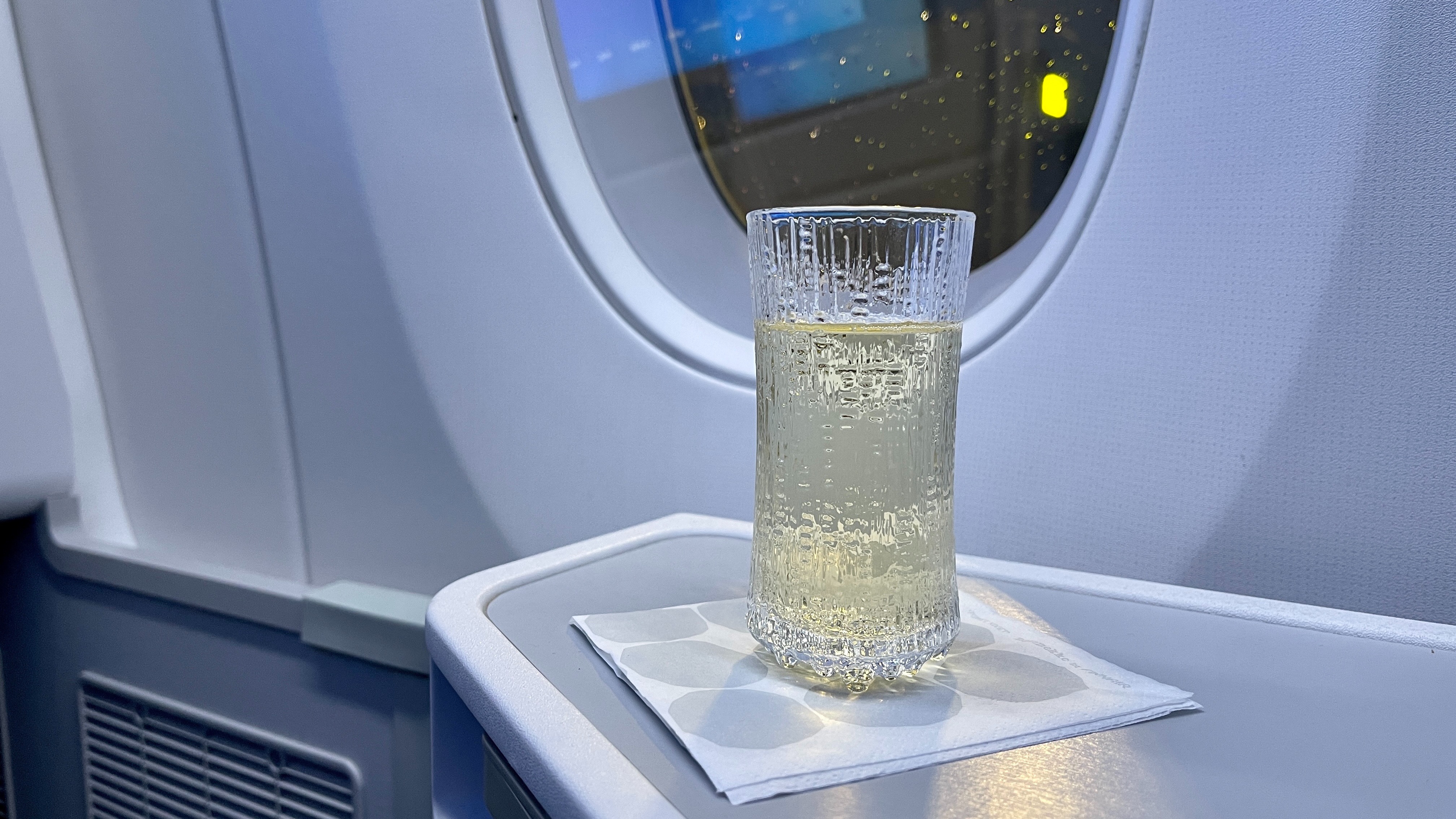
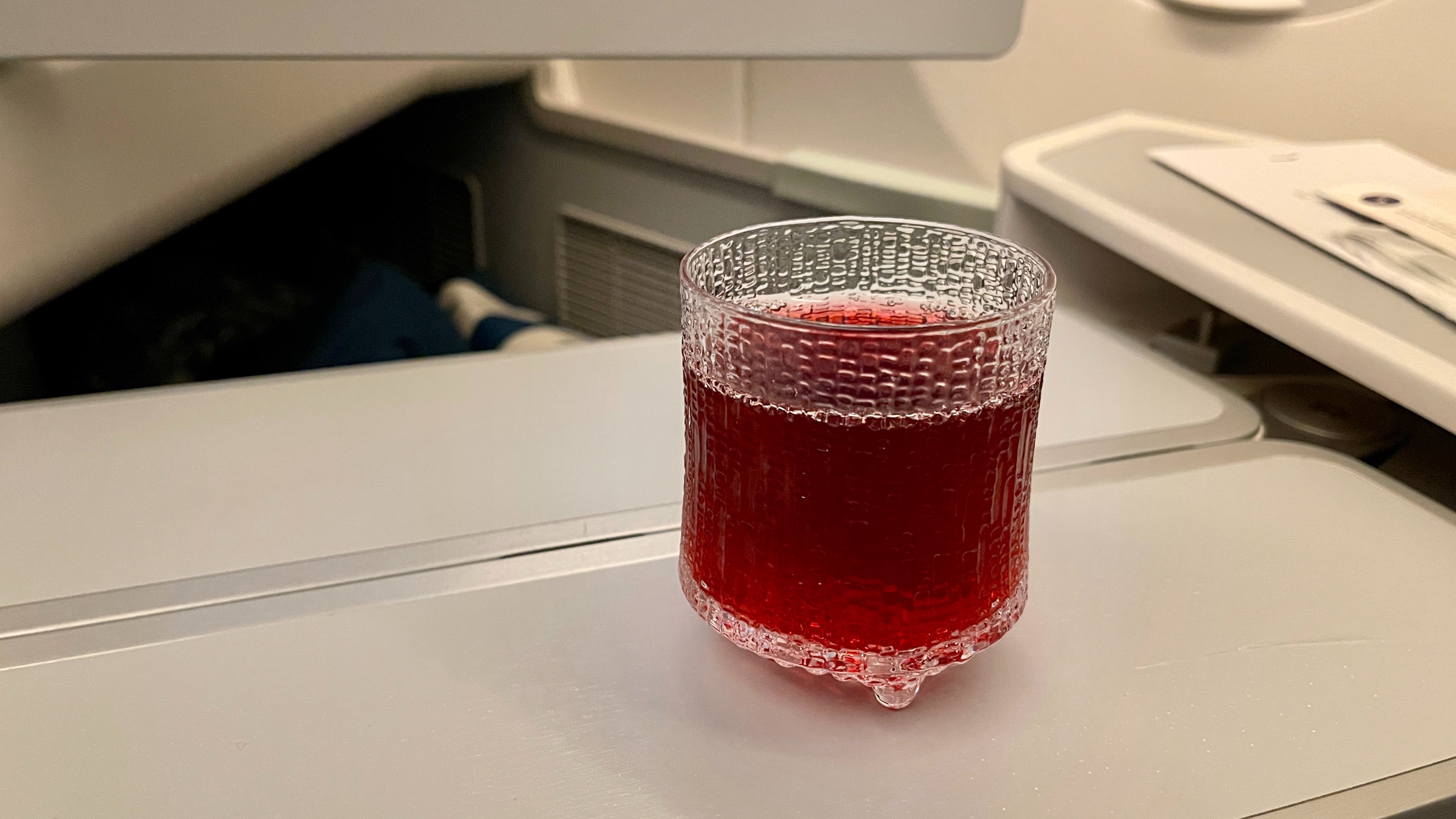
Shortly after I have settled in, the cabin crew came around to offer a welcome drink of champagne, water or Finnair’s signature blueberry juice.

Pre-departure champagne

Finnair’s choice of champagne is the Joseph Perrier Brut NV, one of the lesser known champagne houses. It rates a paltry 3.9 on Vivino, and is also available for purchase in-flight for €27.

Similarly, all cabin crew were wearing face masks and rubber gloves when serving passengers. I can understand the nee for face masks and even shields, but I personally find the donning of rubber gloves very impersonal. It might be the type of gloves and even the way the gloves were worn that makes it look very shoddy, but it definitely doesn’t scream service.

Just before take off, the cabin crew serving my section came by to take my order for dinner. Seeing that I’m halfway through with my champagne, he offered to top it up for me, which I gladly obliged.

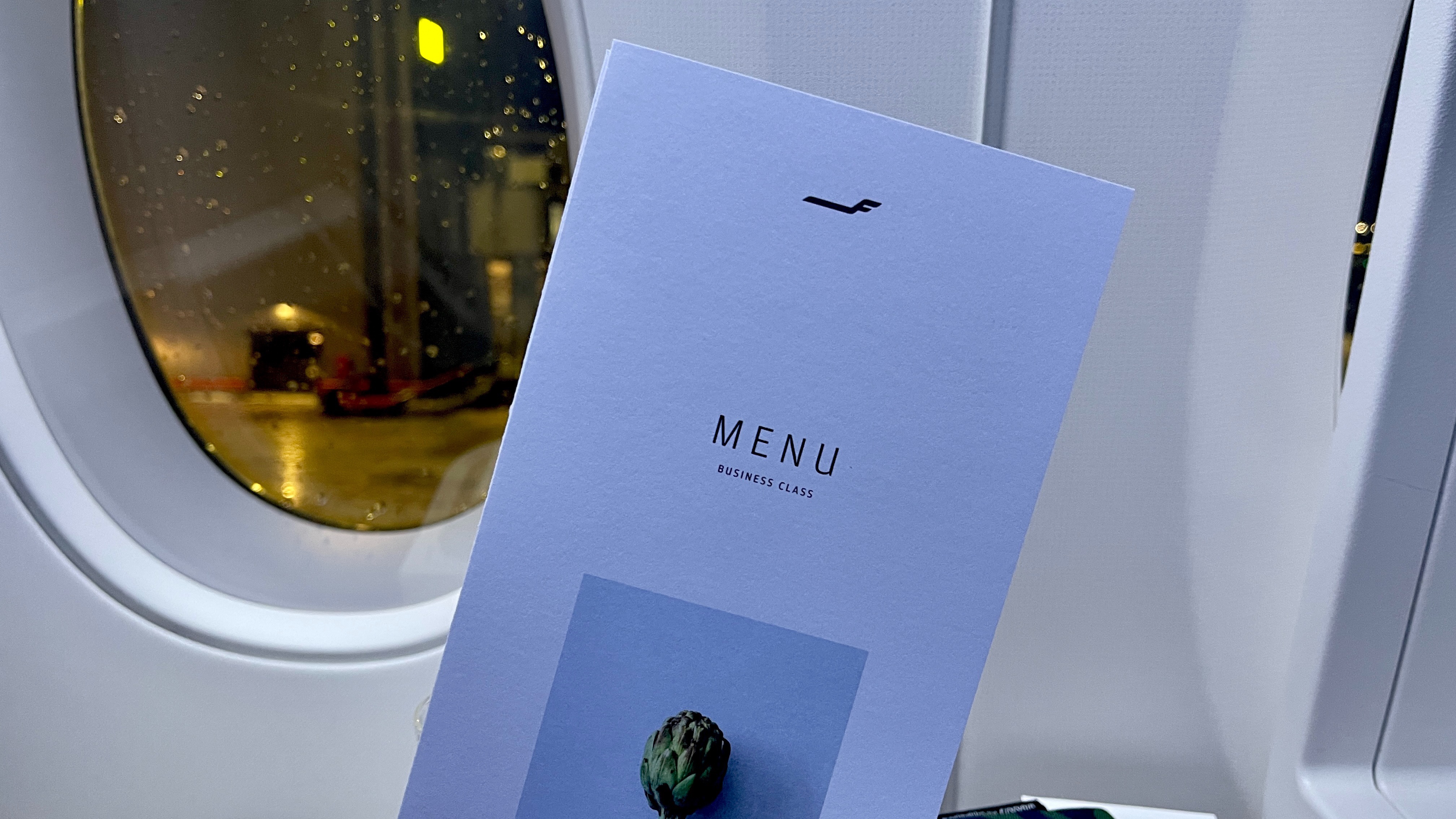
Physical menu cards were present, and for some people this is a semblance of pre-Covid normalcy and by extension, a new form of nostalgia.

Menu cards

Boarding was soon completed and the doors were closed. We remained at the aircraft stand for a long while as the cargo compartment was still busy with loading, and I fell asleep.

When I woke up again, I found that we were already in the air, with an hour past since the scheduled take off time. Almost like magic, my drinks – some water and a glass of champagne – which I ordered earlier were already served to me on the side console, along with a serve of salted almonds.

Drinks and nuts

About 15 minutes later, dinner was served. I made my choice of dinner earlier before the flight took off, as my order was taken during the rounds of drinks before take-off.

For those who are interested, this is the full menu:

To my surprise, the meal was served in a single tray, with the appetiser and main course presented together. There was also a mini salt and pepper shaker on the tray, as well as another empty plate for bread along with cutleries rolled up in a napkin.

Dinner service – Teriyaki chicken, eggplant with rice

I took a while to visually digest what was presented to me. The crew came around again with a basket of bread, with a selection of white bread rolls, brown sliced bread, or breadsticks. I went with a bread roll, which was fortunately warm.

The appetiser was minute – there were two prawns and two slices of halloumi – but incredibly tasty. Seafood was scarce in Germany, so prawns were the most delightful and refreshing for me.

The main on the other hand left much to be desired. I was craving rice (you can’t take me out of Asia but you can’t take the Asian out of me), and went for the grilled chicken and eggplant on rice, which turned out pretty disappointing. The grilled chicken was not the offending one although the portion was pretty minuscule, but the rice was definitely overheated to the point of being hard and dried out. Definitely a wrong bet.

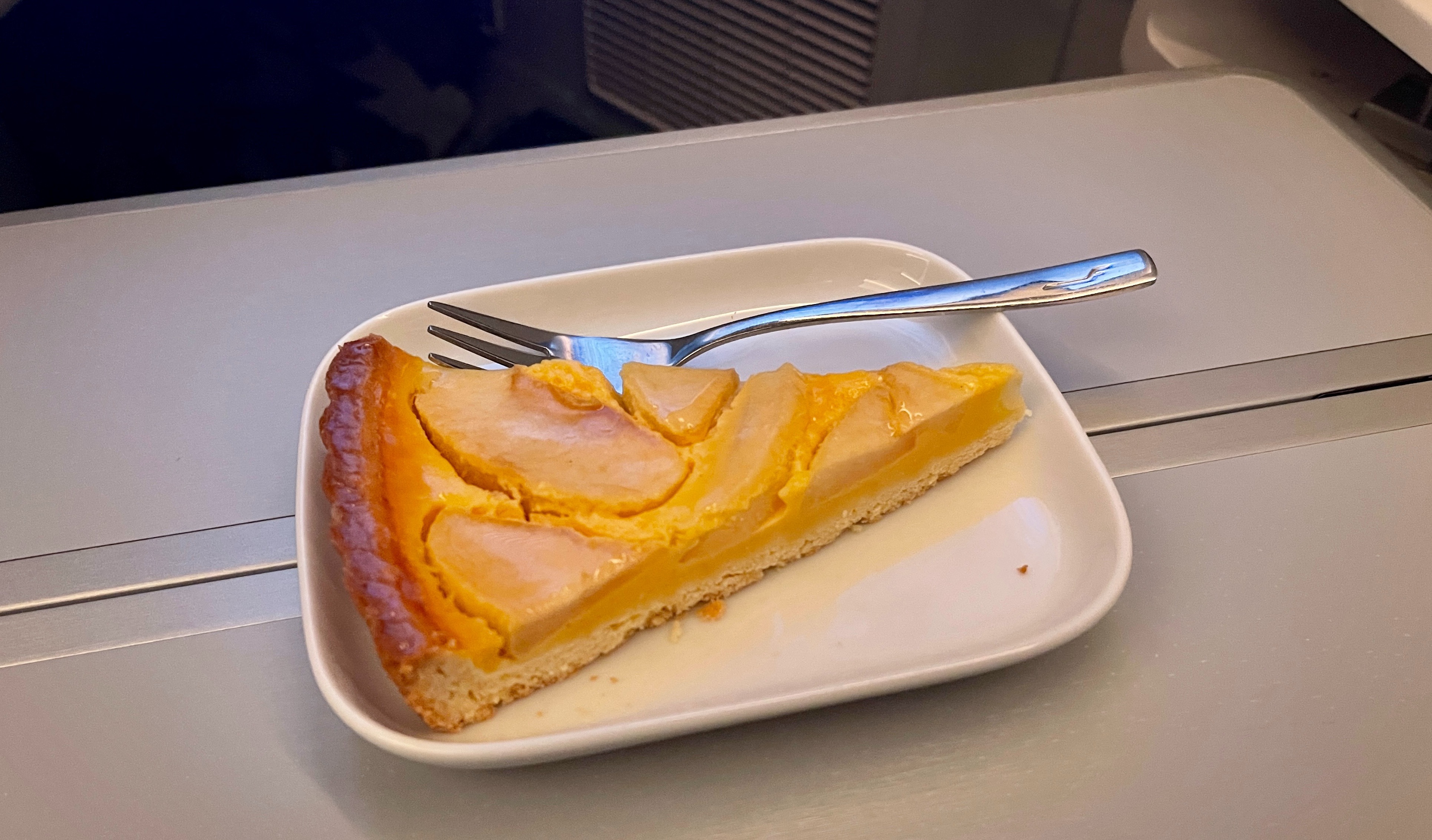
When I was done with the meal, my tray along with the tablecloth was cleared promptly, before the crew brought around a tiny serve of the apple tart dessert i chose beforehand. Again, I was rather disappointed, I must say, having had excellent apple pies during my stay in Deutscheland.

Dessert – Apple pie

Overall, the meal was a little underwhelming in all aspects, from taste, to portion and presentation. I definitely didn’t feel well fed.

I can imagine for hearty eaters, the portion will definitely be insufficient. Normally this wouldn’t pose a problem given that most travellers would have eaten something in the lounge, but if the lounge was going to be closed during the interim, more food would have been appreciated.

For my drink, I went with the Riesling, which tasted pretty tart in the cabin. I didn’t finish my wine.

Exhausted and tired, I fell asleep almost immediately after the meal and slept for a good 4-5 hours.

As i woke up mid-flight so as to start adjusting my body clock to the Singapore time zone, I went to the galley to stretch my legs and hoping to get a coffee. Unfortunately I found no one there, so I returned to my seat and hit the call button instead.

Another crew member came around within the minute. I asked for a cappuccino and also asked what snacks were available, to which he told me he wasn’t sure what’s on board and he had to check. He went to the galley, and returned with my cappuccino shortly as well as a small selection of snacks, comprising gummy bears, a granola bar, Pringles potato chips and peanuts.

Based on anecdotal feedback, they used to carry cup noodles on this flight but not in recent months. Hence, there wasn’t any hot food available, so you might be out of luck if you need something warm to munch on.

Mid-flight snack

I do have a gripe about this particular crew member though. He was probably standing in while the first crew member went for his shift rest. Each time I made an order, he was really quick to want to walk away to fetch the drink, but always before I had finished my order. More than once I had to stop him from leaving, and it increasingly became annoying because it made me felt like I was bothering him.

Thankfully, the first crew member came back in time for breakfast service, and I was most happy to see him again. Breakfast was served about 90 minutes before landing. Before food, the cheery crew – obviously refreshed from his rest – came by with a hot towel, as well as a glass of finnair’s famed blueberry juice. I took a sip and was blown away, and probably had three servings of it throughout breakfast.

Blueberry juice

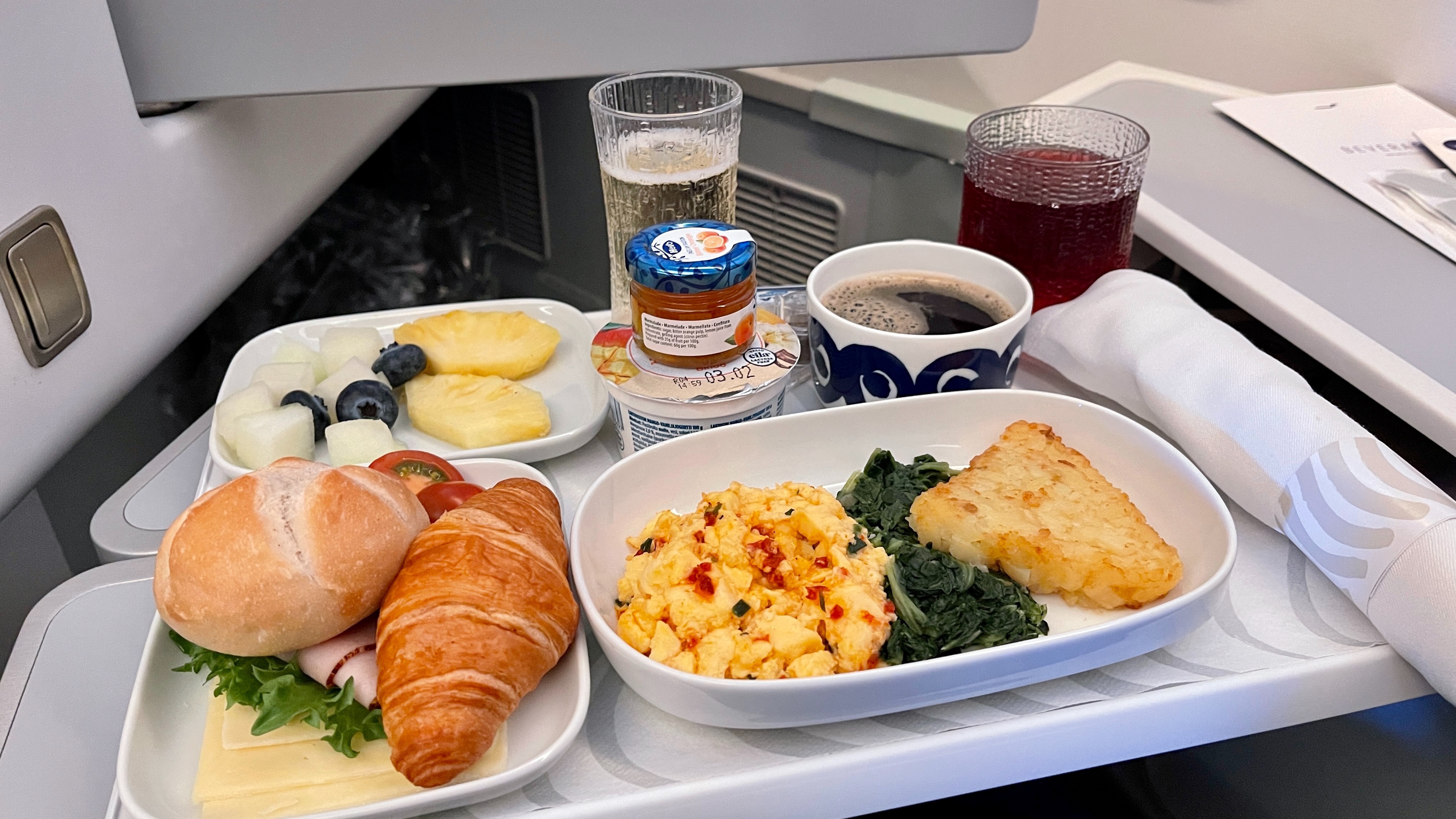
Breakfast was served about 90 minutes before landing. As a result of Covid, Finnair has moved away from a customised breakfast service where you get a breakfast card and select whether you want to wake up for a full breakfast or an express breakfast, but instead chooses to serve the same for all passengers.

Breakfast

Breakfast was a simple platter, with fruits, cold cuts, cheeses, scrambled eggs, hashbrown and sauteed vegetables. In my opinion this was probably a bigger meal than supper.

On board internet

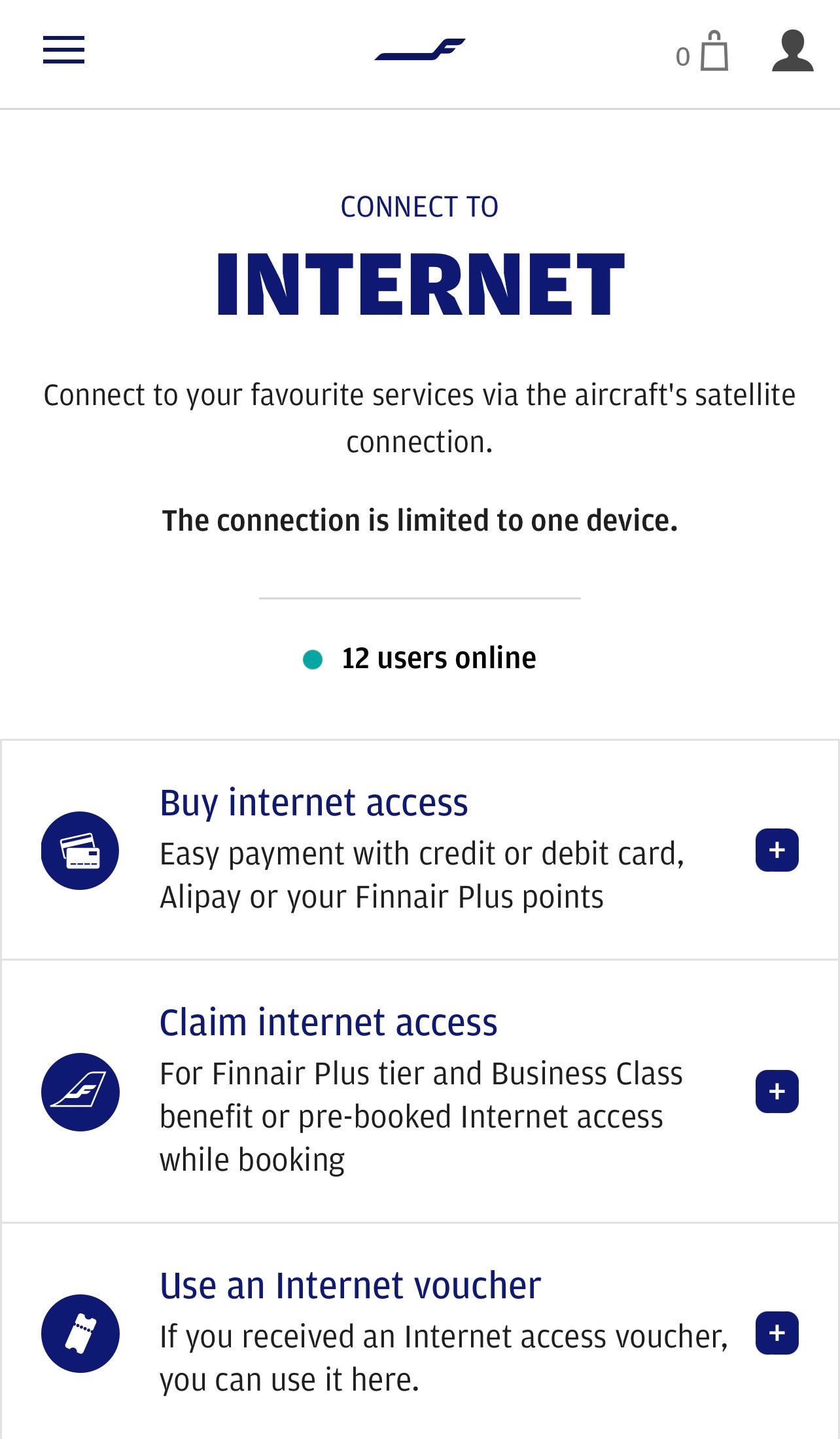
Finnair provides in-flight internet across its entire fleet, including its single aisle aircraft, which makes it one of the leading European carriers in terms of wifi provision.

Internet access

The airline has gone with Viasat as its provider, which I understand has better speeds than both SITA OnAir and Panasonic, which Singapore Airlines uses on its fleet. The downside is that the coverage is not as good, so there are significant parts of the journey where wifi coverage is not available.

Internet speed

Pay per use rates are not expensive, with three options to choose from:

  • €7.95 for 1 hour
  • €11.95 for 3 hours
  • €19.95 for the entire flight

Needless to say, the pricing is best for the entire flight, averaging €1.7 per hour.

Business class passengers, along with Finnair Plus Gold members get an hour’s internet for free, while Finnair Plus Platinum and Platinum Lumo gets free internet for the entire flight. Beyond the complimentary provisions you will have to pay for a new allowance.

In-flight entertainment

Finnair’s entertainment system was pretty functional. I made a rough count and there are about 100 movies and 70 TV shows, so definitely sufficient content to last you through one flight. As with most European carriers they don’t carry a lot of Asian content, so that might be a downside for some travellers.

There is also a good selection of music and games, as well as an online shopping screen to browse the limited selection Finnair carries on their flights.

Final thoughts

Overall the flight was okay. The Finnair’s A350 business class seat is functional and fit for a long journey, but with this seat type being found on so many other carriers, it is practically nothing memorable.

Nonetheless, if you compare it to other European airlines, the seat definitely ranks far higher, and has good ancillary services such as good (and free!) wifi, and a fairly functional entertainment system.

Catering is passable, but lacking in both quantity and presentation for a business class product on a long haul flight if you compare them to what some Asian carriers offer. Service from the Singapore-based cabin crew is also rather inconsistent, and really boils down to the luck of the draw.

Nonetheless, Finnair is still a strong option particularly, if you are looking to burn some frequent flyer points out of Asia. The sweet spot it seats geographically also means that you can potential save quite a bit of miles or points when flying between Asia and Europe, so remember to do your homework. Finnair also run very compelling sale offers even in Business class from time to time, so that also makes it a strong contender for transcontinental travel.

Singapore switches VTL on-arrival testing to ART; reduces travel history requirements

On-arrival tests changed from PCR to ART; travel history requirements shortened to 7 days

Singapore earlier this week announced a slew of changes to the way it manages its Covid-19 restrictions in Singapore, and along with it made some key changes to travel requirements as well.

These changes are largely in a positive direction, including using cheaper testing requirements, and simplification of how it categorises source countries.

Cheaper ART test for VTL on-arrival testing

From 22 Feb 2022, VTL and Category I travellers will no longer need to perform an on-arrival PCR test. Instead, they will have up to 24 hours from their entry into Singapore to take a supervised self-swab ART at one of the testing centres (Combined Test Centres (CTCs) or Quick Test Centres (QTCs)) located across Singapore.

Supervised testing centre

In addition, the current enhanced testing regime requiring VTL travellers to take self-administered Antigen Rapid Test (ART) from Day 2 to Day 7 will also cease.

This change will see travellers save at least S$110 on testing, further lowering the costs of travelling into Singapore.

For those who were originally arriving on or after 22 Feb 2022 and booked a PCR test at Changi Airport through Changi Airport Safe Travel Concierge, you will be given a refund in the coming days, less a S$3 processing fee.

Note that you will be required to self-isolate until you get a negative result on the ART test at the test centre, so it’s best to book early.

No more testing requirements for transit passengers

In another critical development, transit passengers are also no longer required to take any form of pre-departure tests from 22 Feb 2022 if they are transiting in Singapore.

In tandem with the other adjustments to travel measures, CAAS will also be removing the pre-departure test requirements for all passengers transferring or transiting through Singapore. This will help reduce cost, improve convenience and enhance Singapore’s attractiveness as a transfer/transit hub.

The changes will apply to all flights arriving in Singapore from 21 February 2022, 2359 hours (Singapore Time), regardless whether the flight is a designated VTL flight.

CAAS

Note that this waiver only applies for passengers who are booked on a single ticket through Changi Airport. If passengers self-connect (i.e. booked two separate tickets) and have to pass through immigration, the prevailing rules (whether VTL or non-VTL) will apply, including test and quarantine requirements.

Previously, transit passengers are also required to produce a negative PCR or ART (only for Category I, II and III countries) test taken within two days before their flight. This has posed some challenges for some travellers, given the increasing number of countries – in particular European countries – that have completely done away with pre-departure tests.

With the scrapping of the transit testing requirement from 22 Feb 2022, passengers flying through Changi Airport will no longer need to carry a test result, unless of course their final destination requires it. 

Simplification of travel categories

In addition to the changes in testing requirements when travelling to Singapore, the authorities have also simplified how it categorises countries when travelling to Singapore.

The least restrictive Category I will remain as it is, and continue to enjoy quarantine-free entry into Singapore. Category I countries include China, Chinese territory of Macau, and Taiwan. Hong Kong has unfortunately been ‘demoted’ to Category II.

Similar to VTL travellers, travellers from Category I countries will also no longer be required to take a PCR test on arrival, instead they will also be required to take a supervised ART at an approved test centre within 24 hours of arrival.

Categories II, III, and IV will be combined into a single General Travel category. To this end, the SHN period for non-VTL travel from these countries will be standardised to 7 days, and can be taken at either a hotel of choice or a private residence.

A new category, Restricted countries/regions, will be introduced to allow for imposition of stricter measures where necessary.

Final thoughts

These changes are definitely good developments, with travel to become less restrictive and cost prohibitive.

The switch to post-arrival ART test from the current PCR testing regime is probably the most celebrated change; this alone will result in a S$110 savings, significant when travelling from a nearby country.

However, one key hassle in this new arrangement is the requirement to visit a test centre after arrival, as well as the need to isolate until you have received your negative result.

The simplification of the country categorisation, along with the shortening of travel history consideration (from 14 to 7 days) and the standardisation of SHN period is also another positive move. Travel today has been made complex, so any consolidation is always good news and easier to navigate.

Regardless, these moves are another step to the reopening of Singapore as a travel hub, and opened up even more travel opportunities and options for Singapore residents, even as we continue to inch towards a semblance of normalcy for international travel once more.

Introduction: Of Banhofs and Bavarian sausages

Germany was never a top-of-mind destination personally. Despite having a good time in Berlin some years back, spending an extended period of time in the land of good beers and Christmas markets in the heart of winter wasn’t exactly my idea of fun.

So how did I ended up spending close to three weeks in Germany? This trip was fraught with many twists and turns. Originally meant to be a part-Italy and part-Germany trip, the entire plan was thrown out of the window when Italy closed its doors to travellers planning to land directly from Singapore.

Cologne

There were some workaround ways possible, such as landing in a third country in EU and then travelling into Italy, but that proved too risky, so we decided to stay put in Germany fully.

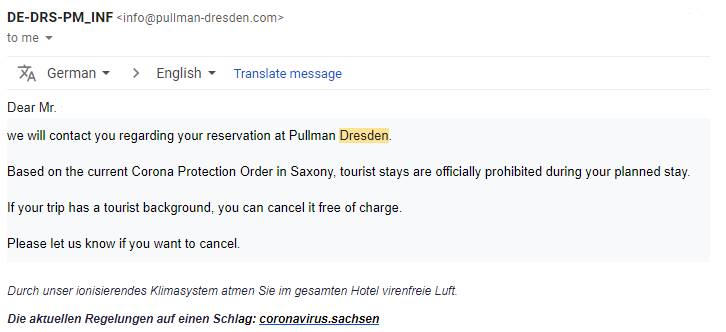
Even a full two weeks in Germany was not as easy as it seemed. Germany, like many other countries, have both federal and state governments, both of them responsible for different set of Covid-19 rules. One of the cities we were intending to visit, Dresden, was in the state of Saxony, which banned any form of tourism in late 2021. We only found out about this when the hotel wrote to us a week before the trip, asking that we cancel the reservation if we were planning to visit for holidays.

Ich verstehe nur Bahnhof. At this stage, it was clear to me that I was faitgued with trip planning, and all I’m reading was yet another set of (complicated) regulations.

Needless to say, Saxony was off the books, and once again, we are back to the drawing board.

Eventually, we landed on a (almost) round Germany trip, kicking off with Cologne, before spending the second week in Bavaria down south, with the last couple of days back in Frankfurt.

Flight planning

Right from the onset, the intent was to burn the long-accumulated miles on flights. After all, availability was aplenty, wasn’t it?

Alas, the availability wasn’t as plenty as one would thought. Getting out of Singapore was easy; coming back on a VTL flight was like searching for a needle in a haystack. With the last-minute change in plans, the search became frantic: I ended up looking in another direction, and landed myself a seat on Finnair, via Helsinki.

Not a bad thing, I thought, given that I have not tried the Finnair product before.

Flight Reviews
Singapore Airlines B777-300ER, Business Class, Singapore – Frankfurt
Finnair A320, Business Class, Frankfurt – Helsinki
Finnair A350-900, Business Class, Helsinki – Singapore

What happened to my return leg on Singapore Airlines then? This was one helluva excursion to Singapore Airlines “world-class” service centre at Ion Orchard. Because of the change in plans, I personally spent about three mornings at Singapore Airlines’ service centre to get my tickets amended.

While Singapore Airlines offers unlimited free change for tickets to entice people to book with them, the change experience was far from ideal. Reports from the ground was a three-hour wait time for its customer service hotline, while the queue time at the Ion service centre was not any better: anything between 4-6 hours. What complicated matter was the suspension of VTL flight tickets announced on 22 Dec for a month, leading to a surge in last-minute bookings and change request.

Five star for branding, zero for customer service.

Hotels

A two-week journey means countless hotels. You will notice most of these hotels are Marriott properties, this is mostly planned to chalk up as many nights as possible in the new membership year in my pursuit for Platinum.

The hotels we chose for this trip will be a mix of budget-friendly and mid-tier hotels, with nothing too outrageous given the travel budget constraints of the group.

While it’s always fun to review awesome hotels, the intent is also to build and provide a little more insights to hotel options that are great value for money for those who may be starved of points and need to pay cash for accommodation.

Hotel Reviews
Moxy Hotel Frankfurt Airport
Courtyard by Marriot Cologne
Sheraton Carlton Hotel Nuremberg
Aloft Munich
Hilton, Frankfurt Airport
Gekko House, Frankfurt

Moxy Hotel, Frankfurt Airport

Moxy Hotel, Frankfurt Airport

Moxy Hotel is Marriott’s relatively new, budget-friendly hotel brand, with over 60 properties across North America, Europe and Asia. The hotel has come upfront to say that its rooms are tiny, but all properties also include social spaces, clearly targeting the younger travel crowd who may be budget conscious. Moxy has a cheeky vibe to it, so it will be interesting to see what the hotel can offer beyond a room.

Courtyard by Marriott, Cologne

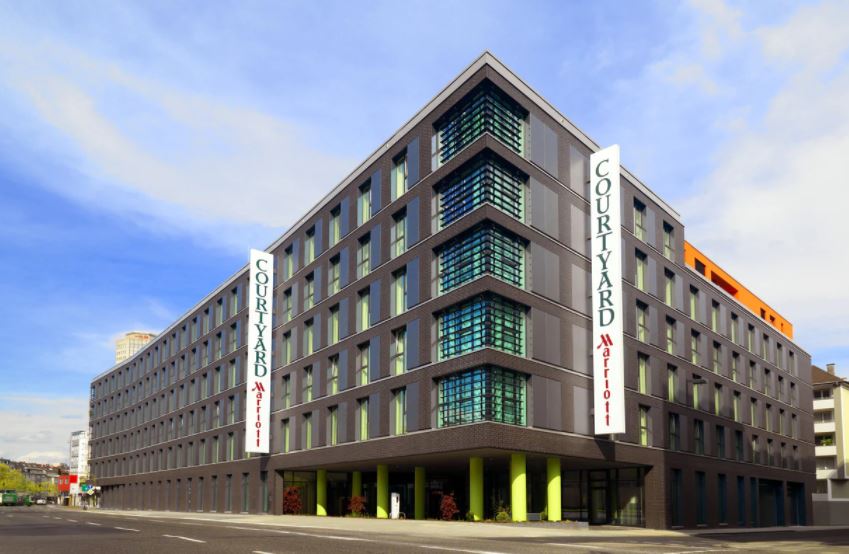
Courtyard by Marriott, Cologne

To be completely honest, I wasn’t looking forward to this property at all. This is your typically business hotel, catered for your one-night business travellers, so that also means no-frills, no-personality. In short, Courtyard doesn’t scream anything at all, so spending four nights at this property wasn’t exactly going to appeal.

But what gives? Location and price. It was in the Old Town, minutes away from the epicentre of where the attractions are, and incredibly affordable. So four nights, here we go.

Sheraton Carlton Hotel Nuremberg

Nuremberg was meant to be a pit stop to fill up some time before we head to Garmisch-Partenkirchen, where we had a confirmed, unchangeable hotel reservation for three nights.

This also means the hotel here is purely perfunctory, which means location and price are both prized above everything else.

While the Sheraton brand is arguably strong in Asia with its luxe touches and premier hospitality, the same can’t be said of its counterparts in other parts of the world. How will this stay pan out? We shall see.

Aloft Munich

Aloft Munich

Aloft needs no introduction; with a tagline “A Vision of W”, you will know it’s kind of like a lesser cousin to that flashy boy who’s everyone’s favourite.

Aloft is a select-service brand, and the Munich branch is excellently located: right across from the Munich Hauptbahnhof station. This makes the property a hot favourite for those who values location over everything else; there’s a direct train line to the airport, Marienplatz is just two S-Bahn stops away and if you are looking to do day trips, they all depart from near here.

The best part? The hotel was offering a deal, so this only went at slightly under €100 per room, per night.

Hilton, Frankfurt Airport

Hilton Frankfurt Airport

Having stayed at Moxy the first time round, we decided that we should try a property that’s at least located within walking distance from the airport itself, and settled on the Hilton Frankfurt Airport.

The hotel is located atop the long distance train station, within The Squaire mall right across the skywalk (bridge) from Frankfurt Airport Terminal 1.

As a diamond member, there were also some perks that came pretty convenient even as I book entry level rooms, such as free breakfast even for the second room I booked.

The Gekko House, Frankfurt

Gekko House

This Tribute Portfolio property was the second Frankfurt hotel I chose to stay in, when I had a couple of last days alone in Frankfurt. Travelling alone at this stage also means twice the price for hotel stays, so I looked at value-for-money options without breaking the bank and Gekko House came up.

Looks fun, so here we go.

Bonus: Reindl Partenkirchen Hof

Reindl Partenkirchen

Reindl Partenkirchen Hof is a family-run inn in the ski resort town of Garmisch-Partenkirchen. The hotel is decked out in classic Bavarian traditional fittings, so it’s probably the closest you will get to a historic feel of what a Bavarian house feels like.

Let the humble look of the place fool you not, this place often books out way in advance and also requires a multiple-night stay during the peak ski season. We had a chance at a booking, so let’s see how this turns out.

Covid-19 test requirements

All travellers to Germany over the age of 6 must be fully vaccinated to qualify for quarantine-free travel. Germany also does not require any pre-departure tests nor on-arrival tests for fully vaccinated travellers.

However, rules within each German state may vary. All establishments within the country largely operate under one of these three rules:

  • 3G: vaccinated (German: geimpft), recovered (genesen) or tested (getestet
  • 2G: vaccinated or recovered
  • 2G+: 2G, plus either a booster or a valid current test

Depending on the state you are in, most establishments currently (February 2022) have a 2G+ requirement before you may enter, including restaurants, bars, and even leisure stays in hotels.

However, Germany is set to further relax restrictions in March, with restaurants and bars becoming 3G on 4 Mar, and subsequently dropping all restrictions from 20 Mar.

Regardless, as with all travel, research before you go.

Returning to Singapore, VTL travellers will now only require a pre-departure ART test taken within 2 days of departure day, as well as a supervised ART at an approved test location within 24 hours of arrival into Singapore.

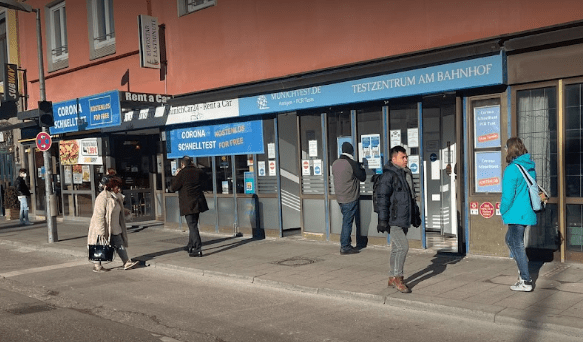
Germany has many free rapid test centres around in the city, and the results will be sent to you via email within 30 minutes of your test. These tests are valid for travel to Singapore, as long as there’s a corresponding identifier such as your passport number or date of birth on the test results along with your name.

Free testing centre in Munich

Final thoughts

This trip is the first extended holiday I’ll be taking. While the itinerary as far as flights and hotels are concerned are not as fancy as I would want it to be, but this is probably a more realistic itinerary and choice for the average traveller, so it will provide a good perspective on mid-tier and budget-friendly options you might consider.

The actual reviews will come in a while, so this page will be updated as and when the reviews are completed.

Singapore relaxes post-arrival swab requirements; waives tests and quarantine arrangements for recently recovered travellers

Some good news for travellers: Singapore has relaxed some inbound travel requirements, including a relaxed post-arrival testing regime, as well as exemptions for recently recovered travellers.

Singapore health authorities have made two significant tweaks to its border health measures last week, which should make travelling slightly easier. This includes a relaxation of the post-arrival testing regime from today (24 January 2022) for travellers entering the country via the Vaccinated Travel Lane (VTL) programme, as well as some important exemptions for travellers who have recovered from Covid-19 within the last 90 days.

Relaxed self-testing regime from 24 January 2022

The daily testing regime, in place since Omicron first hit Singapore in November last year, will now be replaced by self-administered antigen rapid tests (ARTs) on days travellers need to leave their accommodation. This is a significant improvement from the previous rules, including a daily swab plus two supervised tests on Days 3 and 7.

No more supervised swabs at Quick Test Centres

Travellers arriving on VTL flights and entering Singapore will only be required to complete an on-arrival PCR test (S$125) at Changi Airport (no change), followed by ARTs on days 2 to 7. The actual policy communication is as follow:

“[VTL travellers] will only be required to do unsupervised self-administered ARTs from Day 2 to Day 7 of their arrivals if they need to leave their place of residence or accommodation.”

Singapore Ministry of Health

In addition, results from your self-administered ARTs will no longer need to be reported to MOH via the self-reporting system.

Note that the ART kits are not provided, travellers will need to purchase and use their own kits. If you are travelling or returning to Singapore, note that you are not supposed to go out to purchase them during your self-isolation period as you wait for your PCR test results. Otherwise, these ART kits are available at most pharmacies in Singapore, or available for purchase online from marketplaces such as Shopee or Lazada.

What if I test positive when I do my own ART?

If you test positive from a self-swab and have minimal or no symptoms, the good news is that you can self-isolate at home and no longer need to get a PCR confirmatory test.

Instead, you will follow Ministry of Health’s Protocol 2, as follow:

  • Go home and self-isolate immediately.
  • Stop going to work and cancel your social activities to protect others from possibly being infected with Covid-19.
  • Self-isolate for 72 hours at home or in your accommodation. This will allow you to safely recover, monitor your health and avoid spreading the virus further.
  • At the end of 72 hours, you should perform a self-administered ART.
  • You can stop self-isolation and resume normal activities when you get a negative result.
  • If you continue to test positive, continue to self-isolate and self-test daily until you obtain a negative result, or until 12pm on Day 10 for vaccinated individuals, whichever comes earlier.

Test and quarantine exemptions for recently recovered travellers

One other key development are for travellers who have recently recovered from Covid-19.
Travellers who have recovered from the virus within 90 days of their last infection will be exempted from all testing and stay-home notice requirements. This includes any required Stay-Home Notices (SHN), pre-departure tests or on-arrival tests.
Travellers will need to furnish the following, which must be in English or accompanied with an English translation:

  • A positive Covid-19 PCR test or professionally-administered ART result 7-90 days (for fully vaccinated travellers) or 14-90 days (for partially or unvaccinated travellers) before the date of departure for Singapore.
  • A discharge memo that states the traveller’s name, and at least one other personal identifier such as the date of birth or passport number corresponding exactly with the information in the passport used for entry into Singapore. It should also state the date of infection or the discharge date, which must be within 7-90 days (for fully vaccinated travellers) or 14-90 days (for partially or unvaccinated travellers) before the date of departure for Singapore. The memo must also be issued by a relevant state authority or licensed medical professional.

This is great news because it will allow those who have recently recovered from Covid-19 to travel or return to Singapore after only 7 days, instead of the current 14 days.

Recently recovered travellers can also return earlier than 7 days

For people who have unfortunately contracted Covid-19 just before returning or travelling to Singapore, they may be permitted to depart for Singapore if they test negative for Covid-19 via a PCR test or professionally administered ART at least 72 hours after their initial positive diagnosis, even if it’s within the 7-day period for fully vaccinated travellers or 14-day period for partially or unvaccinated travellers.

However, the full testing and any quarantine requirements will still apply should this group of travellers decide to return earlier.

In any case, our recommendation is still to wait till the 7-day (or 14 days for partly or unvaccinated travellers) before travelling to Singapore.

Final thoughts

This turn of events is an affirmation as to how Singapore has understood Omicron and its management plans within the community.

Health Minister Ong Ye Kung has come out to say in no uncertain terms that he expect another big wave of Omicron cases to come in the weeks ahead. Despite that, the current travel posture and the most recent changes reflects Singapore’s commitment to keep its borders open as we try to achieve an endemic state.

The biggest news are for those who have recently recovered from Covid-19, with the waivers of all tests and quarantine requirements. This means that there is a lot more flexibility in planning for travel, as well as for those recently infected while overseas and wishing to come back to Singapore as soon as possible.