Qantas Frequent Flyer has added Philippine Airlines as a new redemption partner to its fold, allowing members to book Classic Reward seats across the entire PAL network.
For Asia-based members, this is a meaningful addition to the award network, especially if you are planning your next Filipino holiday.
What’s new
Frequent Flyers can now use their points to reach 15 island destinations across the Philippines, including Boracay, Cebu, Palawan and more. Beyond the Philippines itself, you can also redeem your Qantas points for Philippine Airlines-operated flights to USA, Canada, Australia and even the Middle East.
The arrangement is two-way, so Mabuhay Miles members can also now redeem miles on Qantas domestic and international flights, including regional Australian destinations such as Adelaide, Hobart, Byron Bay, and Cairns. Outside of Philippines, I imagine there wouldn’t be many Mabuhay members anyway, so this may not be of interest.
Notably, this new partnership marks Mabuhay Miles’ fourth airline collaboration as PAL continues to expand its global loyalty footprint. Philippine Airlines most recently signed a similar tie-up with Qatar Airways, allowing members of both programmes to redeem miles for flights on both airlines.
A redemption-only arrangement for now
Before you get too excited: the partnership only allows you to redeem for flights on Philippine Airlines. You will not be able to earn Qantas points, nor can you receive lounge access (even Qantas lounges!) if you are travelling on Philippine Airlines.
From Singapore, you are looking at 23,000 points and $177 in fees for a one-way economy class ticket to Manila, and business class will cost you 46,000 points plus $187 in fees.
Most domestic destinations in the Philippines will unfortunately require a one-stop journey via Manila.
For a journey to Davao, this will jack up the cost of redemption to 26,500 points and $205 in fees in economy, and for business, this goes up to 52,900 points and $215.
You can even go beyond Manila, to anywhere on Philippine Airlines’ network from Japan, Australia and even the US. I’ve outlined some of the redemption costs below for ease of reference.
Destination from Singapore
Economy (one-way points + fees in S$)
Premium Economy (one-way points + fees in S$)
Business (one-way points + fees in S$)
Tokyo, Japan
28,200 + $218
–
73,400 + $227
Beijing, China
28,200 + $205
–
73,400 + $214
Sydney, Australia
50,100 + $298
97,800 + $298
124,000 + $298
Honolulu, USA
51,800 + $374
98,200 + $384
125,400 + $384
San Francisco, USA
70,700 + $374
167,000 + $384
Toronto, Canada
76,100 + $320
182,900 + $330
One important thing to note is that Qantas calculates a mixed cabin itinerary as the sum of redeeming two individual sectors. Given that Philippine Airlines only offer premium economy on some routes, please be careful if you are booking — sometimes the premium economy option is more expensive than the business class option!
Redemption costs to Honolulu – See how Premium Economy is more expensive!
Final Thoughts
While Philippine Airlines is not exactly a world-class 5-star airline, this new partnership is a welcome addition that unlocks redemptions to new destinations.
With Philippine Airlines signing two new partnerships with oneworld carriers, one can only wonder if this is a sign of the airline considering to join the alliance. If so, this is definitely a boon for oneworld to further entrench its Asian network.
Nonetheless, given that Philippine Airlines does not belong to any alliance at the time of writing, their award availability should be fairly high since only a small number of partner programmes have access to the inventory. I’d imagine that Philippine Airlines will be a viable option to fly to some destinations out of Asia, such as domestic destinations within the Philippines, as well as some further destinations such as Honolulu, USA, Vancouver and Toronto, Canada.
This is a long overdue review, but I thought it might still be good to put up one given the dearth of premium economy reviews, as I have realised while looking at whether it’s worth its price.
Having to head off to London for a short trip to attend to a personal matter earlier this year, I was choosing between Singapore Airlines or Qantas in premium economy, and decided to go with Qantas this time round.
While I have previously tried both Qantas’ first and business cabin, I was pretty excited to check out its premium economy cabin this time round for a couple of reasons. Right before Covid-19 hit Singapore, I had a trip planned to Sydney to try this cabin back in 2020, but obviously the trip got called off. This cabin is also a little bit of a unicorn, given that Qantas only has this class of travel on its A380s and B787s, of which Singapore only gets 2 A380 services a day: one to London and one to Sydney.
Qantas QF1 Singapore (SIN)– London Heathrow (LHR) 28 February 2023 Scheduled departure: 11.55pm Scheduled arrival: 6.25 am (+1 day) Duration: 13 hr 50 min Aircraft: Airbus A380-800 Seat: 34B (Premium Economy)
So what’s so premium about Premium Economy?
In an era not too long ago, business class seats were generally just a nudge up from economy class: a wider seat with a better recline, better food (remember, in the olden days, economy class food was actually quite a treat), and the perks of being upfront in the cabin.
But that era is long gone and forgotten by many (except if you are a frequent flyer in domestic US). Business class today, at least in the international sense, have evolved into an excellent experience for many if not most travellers, offering flat beds, sufficient dining, lounge access, and actually treats you like a normal human being, while economy class has all but improved since decades ago, with reduced practically everything from seat width to meal sizes.
Correspondingly, the price gap between the two has also widened, with business class seats going for as much as between 4 to 8 times of economy class seats. In airline economics, the pointy end of the cabin typically brings in most of the revenue for the flight.
So there is obviously a gap in between, airline managers said. What will people be willing to pay a good premium for to make air travel more bearable?
Enters premium economy.
The case for premium economy is a peculiar one. It first came into the market in the early 1990s with EVA Air purportedly being the first to do so, and many long haul airlines followed suit.
Singapore Airlines itself introduced its own version of premium economy, called the “Executive Economy”, in its non-stop flights between Singapore and New York, on the A340s, back in 2004.
This is what Singapore Airlines said about these seats in its annual report:
Designed in a very spacious 2-3-2 configuration, Executive Economy offers the industry’s widest economy class seats at 51cm, with an expanded seat pitch of 94cm. The seats also come with a larger 23cm personal monitor and laptop power supply.
Singapore Airlines Group, Annual Report 04/05
However, Singapore Airlines took the cabin off the market later in 2014. The latest wave of premium economy cabins being widely available probably came in the last ten years or so, as demand for a in-between product picked up. The cabin has become so commercially popular that even carriers such as Emirates who are traditionally resistant to it, have also jumped on the bandwagon.
Qantas Premium Economy
Qantas runs a pretty solid premium cabin, with its first and business class cabins stacking up fairly well against major international airlines. As far as premium economy is concerned, this is a lesser researched and reviewed area, but for good reasons.
Qantas A380 Premium Economy cabin
The Aussie airline has an incredibly limited offering of its premium economy cabins, as only its fleet of 10 A380 jumbos and and 14 Boeing 787-9 birds have these seats.
Qantas introduced premium economy in 2008, a good 15 years back. The first generation premium economy seats were available first on the A380 and later on the Boeing 747s, but this seat was never placed on any other aircraft that Qantas operates. Even on the A380, the airline originally installed only 35 such seats, even lesser than the 36 on the B747!
The next refresh took place only in 2017, when Qantas introduced the Dreamliner into its fold, making it only the third aircraft type flying the Qantas flag to feature premium economy. The same seat was then used in the reburbishment of the A380, which is the highlight of today’s review.
Even up to as recent as just before the pandemic, the availability of premium economy on Qantas is therefore fairly limited.
The new Qantas A380 features four cabins – first, business, premiun economy and economy, with the premium economy cabin located on the upper deck, at the rear of the deck behind the business cabin.
The main deck contains both first and economy cabins. I have previously done a First class cabin review on this route here.
Prior to Covid-19, Qantas launched a refurbishment project for its fleet of 12 A380s. Both the business and premium economy cabins got a complete overhaul. In premium economy, this meant a significant upgrade to the latest seat first debuted on the airline’s Boeing 787-9 Dreamliner fleet.
Qantas has chosen to go with the Thompson Aero seats, with a customised by leading Australian industrial designer and design consultant for Qantas, David Caon.
The premium economy cabin is spread across 10 rows, with a 2-3-2 seating configuration, for a total of 60 seats.
The cabin reduces in the number of seats across each row towards the rear, where it’s closer to the galley, so if you are slightly claustrophobic I would recommend avoid rows 38 to 40.
The premium economy cabin also comes with its own dedicated toilets, which is a rarity. This puts the passenger to toilet ratio at 30:1, which is still a decent figure. The pair of toilets are located behind the cabin near the galley.
There is also a spiral staircase at the rear of the cabin that leads downstairs to the economy cabin, but there is a gate that is closed throughout the flight so you shouldn’t be expecting anyone coming up or down, save for crew members.
Checking in
Qantas operates out of Changi Airport Terminal 1, Row 8.
Check in Row 8, Changi Airport Terminal 1
Qantas uses self check-in kiosks for its passengers which peppers the front of the counters. As a premium economy passenger, you will be directed to one of these kiosks to check-in, before heading to the baggage drop counters to drop your bags. But of course if you are holding oneworld
Note that Qantas closes check-in a full hour ahead of all its A380 services, so be sure to arrive ahead of time if you have the habit of cutting it close.
Do you get lounge access?
The short answer is: typically no. Premium economy class passengers by default do not get lounge access, so you will have to rely on your frequent flyer status to gain access.
If you are a Qantas Frequent Flyer Gold, Platinum or Platinum One member, you can use the Qantas Business Lounge (for Gold or higher members) or the very awesome Qantas First Lounge (for Platinum or higher members). Similarly, oneworld sapphire and emerald members also get access to the business class and first class lounges respectively.
Qantas First Lounge Singapore
Boarding
QF1 is a through service from Sydney to London via Singapore. Commencing from Sydney, the flight makes a brief stop in Singapore before continuing on to London.
The flight today arrived about an hour late, and therefore the departure is expected to be delayed as well.
When I got to the gate about 11.30pm, boarding was just about to commence, which meant that there was a good chance we could still depart fairly on time, despite the torrential rain.
Qantas segments the boarding gate into two portions: one for all premium passengers, including first, business and premium economy, as well as all oneworld status holders; while all other economy class passengers are kept to the rear of the boarding area.
Once boarding commenced, passengers requiring special assistance and first class passengers are asked to board first. Shortly after, business class and premium economy passengers are also invited to board.
There is an aerobridge that leads directly to the upper deck. As both business and premium economy cabins are located on upper deck, you might be better off holding off until business class passengers are also done boarding before heading on board, given that the premium economy cabin is located at the rear.
Once you are at your seat, you will find a menu, a full sized pillow, a full fluffy blanket, as well as an amenity kit placed on the seat for you.
Amenities at the seat
The seat
Qantas has gone with the Thompson Aero seats, with a customised by leading Australian industrial designer and design consultant for Qantas, David Caon.
Qantas A380 Premium Economy seat
Arranged in a 2-3-2 configuration, there are 60 seats across 10 rows at the rear of the top deck. Qantas’ premium economy seat measures 20.5 inches wide across, with a pitch of 38 inches. As a point of comparison, Singapore Airlines run 19.5 inches wide with the same amount of pitch, so you may or may not notice the additional inch.
The seat also reclines a full 9 inches, although it feels much more than that. This is where the Thompson Aero seat shines through. The seat is held in a shell of its own, which moves only slightly when you recline, therefore reducing the impact to your seat neighbour behind you. Upon recline, the seat slides forward slightly, with the seat lifting up to form a cradle to hold you. This solves the economy class seat problem of slipping of the seat in a reclined mode, and thereby allowing one to sleep better.
Adjustable footrest with netting
The seat also comes with a footrest attached to the bottom of the seat in front. When put down, the footrest also comes with a netting, so you can stretch your feet.
The shell nature of the seat also provides a ‘wing’ of sorts, offering a (false) sense of privacy. The headrest were however rather amazing: despite being fully adjustable, they also hold pretty well against pressure of laying on them, so that means they don’t need a lot of adjustments throughout the flight to keep them in the same position.
Adjustable headrest in all imagineable directions
Apparently, after the flight I read that you could actually slot your pillow over the headrest so that it stays there while you sleep! I obviously didn’t get to try it, but it looks like a very well thought out design.
Integrated ergonomic pillow, as Qantas styles it (photo: Qantas)
Between seats, there are unmovable armrests, where the trays are stowed. At the tip of the armrests is also a small surface where you can place a drink, but it’s usually not a good idea to do so, as it’s pretty easy to accidentally brush against the glass and push it off the surface.
The audio jack, as well as a USB port, can be found along the inner side of your armrest, so if you are slightly bigger in build you may find them cumbersome to use.
USB and audio jack
Each seat comes with a 13.3″ touch screen entertainment screen, with a high resolution and an intuitive user interface (more on this later). Under the screen was a nifty storage area, which was great for putting your phone in. Beside it is yet another USB port and also the release catch for the footrest.
Under screen storage, USB port, footrest release
Under this section at the seat level, was another storage area, where the in-flight magazine and safety briefing card can be found. While this is a larger storage area, I found them not ideal for placing thicker items, including my laptop, so you may want to avoid using that for another more than a magazine or an iPad.
Entertainment screen and literature pocket
There is also a power socket found next to the footrest, although there’s only a single socket for me and my seatmate to share. Fortunately we did not have to use it during the flight, so that was no problem at all.
The service
Upon being seated, this is when Qantas’ premium economy service starts, with a pre-departure drinks service.
The cabin crew dedicated to premium economy came through the cabin with a tray of pre-poured drinks, including a choice of Australian sparkling wine or water for a tipple before push-back.
Unfortunately, due to an engineering issue involving the engine, coupled with inclement weather, the departure time was further delayed by about three hours. While the captain was proactive in offering updates, the crew also came around rather frequently to offer refills and some packaged snacks.
The original scheduled push-back time was 11.55pm. By the time the captain updated that the engine issue was resolved and we were ready for take-off, it was 2.10am. By this time, I was probably about three glasses of sparkling wine in, while most of the rest of the cabin was soundly asleep, including my neighbour who has covered himself with the blanket.
At 3am, we finally hit the runway, with lights off, and took off on our 14-hour journey to London.
Shortly after we went into cruise mode, the cabin lights came back on, albeit half lit. The cabin crew quickly wheeled out their cart to begin the first meal service, supper – although by this time it was more like an early breakfast in Singapore.
For supper service, there are three options, but because I was given a wrong menu, I didn’t quite catch what were the options apart from “beef curry”, something something “chicken”, and a vegetarian pasta. I went with the beef curry.
I was pleasantly surprised at what came. A single tray was laid out in front of me, but it was beautiful presented, with a multi-course meal served up in proper tableware.
Supper service
The tray comprised a side salad, a side plate for bread and butter, the main course in the middle, as well as a slice of cake for dessert.
After the tray was presented, the cabin crew offered sliced sourdough to go with my meal, as well as a choice of water and drinks. I took a glass of Shiraz and some sparkling water, and happily started on my meal, even though I was terribly sleepy.
I walloped my meal in less than 20 minutes, and the crew then again promptly moved through the cabin again, clearing the trays and offering a round of coffee and tea. Against good judgement I went for a cup of coffee, before heading off to sleep at about 5am Singapore time.
Coffee service
About halfway through the flight, while we were cruising over the Middle East at about 11am Singapore time, the sky was bright. Most of the cabin seemed to still be sleeping, but I was bright awake due to the sunlight that came seeping into the cabin.
I was feeling a little hungry, so I called for the flight attendant, who came around and offered two options of a hot refreshment: a choice of a mushroom and cheese pastry, or ratatouille. I went with the pastry, along with another glass of wine since my aim was to get back to bed after the snack.
Mushroom pastry and red wine
The pastry fared much better than what I thought it was going to be, being fluffy and packed a punch in terms of flavour. I savoured every bite of it while enjoying another movie.
Given the overnight nature of the flight, note that the mid-flight refreshments will not be offered proactively, you will have to request for it. Mid-flight refreshments will only be available up to about 3.5 hours before the end of flight, after which they will be discarded as the cabin crew prepares for breakfast.
If the hot snack is too heavy for you, there is also a self-service snack bar prepared at the galley. Snacks include cheese and crackers, fresh whole fruits, sliced cake and chocolates. These are also the same snacks available for business class passengers!
Snack bar
After my little refreshment, I went back to bed and snoozed more, until the cabin lights were switched on in time for breakfast about 2 hours before landing.
Breakfast was a choice between a continental breakfast, comprising a large fruit plate, bircher muesli and a pastry, or a hot English breakfast. I went for the hot breakfast and it was pretty much a feast.
Pre-landing breakfast
Even without the side of fruit and muffin, the hot breakfast was pretty much a meal in itself.
In-flight entertainment
Let’s talk wifi first, given it’s all the rage today: Qantas does not offer any form of wifi access for all its international flights. Despite introducing high speed wifi domestically in Australia since 2017, it has not made any progress on this front for its international network, meaning that it is now becoming one of the few major airlines to not offer connectivity on board.
If this is a major deal breaker, you may wish to consider other optios.
In terms of in-flight entertainment, Qantas offers a 13.3″ screen in premium economy, significantly larger than its economy counterpart. The new premium economy seats also meant that these screens were upgraded for this cabin, so it has a more responsive screen and better display than the economy class screens.
Content wise, Qantas has several notable offerings in place, including original content from Stan and HBO. The airline also offers ‘box sets’, which are essentially entire seasons of popular TV series.
Headphones
Headphones are also offered in this cabin, which are the same as those in business class. Unfortunately they are not noise cancelling, so bring your own if you prefer to use those.
Amenity kit
Qantas offers an amenity kit in premium economy as well, although this is not as flashy as the one you receive in Business class. The amenity kit is a simple pouch made of felt, with a simple splash of offerings comprising a dental kit, eye shade and socks.
Final thoughts
I’m pretty much impressed by Qantas Premium Economy experience, with both the hard and soft products exceeding my expectations.
The seat is arguably one of the best-in-class, and I have slept arguably the most in a non-flat bed on this seat. The little details and functions around the seat features are also well thought out, maximising every bit of space the seat could offer. The amount of legroom is excellent for me, although it might still be a little tight for taller folks.
Service wise, I would argue that the Qantas Premium Economy is probably a notch down from business class, rather than a small step up from economy as most other airlines do. Meals are served on proper tableware instead of something similar to economy class grub, which may not sound like a lot but it does elevate the dining experience. In addition, Qantas offers its own selection of wines specially curated for the cabin, which again adds a nice touch to the service.
Overall this is probably one of the best splurge of money, coming in at almost half the price of business class. If you do ever come across a sale for Qantas premium economy – take it and try it for yourself.
Qantas made quite a fair bit of news in Singapore just before Covid-19 with the grand opening of its first class lounge, which sadly shuttered not long after it was officially opened.
The good news is, the lounge survived the pandemic; it is now reopened and received guests at full force, just as with before.
I have had the fortune to experience the first class cabin some years back, but it was from Sydney to Singapore. I had such a great time, it created a new bucket list item for me, to try the same product again but on a much longer flight, from Singapore to London or vice versa.
However, the first class cabin across all airlines is some what of a unicorn in the post-Covid era. Even with a bank full of points, it takes sheer determination and an awful lot of patience to find any kind of award availability.
Qantas QF1 Singapore (SIN)– London Heathrow (LHR) 20 November 2022 Depart: 11.55pm Arrive: 6.25 am (+1 day) Duration: 13 hr 50 min Aircraft: Airbus A380-800 Seat: 4F (First Class)
The Qantas A380
The A380 needs no introduction – the famous double decker jumbo is a favourite amongst both airlines and passengers; the latter for the number of passengers it can pack, while it also calls for a stable ride.
Prior to Covid-19, Qantas launched a refurbishment project for its fleet of 12 A380s. While business class and premium economy got a complete overhaul, the first class cabin saw relatively less major upgrades, including a reupholstering of the seats and a brand new in-flight entertainment screen.
Through Covid-19, Qantas has grounded all of its aircraft, only to bring it out of storage earlier this year in 2022.
Sadly, Qantas has retired two of the big birds, with 10 superjumbos left in its fleet. Even with, only five of the aircraft are currently in service with the other half still in storage.
At the time of writing, Qantas is only operating the A380 on two routes: QF1/2 between Sydney and London via Singapore, and QF11/12 between Sydney and Los Angeles.
Checking in
Qantas operates out of Changi Airport Terminal 1, and currently operates out of row 8, sharing the row with its low cost subsidiary Jetstar.
Check in Row 8, Changi Airport Terminal 1
The configuration has now changed a little since the pandemic. There is an agent stationed at the front of the kiosks and counters to check that you have all the necessary documents, before leading you to a self check-in kiosk.
Qantas uses self check-in kiosks for its passengers which peppers the front of the counters, but as a First class passenger feel free to skip ahead and head straight to the counters for assistance.
By the time I got there, check-in was almost closed and there were hardly anyone there, hence check-in was relatively fast and smooth.
Note that while check-in for most airlines typically close 45 minutes before the flight, Qantas closes check-in a full hour ahead of all its A380 services, so be sure to arrive ahead of time if you have the habit of cutting it close.
Qantas First Lounge
Qantas First Lounge – Singapore
One of the key highlights of the Qantas First experience is the Qantas First Lounge in Singapore. Unfortunately as I was only able to reach the airport right before check in close, I headed straight to the gate.
Milelion did a wonderful job of a recent review for the lounge, so you can find out more about it there.
Boarding
QF1 begins in Sydney, and makes a quick stop in Singapore before continuing to London. The flight today arrived about 40 minutes late from Sydney. Correspondingly, the scheduled departure was also slightly delayed, and according to the Qantas app, it was scheduled for 12.20am.
When I got to the gate about 11.20pm, the set of operating crew were still waiting to go onto the aircraft. Eventually they headed on in shortly after.
Departure from Singapore
Boarding eventually commenced closer to 11.40pm, 15 minutes away from the scheduled departure time. First class passengers, along with passengers with young children, the elderly as well as oneworld Emerald passengers were invited to board first.
I got onto the cabin a little later than everyone else, and the First class cabin was already in a furry of action when I stepped on. The moment I got onto my seat, one of the cabin crew, Luke, came over and introduced himself and asked if I’ll like a champagne (the answer is “always”). He also swiftly took my jacket to keep in the closet.
Minutes later, the cabin service manager Ginny also came by and introduced herself, as well as the names of the entire team, including Luke and Tania, working in First class. She also asked for my size, and quickly brought along a set of pyjamas, bedroom slippers and an amenity kit.
Luke returned minutes later with a champagne glass and a set of canapes. The champagne on offer today was the Pommery Cuvee Louise 2005, which was poured at my suite.
Pre-departure champagne and canapes
Subsequently, when everyone in First was more or less settled down, another crew walked around offering top-ups for whoever who wanted another pour, or five.
The two canapes on offer today are: caviar tart with crème fraiche, as well as a barbecue pork egg roll dressed in hoisin sauce. It’s rather novel to be served snacks upon boarding, although it may be rather pointless given that most passengers may have fed themselves at the lounge prior to boarding anyway.
Qantas first class canapes
The portions are also rather tiny as with all canapes, so if one was famished, this would have only teased one’s appetite in anticipation of something more.
My only feedback about the canapes was the need to use one’s hands to eat with it. It would have been appropriate to offer a hot towel service, or perhaps a disinfectant wipe if no cutleries were offered.
Eventually, we pushed back shortly after 1am, more than a full hour later than the scheduled time.
The seat
I have earlier done a review of the Qantas First class service from Sydney to Singapore, and the seat product has seen a modest upgrade since then. The cabin remains unchanged with 14 seats in a 1-1-1 configuration, but what has changed is a reupholstered seat, improved seat controls and an upgraded in-flight entertainment screen.
Qantas first class reupholstered seats (photo: Qantas)Qantas first class in-flight 18″ entertainment screen
To recap, Qantas refer to its 14 First Class products as ‘suites’, which are in fact open seats. Packed in a 1-1-1 configuration, the cabin has 5 seats on each side of the plane (seats A and K), and 4 in the middle (seats F).
Each of the seat is designed to face forward during take off and landing, but while in the air, the seat can be rotated to an angle for you to stretch out and for more privacy. The window seats swings towards the window, while the middle column F seats swings towards the left.
As the seat swivels, there is a little ottoman underneath the foldable screen, one little known fact is that this allows for a companion in first class to dine together with you by sitting across you.
For those in the middle seats, there will also be a privacy screen that you can control and put up to avoid the awkward eye contact with anyone walking down the middle aisle, but this screen is modest at best.
This is why you need a privacy screen
The screens on my seat (as well as those in front of me, I later realised) couldn’t quite be pulled up all the way, but given that the lights were off most of the flight time, it didn’t bother us.
Privacy screen on the left of the screen (when put down); ottoman for buddy dining
The seat comes with a set of controls on the side panel, where you can adjust practically everything in your suite, from lights, seat position as well as the privacy screens. This is also where the call button is located, but in all honesty most of my flight I rarely used it.
Seat control panel
For those who constantly require good ventilation, you will be pleased to know that there are at least two air vents at the seat, one in front of you and another at the side.
Air vent at the top of the seat
For those who are in need of power sockets, they can be found right in front of you, at the bottom of the seat in front. With the upgrade the socket now comes with a USB charging port also, which is handy when you need to charge your phone while you sleep.
charging sockets
Right after meal service, the cabin crew offered to turn the seat into a bed for me. While that was happening, I went up to check out the in-flight lounge at the upper deck during this time (more about this below).
When I returned, my bed was fully made and ready for a good night’s rest.
Qantas A380 bed
Qantas uses bedding and quilts from Sheridan, which includes a thick memory-foam sheepskin mattress as well as a fluffy duvet to line the fully flat seat. You also get two pillows, one bigger one and a smaller, firmer one. There is also a pillow menu on board, so feel free to request for something else such as a memory foam pillow. For someone who usually can’t sleep on board, this heavenly setup also meant that I managed to pull about 6 hours of uninterrupted sleep on the flight.
Meal service
On this overnight flight to London, Qantas offers a supper and breakfast service.
Prior to take off, as we were still on the ground, one of the crew, Tania, came around taking meal orders for supper, which was to be served right after take off.
We ended up departing at about 1 am. With that, service only commenced at almost an hour later at 2 am Singapore time.
Supper service
The supper service was not exactly the most elaborate; you have a three course meal: a starter, a main course, and a dessert.
The options are below:
First class menu – SupperFirst class menu – supper & breakfastFirst class menu – beverages
For my first course, I went with the signature steak sandwich. Having had it a couple of years back, I was craving for it so I chose it.
I recalled the bread to a baguette and rather tough to bite, but this time round it was soft and fluffy, which was surprising. The beef was essentially a medium steak, and went very well with the chilli relish.
Neil Perry’s signature steak sandwich
Shortly after the starter, my plate was promptly cleared and my main course was served almost immediately after.
My choice for the main was the seared grouper with soy, ginger and shallot, bok choy and brown rice. The rice came rather dry rather than fluffy.
Main course – grouper filet
This was where the menu and actual product differed quite a bit; the fish came deep fried (rather than pan seared as I thought it was going to be). The problem with deep fried items is that they generally do not keep well, and tend to be tougher on the bite after prolonged storage. However, it was drenched in a watery sauce, so that helped to make it a little easier to bite through. Even at 30,000 feet, the sauce was a tad too sweet.
As for dessert, I was stuffed and sleepy, so I decided to go with a fruit plate, comprising a tad of everything you can find in Singapore: a slice of dragonfruit, papaya, pineapple, watermelon, plum and a whole strawberry. I had a glass of desert wine along with it.
Fruit plate
The meal service ended with 40 minutes, which was well and good for those who are considering going to bed quickly. My strategy however was to stay awake, so I continued on with more wine.
Those who are familiar with what some other airlines offer may be a little shocked at how scanty the menu is for first class. I spoke with the cabin crew, who said that this is a deliberate design given that most of the customers would have fuelled up in the lounge, so this is a pared down service. I was also told that the dining philosophy for first class is that passengers will never go hungry, as they strive to make everything on the menu available throughout the flight, effectively making it a dine-on-demand service.
Having said that, I don’t find the menu particularly exciting, so halfway through the flight, I did go up to the business class lounge and asked for a small snack.
There were two choices of snacks in business class, a Vietnamese chicken meatballs which I went for, and another which I didn’t quite remember.
Business class mid-flight refreshments
This was probably halfway through the flight, when I was working on this report in the in-flight lounge. As mentioned earlier, the service was excellent, as each and every single crew who past by checked in if I needed something else.
Let’s talk about the wine list. Qantas offers a printed wine list in first class, and here’s the menu for the day:
First class wine list
As you can see, one of the white wines was replaced with another, so that’s the downside of a printed wine list. You will also notice from earlier in this post that the champagne offered was different from what is printed here, and again, this was because they didn’t carry the Piper Heidsieck on this flight, but instead offered the slightly lower rated Pommery Cuvee Louise 2005.
Champagne Pommery Cuvee Louise 2005
Travellers familiar with Qantas service will know that the airline serves almost exclusively Aussie wines. Not exactly the top of the shelf items even in first class, but these are well considered to be excellent. My personal favourite was the Penfolds RWT, which I thought was exceptionally buttery and yet doesn’t leave a tannic aftertaste.
The breakfast meal service was towards the end of the flight. With two hours left on the clock, breakfast commenced. Breakfast once again comprised a multi-course offering, with a choice of fruit, cereal and yoghurt to start off, as well as baked options from the bakery. After which, a full breakfast main course was offered as well, accompanied by your choice of morning beverages.
To start off, I had a bircher museli, which I’m a personal fan of. The museli portion was a tad tiny, but good enough to start the meal going. I was also offered some bakery options, which I politely declined.
Breakfast – Neil’s healthy Bircher muesli
For my main, I went for the healthy bowl of kale, brown rice (again), pickled mushrooms and sesame dressing with a poached egg.
I have to say that I was pretty much blown away by the freshly cooked eggs on board. While frying was not possible, the team was able to offer a choice of either freshly poached eggs or scrambled eggs (available with the English breakfast option).
Breakfast – Healthy bowl of kale, brown rice, mushrooms with poached eggs
The bowl surprised me; it packed some really good flavours, and left me sufficiently satisfied and yet not overly salted. I was pleasantly surprised at how delicious the bowl was, with perfectly made poached eggs that oozed.
To accompany my meal, I went for a cold pressed juice of honeydew, cucmber, green apple and kale, as well as a flat white. Yes, espresso coffee is available in the premium cabins, as expected of an Australian airline!
First class amenity kit & pyjamas
Qantas offers a first class amenity kit and a set of pyjamas to all premium cabin passengers in both business and first class. The first class kits and pjyamas have been designed by Australian designer Martin Grant since quite a while ago, but the latest versions have been refreshed along with the cabin refresh back in 2019.
First class Martin Grant amenity kit and pyjamas
The kit comes in two colours: a dark navy blue version for the gents and a red one for ladies. The amenity kit is not particularly exciting, but contains quality skincare products from LaGaia, another Australian brand that Qantas signed in recent years.
Some other handy items within the kit include a dental kit, ear plugs, an eye shade and a pair of socks for those who need the extra warmth.
Martin Grant amenity kit and contents
Qantas also offers pyjamas for both business and first class cabins for overnight flights, such as the the Singapore-London service. The added perk for first class is the pair of bedroom slippers, which are incredibly comfy to don for the times you need to leave your suite.
Note that if you are taking a day flight out of Australia to Asia, PJs and the slippers will not be offered; if you ask, sometimes they do have a set or two lying around, but your mileage will vary.
In-flight entertainment
Let’s address the elephant on the jumbo first: Qantas does not offer any form of wifi access for all its international flights. Despite introducing high speed wifi domestically in Australia since 2017, it has not made any progress on this front for its international network, meaning that it is now becoming one of the few major airlines to not offer connectivity on board.
If this is a major deal breaker, you may wish to consider other optios.
In terms of in-flight entertainment, Qantas offers a 17″ screen for its first class passengers, the largest across any cabin. This has been upgraded to a high definition, touch-screen version in the most recent aircraft refresh, which is significantly better than its predecessor.
17″ entertainment screen
Content wise, Qantas has several notable offerings in place, including original content from Stan and HBO. The airline also offers ‘box sets’, which are essentially entire seasons of popular TV series.
The touchscreen is a little useless given the distance between the seat and the screen, but you can always use a handheld control that can be found at the side of the seat.
Entertainment handheld contol
Noise cancelling earphones are also offered, which I unfortunately didn’t take a photo of.
Beyond TV shows and movies, the in-flight entertainment system also offers a variety of (simple) games, as well as an audio library.
In-flight lounge
The Qantas A380 offers an in-flight lounge on the upper deck of the aircraft, at the nose of the aircraft. Both business class and first class passengers can access this space, which can comfortably seat 10 people at least.
Before you have in mind the glorious Emirates A380 bar, this is merely a little seating space on both sides of the stairways between the two decks. Facing the front of the aircraft, on the right is two booth-like seating space, while the space on the left is a single long couch with a small coffee table good for drinks.
In-flight loungeIn-flight lounge
The space is particularly versatile in a few ways, I have seen families with children coming out to hang around a table playing card games, and I personally used the space to hammer away on my laptop. This is also a perfect space for some reading if you are concerned that your reading light may be too bright for your neighbours at your seat.
Unpictured is a small self-service bar beside the long couch, where wines, water, snacks and fruit are stocked for passengers to help themselves. I probably spent about 2-3 hours in the lounge, during which I saw quite a number of business class passengers coming out to help themselves with snacks, rather than drinks.
Final thoughts
The Qantas first class cabin is definitely a significant level of luxury up from its business cabin. Despite not offering a fully enclosed suite, I felt the seat was still private enough for both work and leisure.
A special mention for the bedding: it’s probably one of the best I have had in the sky, with an extra thick and firm mattress and a sufficiently thick duvet cover.
The suite design, despite being a decade-old product, works well. The attention to little details, such as sufficient storage space for little knick-knacks were available where you need them, whether in bed or seat mode. The upgrade was a good mid-point recovery, with the previous seats looking worn and discoloured and also badly in need of a new screen.
The service was excellent, not overly attentive, but timely whenever I need someone or something. Case in point: when I was in the upper deck lounge working away at my laptop with a glass of champagne from first class, the crew proactively came up to the upper deck to refill my champagne. If that’s not mindfulness, I’m not sure what do you call that.
For an extended overnight service, the food and beverage service was sufficient, although considerably scaled back from pre-pandemic days.
However, if you compare its offerings with what other competitors, including Singapore Airlines are offering, I tend to agree that Qantas’ menu is the weakest of all, both in terms of quality and options.
Having said that, the A380 is still an incredible aircraft to travel on for comfort.
This is not the end of the line for the first class product; Qantas has unveiled a new first class suite concept to be fitted onto its ultra long-haul aircraft, the A350-1000ULR.
Comprising an enclosed suite that comes with a separate seat and bed, this will be definitely top of the line compared to many other major carriers when it starts flying in late 2025.
In November 2022, Qantas resumed flights between Singapore and Australia, after a 20-month hiatus since Australia closed its borders in March 2020.
With Australia allowing Singapore citizens into the country since November last year as a pilot before reopening the borders, I thought I’d take a trip Down Under in February this year to see a couple of friends that I have not met for years.
I had a good experience with Qantas several years ago, and was excited to see if the experience remained the same.
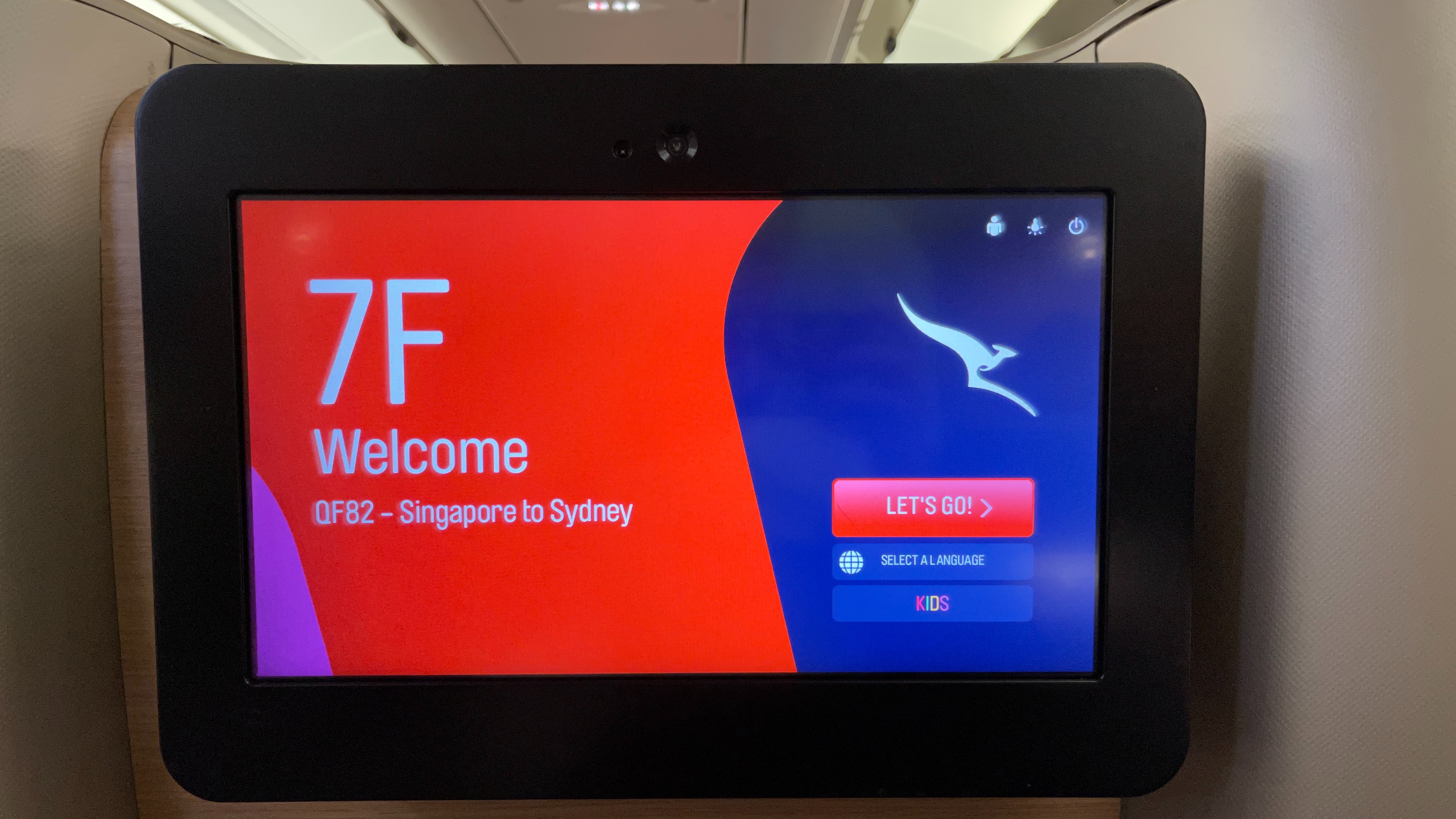
Qantas QF82 Singapore (SIN)– Sydney (SYD) 16 February 2022 Depart: 9:00PM Arrive: 7:20PM (+1 day) Duration: 7 hr 20 min Aircraft: Airbus A330-300 Seat: 7F (Business Class)
Pre-trip planning
Visa
Most visitors to Australia will require an Electronic Travel Authority (ETA) or a visa to enter, including Singapore citizens.
Citizens of over 33 countries, including Singapore, Malaysia, Brunei, Hong Kong and Japan can apply for the ETA through the Australia ETA app. Each ETA is valid for 12 months and costs A$20.
This is incredibly important and I cannot emphasise how many Singaporeans have always forgotten to apply for an ETA until they get to the airport. In the past, airlines were able to do this ETA for you at the airport for a hefty fee, but this is no longer the case as Australia Departure of Home Affairs has now restricted applications to be done solely through the app.
If you have an APEC Business Travel Card, that also forms a valid visa and you will not have to apply for an ETA for your visit, even if it’s for leisure.
Covid tests
At the point of time when I travelled, Australia required a pre-departure test using either a PCR at most 3 days before the flight, or an ART 24 hours before the departure time.
Australia will drop all pre-departure testing requirements from 18 Apr 2022, so you are only subject to an on-arrival test which in most cases are a self-administered ART within 24 hours of arrival.
Checking in
Qantas operates out of Changi Airport Terminal 1, and currently operates out of row 8, sharing the row with its low cost subsidiary Jetstar.
Check in Row 8
The configuration has now changed a little since the pandemic. There is an agent stationed at the front of the kiosks and counters to check that you have all the necessary documents, before leading you to a self check-in kiosk.
After you retrieved your boarding pass and bag tags, you can then proceed to the baggage counters to drop off your bags. Note that your boarding passes printed from the kiosks should be seen and stamped by an agent. Mine wasn’t stamped, and I was turned back at the pre-immigration point to get my boarding pass stamped.
The seat
Qantas uses the Thompson Aerospace seat product across its entire wide-body fleet. The product is now almost 10 years old, and fans of Qantas would be familiar with the hard product.
Qantas A330-300 business class seat
With the phase-out of the older business class products that used to be on the A330-200s, Qantas now only has a single seat product on all its long-haul widebody aircraft, making it easier for travellers, so you don’t have to figure out what seat you are travelling in.
Given that I have reviewed this product before, you can read more about the seat here.
The service
QF82 is a red-eye flight to Sydney, with a total flight time of 7 hours and 20 minutes.
Boarding commenced 45 minutes before the scheduled take off time. I went to the boarding gate at about 30 minutes before, only to find an incredibly long queue for the security screening. Lucky for me there’s a separate queue for business class passengers, which was considerably shorter than the economy one.
Gatehold room
Within 10 minutes I was done with security and was on my way straight to the aircraft. The business cabin was surprisingly full today, with all but two seats occupied in the 28-seat section.
Promptly I took my seat at 7F. The mattress topper, along with the comforter, was wrapped in plastic and placed on the seat along with an unwrapped pillow.
On the side console was a pair of menus, one for the supper service, and a separate breakfast card for me to check off the items I wanted before landing. This card was collected even before the aircraft took off, so that’s some mighty efficiency there.
Menu cards
A cabin crew came around to offer a pre-departure drink of either water, juice or champagne, along with a set of the famed Qantas pyjamas. It was pretty refreshing to be offered a drink while the plane was still on the ground, given that some other airlines took the chance to do away with it.
Soon we were on the way, with the push back of the aircraft happening about 15 minutes after the scheduled departure time of 8.30pm.
Food & drinks
Right after take-off, dinner service commenced at about 9.45pm. The crew pushed a trolley through the cabin, setting up the table setting along with a first choice of drink. Instead of a table cloth, the setting was all done on a pre-set tray: a side salad, a bread plate and the glassware. I took one slice of bread, and went with a glass of red wine.
Dinner setup
The supper menu was rather simple: a choice of main course, followed by dessert. There were four main courses to choose from, and a good selection of post-meal sweets or cheeses.
Business class dinner menu
For my main course tonight, I chose the prawn wanton dumplings (a misnomer, given that wantons are dumplings). Unfortunately, the main course took another 20 minutes before it got to me.
Prawn wanton dumpling soup
The wantons were served with a serving of springy egg noodles, as well as a side of Asian greens, spring onions and green vinegared chillis. Overall it was a pretty hearty supper, and I liked that it was served not too hot. The greens looked like they are out for too long, but otherwise everything else was excellent.
The only other problem is that this dish didn’t exactly go with a slice of bread and a side salad, but I’ll let that pass.
After I was done with dinner, the tray was promptly cleared. The dessert came around in a form of a trolley, which I chose an ice cream from (10.30pm). Out of Singapore, Qantas carries a selection of Haagen Daz ice cream, and the flavour of the day was strawberry.
Dessert and wine
Soon after, I set out my own mattress topper on the seat, reclined the bed into bed mode and fell into snooze land.
Given that breakfast was ordered at the beginning of the flight, this means that the crew didn’t have to wake passengers up too early for breakfast. The breakfast card offered three options: a full breakfast served 90 minutes before landing, an ‘express breakfast’ served 60 minutes before landing, or no breakfast at all.
Breakfast card
A full breakfast meant any number of items on the menu, while an express breakfast was a choice of one food item and one drink. I picked two drinks – a juice and a coffee – and a savoury item for breakfast, and I was woken up only about 40 minutes before landing, so I guess you could get away with two drinks for an express breakfast.
Express business class breakfast – Brioche roll with bacon and egg
Breakfast was a brioche roll with bacon and egg, which was delicious. The bacon was over cooked and incredibly salty even at 35,000 feet, so I took out most of it. I also chose a cold pressed juice and a white coffee. The crew was too busy to offer a second round of coffee, so when I finally managed to get the attention of a crew for a review, the captain asked to prepare the cabin for landing. This meant that my review had to come in a paper cup, given that all crockery would have to be stowed for landing by that time.
Qantas amenity kit
You might be wondering about the amenity kit. Qantas usually offers an amenity kit on the flight, but as there were not enough on this flight, the kits were only available on demand. I learnt about this only when I requested for an eye shade, and the crew discreetly explained why they didn’t hand them out to all the passengers.
The amenity kit this season was designed in commemoration of Qantas’ centenary in 2020, with a range of designs in a nod to its colourful history. The kit itself was a throwback to the 1960s era, decked in pastel blue.
Qantas amenity kit (credit: Qantas)
Within the kit was an eye shade in the same design as the kit, a dental kit, ear plugs and also a mini-kit of amenities from Australian wellness brand Li-Tya, comprising lip balm, face cream and hand cream. Qantas has also chose the eco-friendly route of packing these items in paper (rather than plastic), in a nod to their sustainability efforts.
Qantas amenity kit
Qantas also offers pyjamas in its business cabin for overnight flights. On this flight, the PJs were handed out on the ground, right after the pre-departure drinks were served. Note that if you are taking a day flight out of Australia to Asia, PJs will not be offered; if you ask, sometimes they do have a set or two lying around that they can offer you with.
Qantas business class pyjamas
One thing to note: Qantas business class cabins have a dearth of lavatories, so there is almost always a line of people waiting to wash up and change out. To avoid that and to maximise sleep, I usually wear my own sweatpants and change into the pyjamas top only, and change out only after I arrive and get out of the airplane.
Final thoughts
It was an incredibly enjoyable flight, partly accentuated by the fact that I was visiting Australia for the first time after a three-year gap. It was encouraging to see that the flight was relatively packed in both cabins, and that will only continue to grow as international travel relaxes further with time.
The cabin service also remained fairly consistent from before. While all airlines have been reeling from a drastic drop in revenue over the last two years, I’m also glad that Qantas has stuck out and not further reduced cabin service. In contrast, Singapore Airlines have now reduced meal service on Australian flights to just a single meal service, which in my opinion is way too little.
Overall I’m relieved and happy that the Qantas experienced remained more or less similar to its pre-Covid days. While the schedule is not as favourable given it only operates only a single overnight flight out of Singapore, it is still nonetheless a very comfortable flight to be on.
Finland is hardly one of the top travel destinations in Europe, despite the charm of the Nordic countries in the past years. Nonetheless, long-time fans of oneworld airlines would know Finnair as a viable alternative to British Airways for transcontinental travel between Europe and Asia.
This flight came around as a surprise: I was originally booked in economy class from New York back to Singapore via Helsinki, but due to a change in plans, I had to reroute to return from Frankfurt, again via Helsinki. Fortunately or unfortunately, there were no more award availability in economy class (first time I’ve ever heard of this), but there were still available award space in business.
Booking
For this flight, I have used my Asia Miles for the seat. Finnair is a oneworld member, so there are plenty of options for redemption.
This itinerary cost me 70,000 miles, which was incredibly value for money given that a direct Singapore Airlines flight from Frankfurt to Singapore would have cost me 92,000 Krisflyer miles.
If you have points or miles in other oneworld FFPs, these are the redemption options you have between Singapore and Frankfurt. Additional fees and taxes vary between S$50 and S$160 depending on where you depart from and which programme you redeem from, with most itineraries falling under S$100.
Frequent Flyer Programme
Between Singapore and Helsinki
Between Singapore and Frankfurt (via HEL)
60,000
60,000
70,000
70,000
90,000
104,500
92,750
108,250
120,000
150,000
Miles/Points required for one way business class award
Flight today
Finnair AY131 Helsinki (HEL) – Singapore (SIN) 13 January 2022 Depart: 11:55PM Arrive: 5:15PM (+1 day) Duration: 11hr 20min Aircraft: Airbus A350-900 Seat: 8A (Business Class)
Helsinki Airport
Helsinki Airport is not a terribly big airport, but it can still be pretty disorienting for a first visit.
Helsinki Airport Terminal 2
The airport comprises two terminals, although in practice, the two terminals are linked both on the public and transit areas. The separation is clearer in the public areas, as the transit areas are seamlessly linked via a continuous walkway.
Within the public area, Terminal 1 serves all Star Alliance airlines (except Turkish Airlines), while all other airlines are in Terminal 2. Terminal 2 also serves all transcontinental services, which explains why Turkish Airlines operates out of the terminal.
Within the transit area, the demarcation is not as clear. As Finland is a Schengen country, Helsinki Airport divides the transit area into two parts, the Schengen and non-Schengen areas. Gates 5 to 36 serve Schengen flights, while gates 37 to 55 are for non-Schengen flights.
Finnair operates out of Terminal 2, which saw some expansion works back in 2019, including a larger non-Schengen area as well as new check-in and baggage facility at Terminal 2.
Transit in Helsinki
If you are transiting in Helsinki from a Schengen country, you will enter the Schengen transit area upon arrival. For those transferring to a long-haul flight, you will need to pass through passport control before making your way to your departure gate.
If you are doing tax refunds out of Helsinki airport, the customs office and the Global Blue counter is in a small corner before passport control, across from Gate 29.
Customs clearance office across from gate 29Look for this little Tulli counter next to the Pharmacy
Unfortuantely, flying Finnair out of Helsinki became somewhat of a hassle during the times of Covid.
I had the most unfortunate experience when flying through Helsinki. As a result of newly implemented restrictions to curb the spread of Omicron, Finland has decided to reimpose a curfew, requiring shops and restaurants to shut at 6pm. Unfortunately, this restriction extends to the airport as well, affecting all shops, restaurants and even lounges.
Finnair Lounge – Non-schengen area
I had a pretty long layover of nine hours from my flight from Frankfurt, so I took some time earlier in the day to head into the city, expecting to come back to the airport to freshen up in the lounge. To my dismay, I found the entire airport dimmed as most shops are closed, and both lounges are also shut to passengers. Only a single restaurant within the non-Schengen area was open – for takeaways only.
What this meant was that for a 11.55pm flight, all guests had to dwell in the common areas for over six hours, with only vending machines at their disposal.
You would imagine what a relief was it for everyone when they started boarding calls!
Boarding
As a VTL flight, there are plenty of document checks that need to be completed. Finnair decided to do this at the gate, and I suspect is due to the volume of transit passengers on the flight.
Boarding gate 42
To facilitate a smooth boarding, Finnair uses one of those gates that has a sterile holding area, pretty much similar to what some airports have for US-bound flights. Document check started almost 90 minutes, and passengers are funneled into a segregated holding area to wait for boarding after having their documents checked.
If you require the use of the restrooms, you should use it before clearing the document check.
The actual boarding began about 40 minutes before the scheduled take off time. While there were group numbers printed on the boarding passes, the gate agent called for multiple groups at once to board, causing quite a big number of people heading to queue at the same time.
Boarding was through a single door, the second left door between the two business class sections. My seat for the day was 10L, which was in the second, smaller section of the business class cabin. Note that the smaller business class was after the second set of doors, so that means that all the economy class passengers will inevitably filter pass your seat if you are seated there.
The aircraft
A note about Finnair: the northern European carrier uses Airbus aircraft exclusively, plus a small fleet of Embraer 190s and ATR 72s for domestic and regional use.
Finnair operates the A350-900 as its main wide body workhorse, with 16 aircraft in its stable and another three on order. Of which, there are only two configurations: one with 12 rows of business class seats, while the other seats only 8 rows.
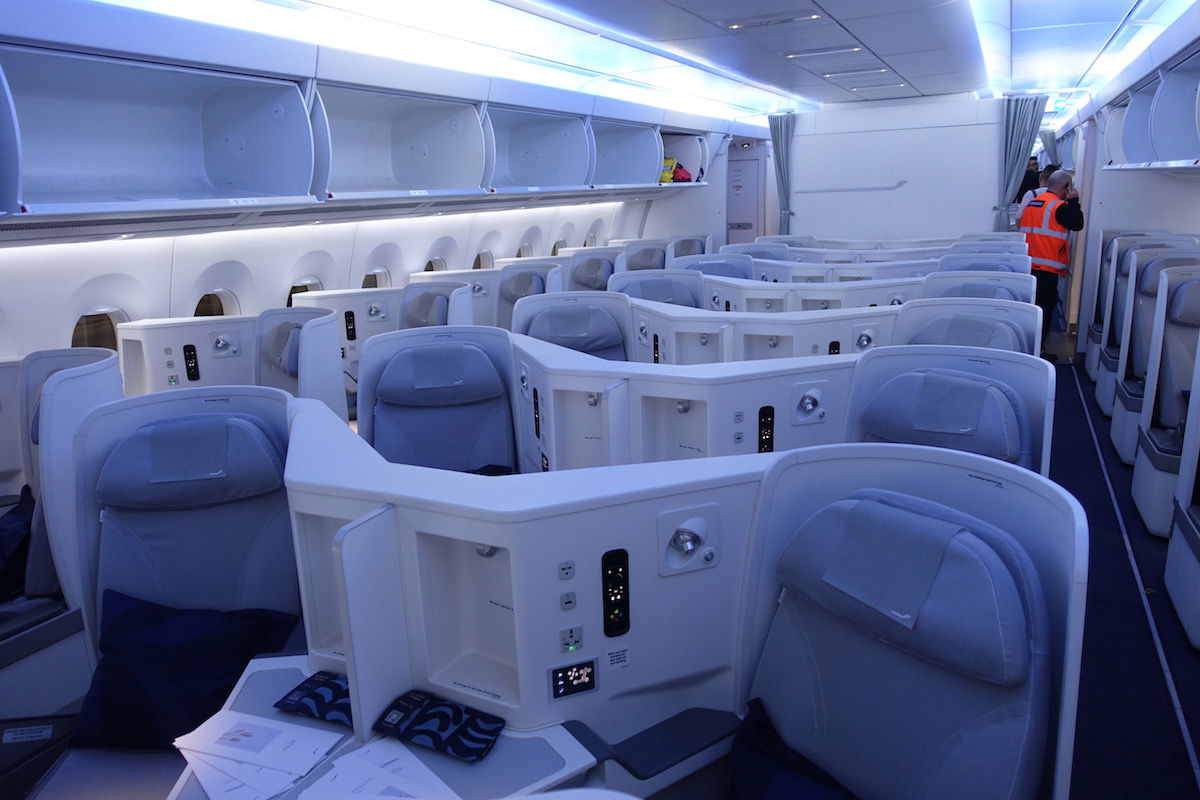
A350-900 business class
The aircraft I travelled on today was the one with 12 rows, for a total of 46 seats (row 9 is missing 2 seats).
The forward cabin comprises 8 rows in a 1-2-1 reverse herringbone configuration, while the smaller business class section comprises 14 seats. Both sections are separated by a galley and lavatories, while the rear section is separated from economy class with only a partition and curtails.
The proximity to economy class may bother some people, so be sure to avoid rows 9-12 if that’s the case for you.
One other key thing to note: the forward cabin does not have any overhead compartments for the middle seats, so if you are seated there your bags will have to be stowed above the window seats. These may be cumbersome for some people, as they prefer not to have other people hovering above them mid-flight. I didn’t take a photo of the forward cabin, but you can see it from OMAAT’s photo below.
The rear section however has overhead storage for the middle seats, so those may be better options for those with plenty of carry-on bags.
The seat
Finnair has opted for the Zodiac Cirrus seats in a reverse herringbone configuration for its business class cabin, similar to Cathay Pacific and Japan Airlines. In a 1-2-1 configuration, this means every seat gets direct aisle access, which is pretty standard today.
Finnair A350 Business Class seat
The window seats are pointed towards the windows, while the middle seats face each other. If you are placed in the middle but are travelling alone, there’s a partition you could pull up to have a little more privacy and avoid the awkward eye contact moments with your neighbour.
However, if you are travelling with a partner, these seats are your best options. Nonetheless, despite the middle two seats facing each other, you will still need to stretch forward to talk with your seat partner.
Couple seats in the middle
The angled seat means that your seat reclines into a footwell. Unlike the Japan Airlines version, the foot well is relatively spacious, and I had no issues having a comfortable rest throughout my flight.
Footwell
Underneath the foot well is another compartment, good for storage of your shoes during the flight. The good thing is that the seat doesn’t not have a calf rest segment, so as you recline whatever you left on the floor will not get crushed.
On the side of the seat closest to the aisle is also an adjustable armrest. During take off and landing this has to be stowed to seat level, but during the flight itself this can be brought up to your elbow level for your comfort.
Entertainment screen
The in-flight entertainment system screen is stowed to the back of the forward seat. To use it, you will have to press a release catch, and then swivel the screen towards you. As screens need to be stowed during take-off and landing, this means that you will be unable to use the screens at all during these times, which is a significant disadvantage of this configuration.
Another way to control the screen is to use the remote control stowed to the side of the seat. Along with it you will also find the headphone jacks, a USB socket and a power socket. There’s also a reading light should you need one.
Seat controls, power sockets
Each seat is also provided with a pair of slippers, as well as a comforter. The slippers were trending towards the thin side, but comfortable nonetheless.
Comforter and slippers
Amenity kit
For the current season, Finnair partnered Marimekko for its amenity kit. In the kit was an eyeshade that’s of the same design as the pouch. You will also find a dental kit, ear plugs and a lip balm enclosed for your comfort during the flight.
Marimekko amenity kit
Thankfully, Finnair has moved away from the previous loud and gaudy design for its in-flight amenities and opted for a classier finish.
The meal service
One little known fact: Finnair has cabin crew based in Singapore, and uses this set of crew for flights between Helsinki and Singapore. You will be hard pressed to find Finnish speaking crew on these flights, but of course, most Finns are fluent in English so the lack of Finnish language capabilities is hardly a problem.
Shortly after I have settled in, the cabin crew came around to offer a welcome drink of champagne, water or Finnair’s signature blueberry juice.
Pre-departure champagne
Finnair’s choice of champagne is the Joseph Perrier Brut NV, one of the lesser known champagne houses. It rates a paltry 3.9 on Vivino, and is also available for purchase in-flight for €27.
Similarly, all cabin crew were wearing face masks and rubber gloves when serving passengers. I can understand the nee for face masks and even shields, but I personally find the donning of rubber gloves very impersonal. It might be the type of gloves and even the way the gloves were worn that makes it look very shoddy, but it definitely doesn’t scream service.
Just before take off, the cabin crew serving my section came by to take my order for dinner. Seeing that I’m halfway through with my champagne, he offered to top it up for me, which I gladly obliged.
Physical menu cards were present, and for some people this is a semblance of pre-Covid normalcy and by extension, a new form of nostalgia.
Menu cards
Boarding was soon completed and the doors were closed. We remained at the aircraft stand for a long while as the cargo compartment was still busy with loading, and I fell asleep.
When I woke up again, I found that we were already in the air, with an hour past since the scheduled take off time. Almost like magic, my drinks – some water and a glass of champagne – which I ordered earlier were already served to me on the side console, along with a serve of salted almonds.
Drinks and nuts
About 15 minutes later, dinner was served. I made my choice of dinner earlier before the flight took off, as my order was taken during the rounds of drinks before take-off.
For those who are interested, this is the full menu:
To my surprise, the meal was served in a single tray, with the appetiser and main course presented together. There was also a mini salt and pepper shaker on the tray, as well as another empty plate for bread along with cutleries rolled up in a napkin.
Dinner service – Teriyaki chicken, eggplant with rice
I took a while to visually digest what was presented to me. The crew came around again with a basket of bread, with a selection of white bread rolls, brown sliced bread, or breadsticks. I went with a bread roll, which was fortunately warm.
The appetiser was minute – there were two prawns and two slices of halloumi – but incredibly tasty. Seafood was scarce in Germany, so prawns were the most delightful and refreshing for me.
The main on the other hand left much to be desired. I was craving rice (you can’t take me out of Asia but you can’t take the Asian out of me), and went for the grilled chicken and eggplant on rice, which turned out pretty disappointing. The grilled chicken was not the offending one although the portion was pretty minuscule, but the rice was definitely overheated to the point of being hard and dried out. Definitely a wrong bet.
When I was done with the meal, my tray along with the tablecloth was cleared promptly, before the crew brought around a tiny serve of the apple tart dessert i chose beforehand. Again, I was rather disappointed, I must say, having had excellent apple pies during my stay in Deutscheland.
Dessert – Apple pie
Overall, the meal was a little underwhelming in all aspects, from taste, to portion and presentation. I definitely didn’t feel well fed.
I can imagine for hearty eaters, the portion will definitely be insufficient. Normally this wouldn’t pose a problem given that most travellers would have eaten something in the lounge, but if the lounge was going to be closed during the interim, more food would have been appreciated.
For my drink, I went with the Riesling, which tasted pretty tart in the cabin. I didn’t finish my wine.
Exhausted and tired, I fell asleep almost immediately after the meal and slept for a good 4-5 hours.
As i woke up mid-flight so as to start adjusting my body clock to the Singapore time zone, I went to the galley to stretch my legs and hoping to get a coffee. Unfortunately I found no one there, so I returned to my seat and hit the call button instead.
Another crew member came around within the minute. I asked for a cappuccino and also asked what snacks were available, to which he told me he wasn’t sure what’s on board and he had to check. He went to the galley, and returned with my cappuccino shortly as well as a small selection of snacks, comprising gummy bears, a granola bar, Pringles potato chips and peanuts.
Based on anecdotal feedback, they used to carry cup noodles on this flight but not in recent months. Hence, there wasn’t any hot food available, so you might be out of luck if you need something warm to munch on.
Mid-flight snack
I do have a gripe about this particular crew member though. He was probably standing in while the first crew member went for his shift rest. Each time I made an order, he was really quick to want to walk away to fetch the drink, but always before I had finished my order. More than once I had to stop him from leaving, and it increasingly became annoying because it made me felt like I was bothering him.
Thankfully, the first crew member came back in time for breakfast service, and I was most happy to see him again. Breakfast was served about 90 minutes before landing. Before food, the cheery crew – obviously refreshed from his rest – came by with a hot towel, as well as a glass of finnair’s famed blueberry juice. I took a sip and was blown away, and probably had three servings of it throughout breakfast.
Blueberry juice
Breakfast was served about 90 minutes before landing. As a result of Covid, Finnair has moved away from a customised breakfast service where you get a breakfast card and select whether you want to wake up for a full breakfast or an express breakfast, but instead chooses to serve the same for all passengers.
Breakfast
Breakfast was a simple platter, with fruits, cold cuts, cheeses, scrambled eggs, hashbrown and sauteed vegetables. In my opinion this was probably a bigger meal than supper.
On board internet
Finnair provides in-flight internet across its entire fleet, including its single aisle aircraft, which makes it one of the leading European carriers in terms of wifi provision.
Internet access
The airline has gone with Viasat as its provider, which I understand has better speeds than both SITA OnAir and Panasonic, which Singapore Airlines uses on its fleet. The downside is that the coverage is not as good, so there are significant parts of the journey where wifi coverage is not available.
Internet speed
Pay per use rates are not expensive, with three options to choose from:
€7.95 for 1 hour
€11.95 for 3 hours
€19.95 for the entire flight
Needless to say, the pricing is best for the entire flight, averaging €1.7 per hour.
Business class passengers, along with Finnair Plus Gold members get an hour’s internet for free, while Finnair Plus Platinum and Platinum Lumo gets free internet for the entire flight. Beyond the complimentary provisions you will have to pay for a new allowance.
In-flight entertainment
Finnair’s entertainment system was pretty functional. I made a rough count and there are about 100 movies and 70 TV shows, so definitely sufficient content to last you through one flight. As with most European carriers they don’t carry a lot of Asian content, so that might be a downside for some travellers.
There is also a good selection of music and games, as well as an online shopping screen to browse the limited selection Finnair carries on their flights.
Final thoughts
Overall the flight was okay. The Finnair’s A350 business class seat is functional and fit for a long journey, but with this seat type being found on so many other carriers, it is practically nothing memorable.
Nonetheless, if you compare it to other European airlines, the seat definitely ranks far higher, and has good ancillary services such as good (and free!) wifi, and a fairly functional entertainment system.
Catering is passable, but lacking in both quantity and presentation for a business class product on a long haul flight if you compare them to what some Asian carriers offer. Service from the Singapore-based cabin crew is also rather inconsistent, and really boils down to the luck of the draw.
Nonetheless, Finnair is still a strong option particularly, if you are looking to burn some frequent flyer points out of Asia. The sweet spot it seats geographically also means that you can potential save quite a bit of miles or points when flying between Asia and Europe, so remember to do your homework. Finnair also run very compelling sale offers even in Business class from time to time, so that also makes it a strong contender for transcontinental travel.