Latest Posts

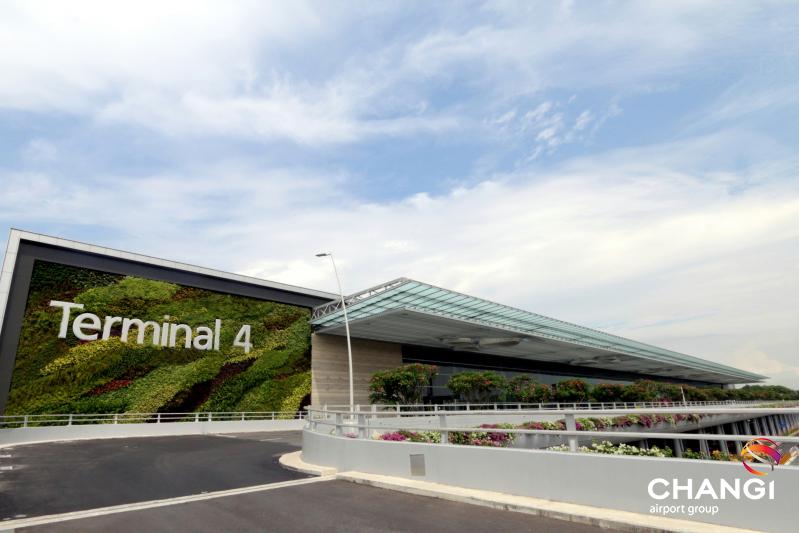
Changi Airport to shut Terminal 4 temporarily from 16 May

Not many airlines are operating there for now, anyway.

Changi Airport today (12 May) announced that it will be suspending operations at Terminal 4 from 16 May until further notice.

It said in a press release:

Changi Airport’s terminal operations will be consolidated further to optimise resources in tandem with the sharp decline in flight movements because of the global Covid-19 pandemic. This move will enable Changi Airport Group (CAG) and its airport partners to continue to save on running costs such as utilities and cleaning.

Changi Airport Group, press release dated 12 May 2020

Earlier this month, Changi Airport shut Terminal 2 from 1 May for a period of 18 months to upgrade the aged terminal. This is the first time Changi Airport has closed off an entire terminal to facilitate upgrading works in its almost 40 years of operations.

Where are T4 airlines moving to?

Some time last month, Cathay Pacific has already moved to Terminal 1 at Changi Airport for its 2 to 3 flights each week. It has closed off its own lounge at Terminal 4 as early as February, so moving terminals wasn’t really a big deal.

With Cathay operating out of Terminal 1 since mid-April, Terminal 4 was effectively… a ghost town. Before Cathay Pacific moved, there was still the occasional Juneyao Airlines flight, but this has seemed to be suspended for a while now.

Korean Air seemed to have resumed a weekly service between Singapore and Seoul-Incheon, so it will have to move terminals as well.

For those who are still interested to know in theory where are the T4 airlines moving to, all the airlines currently housed in T4 will be moving to T1 except for Vietnam Airlines, which will be in T3.

The full table is below:

AirlineTerminal
AirAsia Group (AK/FD/QZ)1
Cathay Pacific (CX)1
Cebu Pacific (5J)1
GoAir (G8)1
Guangxi Beibu Airlines (GX)1
Hainan Airlines (HU)1
Korean Air (KE)1
Regent Airways (RX)1
Spring Airlines (9C)1
Urumqi Air (UQ)1
Vietnam Airlines (VN)3
Vietjet (VJ)1

To recap, this is the list of terminals that T2 airlines will be moving to as well, which was announced earlier:

AirlineTerminal
Air India (AI) – currently suspendedTBC
Air India Express (IX) – currently suspendedTBC
ANA (NH)1
Ethiopian Airlines (ET) – currently suspended3
Etihad Airways (EY)3
Indigo (6E)TBC
LOT Polish Airlines (LO) – currently suspended3
Lufthansa (LH)TBC
Malaysia Airlines (MH) – currently suspended1
Royal Brunei Airlines (BI)1
Sichuan Airlines (3U)TBC
Swiss International Airlines (LX)TBC
United Airlines (UA) – currently suspended3

T4 shops, restaurants will be closed; shuttle bus suspended

As a result of the closure, all shops and restaurants in T4 will be closed until operations in T4 resume.
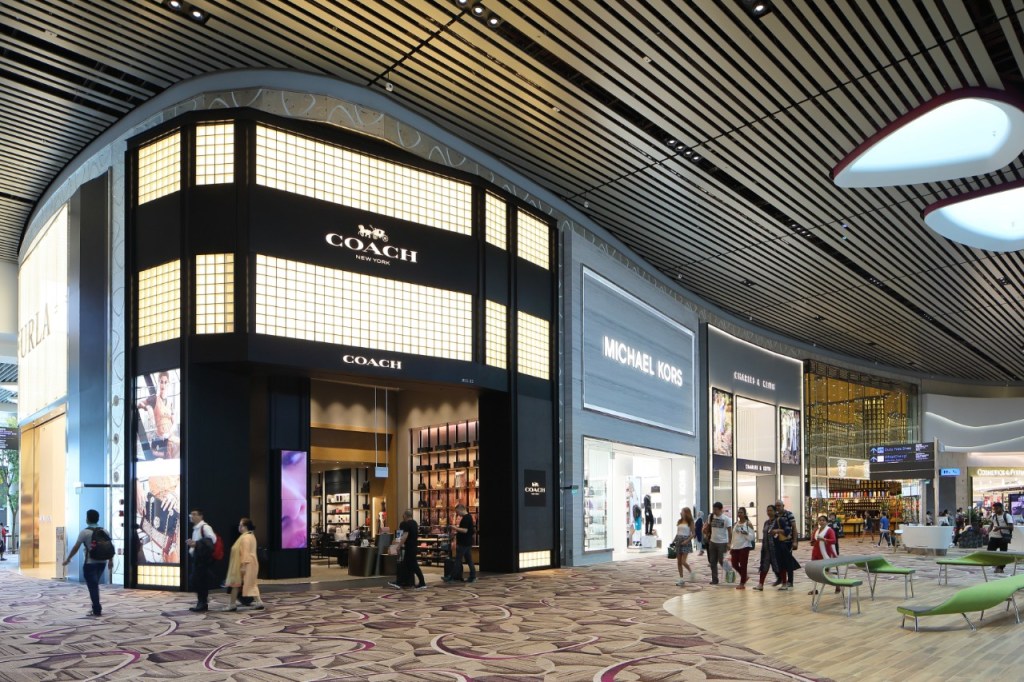
Terminal 4 shops (source: Changi Airport Group)

The shuttle bus service currently connecting T4 to T3 will also be suspended, although public buses will still call at the terminal. Public carparks at T4 will remain open as well.

Changi Airport has committed to working with its partners in spite of the current downturn, so that it “stands ready to restart operations at T4 as soon as a sufficient number of flights return to the terminal”.

Apart from these changes, Changi Airport has also mentioned other reduced operational footprint in view of the exceptionally low passenger numbers.

For instance, it said that it has closed seven finger piers at T1 and T3 until demand picks up. On the landside, it has also consolidated taxi stands at each terminal down from two to a single location each.

Skytrain services between all terminals have also been suspended, and visitors are directed to use the connecting bridges if they in the public area, and simply walk through the B gates on the transit area.

Changi Airport website

Final thoughts

The writing is on the wall. To be honest, I would have thought that Changi Airport would close off the terminal way earlier, given that Cathay Pacific has moved to Terminal 1 as early as last month.

It’s a good call nonetheless, given that operating an ghost town empty terminal is not exactly prudent on the energy end. While it kind of keep shops and operations running and still provide some form of a job, but you can imagine how low morale would be for these people, who are working in the world’s best airport, but only to see virtually no passengers most days.
Qantas puts Project Sunrise on hold

Non-stop flights from Sydney, Melbourne to London, New York will have to take a stop for now

Qantas has suspended its plans for direct flights between Australia east coast to London and New York, also called Project Sunrise, due to uncertainty over travel demand even after Covid-19 fades.

Project Sunrise was set to launch by 2023, but in a report by Executive Traveller, Qantas Group CEO Alan Joyce has confirmed that the project will be put on hold, for now.

A350 orders put on hold

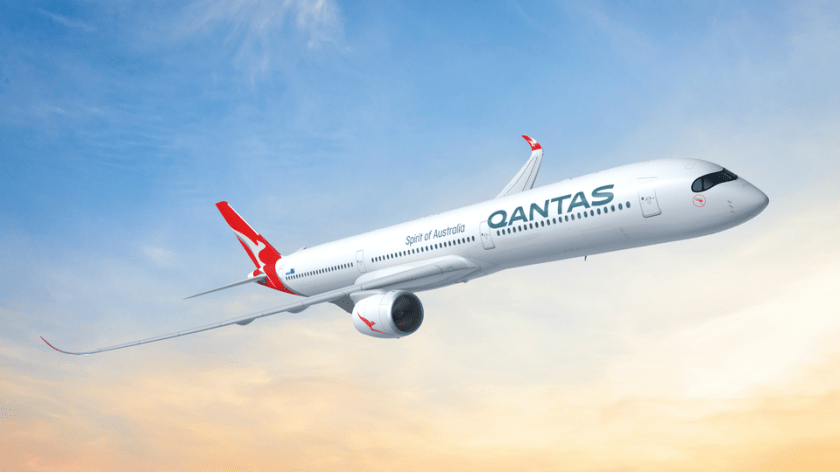
Qantas has earlier announced that it would order 12 dedicated A350-1000 for this project. The final decision was meant to be made in March 2020, but of course in the face of Covid-19, this was quickly paused indefinitely. According to Executive Traveller, the dedicated fleet of up to 12 Airbus A350-1000 jets would have been “valued as high as $6.8bn (US$4.4bn) based on Airbus’ list price”,

Qantas announced Project Sunrise proposal as early as August 2017, initially mapping out potential non-stop destinations such as New York, London and Rio de Janeiro from Sydney, Melbourne and Brisbane.

Proposed routes for Project Sunrise (source: Qantas)

The initial plan was ambitious: it was touted as a challenge to Boeing and Airbus to create an aircraft capable of flying full payload, both passenger and cargo, non-stop to these far-flung destinations, some with a flying time of up to 22 hours.

This was followed by union negotiations, technical discussions with the plane makers and even research flights to see how these ultra long haul flights will affect passengers and crew. Eventually, the airline conceded that a full payload wasn’t possible, and would settle for slightly less for a ‘viable commercial payload’.

In announcing the choice of the A350-1000, Qantas has also said that it will be configuring the aircraft in four cabins – first, business, premium economy and economy – as well as designing the seats in all cabins.

Unfortunately, this also means that the new designs will be put on hold for a few years, until we see the project dawn again.

Qantas to extend suspension of most international services until end-July

Qantas still operating minimum essential international links; seems to suggest opening up New Zealand travel first

Qantas today announced a further extension flight cancellations on most international services in June and July. Flights between Australia and New Zealand will however be cancelled up to end-June for now.

Before this, practically all flights up to end-May were cancelled, except for a handful of services to four international hubs for the most essential travel.

Domestic travel within Australia has also be scaled back to a bare minimum, as many states have imposed travel restrictions and isolation requirements. These reductions are also extended till at least end-June.

Qantas however has caveat that “some capacity can be added back in if domestic and Trans-Tasman restrictions ease in coming weeks”.

What does it mean for customers

Assuming you still have a booking for June and July (not sure why you are still holding on to hope for travelling now, but that’s another conversation), these flights will automatically be cancelled.

You will be contacted with an option to receive your credit, which can be used towards a next flights within 12 months.

Note that if you want a cash refund, they will charge you a refund fee so that’s not advisable.

Raising cash

Qantas Group announced the cancellation extensions today along with a loan announcement, having secured A$550 million in funding, with three of its wholly-owned Boeing 787-9 aircraft as collateral. This follows an earlier A$1.05 billion raised in March against seven of its dreamliners. Qantas has 11 dreamliners for now, which it bought with cash a few years ago.

Qantas has now a total of A$3.5 billion in short-term liquidity, including other un-pledged assets. It has also said that it is currently burning cash at about A$40 million a week, after all the cost reduction measures, including putting about two-thirds of its employees on leave. This means that even if the coronavirus situation persists, the airline will still have enough funds to last it through another 18 months based on current circumstances.

Australia, New Zealand thinking of forming travel ‘bubble’

The two largest countries in the Pacific has so far sealed off their borders for more than a month, with even movement within the country highly restricted.

Even as both countries work towards opening up their respective country’s economy and transport, both country’s leaders have also committed to working towards opening international travel between both countries at the same time.

Both countries have jointly announced last week working towards a “Trans-Tasman bubble” to boost tourism, trade and business ties, with Qantas CEO being optimistic in resuming flights to New Zealand ahead of other international destinations.

OCBC Titanium Rewards to award OCBC$ in blocks of S$5 spend

OCBC going down the UOB way.

Right after OCBC made changes to the 90°N card, the bank also revised the OCBC Titanium Rewards card to give out points in blocks of S$5 spend from 1 Jun 2020.

On top of the earning change, OCBC will also be add more exclusion categories to what will earn you bonus points with the Titanium Rewards card.

Earning OCBC$ based on $5 blocks of spending

Currently, cardmembers earn a flat 10 OCBC$, or 4 miles, per dollar spent on the Titanium Rewards card when spending on eligible categories (i.e. sclothes, accessories, shoes, bags, electronics and gadgets and babies’ and children’s wear).

From 1 Jun, this will have a technical change: OCBC will award 50 OCBC$, or 20 miles, per S$5 spent, rounded down to the nearest S$5.

Why this makes a difference

Why this change is material to the Titanium Rewards card is because unlike the 90°N card, this card is a specialised spending card (i.e. the bonus applies for spending in specific categories). The difference lies in the way OCBC$ is awarded previously and from 1 Jun.

At present, 1 OCBC$ (or 0.4 mile) is awarded when the transaction is posted, while the remaining 9 OCBC$ (or 3.6 miles) will be awarded a month later. From experience, the bonus 9 OCBC$ is calculated based on an aggregate spend from the preceeding month, and awarded based on the total spend.

From 1 Jun 2020, OCBC will award the OCBC$ in two parts too: the first 5 OCBC$ will be given per S$5 spent when the transaction is posted, and the remaining 45 OCBC$ for the same transaction will be awarded a month later.

As an example, in a given month, you make the following spend:

  • Shopee: $124.30
  • Ikea: $264.90
  • Challenger: $47.20
  • Qoo10: $2.60

This is how your OCBC$ earnings will look like, before and after 1 Jun:

Before 1 JunAfter 1 Jun
Spending1X9X1X9X
Shopee – $124.30124Based on
total spend
of S$439:
3951
1201080
Ikea – $264.902642602340
Challenger – $47.204745405
Qoo10 – $2.60200
Total OCBC$4388 (1755 miles)4250 (1700 miles)

For a total spend of S$439, you may argue that 55 miles is not a big sum (~3%), but when you scale it up to a S$20,000 annual spending, this grows to about 2,400 miles difference per year.

Slightly higher spending cap per year

With the tweak in the terms and conditions, it turns out that there’s slightly higher cap in the annual limit of bonus OCBC$ that can be earned.

Previously, Titanium Rewards card had an annual cap of 120,000 OCBC$ (or 48,000 miles) for eligible spending, which include both the 1X and the 9X components. This annual cap is calculated based on your card anniversary (e.g. if you got your card in January, your card annual period is from Jan to Dec). To earn the max of 120,000 OCBC$, you will need to spend at least S$12,000 in the year.

From 1 Jun, only the 9X bonus OCBC$ will count towards this annual cap of 120,000 OCBC$, so that lifts your annual spending to S$13,335. The base OCBC$ (or the 1X) is counted as a base rate, so will not go into this cap.

This cap is on a per account basis, and one person can hold both the pink and blue versions of the card, effectively doubling the cap. Note that any supplementary cards will count towards the main cardholder’s limit.

New exclusion categories

Similar to the 90°N card, OCBC has added new exclusion categories for the earning of OCBC$. Note that transactions under these categories will not even earn you the base rate of 1 OCBC$.

  • Cleaning, Maintenance and Janitorial Services (MCC: 7349)
  • Tolls and Bridge Fees (MCC: 4784)
  • Cigars Stores and Stands (MCC: 5993)
  • Automobile Associations (MCC: 8675)
  • Labor Union (MCC: 8699)
  • Transactions to Singapore Government Public Hospitals including Non-Profit Hospitals, Community Hospitals and Polyclinics under the MCC 8062

Note that transactions under transportation categories are missing from this list (unlike the 90°N card), but this doesn’t mean you should use the card for transportation or Grab top-ups.

Final thoughts

It seems like OCBC has followed the lead of UOB in implementing S$5 earning blocks. While at first glance this means a little bit of cost savings (read: give out less miles) for OCBC, I’m personally not sure if the trade-off is worth it.

Having said that, there is a silver lining: you have a slightly higher cap, or about 10% headroom on top of the usual $12,000 annual spend limit. The OCBC Titanium Rewards is an extremely useful card to hold for online spending on frivolous shopping (not sure about you but I’ve spent about S$1,000 during this Circuit Breaker).

Unlike some other cards such as the UOB Platinum Preferred Visa, the OCBC Titanium Rewards card’s 10X cap is based on membership year, making it very useful for large ticket items such as electronics.

OCBC adjusts earn rates on 90°N card

Travel$ to be awarded in blocks of S$5 spend from 1 Jun

OCBC has made some tweaks to their 90°N card, to be effected from 1 Jun. These changes are not major, but may affect the way you spend if you are still using that as your default card.

Travel$ to be awarded in blocks of S$5 spend

From 1 Jun, OCBC will award Travel$ in blocks of S$5 spend, meaning:

  • For local spend, every S$5 spend will earn you 6 Travel$, equivalent to 6 miles (i.e. 1.2 mpd)
  • For foreign spend, every S$5 equivalent spend will earn you 10.5 Travel$, equivalent to 10.5 miles (i.e. 2.1 mpd)
  • AXS Pay+Earn will earn you 5 Travel$ for every S$5 spend (i.e. 1 mpd)

Previously, OCBC award Travel$ based on dollar spend, rounded down to the nearest dollar.

So this means that there will be slight changes to the number of Travel$ you earn after 1 Jun:

Transaction amountLocal/Overseas spendTravel$ earned before 1 JunTravel$ earned on or after 1 Jun
$4.99Local4.80
$9.50Local10.86
$26.40Local31.230
$3.80Overseas6.30
$19.48Overseas39.931.5
$200.00Overseas420420

So as you can see, by and large, you are going to get a bit less Travel$ after 1 Jun, and all the little bit adds up. If your spend is mostly under S$5, this makes it even more obvious, as any transactions under S$5 will effectively get nothing from 1 Jun.

More excluded transactions

OCBC has also added in even more exclusions in the earning of Travel$. These new categories will be excluded from 1 Jun, on top of existing ones:

  • Cleaning, Maintenance and Janitorial Services (MCC: 7349)
  • Tolls and Bridge Fees (MCC: 4784)
  • Cigars Stores and Stands (MCC: 5993)
  • Automobile Associations (MCC: 8675)
  • Labor Union (MCC: 8699)
  • Transactions under Transportation and Tolls (MCC: 4111, 4121, 4131), except for Grab Transport, Gojek and Comfort/Citycab transactions
  • Transactions to Singapore Government Public Hospitals including Non-Profit Hospitals, Community Hospitals and Polyclinics under the MCC 8062

This is consistent with many other card issuers, which have been excluding transactions from MCCs that typically pay very low fees.

Final thoughts

I’ve long set aside this card since the launch promotional earn rates ended on 29 Feb earlier this year, and these changes will just make me bury this card even further down the pile.

Even before these changes are announced, with its regular miles earning rate, you are better off using some other cards, including the UOB PRVI card and BOC Elite Miles cards (although the customer service is rather dire, but hey it’s a trade-off).

The upside for this card remains to be the free conversion of miles to Krisflyer programme and non-expiry of Travel$, but beyond these, there really isn’t much point using this as your default card whenever there is no promotion.