Latest Posts

Citibank cards can now be added to Apple Pay: Earn up to 8 miles per dollar spent!

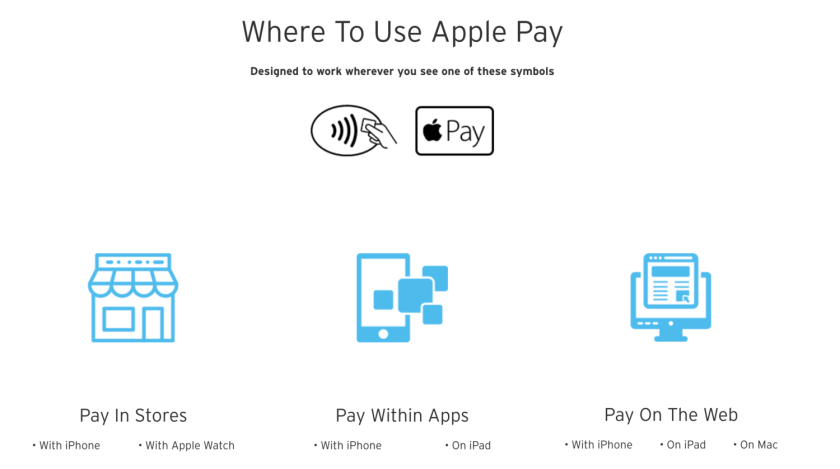
Citibank Singapore is finally on Apple Pay, so they are running a promotion with extra rewards from now until 31 July where you will get double or more of the usual rewards, up to 8 miles per dollar spent!

All Citibank cards can now be added to your iPhone now, so that means you keep those physical cards at home.

72196459-0738-4903-976B-0A8EE3C4C8C4

The following cards are eligible and will earn you 8 miles per dollar:

Citi ULTIMATE card: You will get 20 ULTIMA dollars (or 8 miles equivalent) for all transactions in Singapore dollars

Citi Prestige card: You will get 20 Citi Dollars (or 8 miles equivalent)

Citi Rewards card: You will get 20 Citi Dollars (or 8 miles equivalent) for all transactions except for transactions that qualify for existing promotions, that means any purchases on Lazada (which will get you 20 Citi Dollars until 8 Jul 18), shoes, clothes or bags, departmental stores or online merchants (10 Citi Dollars year round).

Other promotions include:

Citi PremierMiles card: You will get 4 Citi Miles for all transactions in Singapore dollars.

Citi Cash Back card: You will get 5% cash back for all transactions, except for petrol, groceries, dining. The cash back will be capped at S$25 per month.

Citibank SMRT card: 5% rebate in SMRT$, capped at SMRT$ 600 per year.

Citi M1 card: 5% Citi rebate, capped at S$25 per month.

So if you haven’t add your Citibank cards to your iPhone wallet, now is a good time to do it.

For more details, click here.

REVIEW: InterContinental Robertson Quay, Club InterContinental Studio Room

Having had a fantastic experience with InterContinental Singapore several weeks ago, I decided to check out its newer sibling in town, InterContinental Robertson Quay.
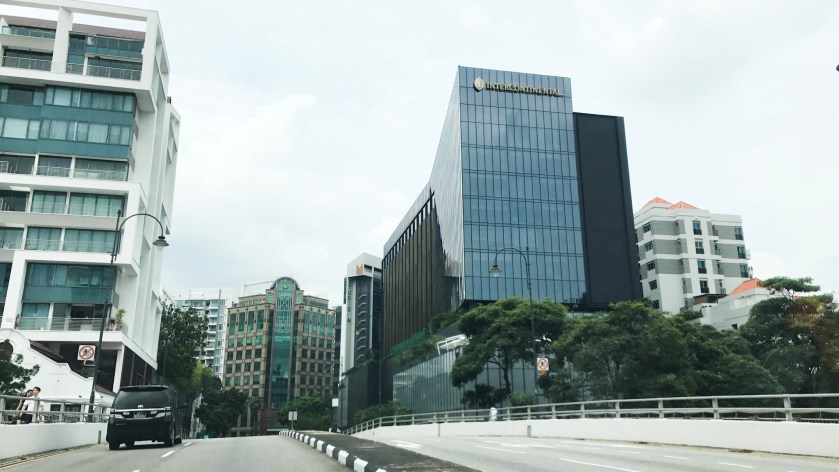
Opened in 2017, the property is one of the many hotels that sprouted up in the Robertson Quay area in recent years, including M Social, Warehouse Hotel and the recently refurbished Four Points by Sheraton (although technically not a new hotel).

IHG together with owners RB Capital announced the hotel back in 2014. It was rather surprising for IHG to open up a second InterContinental brand in Singapore, given the rather small market.

I booked the room through the IHG website. The rooms are fairly straightforward: the entry level room was the Classic Studio or Deluxe rooms, before moving on to the Club Rooms and finally, the Suites. All Club rooms and Suites also get access to the Club InterContinenal Lounge.

A thing to note is that InterContinental Robertson Quay does not offer twin beds in their entry level Studio rooms. For twin beds, you will need to select the Deluxe Rooms which are typically about S$60 more.

A couple of days later I received an email advising me that I have indicated that I preferred a twin bed (which I didn’t), and that I can upgrade to a Deluxe Room for a fee. I wrote that to say that I could keep the room as is, given that I did not opt for a twin bed. They wrote back again to confirm my option.

What really bugged me was the fact that they have addressed me as Ms, rather than Mr, on both occasions, even though I have corrected them the first time round. And this was not the only service lapse in my opinion (more about that later).

The Hotel

When I arrived at the hotel, I was rather excited by the exterior of the hotel: modern and classy. Taking the lift up to the lobby, I was rather impressed by elegance of the fittings and the decor.

Being a mixed-used building, the hotel is fairly compact. The arrival lobby is on the ground floor, while the hotel lobby is on the fourth, where the Club InterContinental can be found also.

So this was where I thought the service could have been a lot more polished. I walked up to the check-in counter, completely forgotten that I could have gone to the Club InterContinental Lounge to check in. The host went to retrieve my reservation, and didn’t offer to bring me to the Club Lounge to check in as well. Having said that, the check-in process was pretty fuss free. However, later that evening I received a call from the Reception, and they were rather abashed to mention that they have retained my ID by mistake, which I didn’t realise as well.

The hotel is a mixed use complex: the first couple of floors were devoted to F&B, including their anchor restaurant, Publico, along with 1880 on the second floor. The rooms took up levels 5 to 10.

Given the size of the property, there were hardly space for anything else. The swimming pool was on level 4 as well, in full view of the lobby lounge. The fitness centre is on the ground floor, outside of the property and enclosed fully by glass, which means you are working out in full view of the public.

The Room

At 23 sqm, the room is tiny by a five star hotel standard, but the norm for new hotels. Nevertheless, the design was rather ingenious: the bathroom is integrated with the bedroom so it looks incredibly spacious, without taking precious space away from the room.

The toilet is tucked away in its own corner, while the vanity and the shower cubicle is part of a open concept bathroom nearer to the door. For complete privacy, there’s also a sliding door that separates the bath area (along with the wardrobe) from the bedroom, so that means that if your room companion is taking a shower, there’s no way for you to exit the room or access the wardrobe.

Despite its size, the room is power packed – it has a good sized bed, a side armchair complete with an ottoman, as well as a fold-down seat from the wall to accommodate more people; a Nespresso machine for DIY coffee, Gryphon tea with a kettle and tea cups, as well as other amenities you will expect in a top-end hotel room.

What’s also worth mentioning is the innovative design of the minibar: it’s a pull out drawer refrigerator. There’s also an in-room bar, complete with a shaker and instructions on how to make your own cocktails from espresso martini to gin and tonic, with every ingredient you need somewhere in the bar, including olives, vermouth and juices. Of course it comes at a price, but hey the menu includes an all-in price, so why not?

Club InterContinental lounge

The Club InterContinental serves up daily breakfast, afternoon tea and evening cocktails. Having remembered an excellent afternoon tea at InterContinental Singapore, I decided to go stuff my face after checking in.
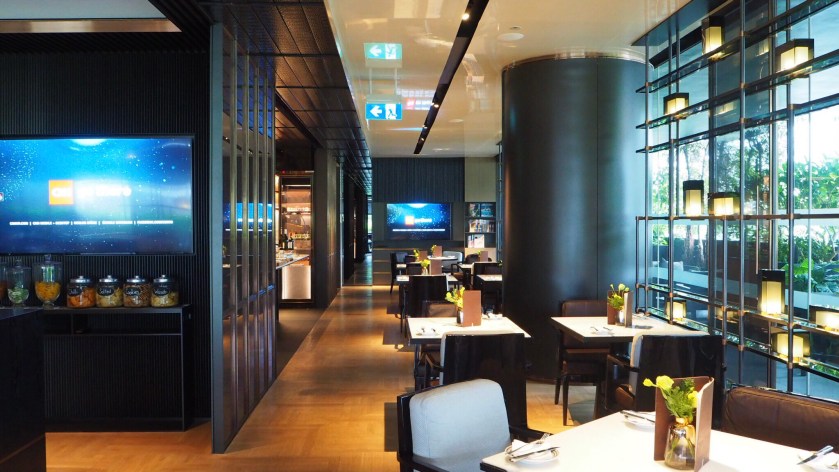
Afternoon tea at the lounge is served daily from 2 to 4pm. The afternoon tea is similarly served on a three-tier stand, consisting of sweet and savoury snacks, including mini pastries, cakes and scones. When it’s first served up, instinctively the presentation failed to wow me. I am a big fan of scones: I went for them first and was deeply disappointed at how cold the scone was, and the lack of taste in the cream. The rest of the items were fine, but not incredibly memorable.

What was incredibly dismal was the fact that from the time I walked into the Lounge until I found myself a seat on the outdoor patio, no one came by to say hi or asked if I would like anything. On top of that, I had to go up to a staff twice to request for something. In all fairness, I mentioned this to one staff later on and service has remarkably improved since then.

When I came back and check out the evening cocktails at 6pm, the lounge was noticeably empty. Within the first half hour, I counted no more than 10 people in the lounge although it got visibility more crowded as the sky turned dark. However, never once was the lounge full.

As for the canapés on offer, it definitely pales in comparison to the Bugis property. While there’s a hot plate served, the ‘buffet’ spread consisted of some cold canapés, including smoked salmon with mango and some bread and butter.
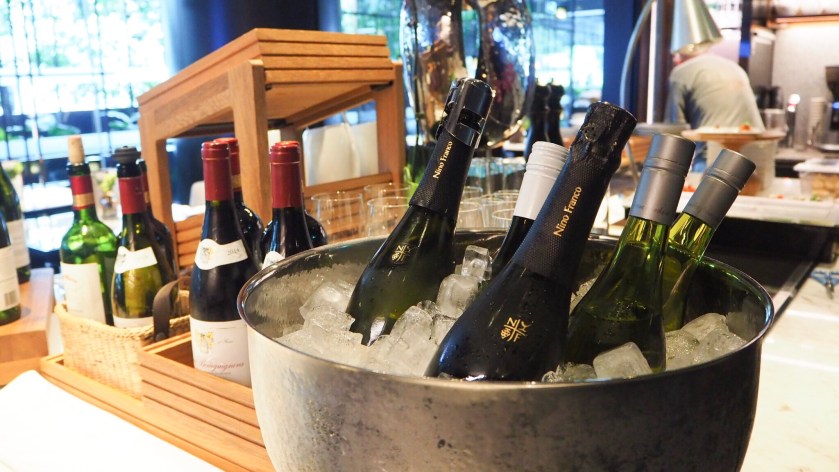
Having said that, the alcohol more than made up for the lacklustre food. My staple for the night was the Prosecco, but I heard good things about their cocktails and took a try with their signature Quayside Sling (a cherry and gin cocktail) which delivered on its promise (probably the only thing that made me happy the entire day).
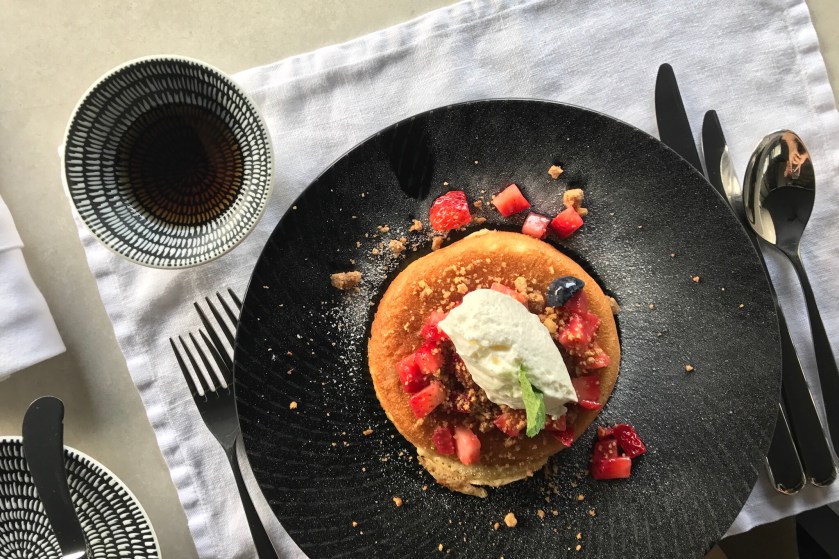
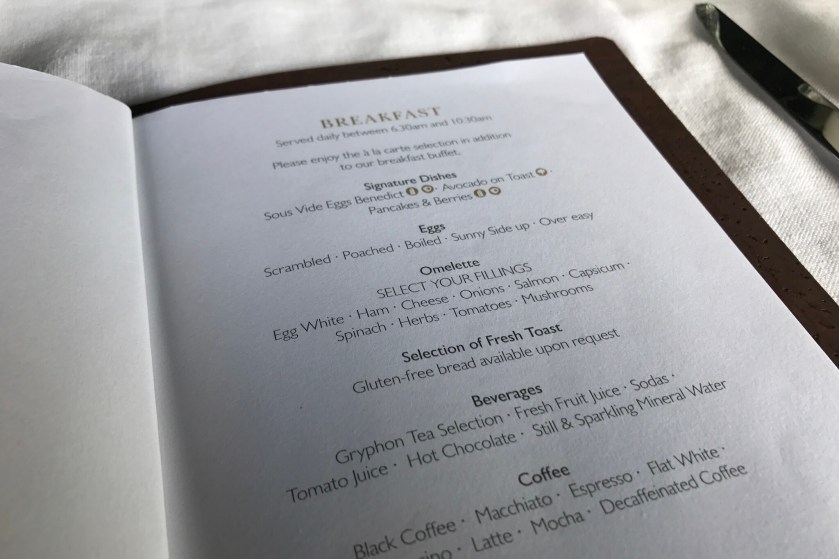
The next morning, I went back to the Club InterContinental Lounge for a quiet breakfast service. I liken the spread to be similar to what Westin Singapore provides: a smaller buffet, but with a small cooked to order menu. The host recommended their signature Sou Vide Eggs Benedict, so I ordered that along with the pancakes with berries. As it turns out, I very much preferred the pancakes over the eggs benedict.
My take

In summary, the property is excellent in its build: the rooms are compact but well purposed, and in fact I haven’t seen any other rooms so efficiently and yet elegantly designed in such a long time now. the Club lounge is adequate in its purpose. However, there are many gaps that need to be addressed, such as the quality of food in the Club Lounge, as well as the lacklustre service.

Overall it is definitely still a good business property given its proximity to city, but I will stop short of recommending this hotel for leisure travellers who will like to shell out $400 a night for a Club lounge. For that, I’ll still suggest they go back to the InterContinenal Singapore where you get much more value for money.

SPG members alert: 2018 is your last year to earn SPG Gold with 10 stays

2016 and 2017 were good years for me – I had status in not one, but two hotel programmes, all thanks to Marriott’s acquisition of Starwood hotels. But obviously good things don’t last.

In what seemed like a seemingly long week for SPG, Marriott Rewards and Ritz-Carlton Rewards members, all was finally revealed early today when details of the changes to unify both programmes were announced.

If there are five key takeaways, they are:

  • All three loyalty programmes are unified essentially with point, elite tiers and earning requirements aligned across, and you can transfer points freely from one to another, or earn elite-qualifying nights from one portfolio towards another programme. Marriott will only rebrand all three into a single programme in 2019.
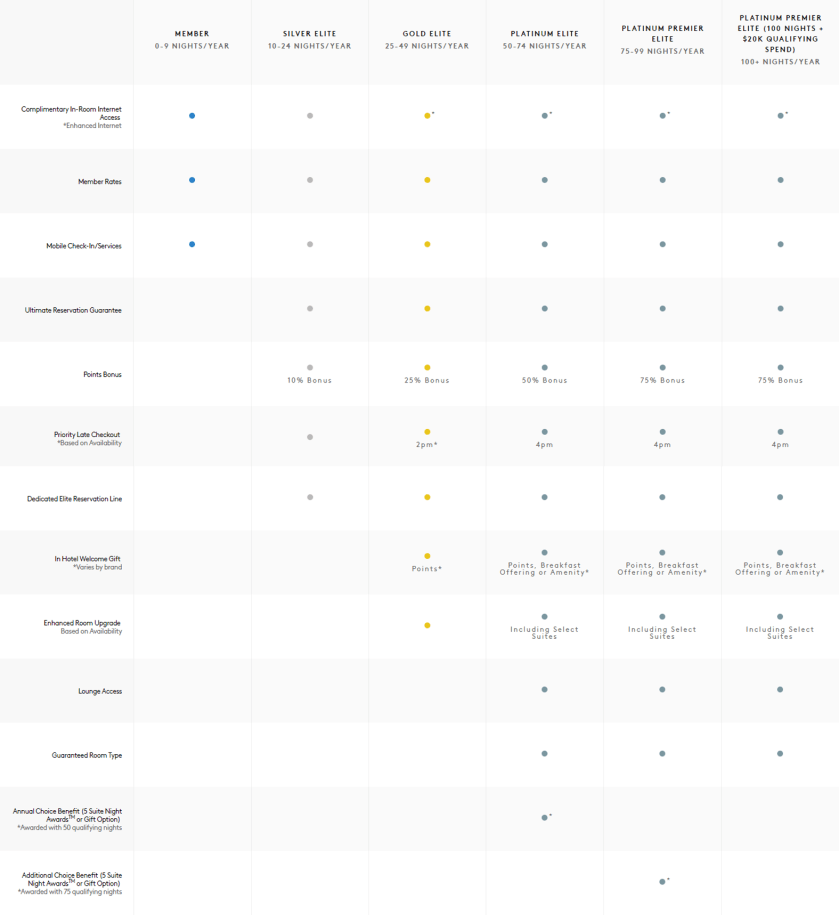
  • There will be six tiers in the new programmes. For SPG, this means a new Silver Elite tier at 10 night. Gold Elite will now require 25 nights, while Platinum Elite goes for 50 nights and Platinum Premier Elite at 75 nights.
  • All elite qualifications will be made based on nights, and not stays, from 2019.
  • All SPG starpoints will be automatically tripled in August 2018 to match the ‘value’ of Marriott Rewards points.
  • Award charts across the programmes will be unified with a eight category chart, along with off-peak and peak redemption rates at each level.

News of the announcements were leaked earlier last week (read Loyalty Lobby’s report here) and caused anxiety among many members, on and offline.

Being an SPG Gold Preferred Guest that offered very good value for the elite membership, naturally I was worried if it was going to be tougher to requalify, given the stark difference in both programmes’ requirements (SPG required 10 stays or 25 nights for Gold, while Marriott required 50 nights).

So what has changed for SPG members?

Under the new programme, SPG Gold Elite will now require 25 nights (the same) rather than 10 stays, as Marriott removes the stay-based qualification. This will definitely trim many SPG Gold members as I know a majority of them does a whirlwind survey of Starwood properties in China or Thailand (where they are the cheapest) to requalify for Gold each year.

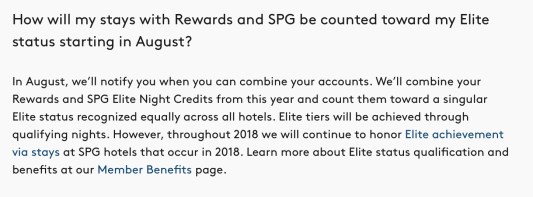
However, Marriott will continue to honour stay-based qualification for SPG members until the end of 2018, so this is your last chance at Gold (and move one year closer to lifetime Gold Elite) if this is the normal route you take to achieve status. Note that the stay-based qualification will only apply for stays at SPG-associated hotels, so this means you can’t be staying at the (supposedly) cheaper Courtyard by Marriott and count towards your SPG Gold.

img_0404

You can still get your SPG Gold this year (for the last time) with 10 stays

Alternatively, you could also choose to throw money at Marriott and work towards 25 nights at any Marriott, Starwood or Ritz Carlton properties for Gold. #justsaying.

The update wasn’t too bad and in fact is a boon to Marriott Rewards members – Gold Elite now require only 25 nights to qualify with similar perks to what they currently would get at 50 nights.

So what are you getting with the new Gold Elite?

With the changes, I guess these are the changes I reckoned with the new Gold Elite:

The only upside: More points earned per US$ spent

Downsides:

  • Late checkout now reduced to 2pm (which is lame)
  • Welcome gift reduced to points only, with no indication how many points
  • And the fact that you need 25 stays to qualify

compare

While SPG Gold Preferred Guests get mapped to the new Gold Elite status, on the Marriott end, existing Marriott Rewards Gold Elite are upgraded to the new Platinum Elite while the silvers with 25 nights minimum now gets gold.

New Marriott Chart.png

New benefit summary table

Earning changes

From August 2018, all your stays across Starwood, Marriott and Ritz Carlton properties will earn a unified 10 points per US$1 spent (exceptions apply for some properties). Elite silver members will earn a 10% bonus, while elite gold and platinum members earn a 25% or 50% bonus.

At first glance this sounds better given that SPG members currently earn 2 or 3 points per US$1 spent, and even after tripling the new deal sounds better. But until we see how the Starwood properties are mapped to the new award chart categories, this remain to be seen.

If SPG maps the property at the same level, it will be good news for SPG members. A current category 6 hotel cost anything from 20,000 to 25,000 Starpoints to redeem, and that translates to 60,000 to 75,000 points after the August conversion. Under the new chart unveiled by Marriott, a category 6 hotel will only require 50,000 points. Even if the hotel is upgraded to the next category, members will not be worse off. But let’s wait and see how the hotels map out come August.

awardchart.JPG

Comparison of existing SPG award chart versus new award chart

Lifetime elite status here to stay, but more difficult to achieve

With the new elite silver level introduced, SPG members will now find it more difficult to achieve lifetime elite gold.

img_0403

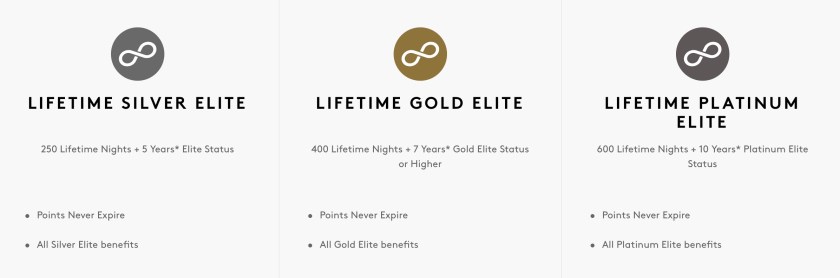
New lifetime elite qualification requirements

You will now need to achieve seven years of elite gold statuses, along with 400 nights stayed across any of the 29 brands combined. This an increase from the 5-year, 250 nights requirement.

spglifetime.jpg

Current SPG lifetime status requirements

So if you haven’t already achieved lifetime Gold with SPG – too bad, it’s a further climb now. I figure that is now further out of reach given that I stay in hotels on average 10 nights a year – I might just get there when I’m 70.

Final words

I’m sure that many SPG loyalists saw this coming – a devaluation of their beloved programme, or a hike in the investment required to maintain it. While props to Marriott for merging both programmes and meeting halfway in terms of requirement, the impact is more real for SPG members given the increased spending required, along with the slight reduction of benefits for the programme.

More work for less perks? Sounds like a brilliant business plan, but obviously poorer off for customers. You might be better exploring other programmes given that Gold qualification is now comparable to some other programmes.

Having said that, given that Marriott and SPG together forms the world’s largest hotel chain, it might be a tough choice to shake them off altogether. Even with these revisions, the programme is still relatively competitive.

For the full details of the new programme come August 2018, check it out here.

Emirates fares on sale: S$559 economy return to Melbourne, Brisbane; S$899 to London, Wellington

From now till 23 April 18, Emirates is running a sale to Australia and Europe (and Dubai actually, if you intend to go there). Sale fares include both economy and business class fares, starting from S$429:

Destinations Economy return (S$) Business return (S$)
Perth 429 2,039
Melbourne, Brisbane 559
London (Gatwick/Stansted) 899
Wellington 899 5,679
Johannesburg  1,169 5,179
New York (JFK) 1,429 6,499

Know your operating airline

For Australia-bound customers, Emirates only operate two flights daily using their own aircraft – one to Melbourne, and one to Brisbane. For all other Australia destinations, you will be travelling with Qantas and that includes Perth, Sydney, Adelaide. Even for Wellington, your Australia-Wellington leg will be carried by Qantas.

If you check both their websites, you will see that for the same flights, you will be paying the same regardless of who you book through. This is due to a partnership between Emirates and Qantas signed five years ago that allows both airlines to better leverage each other’s networks in different parts of the world, as well as coordinate pricing in certain markets.

Are you a oneworld/Qantas Frequent Flyer?

So what does that mean for you? If you have a Qantas Frequent Flyer account, you might be better off booking through Qantas.com and earning some points and status credits on it. Since Qantas is part of oneworld, this also means that you get much better use of those points if you want to redeem flights within Asia.

Personally, what I love about the QF-EK partnership is really about being able to earn QF points on Emirates flights. While Emirates run a pretty solid programme, their refusal to join any major alliances, couple with their Dubai hub, means that the points you have with them are pretty much useless for intra-Asia flights redemption since they don’t do any of that.

WIth Qantas Frequent Flyer, not only you can redeem on oneworld partners, you can use them for Jetstar Asia flights too (but yeah I know, waste of points).

To earn Qantas points, you have to make sure you book on a QF code (e.g. QF8404 from SIN-MEL rather than EK404) and that’s easily done on Qantas.com.

In the meantime, there are many other fares available in the Emirates sale, so just check it out here.

FLIGHT REVIEW: Malaysia Airlines Boeing 737-800 Business Class, Shanghai Pudong – Kuala Lumpur

Malaysia Airlines / 30 April 18 / B737-800 / MH PVG-KUL / Business Class

Tl;dr – It’s not too bad, but avoid red-eye flights under six hours at all costs. Product is dated but still acceptable, timing of the flight is absolutely horrendous. Also, catering out of Shanghai airports generally suck.

Malaysia Airlines B737-800 Business Class seats

In another one of my crazy business trips up to Shanghai, I made the mistake of planning to travel back to Singapore via Hong Kong during the Easter weekend when half the territory is going on holiday. True enough, I didn’t manage to get any seats out of Hong Kong, so I ended up booking myself on Malaysia Airlines via Kuala Lumpur and the only option available was a red-eye departure.

The flight departs from Shanghai Pudong airport at an ungodly hour of 2.30am, scheduled to arrive into Kuala Lumpur at a little over 8am.

Now, for those who are unacquainted with Shanghai airport, this is one of the worst hub airports I’ve ever been to. The astounding lack of good quality restaurants, lounges and shopping is even more stark now as compared to what’s available in town. The lack of customer service at almost all travel touchpoints – from check-in, security, immigration – coupled with standard long wait times makes this airport an undesirable one for me.

I left my hotel at about 12.30am for the 40-minute cab ride to the airport, and got to the kerb at about 1.15am. When I arrived at Terminal 2 – where Malaysia Airlines operated out of – the terminal was completely dark with only a handful of people within. You could have thought that the airport was closed, except that it’s not (it is technically a 24-hour airport).

Airport experience

Only three check-in counters were opened, and there were nobody in line when I got there. When I was checking in, the check-in agent was multitasking – checking me in while playing his mobile game. I let it go given that it’s really late at night and I know how tough is it to stay awake with nothing to do.

One of the best things about travelling during such zombie hours is the lack of queues. I swept through immigration and security checks in less than five minutes altogether, a new record for me in Pudong, so much so I had some time to check out the lounge.

The aircraft

I made my way to the gate at about 2am, half hour before departure. The gate was still not ready for boarding when I got there, and as usual lines has already formed up. A glance at all the tired faces, you could tell that everyone was waiting to get in their seats so they could sleep.

The choice of aircraft for this red-eye service was a Boeing 737-800, a narrowbody which holds 16 in business class and 144 in economy. Malaysia Airlines ply Kuala Lumpur-Shanghai twice daily, and uses an A330-300 on the day flight and this smaller aircraft on the overnight flight, a decision which baffles me.

16 business class seats in a 2-2 across configuration

Now a little bit about MH’s 737s. Malaysia Airlines has a relatively large fleet of about 52 of these birds, which they use primarily for domestic and regional services, and Shanghai was one of the furthest destinations they have for this fleet.

The 16 seat business cabin was laid out in a 2-2 across configuration, and featured recliner seats which was hardly ideal for a red-eye. Each seat measured 21 inch across and had a pitch of 42 inches.

Obviously there wasn’t any fancy controls to handle, apart from some mechanical buttons to control the seat back and leg rest.

The service

Given that this is a red-eye service that departs at a god-forsaken hour, I was bracing myself for grumpy cabin crew. Who wants to work through the night?

Fortunately for me there was no such thing. The crew was friendly, albeit a little quiet, but still very professional in the truly Malaysian hospitality.

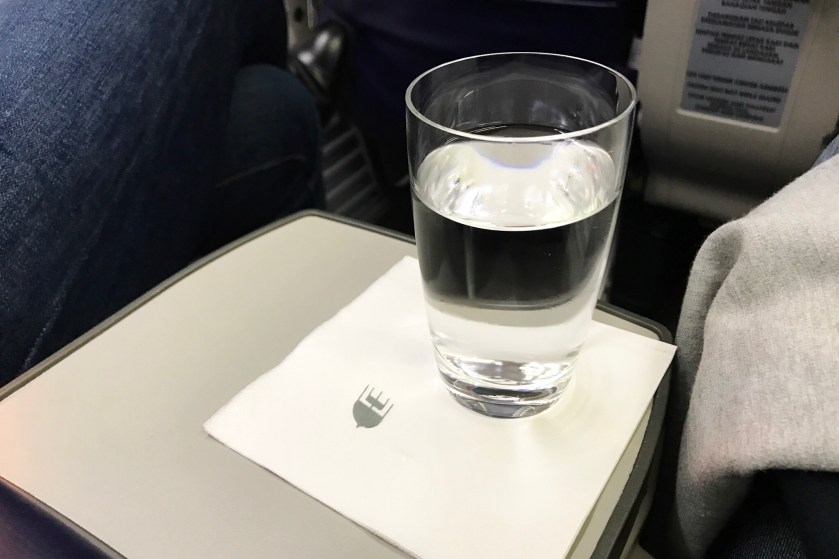
Pre-departure drink, no alcohol served

In the front, there were two cabin crew including the inflight supervisor, who worked the business class while the rest were at the rear. When we first boarded, they quickly offered earphones and a choice of welcome drink of juice or water for pre-departure drinks. Consistent with other flight reports, no alcohol was offered on ground.

I noticed there was no newspapers distributed or offered to passengers when I was boarding and was wondering if that’s normal. When I got to my seat, I realised why – the newspapers were stuffed into the seat back pockets at random. I had a copy of The Star, while my neighbour had a copy of the New Straits Times. Given this was 2.30am I decided that it was a bad idea to be difficult and request for a Chinese newspaper for the sake of it.

Complimentary Malaysian newspaper

As a narrowbody, this means that while premium passengers get to board first and relax in their seats, they also end up being exhibits while the economy class passengers file through from the front door. Awkwardly that means your every move, whether you start getting comfortable and all covered up in your blanket, or having your pre-departure drink, is being observed by all 100 over passengers as they move pass you.

Soon enough, as the plane pushed back and took off on the 5-hour journey down south to Kuala Lumpur, the lights never came on and most of the cabin went to sleep.

I went up to the crew and asked for a glass of champagne, which they obliged. I supposed they were a little taken aback given that most passengers went straight to sleep, while this alcoholic (me) wanted some bubbly at an unearthly hour.

Feeling bad for having to open that bottle, I had a second round, before finally retiring for the night.

About 90 minutes before landing, the lights were turned on and breakfast service commenced. The sky was starting to light up as it was about 6.30am in the morning.

To start off breakfast, there was a side of fruits, yogurt and a choice of hot bread. I went for the croissant, which was surprisingly light and fluffy.

Signature Malaysian breakfast – nasi lemak

For mains, there was three options in Business – a western breakfast, an oriental option of dim sum, or the classic Malaysian choice of nasi lemak. Instinctively I went for the last choice, given my love for the dish. Unfortunately the rice was a little too moist and mushy for my liking, and lacking the distinct coconut aroma, but otherwise the curry chicken was good.

Overall the flight service was very acceptable, despite the choice of timing and aircraft. Understandably, given the economics of routes in and out of Malaysia, one can understand why Malaysia Airlines operates the B737 on many of its routes given the weak demand on many of the routes especially after 2014, despite very good prices.

Poor Malaysia Airlines’ reputation had taken a tremendous beating since the twin tragedy in 2014 and ticket prices have been consistently low since.

In what seem to be an uplift, it has most recently taken delivery of the A350 which has promised to offer a much better experience, including in-flight wifi, and will also start moving away from the A380 to better manage its commercial performance. Given the slow and steady shifts in the business I do look forward to much improvements in the product and the classic Malaysian hospitality that it has always strived to offer.