
Tag: Silkair

  • SilkAir moving 17 services to Scoot ahead of merger

    SilkAir moving 17 services to Scoot ahead of merger

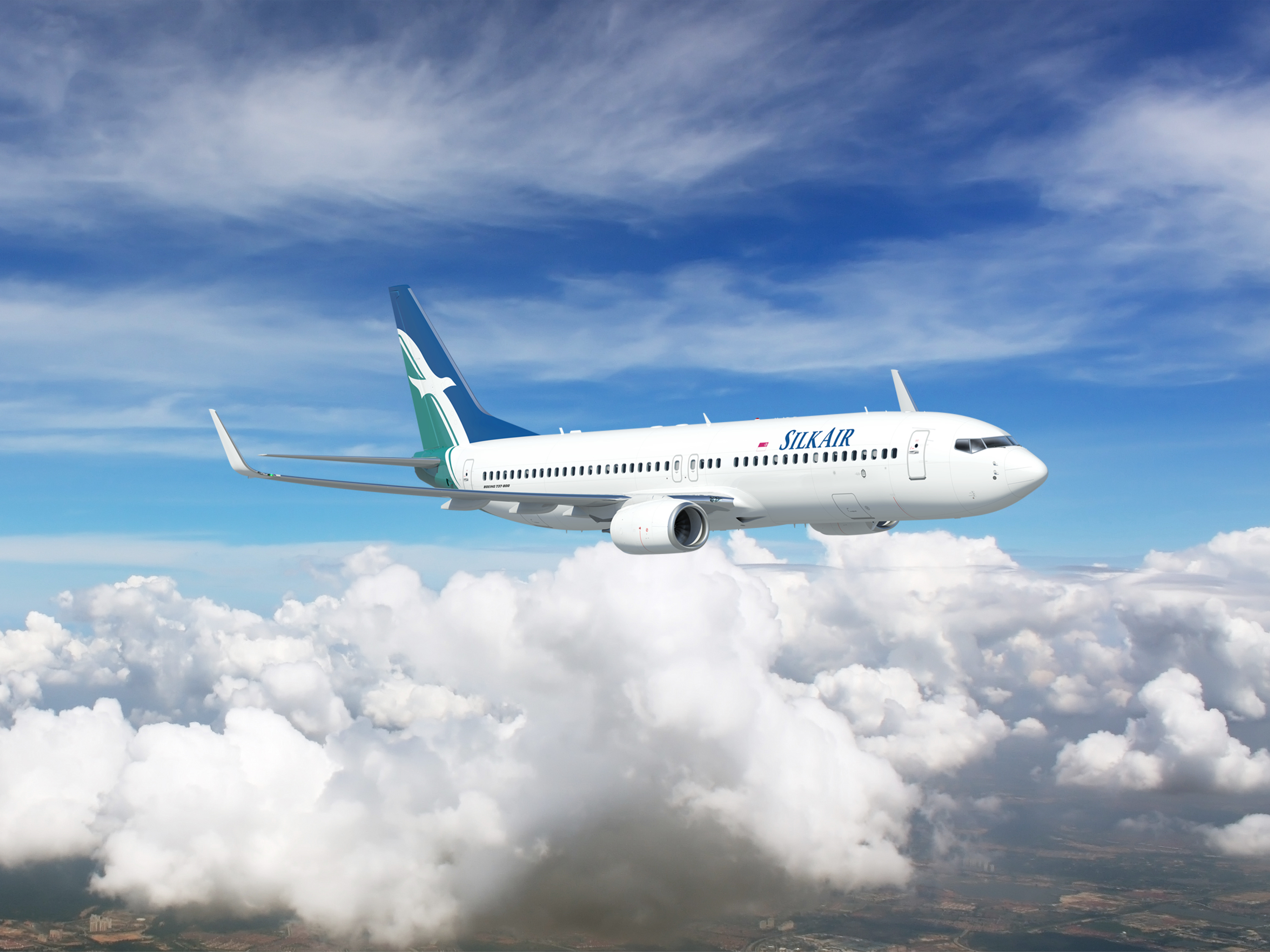
    SilkAir has announced that it will transfer 17 destinations to the low-cost subsidiary Scoot progressively, starting from April 2019. 

    In the same announcement, Scoot will be stopping its Honolulu service, barely a year after the inaugural service. It will also be giving up four other destinations that is currently served by SilkAir and Singapore Airlines.

    SilkAir to Scoot transfers

    The destinations SilkAir will be giving up to Scoot, along with the dates that will happen, are below:

    CountryCityDate
    LaosLuang Prabang, VientianeApril 2019
    ChinaChangsha, Fuzhou, Kunming, WuhanMay, June 2019
    IndiaCoimbatore, Trivandrum, VisakhapatnamMay – October 2019
    ThailandChiang MaiOctober 2019
    MalaysiaKota KinabaluDecember 2019
    IndonesiaBalikpapan, Lombok, Makassar, Manado, Semarang, YogyakartaMay – July 2020

    SilkAir has earlier this year transferred 6 other services – Hangzhou, Kalibo, Kuching, Langkawi, Palembang and Pekanbaru – to Scoot as well.

    Observers who are following the merger keenly will know that 14 of SilkAir’s current fleet of Boeing 737-800s will be transferred to Scoot progressively as well, while Singapore Airlines will take the Boeing 737 MAX-8 under its wings.

    I will assume that the transfer of the aircraft will go in tandem with the routes, otherwise Scoot has no other way to manage the extra flying without any new aircraft.

    Scoot to terminate 5 destinations

    Along with the SilkAir transfers, Scoot will also stop services to four destinations which are currently served by SilkAir and Singapore Airlines. They are: 

    • Bengaluru – May 2019
    • Shenzhen – June 2019
    • Kochi – October 2019
    • Chennai – May 2020

    Scoot has also announced that it will stop its Honolulu services by June 2019, citing poor demand. This is not surprising, given it’s not the first long haul low-cost service to be culled; Norwegian announced its exit from the Singapore-London market earlier this year.

    The stoppage of Honolulu services is definitely a dampener, given how Scoot has announced its intent to venture into longhaul route, which is an arguably tough market for low-cost carriers.

    What this means

    The bad news first: this means that Krisflyer members can no longer redeem tickets on the SilkAir network to these destinations after the transfer.

    Of course, you may use your Krisflyer miles to redeem for Scoot flights, but intuitively, you will know that’s not a great value for your Krisflyer miles and you will be better off spending cash on them.

    Also, these routes will also lose their business class product for a ScootBiz service instead, which is really more a premium economy product.

    The other bad news is that you will potentially enjoy much lower fares on these leisure destinations. This means that going to places like Wuhan will now be a lot more affordable, given that you are able to mix and match the add-ons you need for the flight.

    SilkAir traditionally had kept fares pretty high while offering an essentially a product which I call “budget plus”, given that it only provides check baggage allowance and meals as additional perks, for a much higher fare. 

    Where does that leave SilkAir?

    With the integration to begin only from 2020, SilkAir has got some time to embark on its refurbishment project it announced earlier this year, to fit the narrowbody Boeing 737s with lie-flat seats and seatback entertainment.

    SIA has earlier said that the integration of SilkAir into the mainline will only take place when there are sufficient aircraft being upgraded to the new product.

    SilkAir is also currently taking in the new and shiny Boeing 737 MAX 8s, although it remains to be seen whether they will be delivered in the SilkAir livery or in the Singapore Airlines colours.

    SilkAir also has a small number of A319s and A320s, which it said it will phase out in time.

    After the 17 routes are transferred to Scoot, that will leave Scoot with 32 destinations in 14 countries. Of the 32 destinations, 10 are currently served by SIA, so you are only looking at an additional 22 destinations that will be added to the SIA network after 2020 as well.

    While this is the largest lot of destinations to be transferred, I won’t be too certain as to whether SIA will do another round of transfer before the sunset of the SilkAir brand.

  • SilkAir to upgrade cabins with flat bed business class seats, to be folded into SIA

    SilkAir to upgrade cabins with flat bed business class seats, to be folded into SIA

    For the first time, SIA has gone public to address the elephant in the room: merging of the SilkAir into the Singapore Airlines brand.

    From 2020, the regional arm of Singapore Airlines will embark on an extensive cabin upgrade of the narrow body fleet, including lie-flat business class seats, seat back entertainment screen across all cabins to “ensure closer product and service consistency across the SIA Group’s full-service network”.

    The announcement also said that the SilkAir brand will only be merged into SIA after “a sufficient number of aircraft have been fitted with the new cabin product”.

    D0AAA2E7-EE77-4F36-B6D5-133F772D6345
    FlyDubai has announced the world’s first flatbed on a 737 – will SilkAir be the next? (Image source)

    Finally it’s happening

    Many analysts have applauded the move and observed that this is ‘long overdue’, and that Singapore Airlines Group has come full circle to once again operate only two brands, down from four, which is a sensible move. While some people may be reluctant to give up the branding SilkAir has established over the last two decades, I do feel it’s no loss – it hasn’t quite caught up with times anyway.

    Most observers are watching how Singapore Airlines will retain its experience on a narrow body aircraft. Many airlines that operate both narrow- and wide-body aircraft will know that customers generally prefer the larger aircraft due to its stability and better in-cabin experience. Smaller aircraft, along with its smaller galleys also puts a limit to what they can bring on board for customers.

    What does this mean?

    This means some time after 2020, you are going to have a more decent in-flight experience (no more streaming on your own device for entertainment, hopefully better food), and have the iconic Singapore Girl on your flights.

    And given that cabin upgrades typically take several months for each aircraft, the complete refurbishment and transition of the entire SilkAir fleet could take a couple of years.

    What’s really worth looking out for is how Singapore Airlines will start making adjustments to its routes. As it is today, some low traffic routes (e.g. SIN-BWN) have been known to be operated by SilkAir regularly. In the past, the destinations for SQ and MI have been very well segmented, but in recent years there are some ports that are served by both SQ and MI, such as KUL, HAN, RGN, and more recently DPS and CMB.


  • SilkAir to launch flights to its first Japanese destination – Hiroshima

    SilkAir to launch flights to its first Japanese destination – Hiroshima

    SilkAir has announced today that it will launch three times weekly non-stop flights to Hiroshima, Japan from 30 October 2017. This will be SilkAir’s first destination in Japan.

    The flight will depart at 1.45am on Mondays, Thursdays and Saturdays and arrive at 9.30am the same morning. Returning flights from Hiroshima will depart at 10.25am and land at Changi Airport at 3.40pm.

    The new route is significant on several fronts – it will be Hiroshima’s first non-stop link to Southeast Asia, as well as its furthest destination; and it will be the first Southeast Asian carrier to fly to Hiroshima. It is also set to become SilkAir’s furthest destination, edging out Cairns by a few minutes.

    Why SilkAir?

    Within the Singapore Airlines Group, it is very interesting that SilkAir was chosen to service this route. While it is technically SilkAir’s first scheduled services to Japan, it is not entirely new to the market, having previously ran seasonal charters to Okinawa and Hiroshima, with seats sold by travel agents.

    Previously, travellers to Hiroshima will have to transit at either the Japanese gateways of Narita and Kansai, or via North Asian hubs of Hong Kong or Taipei.

    Singapore Airlines itself has previously flown to Hiroshima up to 2003, when they did a massive network reduction as a result of reduced air travel due to SARS.

    Thoughts

    Will I want to fly SilkAir to Japan? Maybe. While I’m not a big fan of flying a narrow body tube for anything longer than four hours, I will put up with that as compared to not having complimentary water for the journey by travelling with a low-cost carrier.

    In terms of product, SilkAir trails Singapore Airlines significantly – no in-flight entertainment (there is streaming entertainment, but you need your own device), and the economy seat width and pitch are comparable to Jetstar’s (SilkAir measures at 30 inch pitch and 18 inch width; Jetstar’s at 29 inch pitch and 17.9 inch width). The key difference you get is free baggage allowance and meals, which hardly justifies the savings.

    Ultimately it boils down to price, and SilkAir is not known to be price competitive for routes it monopolises. It might make more sense to travel via Tokyo or Kansai – the additional couple of hours may well be worth some cost savings.