Tag: Singapore

  • FLIGHT REVIEW: Qantas A380-800 First Class, Singapore – London Heathrow (SIN-LHR)

    FLIGHT REVIEW: Qantas A380-800 First Class, Singapore – London Heathrow (SIN-LHR)

    Qantas made quite a fair bit of news in Singapore just before Covid-19 with the grand opening of its first class lounge, which sadly shuttered not long after it was officially opened.

    The good news is, the lounge survived the pandemic; it is now reopened and received guests at full force, just as with before.

    I have had the fortune to experience the first class cabin some years back, but it was from Sydney to Singapore. I had such a great time, it created a new bucket list item for me, to try the same product again but on a much longer flight, from Singapore to London or vice versa.

    However, the first class cabin across all airlines is some what of a unicorn in the post-Covid era. Even with a bank full of points, it takes sheer determination and an awful lot of patience to find any kind of award availability.

    And I finally laid my hands on it.

    In this post:
    • Flight today
    • The Qantas A380
    • Checking in
    • Qantas First Lounge
    • Boarding
    • The seat
    • The service
    • Qantas amenity kit & pyjamas
    • In-flight entertainment
    • In-flight lounge
    • Final thoughts

    Flight today

    Qantas QF1
    Singapore (SIN)
    – London Heathrow (LHR)
    20 November 2022
    Depart: 11.55pm
    Arrive: 6.25 am (+1 day)
    Duration: 13 hr 50 min
    Aircraft: Airbus A380-800
    Seat: 4F (First Class)

    The Qantas A380

    The A380 needs no introduction – the famous double decker jumbo is a favourite amongst both airlines and passengers; the latter for the number of passengers it can pack, while it also calls for a stable ride.

    Prior to Covid-19, Qantas launched a refurbishment project for its fleet of 12 A380s. While business class and premium economy got a complete overhaul, the first class cabin saw relatively less major upgrades, including a reupholstering of the seats and a brand new in-flight entertainment screen.

    Through Covid-19, Qantas has grounded all of its aircraft, only to bring it out of storage earlier this year in 2022.

    Sadly, Qantas has retired two of the big birds, with 10 superjumbos left in its fleet. Even with, only five of the aircraft are currently in service with the other half still in storage.

    At the time of writing, Qantas is only operating the A380 on two routes: QF1/2 between Sydney and London via Singapore, and QF11/12 between Sydney and Los Angeles.

    Checking in

    Qantas operates out of Changi Airport Terminal 1, and currently operates out of row 8, sharing the row with its low cost subsidiary Jetstar.

    Check in Row 8, Changi Airport Terminal 1

    The configuration has now changed a little since the pandemic. There is an agent stationed at the front of the kiosks and counters to check that you have all the necessary documents, before leading you to a self check-in kiosk.

    Qantas uses self check-in kiosks for its passengers which peppers the front of the counters, but as a First class passenger feel free to skip ahead and head straight to the counters for assistance.

    By the time I got there, check-in was almost closed and there were hardly anyone there, hence check-in was relatively fast and smooth.

    Note that while check-in for most airlines typically close 45 minutes before the flight, Qantas closes check-in a full hour ahead of all its A380 services, so be sure to arrive ahead of time if you have the habit of cutting it close.

    Qantas First Lounge

    Qantas First Lounge – Singapore

    One of the key highlights of the Qantas First experience is the Qantas First Lounge in Singapore. Unfortunately as I was only able to reach the airport right before check in close, I headed straight to the gate.

    Milelion did a wonderful job of a recent review for the lounge, so you can find out more about it there.

    Boarding

    QF1 begins in Sydney, and makes a quick stop in Singapore before continuing to London. The flight today arrived about 40 minutes late from Sydney. Correspondingly, the scheduled departure was also slightly delayed, and according to the Qantas app, it was scheduled for 12.20am.

    When I got to the gate about 11.20pm, the set of operating crew were still waiting to go onto the aircraft. Eventually they headed on in shortly after.

    Departure from Singapore

    Boarding eventually commenced closer to 11.40pm, 15 minutes away from the scheduled departure time. First class passengers, along with passengers with young children, the elderly as well as oneworld Emerald passengers were invited to board first.

    I got onto the cabin a little later than everyone else, and the First class cabin was already in a furry of action when I stepped on. The moment I got onto my seat, one of the cabin crew, Luke, came over and introduced himself and asked if I’ll like a champagne (the answer is “always”). He also swiftly took my jacket to keep in the closet.

    Minutes later, the cabin service manager Ginny also came by and introduced herself, as well as the names of the entire team, including Luke and Tania, working in First class. She also asked for my size, and quickly brought along a set of pyjamas, bedroom slippers and an amenity kit.

    Luke returned minutes later with a champagne glass and a set of canapes. The champagne on offer today was the Pommery Cuvee Louise 2005, which was poured at my suite.

    Pre-departure champagne and canapes

    Subsequently, when everyone in First was more or less settled down, another crew walked around offering top-ups for whoever who wanted another pour, or five.

    The two canapes on offer today are: caviar tart with crème fraiche, as well as a barbecue pork egg roll dressed in hoisin sauce. It’s rather novel to be served snacks upon boarding, although it may be rather pointless given that most passengers may have fed themselves at the lounge prior to boarding anyway.

    Qantas first class canapes

    The portions are also rather tiny as with all canapes, so if one was famished, this would have only teased one’s appetite in anticipation of something more.

    My only feedback about the canapes was the need to use one’s hands to eat with it. It would have been appropriate to offer a hot towel service, or perhaps a disinfectant wipe if no cutleries were offered.

    Eventually, we pushed back shortly after 1am, more than a full hour later than the scheduled time.

    The seat

    I have earlier done a review of the Qantas First class service from Sydney to Singapore, and the seat product has seen a modest upgrade since then. The cabin remains unchanged with 14 seats in a 1-1-1 configuration, but what has changed is a reupholstered seat, improved seat controls and an upgraded in-flight entertainment screen.

    Qantas first class reupholstered seats (photo: Qantas)
    Qantas first class in-flight 18″ entertainment screen

    To recap, Qantas refer to its 14 First Class products as ‘suites’, which are in fact open seats. Packed in a 1-1-1 configuration, the cabin has 5 seats on each side of the plane (seats A and K), and 4 in the middle (seats F).

    Qantas first class cabin layout (image: SeatGuru)

    Each of the seat is designed to face forward during take off and landing, but while in the air, the seat can be rotated to an angle for you to stretch out and for more privacy. The window seats swings towards the window, while the middle column F seats swings towards the left.

    As the seat swivels, there is a little ottoman underneath the foldable screen, one little known fact is that this allows for a companion in first class to dine together with you by sitting across you.

    For those in the middle seats, there will also be a privacy screen that you can control and put up to avoid the awkward eye contact with anyone walking down the middle aisle, but this screen is modest at best.

    This is why you need a privacy screen

    The screens on my seat (as well as those in front of me, I later realised) couldn’t quite be pulled up all the way, but given that the lights were off most of the flight time, it didn’t bother us.

    Privacy screen on the left of the screen (when put down); ottoman for buddy dining

    The seat comes with a set of controls on the side panel, where you can adjust practically everything in your suite, from lights, seat position as well as the privacy screens. This is also where the call button is located, but in all honesty most of my flight I rarely used it.

    Seat control panel

    For those who constantly require good ventilation, you will be pleased to know that there are at least two air vents at the seat, one in front of you and another at the side.

    Air vent at the top of the seat

    For those who are in need of power sockets, they can be found right in front of you, at the bottom of the seat in front. With the upgrade the socket now comes with a USB charging port also, which is handy when you need to charge your phone while you sleep.

    charging sockets

    Right after meal service, the cabin crew offered to turn the seat into a bed for me. While that was happening, I went up to check out the in-flight lounge at the upper deck during this time (more about this below).

    When I returned, my bed was fully made and ready for a good night’s rest.

    Qantas A380 bed

    Qantas uses bedding and quilts from Sheridan, which includes a thick memory-foam sheepskin mattress as well as a fluffy duvet to line the fully flat seat. You also get two pillows, one bigger one and a smaller, firmer one. There is also a pillow menu on board, so feel free to request for something else such as a memory foam pillow. For someone who usually can’t sleep on board, this heavenly setup also meant that I managed to pull about 6 hours of uninterrupted sleep on the flight.

    Meal service

    On this overnight flight to London, Qantas offers a supper and breakfast service.

    Prior to take off, as we were still on the ground, one of the crew, Tania, came around taking meal orders for supper, which was to be served right after take off.

    We ended up departing at about 1 am. With that, service only commenced at almost an hour later at 2 am Singapore time.

    Supper service

    The supper service was not exactly the most elaborate; you have a three course meal: a starter, a main course, and a dessert.

    The options are below:

    First class menu – Supper
    First class menu – supper & breakfast
    First class menu – beverages

    For my first course, I went with the signature steak sandwich. Having had it a couple of years back, I was craving for it so I chose it.

    I recalled the bread to a baguette and rather tough to bite, but this time round it was soft and fluffy, which was surprising. The beef was essentially a medium steak, and went very well with the chilli relish.

    Neil Perry’s signature steak sandwich

    Shortly after the starter, my plate was promptly cleared and my main course was served almost immediately after.

    My choice for the main was the seared grouper with soy, ginger and shallot, bok choy and brown rice. The rice came rather dry rather than fluffy.

    Main course – grouper filet

    This was where the menu and actual product differed quite a bit; the fish came deep fried (rather than pan seared as I thought it was going to be). The problem with deep fried items is that they generally do not keep well, and tend to be tougher on the bite after prolonged storage. However, it was drenched in a watery sauce, so that helped to make it a little easier to bite through. Even at 30,000 feet, the sauce was a tad too sweet.

    As for dessert, I was stuffed and sleepy, so I decided to go with a fruit plate, comprising a tad of everything you can find in Singapore: a slice of dragonfruit, papaya, pineapple, watermelon, plum and a whole strawberry. I had a glass of desert wine along with it.

    Fruit plate

    The meal service ended with 40 minutes, which was well and good for those who are considering going to bed quickly. My strategy however was to stay awake, so I continued on with more wine.

    Those who are familiar with what some other airlines offer may be a little shocked at how scanty the menu is for first class. I spoke with the cabin crew, who said that this is a deliberate design given that most of the customers would have fuelled up in the lounge, so this is a pared down service. I was also told that the dining philosophy for first class is that passengers will never go hungry, as they strive to make everything on the menu available throughout the flight, effectively making it a dine-on-demand service.

    Having said that, I don’t find the menu particularly exciting, so halfway through the flight, I did go up to the business class lounge and asked for a small snack.

    There were two choices of snacks in business class, a Vietnamese chicken meatballs which I went for, and another which I didn’t quite remember.

    Business class mid-flight refreshments

    This was probably halfway through the flight, when I was working on this report in the in-flight lounge. As mentioned earlier, the service was excellent, as each and every single crew who past by checked in if I needed something else.

    Let’s talk about the wine list. Qantas offers a printed wine list in first class, and here’s the menu for the day:

    First class wine list

    As you can see, one of the white wines was replaced with another, so that’s the downside of a printed wine list. You will also notice from earlier in this post that the champagne offered was different from what is printed here, and again, this was because they didn’t carry the Piper Heidsieck on this flight, but instead offered the slightly lower rated Pommery Cuvee Louise 2005.

    Champagne Pommery Cuvee Louise 2005

    Travellers familiar with Qantas service will know that the airline serves almost exclusively Aussie wines. Not exactly the top of the shelf items even in first class, but these are well considered to be excellent. My personal favourite was the Penfolds RWT, which I thought was exceptionally buttery and yet doesn’t leave a tannic aftertaste.

    The breakfast meal service was towards the end of the flight. With two hours left on the clock, breakfast commenced. Breakfast once again comprised a multi-course offering, with a choice of fruit, cereal and yoghurt to start off, as well as baked options from the bakery. After which, a full breakfast main course was offered as well, accompanied by your choice of morning beverages.

    To start off, I had a bircher museli, which I’m a personal fan of. The museli portion was a tad tiny, but good enough to start the meal going. I was also offered some bakery options, which I politely declined.

    Breakfast – Neil’s healthy Bircher muesli

    For my main, I went for the healthy bowl of kale, brown rice (again), pickled mushrooms and sesame dressing with a poached egg.

    I have to say that I was pretty much blown away by the freshly cooked eggs on board. While frying was not possible, the team was able to offer a choice of either freshly poached eggs or scrambled eggs (available with the English breakfast option).

    Breakfast – Healthy bowl of kale, brown rice, mushrooms with poached eggs

    The bowl surprised me; it packed some really good flavours, and left me sufficiently satisfied and yet not overly salted. I was pleasantly surprised at how delicious the bowl was, with perfectly made poached eggs that oozed.

    To accompany my meal, I went for a cold pressed juice of honeydew, cucmber, green apple and kale, as well as a flat white. Yes, espresso coffee is available in the premium cabins, as expected of an Australian airline!

    First class amenity kit & pyjamas

    Qantas offers a first class amenity kit and a set of pyjamas to all premium cabin passengers in both business and first class. The first class kits and pjyamas have been designed by Australian designer Martin Grant since quite a while ago, but the latest versions have been refreshed along with the cabin refresh back in 2019.

    First class Martin Grant amenity kit and pyjamas

    The kit comes in two colours: a dark navy blue version for the gents and a red one for ladies. The amenity kit is not particularly exciting, but contains quality skincare products from LaGaia, another Australian brand that Qantas signed in recent years.

    Some other handy items within the kit include a dental kit, ear plugs, an eye shade and a pair of socks for those who need the extra warmth.

    Martin Grant amenity kit and contents

    Qantas also offers pyjamas for both business and first class cabins for overnight flights, such as the the Singapore-London service. The added perk for first class is the pair of bedroom slippers, which are incredibly comfy to don for the times you need to leave your suite.

    Note that if you are taking a day flight out of Australia to Asia, PJs and the slippers will not be offered; if you ask, sometimes they do have a set or two lying around, but your mileage will vary.

    In-flight entertainment

    Let’s address the elephant on the jumbo first: Qantas does not offer any form of wifi access for all its international flights. Despite introducing high speed wifi domestically in Australia since 2017, it has not made any progress on this front for its international network, meaning that it is now becoming one of the few major airlines to not offer connectivity on board.

    If this is a major deal breaker, you may wish to consider other optios.

    In terms of in-flight entertainment, Qantas offers a 17″ screen for its first class passengers, the largest across any cabin. This has been upgraded to a high definition, touch-screen version in the most recent aircraft refresh, which is significantly better than its predecessor.

    17″ entertainment screen

    Content wise, Qantas has several notable offerings in place, including original content from Stan and HBO. The airline also offers ‘box sets’, which are essentially entire seasons of popular TV series.

    The touchscreen is a little useless given the distance between the seat and the screen, but you can always use a handheld control that can be found at the side of the seat.

    Entertainment handheld contol

    Noise cancelling earphones are also offered, which I unfortunately didn’t take a photo of.

    Beyond TV shows and movies, the in-flight entertainment system also offers a variety of (simple) games, as well as an audio library.

    In-flight lounge

    The Qantas A380 offers an in-flight lounge on the upper deck of the aircraft, at the nose of the aircraft. Both business class and first class passengers can access this space, which can comfortably seat 10 people at least.

    Before you have in mind the glorious Emirates A380 bar, this is merely a little seating space on both sides of the stairways between the two decks. Facing the front of the aircraft, on the right is two booth-like seating space, while the space on the left is a single long couch with a small coffee table good for drinks.

    In-flight lounge
    In-flight lounge

    The space is particularly versatile in a few ways, I have seen families with children coming out to hang around a table playing card games, and I personally used the space to hammer away on my laptop. This is also a perfect space for some reading if you are concerned that your reading light may be too bright for your neighbours at your seat.

    Unpictured is a small self-service bar beside the long couch, where wines, water, snacks and fruit are stocked for passengers to help themselves. I probably spent about 2-3 hours in the lounge, during which I saw quite a number of business class passengers coming out to help themselves with snacks, rather than drinks.

    Final thoughts

    The Qantas first class cabin is definitely a significant level of luxury up from its business cabin. Despite not offering a fully enclosed suite, I felt the seat was still private enough for both work and leisure.

    A special mention for the bedding: it’s probably one of the best I have had in the sky, with an extra thick and firm mattress and a sufficiently thick duvet cover.

    The suite design, despite being a decade-old product, works well. The attention to little details, such as sufficient storage space for little knick-knacks were available where you need them, whether in bed or seat mode. The upgrade was a good mid-point recovery, with the previous seats looking worn and discoloured and also badly in need of a new screen.

    The service was excellent, not overly attentive, but timely whenever I need someone or something. Case in point: when I was in the upper deck lounge working away at my laptop with a glass of champagne from first class, the crew proactively came up to the upper deck to refill my champagne. If that’s not mindfulness, I’m not sure what do you call that.

    For an extended overnight service, the food and beverage service was sufficient, although considerably scaled back from pre-pandemic days.

    However, if you compare its offerings with what other competitors, including Singapore Airlines are offering, I tend to agree that Qantas’ menu is the weakest of all, both in terms of quality and options.

    Having said that, the A380 is still an incredible aircraft to travel on for comfort.

    This is not the end of the line for the first class product; Qantas has unveiled a new first class suite concept to be fitted onto its ultra long-haul aircraft, the A350-1000ULR.

    Comprising an enclosed suite that comes with a separate seat and bed, this will be definitely top of the line compared to many other major carriers when it starts flying in late 2025.

  • FLIGHT REVIEW: Qantas A330-300 Business Class, Singapore – Sydney (SIN-SYD)

    FLIGHT REVIEW: Qantas A330-300 Business Class, Singapore – Sydney (SIN-SYD)

    In November 2022, Qantas resumed flights between Singapore and Australia, after a 20-month hiatus since Australia closed its borders in March 2020.

    With Australia allowing Singapore citizens into the country since November last year as a pilot before reopening the borders, I thought I’d take a trip Down Under in February this year to see a couple of friends that I have not met for years.

    I had a good experience with Qantas several years ago, and was excited to see if the experience remained the same.

    In this post:
    • Flight today
    • Pre-trip planning
    • Checking in
    • The seat
    • The service
    • Food & drinks
    • Qantas amenity kit
    • Final thoughts

    Flight today

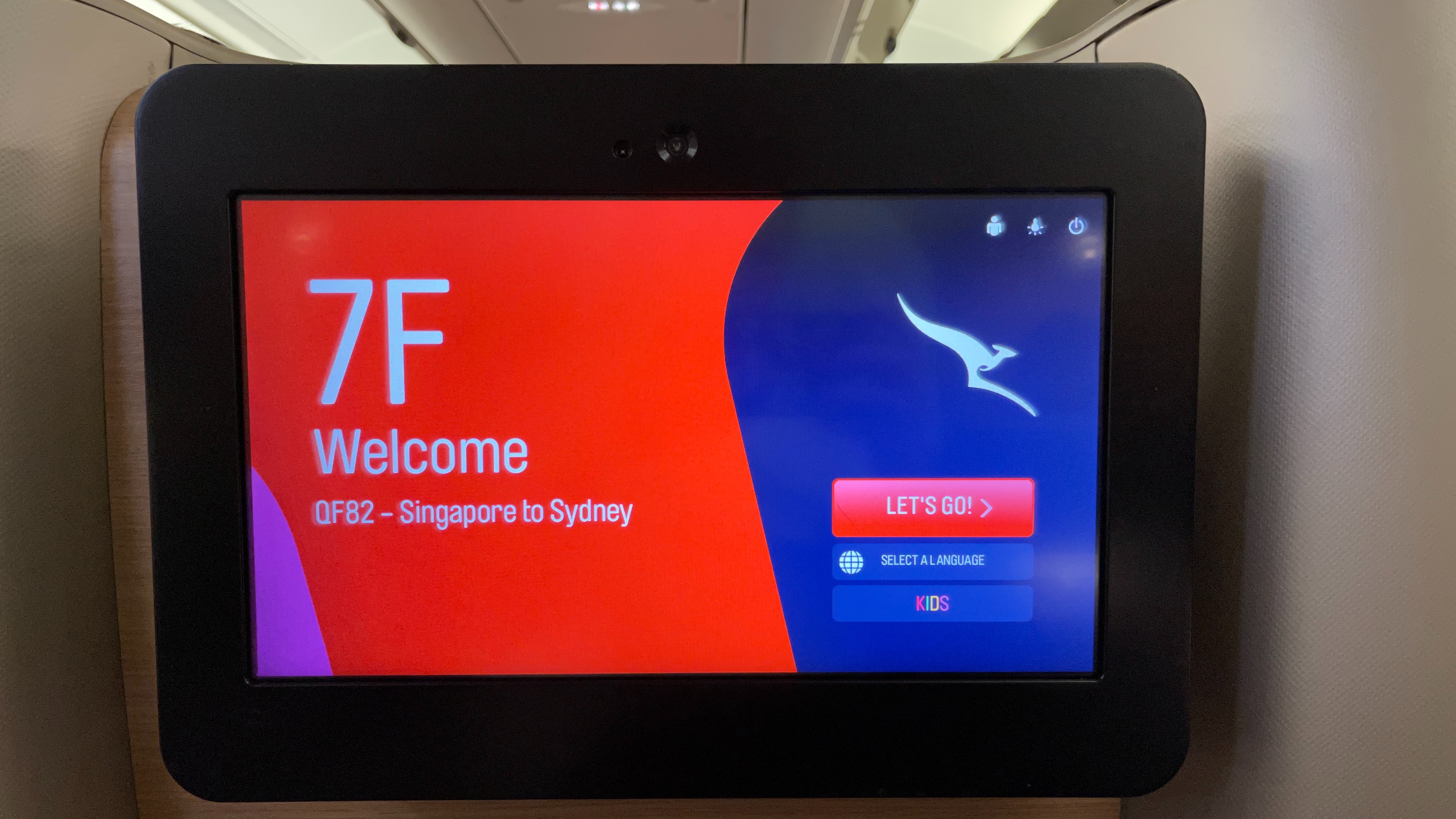
    Qantas QF82
    Singapore (SIN)
    – Sydney (SYD)
    16 February 2022
    Depart: 9:00PM
    Arrive: 7:20PM (+1 day)
    Duration: 7 hr 20 min
    Aircraft: Airbus A330-300
    Seat: 7F (Business Class)

    Pre-trip planning

    Visa

    Most visitors to Australia will require an Electronic Travel Authority (ETA) or a visa to enter, including Singapore citizens.

    Citizens of over 33 countries, including Singapore, Malaysia, Brunei, Hong Kong and Japan can apply for the ETA through the Australia ETA app. Each ETA is valid for 12 months and costs A$20.

    This is incredibly important and I cannot emphasise how many Singaporeans have always forgotten to apply for an ETA until they get to the airport. In the past, airlines were able to do this ETA for you at the airport for a hefty fee, but this is no longer the case as Australia Departure of Home Affairs has now restricted applications to be done solely through the app.

    If you have an APEC Business Travel Card, that also forms a valid visa and you will not have to apply for an ETA for your visit, even if it’s for leisure.

    Covid tests

    At the point of time when I travelled, Australia required a pre-departure test using either a PCR at most 3 days before the flight, or an ART 24 hours before the departure time.

    Australia will drop all pre-departure testing requirements from 18 Apr 2022, so you are only subject to an on-arrival test which in most cases are a self-administered ART within 24 hours of arrival.

    Checking in

    Qantas operates out of Changi Airport Terminal 1, and currently operates out of row 8, sharing the row with its low cost subsidiary Jetstar.

    Check in Row 8

    The configuration has now changed a little since the pandemic. There is an agent stationed at the front of the kiosks and counters to check that you have all the necessary documents, before leading you to a self check-in kiosk.

    After you retrieved your boarding pass and bag tags, you can then proceed to the baggage counters to drop off your bags. Note that your boarding passes printed from the kiosks should be seen and stamped by an agent. Mine wasn’t stamped, and I was turned back at the pre-immigration point to get my boarding pass stamped.

    The seat

    Qantas uses the Thompson Aerospace seat product across its entire wide-body fleet. The product is now almost 10 years old, and fans of Qantas would be familiar with the hard product. 

    Qantas A330-300 business class seat

    With the phase-out of the older business class products that used to be on the A330-200s, Qantas now only has a single seat product on all its long-haul widebody aircraft, making it easier for travellers, so you don’t have to figure out what seat you are travelling in.

    Given that I have reviewed this product before, you can read more about the seat here.

    The service

    QF82 is a red-eye flight to Sydney, with a total flight time of 7 hours and 20 minutes.

    Boarding commenced 45 minutes before the scheduled take off time. I went to the boarding gate at about 30 minutes before, only to find an incredibly long queue for the security screening. Lucky for me there’s a separate queue for business class passengers, which was considerably shorter than the economy one.

    Gatehold room

    Within 10 minutes I was done with security and was on my way straight to the aircraft. The business cabin was surprisingly full today, with all but two seats occupied in the 28-seat section.

    Promptly I took my seat at 7F. The mattress topper, along with the comforter, was wrapped in plastic and placed on the seat along with an unwrapped pillow.

    On the side console was a pair of menus, one for the supper service, and a separate breakfast card for me to check off the items I wanted before landing. This card was collected even before the aircraft took off, so that’s some mighty efficiency there.

    Menu cards

    A cabin crew came around to offer a pre-departure drink of either water, juice or champagne, along with a set of the famed Qantas pyjamas. It was pretty refreshing to be offered a drink while the plane was still on the ground, given that some other airlines took the chance to do away with it.

    Soon we were on the way, with the push back of the aircraft happening about 15 minutes after the scheduled departure time of 8.30pm.

    Food & drinks

    Right after take-off, dinner service commenced at about 9.45pm. The crew pushed a trolley through the cabin, setting up the table setting along with a first choice of drink. Instead of a table cloth, the setting was all done on a pre-set tray: a side salad, a bread plate and the glassware. I took one slice of bread, and went with a glass of red wine.

    Dinner setup

    The supper menu was rather simple: a choice of main course, followed by dessert. There were four main courses to choose from, and a good selection of post-meal sweets or cheeses.

    Business class dinner menu

    For my main course tonight, I chose the prawn wanton dumplings (a misnomer, given that wantons are dumplings). Unfortunately, the main course took another 20 minutes before it got to me.

    Prawn wanton dumpling soup

    The wantons were served with a serving of springy egg noodles, as well as a side of Asian greens, spring onions and green vinegared chillis. Overall it was a pretty hearty supper, and I liked that it was served not too hot. The greens looked like they are out for too long, but otherwise everything else was excellent.

    The only other problem is that this dish didn’t exactly go with a slice of bread and a side salad, but I’ll let that pass.

    After I was done with dinner, the tray was promptly cleared. The dessert came around in a form of a trolley, which I chose an ice cream from (10.30pm). Out of Singapore, Qantas carries a selection of Haagen Daz ice cream, and the flavour of the day was strawberry.

    Dessert and wine

    Soon after, I set out my own mattress topper on the seat, reclined the bed into bed mode and fell into snooze land.

    Given that breakfast was ordered at the beginning of the flight, this means that the crew didn’t have to wake passengers up too early for breakfast. The breakfast card offered three options: a full breakfast served 90 minutes before landing, an ‘express breakfast’ served 60 minutes before landing, or no breakfast at all.

    Breakfast card

    A full breakfast meant any number of items on the menu, while an express breakfast was a choice of one food item and one drink. I picked two drinks – a juice and a coffee – and a savoury item for breakfast, and I was woken up only about 40 minutes before landing, so I guess you could get away with two drinks for an express breakfast.

    Express business class breakfast – Brioche roll with bacon and egg

    Breakfast was a brioche roll with bacon and egg, which was delicious. The bacon was over cooked and incredibly salty even at 35,000 feet, so I took out most of it. I also chose a cold pressed juice and a white coffee. The crew was too busy to offer a second round of coffee, so when I finally managed to get the attention of a crew for a review, the captain asked to prepare the cabin for landing. This meant that my review had to come in a paper cup, given that all crockery would have to be stowed for landing by that time.

    Qantas amenity kit

    You might be wondering about the amenity kit. Qantas usually offers an amenity kit on the flight, but as there were not enough on this flight, the kits were only available on demand. I learnt about this only when I requested for an eye shade, and the crew discreetly explained why they didn’t hand them out to all the passengers.

    The amenity kit this season was designed in commemoration of Qantas’ centenary in 2020, with a range of designs in a nod to its colourful history. The kit itself was a throwback to the 1960s era, decked in pastel blue.

    Qantas amenity kit (credit: Qantas)

    Within the kit was an eye shade in the same design as the kit, a dental kit, ear plugs and also a mini-kit of amenities from Australian wellness brand Li-Tya, comprising lip balm, face cream and hand cream. Qantas has also chose the eco-friendly route of packing these items in paper (rather than plastic), in a nod to their sustainability efforts.

    Qantas amenity kit

    Qantas also offers pyjamas in its business cabin for overnight flights. On this flight, the PJs were handed out on the ground, right after the pre-departure drinks were served. Note that if you are taking a day flight out of Australia to Asia, PJs will not be offered; if you ask, sometimes they do have a set or two lying around that they can offer you with.

    Qantas business class pyjamas

    One thing to note: Qantas business class cabins have a dearth of lavatories, so there is almost always a line of people waiting to wash up and change out. To avoid that and to maximise sleep, I usually wear my own sweatpants and change into the pyjamas top only, and change out only after I arrive and get out of the airplane.

    Final thoughts

    It was an incredibly enjoyable flight, partly accentuated by the fact that I was visiting Australia for the first time after a three-year gap. It was encouraging to see that the flight was relatively packed in both cabins, and that will only continue to grow as international travel relaxes further with time.

    The cabin service also remained fairly consistent from before. While all airlines have been reeling from a drastic drop in revenue over the last two years, I’m also glad that Qantas has stuck out and not further reduced cabin service. In contrast, Singapore Airlines have now reduced meal service on Australian flights to just a single meal service, which in my opinion is way too little.

    Overall I’m relieved and happy that the Qantas experienced remained more or less similar to its pre-Covid days. While the schedule is not as favourable given it only operates only a single overnight flight out of Singapore, it is still nonetheless a very comfortable flight to be on.

  • Singapore switches VTL on-arrival testing to ART; reduces travel history requirements

    Singapore switches VTL on-arrival testing to ART; reduces travel history requirements

    On-arrival tests changed from PCR to ART; travel history requirements shortened to 7 days

    Singapore earlier this week announced a slew of changes to the way it manages its Covid-19 restrictions in Singapore, and along with it made some key changes to travel requirements as well.

    These changes are largely in a positive direction, including using cheaper testing requirements, and simplification of how it categorises source countries.

    Cheaper ART test for VTL on-arrival testing

    From 22 Feb 2022, VTL and Category I travellers will no longer need to perform an on-arrival PCR test. Instead, they will have up to 24 hours from their entry into Singapore to take a supervised self-swab ART at one of the testing centres (Combined Test Centres (CTCs) or Quick Test Centres (QTCs)) located across Singapore.

    Supervised testing centre

    In addition, the current enhanced testing regime requiring VTL travellers to take self-administered Antigen Rapid Test (ART) from Day 2 to Day 7 will also cease.

    This change will see travellers save at least S$110 on testing, further lowering the costs of travelling into Singapore.

    For those who were originally arriving on or after 22 Feb 2022 and booked a PCR test at Changi Airport through Changi Airport Safe Travel Concierge, you will be given a refund in the coming days, less a S$3 processing fee.

    Note that you will be required to self-isolate until you get a negative result on the ART test at the test centre, so it’s best to book early.

    No more testing requirements for transit passengers

    In another critical development, transit passengers are also no longer required to take any form of pre-departure tests from 22 Feb 2022 if they are transiting in Singapore.

    In tandem with the other adjustments to travel measures, CAAS will also be removing the pre-departure test requirements for all passengers transferring or transiting through Singapore. This will help reduce cost, improve convenience and enhance Singapore’s attractiveness as a transfer/transit hub.

    The changes will apply to all flights arriving in Singapore from 21 February 2022, 2359 hours (Singapore Time), regardless whether the flight is a designated VTL flight.

    CAAS

    Note that this waiver only applies for passengers who are booked on a single ticket through Changi Airport. If passengers self-connect (i.e. booked two separate tickets) and have to pass through immigration, the prevailing rules (whether VTL or non-VTL) will apply, including test and quarantine requirements.

    Previously, transit passengers are also required to produce a negative PCR or ART (only for Category I, II and III countries) test taken within two days before their flight. This has posed some challenges for some travellers, given the increasing number of countries – in particular European countries – that have completely done away with pre-departure tests.

    With the scrapping of the transit testing requirement from 22 Feb 2022, passengers flying through Changi Airport will no longer need to carry a test result, unless of course their final destination requires it. 

    Simplification of travel categories

    In addition to the changes in testing requirements when travelling to Singapore, the authorities have also simplified how it categorises countries when travelling to Singapore.

    The least restrictive Category I will remain as it is, and continue to enjoy quarantine-free entry into Singapore. Category I countries include China, Chinese territory of Macau, and Taiwan. Hong Kong has unfortunately been ‘demoted’ to Category II.

    Similar to VTL travellers, travellers from Category I countries will also no longer be required to take a PCR test on arrival, instead they will also be required to take a supervised ART at an approved test centre within 24 hours of arrival.

    Categories II, III, and IV will be combined into a single General Travel category. To this end, the SHN period for non-VTL travel from these countries will be standardised to 7 days, and can be taken at either a hotel of choice or a private residence.

    A new category, Restricted countries/regions, will be introduced to allow for imposition of stricter measures where necessary.

    Final thoughts

    These changes are definitely good developments, with travel to become less restrictive and cost prohibitive.

    The switch to post-arrival ART test from the current PCR testing regime is probably the most celebrated change; this alone will result in a S$110 savings, significant when travelling from a nearby country.

    However, one key hassle in this new arrangement is the requirement to visit a test centre after arrival, as well as the need to isolate until you have received your negative result.

    The simplification of the country categorisation, along with the shortening of travel history consideration (from 14 to 7 days) and the standardisation of SHN period is also another positive move. Travel today has been made complex, so any consolidation is always good news and easier to navigate.

    Regardless, these moves are another step to the reopening of Singapore as a travel hub, and opened up even more travel opportunities and options for Singapore residents, even as we continue to inch towards a semblance of normalcy for international travel once more.

  • Singapore relaxes post-arrival swab requirements; waives tests and quarantine arrangements for recently recovered travellers

    Singapore relaxes post-arrival swab requirements; waives tests and quarantine arrangements for recently recovered travellers

    Some good news for travellers: Singapore has relaxed some inbound travel requirements, including a relaxed post-arrival testing regime, as well as exemptions for recently recovered travellers.

    Singapore health authorities have made two significant tweaks to its border health measures last week, which should make travelling slightly easier. This includes a relaxation of the post-arrival testing regime from today (24 January 2022) for travellers entering the country via the Vaccinated Travel Lane (VTL) programme, as well as some important exemptions for travellers who have recovered from Covid-19 within the last 90 days.

    Relaxed self-testing regime from 24 January 2022

    The daily testing regime, in place since Omicron first hit Singapore in November last year, will now be replaced by self-administered antigen rapid tests (ARTs) on days travellers need to leave their accommodation. This is a significant improvement from the previous rules, including a daily swab plus two supervised tests on Days 3 and 7.

    No more supervised swabs at Quick Test Centres

    Travellers arriving on VTL flights and entering Singapore will only be required to complete an on-arrival PCR test (S$125) at Changi Airport (no change), followed by ARTs on days 2 to 7. The actual policy communication is as follow:

    “[VTL travellers] will only be required to do unsupervised self-administered ARTs from Day 2 to Day 7 of their arrivals if they need to leave their place of residence or accommodation.”

    Singapore Ministry of Health

    In addition, results from your self-administered ARTs will no longer need to be reported to MOH via the self-reporting system.

    Note that the ART kits are not provided, travellers will need to purchase and use their own kits. If you are travelling or returning to Singapore, note that you are not supposed to go out to purchase them during your self-isolation period as you wait for your PCR test results. Otherwise, these ART kits are available at most pharmacies in Singapore, or available for purchase online from marketplaces such as Shopee or Lazada.

    What if I test positive when I do my own ART?

    If you test positive from a self-swab and have minimal or no symptoms, the good news is that you can self-isolate at home and no longer need to get a PCR confirmatory test.

    Instead, you will follow Ministry of Health’s Protocol 2, as follow:

    • Go home and self-isolate immediately.
    • Stop going to work and cancel your social activities to protect others from possibly being infected with Covid-19.
    • Self-isolate for 72 hours at home or in your accommodation. This will allow you to safely recover, monitor your health and avoid spreading the virus further.
    • At the end of 72 hours, you should perform a self-administered ART.
    • You can stop self-isolation and resume normal activities when you get a negative result.
    • If you continue to test positive, continue to self-isolate and self-test daily until you obtain a negative result, or until 12pm on Day 10 for vaccinated individuals, whichever comes earlier.

    Test and quarantine exemptions for recently recovered travellers

    One other key development are for travellers who have recently recovered from Covid-19.

    Travellers who have recovered from the virus within 90 days of their last infection will be exempted from all testing and stay-home notice requirements. This includes any required Stay-Home Notices (SHN), pre-departure tests or on-arrival tests.

    Travellers will need to furnish the following, which must be in English or accompanied with an English translation:

    • A positive Covid-19 PCR test or professionally-administered ART result 7-90 days (for fully vaccinated travellers) or 14-90 days (for partially or unvaccinated travellers) before the date of departure for Singapore.
    • A discharge memo that states the traveller’s name, and at least one other personal identifier such as the date of birth or passport number corresponding exactly with the information in the passport used for entry into Singapore. It should also state the date of infection or the discharge date, which must be within 7-90 days (for fully vaccinated travellers) or 14-90 days (for partially or unvaccinated travellers) before the date of departure for Singapore. The memo must also be issued by a relevant state authority or licensed medical professional.

    This is great news because it will allow those who have recently recovered from Covid-19 to travel or return to Singapore after only 7 days, instead of the current 14 days.

    Recently recovered travellers can also return earlier than 7 days

    For people who have unfortunately contracted Covid-19 just before returning or travelling to Singapore, they may be permitted to depart for Singapore if they test negative for Covid-19 via a PCR test or professionally administered ART at least 72 hours after their initial positive diagnosis, even if it’s within the 7-day period for fully vaccinated travellers or 14-day period for partially or unvaccinated travellers.

    However, the full testing and any quarantine requirements will still apply should this group of travellers decide to return earlier.

    In any case, our recommendation is still to wait till the 7-day (or 14 days for partly or unvaccinated travellers) before travelling to Singapore.

    Final thoughts

    This turn of events is an affirmation as to how Singapore has understood Omicron and its management plans within the community.

    Health Minister Ong Ye Kung has come out to say in no uncertain terms that he expect another big wave of Omicron cases to come in the weeks ahead. Despite that, the current travel posture and the most recent changes reflects Singapore’s commitment to keep its borders open as we try to achieve an endemic state.

    The biggest news are for those who have recently recovered from Covid-19, with the waivers of all tests and quarantine requirements. This means that there is a lot more flexibility in planning for travel, as well as for those recently infected while overseas and wishing to come back to Singapore as soon as possible.

  • Australia opens quarantine-free travel for Singaporeans

    Australia opens quarantine-free travel for Singaporeans

    Leisure travel to Sydney and Melbourne for Singapore citizens will be possible from 21 November

    Hot off the most recent announcements that Australia and Switzerland would be added to Singapore’s Vaccinated Travel Lane (VTL) scheme, Singaporeans will be allowed to travel to select states in Australia from 21 Nov 2021, sans quarantine.

    Australian Prime Minister Scott Morrison announced at the G20 summit that Australia will be opening its borders for vaccinated Singapore citizens.

    The initial announcement last week of Australia’s addition to the VTL scheme was with a caveat: the two-way quarantine-free travel would only apply to Australian citizens, permanent residents and their families. Reciprocal arrangements for students and business pass holders was slated to be in place from late November, while leisure travel was last in the pecking order, to only take effect in December. 

    Two-way quarantine-free travel to Australia to start in November

    While Australia has yet to announce specifics for this latest development, this is what has been reported so far:

    From 8 Nov 2021, Australian citizens, permanent residents and their families will be able to travel between Singapore and Australia with no quarantine on either side, but with Covid-19 tests instead.

    Singapore Airlines has already scheduled For Eligible Passengers Only (FEPO) flights from Singapore to Melbourne and Sydney to cater to this group. 

    From 21 Nov 2021, this arrangement will be extended to Singapore citizens, as long as they board the flight from Singapore.

    Vaccination and testing requirements

    To be able to enter Australia, travellers must fulfill the following criteria:

    • Be a Singapore citizen. PRs and employment pass holders are not eligible for the time being.
    • Being fully vaccinated with a Therapeutic Goods Administration (TGA) approved or recognised vaccine, such as Pfizer, AstraZeneca, Janssen-Cilag, Moderna, Coronavac, or Covishield, at least 7 days prior to arrival in Australia. Children under the age of 12 and those who cannot be vaccinated due to a medical condition are exempted from this requirement.
    • Presenting a valid vaccination certificate in English, i.e. either the Australian Government issued International Covid-19 Vaccination Certificate (ICVC) or a paper or digital vaccination certification issued by a national or state/provincial level authority or accredited vaccination provider. In Singapore, this means a notarised vaccination certificate.
    • Completing the Australia Travel Declaration at least 72 hours before flight departure. 
    • For travellers going to Melbourne: All travellers will need to download the Service Victoria app. This allows users to check in and display their COVID-19 vaccination status. 

    Travellers going to Australia are looking at a minimum of 3-4 tests, depending on the length of travel. Both legs of the travel (i.e. Singapore to Australia and vice versa) will require a pre-departure test and an on-arrival test.

    Test (Testing Country)Testing deadlineEstimated Price
    Pre-Departure to Australia (Singapore)72 hours before departureFrom S$128
    On-Arrival in Australia (Australia)Within 24 hoursFrom A$145
    Pre-Departure to Singapore (Australia)48 hours before departureFrom A$145
    On-Arrival in Singapore (Singapore)On arrivalS$160 (before 18 Nov)
    S$125 (18 Nov and after)

    As you can see from above, the total testing costs for travelling to Australia can easily rack up to about $550. For visitors to New South Wales who are staying for longer than a week, note that you will need a second swab on Day 7, setting you back by about another $150.

    For now, you can get more information on arriving into both New South Wales and Victoria from the respective state governments websites:

    Designated VTL flights

    Travellers from Singapore to Australia may take any direct flight from Singapore to Melbourne or Sydney. This means that travellers have a choice of Singapore Airlines, Scoot and even Qantas from late November.

    However, travellers from Australia to Singapore must take designated VTL flights. Currently, only Singapore Airlines and Scoot have announced their VTL flights. Qantas and Jetstar are expected to join the VTL list in the weeks to come, although they have yet to mention anything.

    VTL flights from Melbourne

    VTL FlightDay of OpsDepartureArrivalFlight TimeAircraft
    SQ218Daily003505157h 40mAirbus A350-900
    SQ228Daily164021207h 40mAirbus A350-900
    TR19Daily19400045(+1)8h 5mBoeing 787-9
    Melbourne-Singapore VTL schedule (8 November 2021 – 26 March 2022)

    VTL flights from Sydney

    VTL FlightDay of OpsDepartureArrivalFlight TimeAircraft
    SQ212Daily090514158h 10mAirbus A350-900 /
    Boeing 777-300ER
    SQ222Daily161021208h 10mBoeing 777-300ER /
    Airbus A380-800
    TR13Tue, Thu,
    Sat, Sun
    21450310(+1)8h 25mBoeing 787-9
    Sydney-Singapore VTL schedule (8 November 2021 – 26 March 2022)

    All remaining services are non-VTL flights, including flights on Qantas and Jetstar (for now). Passengers on non-VTL flights will be subject to the prevailing SHN requirements on arrival in Singapore. 

    Qantas has earlier announced that it is restarting its flights to Singapore (from Sydney and Melbourne) from 22 Nov 21, while its low-cost arm Jetstar will fly from Melbourne to Singapore from mid December onwards.

    Flights from other parts of Australia are not part of this plan as yet, but we expect them to join the party in due course.

    A note about Australia ETA

    While Singapore citizens do not need a visa to visit Australia, you will however need to apply for an Electronic Travel Authority or ETA.

    This can previously be done via the ETA website or through travel agents, but is now no longer possible.

    Users are instead pointed to a mobile app – AustralianETA – if they are eligible for ETA under current rules and are holders of passports from the following countries/territories: Brunei, Canada, Hong Kong (SAR of China), Japan, Malaysia, Singapore, South Korea or the United States of America.

    The app can be downloaded (free) from App Store (Apple) or Google Play store (Android).

    For more information, visit this website.

    Final thoughts

    This latest announcement is somewhat unexpected in its limitation to just Singapore citizens, but as countries move towards reopening their borders, we expect this to be an interim restriction.

    It’s definitely a move in the right direction, with leisure travel to Australia now possible, adding another option to the existing suite of destinations under the VTL scheme.

    While the testing costs may seem daunting, our view is that this should be regarded as the ‘new normal’ when planning and budgeting travel costs. In time to come as the world truly lives in an endemic manner, these costs will also naturally come down, making affordable travel possible once agian.