Latest Posts

REVIEW: InterContinental Kuala Lumpur, Grand Premier Room with Club access

In a frantic attempt to complete the IHG Accelerate challenge by 31 July 2018, the end of the promotion period, I had to clock two nights at any InterContinental properties across Asia Pacific or the Middle East.

Given that I’m not going to hop on a seven-hour flight to the Middle East for a stay, I began scouring this region. The cheapest InterContinental property in Asia Pacific turned out to be right next door: Kuala Lumpur.

I booked myself into the entry level room for two nights at the InterContinental Kuala Lumpur for a total of just under RM1,100 over two nights. The property has also offered a e-Upgrade option where you can opt for certain payable upgrades, which will be confirmed at check-in.

For this stay, apart from offering a paid room upgrade opportunity, the hotel also offered Club InterContinental access for RM150++ per person per day. Since I was going to stay alone, this is much more worth it than paying RM230++ for an upgrade to a Club InterContinental Room.

The Hotel

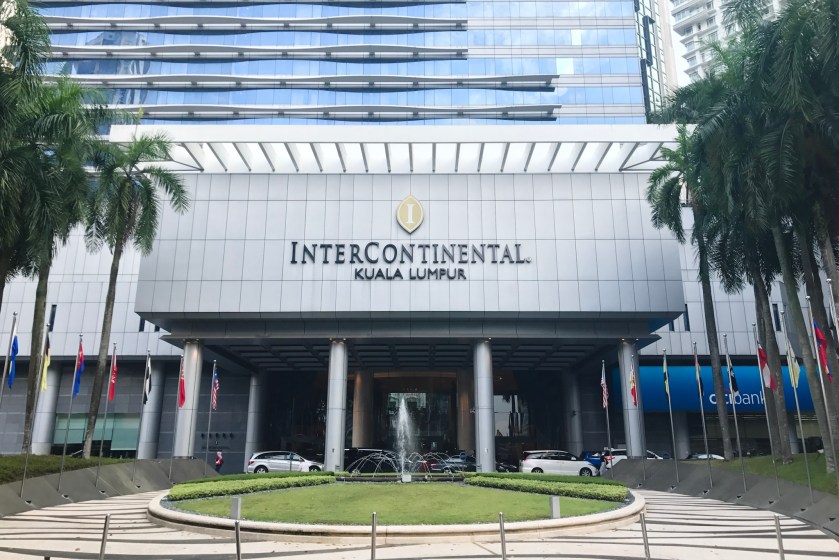
InterContinental Kuala Lumpur is located in the heart of Kuala Lumpur near Ampang Park, or a stone’s throw away from KLCC. The hotel is easily accessible from KL Sentral via the LRT, so travelling from the airport to the hotel is relatively fuss-free on public transport.
AB59C9E4-2F13-4944-8C90-55DFB1D44578

InterContinental Kuala Lumpur, formerly Hotel Nikko

The 473-room property took on the InterContinental brand only in February 2011. Previously Hotel Nikko, the hotel was built in 1997, which explains the design of the hotel: a large front lawn lined up with flag poles and a large driveway; a voluminous lobby adorned with a giant and rather gaudy chandelier. Having said that, the hotel was renovated when InterContinental took over in 2011.

While this is touted as a five star hotel, the hotel had only rather standard amenities. Apart from meetings and conference venues, the hotel only had a 24-hour gym and a swimming pool for recreation. There’s an on-site spa, but beyond offering treatments, the spa did not have any relaxation facilities such as a jacuzzi or sauna.

E8B5BAAB-A07A-4496-BA35-3D3E0D51218F

Fairly good sized swimming pool

The Room

Checking in was a breeze considering I arrived in the middle of the day. The check-in staff did acknowledge my IHG Rewards Club membership, and proactively offered an upgrade to the Grand Premier Room.
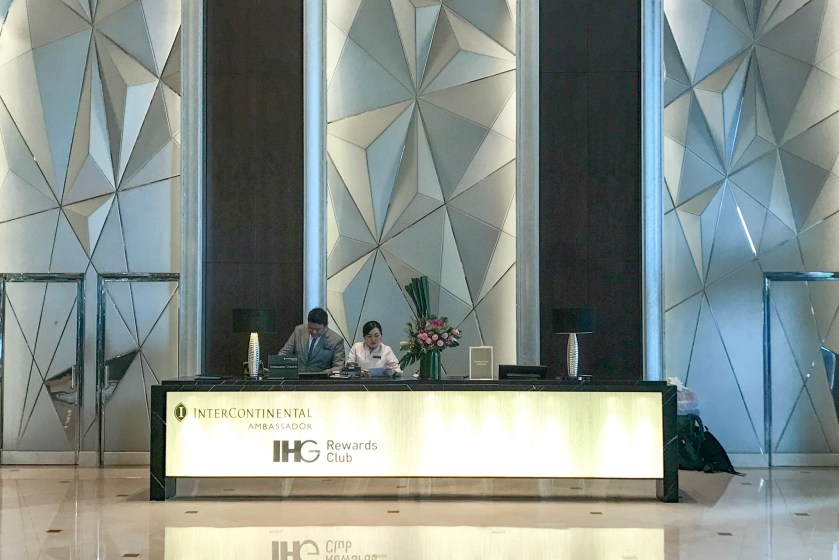
55597FA4-E922-4A28-B530-EF1D9CFC4464

InterContinental Ambassador dedicated check-in counters

Of course, while that sounded awesome, a closer look at the website showed that the first three room types – Deluxe, Premier and Grand Premier – were all of the same size, and offered the same amenities. And Kuala Lumpur is not a city with a great cityscape, so view is definitely not worth any premium.

8CBA8490-6CE2-4B37-A739-1D38FFFB5EDD

Entrance to the Grand Premier Room

At 42 square metres, InterContinental Kuala Lumpur offers up a generous room size, consistent with other hotels built around the same time. The Grand Premier Room, later I found out, was more recently renovated than some of the lower tier rooms.

The room featured a rather standard layout, with an oversized King bed backed upon a beige soft panel against one side and the TV on the other. I believe the bed could take up to an entire family of two adults with two very small children.

7A52D65F-0F4D-4307-AD1E-A7EBD7F67CAF

Grand Premier Room, InterContinental Kuala Lumpur

The bed was rather firm to my liking, but the pillows were rather lacking in support. Both mornings I woke up with a slight neckache, which was a pity given that excellent bed.

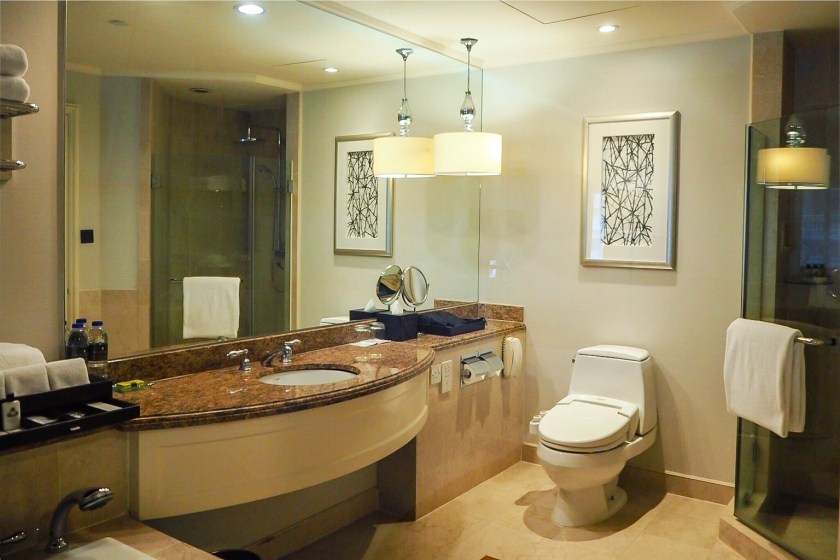
The bathroom now has a see-through glass wall that looks into the room, a feature that I don’t quite understand especially for larger rooms like these. In smaller, newer hotel rooms, hotels often do this to make the room more spacious. But in this case, I don’t see any particular function for this except if you’ll like to watch TV while standing up in the bathtub.
70E508A2-4A30-4A3B-A652-5265319E28D0

Spacious bathroom

Having said that, I appreciated the large bathroom. Arguably one of the better designed toilets, with the details put in sensibly. When else will you need a phone unless you run out of toilet paper while you are on the toilet?

The toiletries were from Agraria as well, similar to what is provided to all InterContinental properties around the world. The American brand markets itself as an aromatherapy brand, but I’m not too big a fan of their bath gels and shampoos as they feel rather watery and I ended up using half the bottle each time.

Club InterContinental

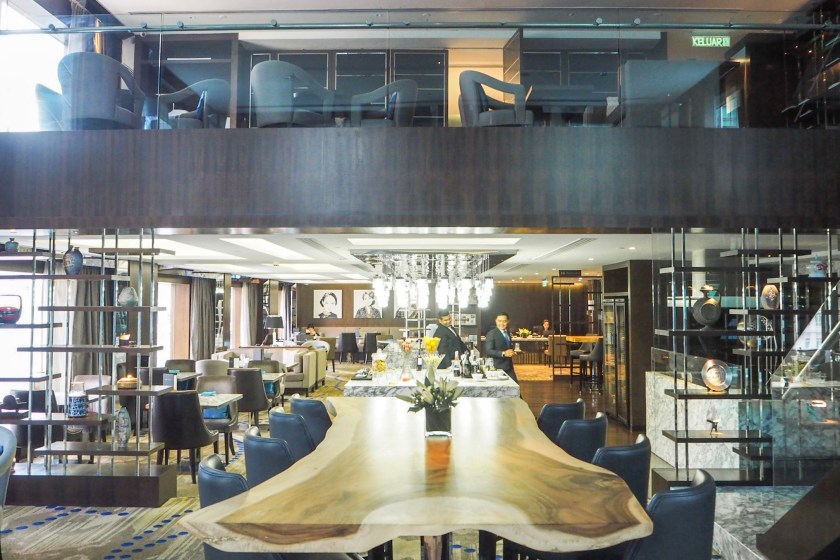
On level 26, certainly not as huge and definitely not as wonderfully designed as the Club InterContinental in Singapore. The decor is a little strange in my opinion, with large gaudy marble table tops and matching ugly chairs. The carpet was incredibly worn out too while the armchairs looked like they needed reupholstering.
9969485D-ACC2-4F31-A87D-FC462352E21E

Club InterContinental Lounge on Level 26

The centrepiece of the lounge was a full marble countertop where food and drinks were placed throughout the day. Hanging above was an array of lights hung from an equally unappealing reflective metal piece. All in all, they looked like they were designed on a budget in the 1980s and never got refreshed.

As with other Club InterContinental, the lounge offers all-day refreshments, with a la carte breakfast, high tea and evening cocktails for guests to enjoy.
42F50E47-DA08-4EC3-8940-E2C9A931D69F

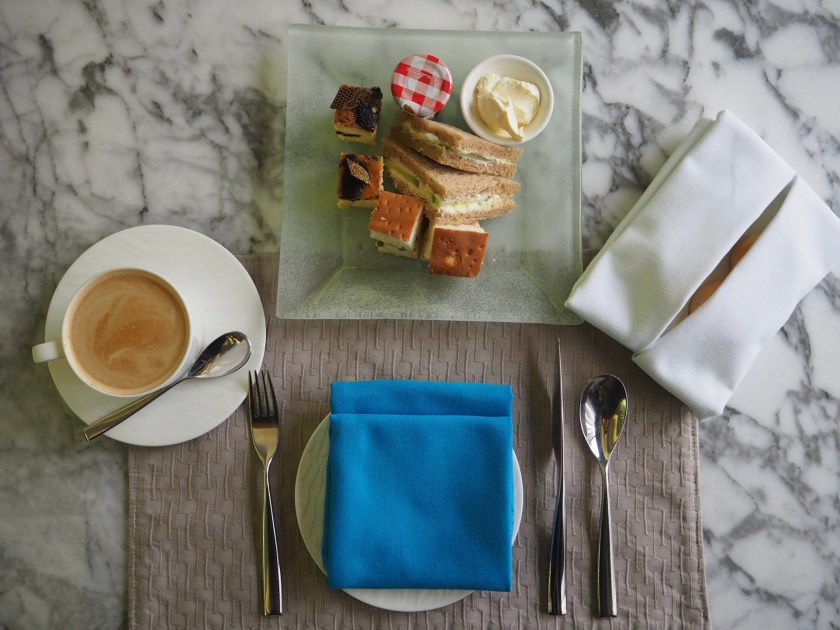
Afternoon tea at Club InterContinental KL

Right after checking in, I went to the lounge for the afternoon tea. The afternoon tea is available daily between 2.30pm to 4.30pm. Similar to InterContinental Singapore, there’s a three-tier afternoon tea set that’s served up, but you can also pick and choose from items if you are feeling peckish but don’t quite feel like a glutton.

Scones were delightful but a little too starchy, clotted cream was on point. The rest of the items were passable, but nowhere near memorable by KL standards, given that you could get incredibly delicious food anywhere.

A70F3944-01BB-4A1F-BD07-C96481222E57

Afternoon tea at Club InterContinental KL

I asked for a flat white to go with the high tea, but disappointingly what came was more like a cafe au lait.

This is when I start to find the service a little awkward. The staff were all incredibly polite and attentive, but the presentation of food and beverage is pretty much awkward. The coffee I requested for came filled to the brim of the cup, which also means that the wait staff struggled not to spill anything while bringing it to me. The sparkling water that I asked for came at room temperature and a single ice cube, again filled right to the brim and I found myself trying not to spill any while lifting it off the table to bringing it to my lips.

In the evening, cocktail hours was from 5.30pm to 7.30pm. Similar to the other InterContinental hotels, the Club lounge serve up a selection of hot hor d’oeuvres, along with a light buffet spread of canapés, cut fruits and cakes.

2DB5C102-5C66-4518-B456-7E69B054C1E9

Evening cocktails canapés 

I got there at a little over 6pm, and the lounge was well attended, but not filled to the brim. I ended up at one of the high benches as most of the choice tables were taken up.

What I thought was good effort on the hotel’s part was to have a theme each day. The first evening I was there, the food were essentially French, with a seafood skewer, some random beef cube and a mushroom tart. This was great, so I had a couple of servings through the evening along with the canapés and desserts.

8B89B2F5-B427-44B6-9B3E-CD6A34549454

Hot hor d’oeuvres, French themed

The second evening was Japanese, with a trio of karaage items for the hot food, and other appetising selections such as spinach in sesame sauce, unagi with seaweed, cucumber and ponzu sauce as well as an assortment of sushi (it was just California maki and inari sushi). Even the desserts were Japanese themed, featuring mochi, azuki cakes and azuki matcha creme.

Having said that, the quality of food was acceptable. It wasn’t mind blowing, but palatable enough for you to waste a bit of calories. Be sure to leave space to venture out and get yourself a wonderful Malaysian dinner.

Breakfast

As a Club InterContinental guest, you get a choice of breakfast either at Serena Brasserie at the lobby, or at the Club InterContinental lounge.

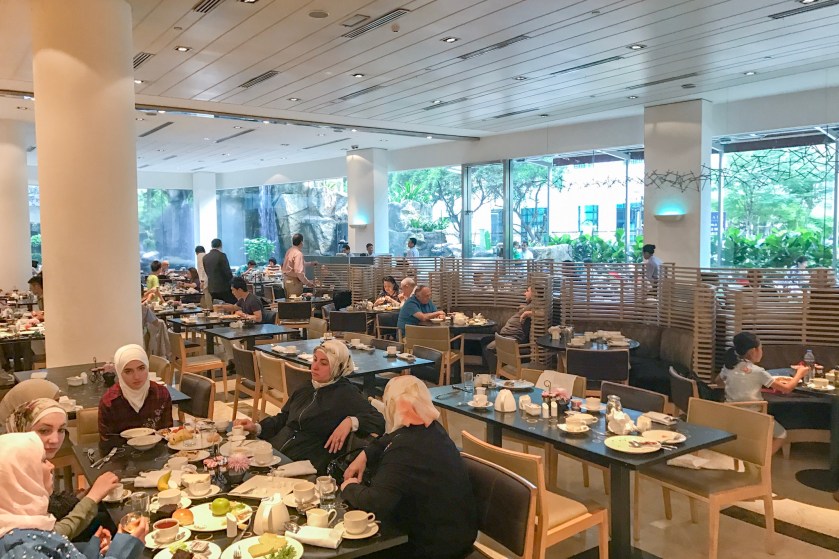
I checked out Serena on the first day. Even before 9am, the restaurant was filled to the brim and there was a line outside waiting for tables. Not totally unexpected, given the size of the hotel. I was seated rather quickly given I was alone and the groups ahead of me were waiting for larger tables.
277CE6D6-81C3-4D69-8ECA-F3F0DA698D8E

Breakfast at Serena Brasserie

I usually have rather high expectations of Malaysian hotel breakfast buffets. In my opinion, they are always much better than the Singapore hotels. For instance, the made-to-order roti canai at Eastern & Oriental Hotel in Penang still lingers in my mind (and its imaginary tastebuds).

The variety of food at Serena Brasserie was pretty reasonable, with a splattering of offerings such as western options, to your local dishes such as congee with condiments, live cooking noodle station, dim sum and Indian curries. However, the quality was pretty dismal: while there’s a staff making roti canai, they were not cooked to order. It was more of a showroom, where he makes it, cuts it into smaller pieces and brings it out to one of the buffet tray.

78BE95F7-120E-4850-A6C9-03CDF8486350

Roti canai & dim sum, Serena Brasserie

The noodles were also incredibly underwhelming, lacking flavour in the soup base. The ingredients were pretty dubious too, and I had no idea what the balls were.

Above all, given the volume of guests, the trays often empty out quickly and the staff were slow in replenishing the food. I was staring at the empty tray of nasi lemak, with some remnants of rice left atop a banana leaf base, wondering if I should scrape the bottom of the tray.

The only thing worth eating in that place? The chicken siew mais. I probably had six.

The morning of the day I left, I decided to head up to the club lounge for my breakfast instead. As with other Club InterContinental lounges, it features a part buffet, part a la carte menu.

CCA204BD-B0C3-4BD9-AFA7-3481004A89F8

Breakfast at Club InterContinental KL

While the menu wasn’t extensive, it had a bit of everything: some local options, along with the usual western eggs and even lighter options.

Unsure of the portions, I decided to go for eggs first, done over easy. The single egg arrived slightly burnt, with two oily small tomatoes and some asparagus on the side.
9A3B47C2-7895-4423-A263-F7D4EB8F1F9E

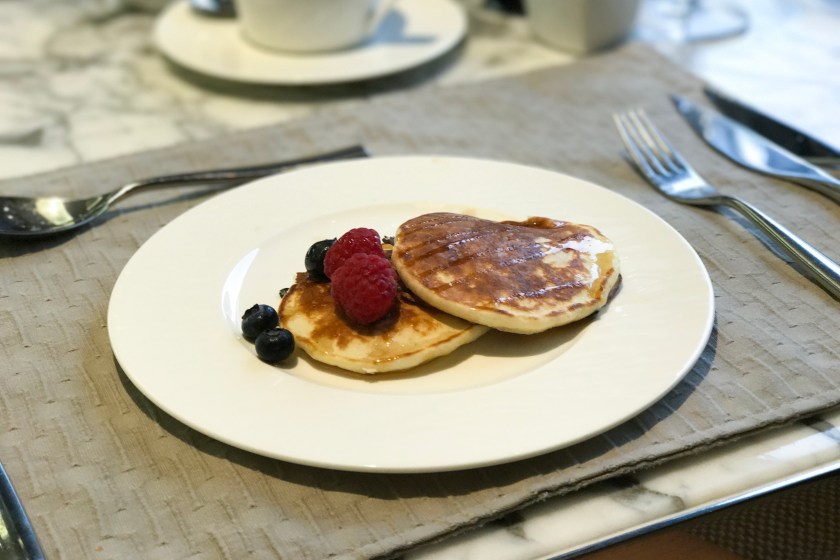
Pancakes with berries

Obviously a single egg is not going to fill me up. So after I was done with the egg, I ordered the pancakes. The serving was small, but totally unappetizing. For some reason, the pancakes came slightly cold and almost tasteless on its own. I gave up after one pancake.

The buffet spread was slightly better, especially the nonya kuehs. That kind of was the saving grace for me.

Final words

Overall the hotel is pretty underwhelming for an InterContinental property. The rooms are decent, but the quality of food and service is pretty much lacking. For a foodie city, the quality of food, both in the lounge and at the breakfast restaurant, has to go up several notches to attract people to want to spend time in the hotel, although one can argue that you shouldn’t be spending time in any hotel in KL.
F93EAF07-F0DB-4746-BF96-D730FCF44D1E

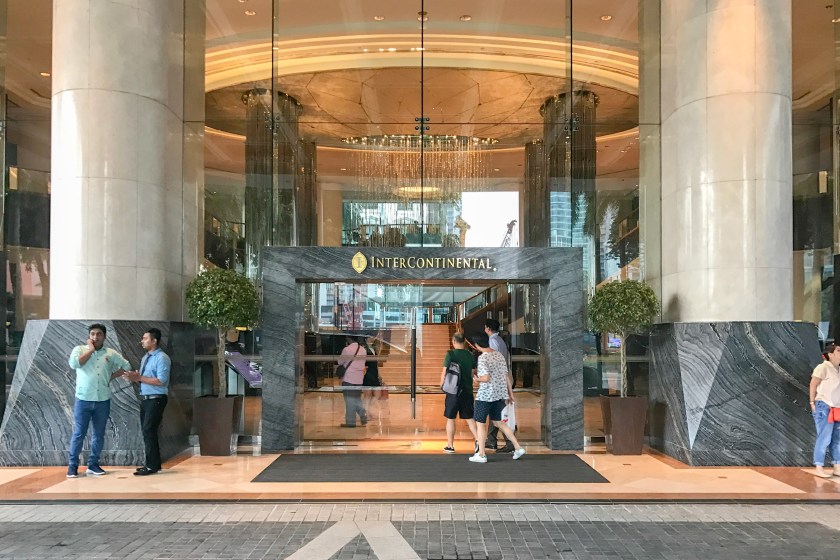
InterContinental Kuala Lumpur

Don’t get me wrong, it’s not that the service is bad. What is lacking is the refinement in the service, particularly of the wait staff in the lounges. The staff were friendly, but when it comes to plating food, serving drinks, you could tell that they needed a lot more training.

While InterContinental Kuala Lumpur has got pretty good rooms and plenty of space to work with, the hotel will be hard pressed to compete with other properties in the city, especially if it wants to be a hotel of choice for business and premium leisure travellers alike.

Amex offers 4 bonus KrisFlyer miles for every dollar spent on mobile wallets

American Express is the latest card to jump on the mobile payment promotion bandwagon, with an offer launched on 15 August 2018 for Singapore Airlines co-branded credit card holders.

For every S$1 spent, Amex will give you 4 bonus miles, on top of the usual mileage. That means PPS Club branded cards can earn up 5.3 miles per dollar, Ascend can earn up to 5.2 miles per dollar and the blue Krisflyer card earns 5.1 miles per dollar.

D5450084-AB2A-4A5F-91A3-7459FA0CD2D8

Earn up to 5.3 miles, the promotional flyer says

There’s a very big BUT

However, the promotion is capped at a grand total of… 1,200 bonus miles. That’s right, that’s a pathetic S$300 spend.

Also, foreign spend will not count towards the promotion too.

This offer is obviously not as generous as what Citibank did with their insane up to 8 miles per dollar spend, but still a relatively easy way to scoop up some miles if you are already holding the card.

How to sign up?

Because this promotion is not available on their website, I assume that only those targeted for this promotion (i.e. received the promotional email) will be eligible to sign up.

So, if you have the email, make sure you click on the “Save to Card” link in that email to register for the promotion first. Only the first 20,000 cardholders who register for the promotion will be eligible for the promotion.

Then, proceed to spend S$300 on your Amex KrisFlyer card between 15 August and 15 November 2018, and wait for the 1,200 bonus miles to be credited.

One caveat though: for any reason if you are holding multiple Amex KrisFlyer cards (I cannot imagine why you will do that), every card is eligible as long as you receive an email for it.

Earn double status credits on Qantas Frequent Flyer

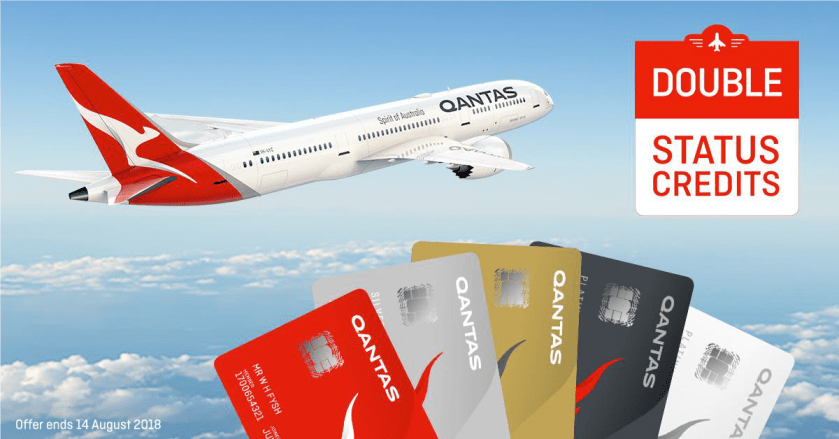
For the minority of you who are Qantas Frequent Flyer members, Qantas is running its double status credits promotion again, this time from 9 to 14 August 2018.

The mechanics are fairly simple:

1. Register for the promotion here. Needless to say, you need to be a Qantas Frequent Flyer member first.

2. Book your flight between 9 to 14 August 2018. Your flight(s) must be between 21 August 2018 and 9 August 2019. Note that the deadline for booking is 11.59pm AEST (Sydney time), so that means 10pm Singapore time.

3. Travel and wait for your bonus status credits to come in!

Now the fine print…

You can book as many flights as you want during this promotion and all of them will qualify for bonus status credits.

You can fly other airlines and qualify for the bonus status credits as long as they have a QF code. So this means you can fly Singapore to London on Emirates (via Dubai) as long as you book it on Qantas.com. And that will earn you 200 status credits (25 credits per sector, multiplied by two) altogether on a single return economy class trip. The wonders of codeshares.

Flying Business class on Qantas from Singapore to Sydney and back? That’s 120 status credits one way, so giving you a total of 480 status credits with the double status credits promotion. Two flights and you will make gold.

Unfortunately, status credits earned through the Jetstar bundles do not count, so tough luck.

What are status credits?

Qantas’ status credits are similar to Cathay Pacific’s club points, which are points you accumulate towards elite status. For Qantas, 300 credits will get you Silver (oneworld Ruby), 700 credits to Gold (oneworld Sapphire) and 1,400 credits to Platinum (oneworld Emerald).

So of course, Silver is incredibly lame, with the only benefit being the 50% bonus Qantas Points you will earn with every flight.

Gold is where the real deal begins. With Gold and oneworld Sapphire, you will get access to Qantas business lounges (except when travelling domestically in Australia), as well as oneworld business lounges, such as the incredibly good Cathay Pacific lounges in Hong Kong.

Best part of being a QFF Gold member based in Singapore is that if you are flying Jetstar Asia (3K), you can also access the Qantas Singapore lounge before your flight.

You also get 75% more points on all eligible flights, so that’s pretty awesome if you ask me.

Platinum is the holy grail, and unless you are a very frequent business traveller, it’s hard to see why you would hit 1,400 status credits in a single year unless you visit London five times a year in Business class. That’s way too much money to spend on prestige, but if you have that kind of money, you will get access to oneworld First Class lounges, including Qantas’ flagship First lounge in Sydney. You will also enjoy 100% bonuses on all Qantas points earned.

So if you are planning to book a Qantas flight anyway, this is probably the best time to buy your tickets.


Singapore Airlines introduces KrisPay

tl;dr: don’t ever, ever convert your Krisflyer miles to KrisPay miles. EVER.

Singapore Airlines introduced KrisPay yesterday, where Krisflyer members can use their miles to offset cash payments at a range of merchants in Singapore (lucky you, rest of the world).

This is how the marketing email sells it:

KrisPay is the new digital wallet that turns your KrisFlyer miles into instant purchases – right from your mobile phone, starting from as little as 15 miles. You can now use KrisPay for everyday spend such as your petrol purchases at selected Esso service stations^, M1, Challenger and many more participating merchants.

How bad is it?

It is… really bad. From the mechanism, to the conversion rate, to the redemption levels. Let’s look at them one by one.

The mechanism

First you will have to download the KrisPay app (I’ve downloaded it, so you don’t). The first bugger that annoyed the hell out of me was that the app can only be installed on iOS 11.0 or later. So if you are like me and detest updating iOSes unless absolutely necessary, this is already a sign of things to come.

31BC9148-0D7D-4F10-90DC-E681D988FBE6

Once you have successfully downloaded the app, you have to sign in with your KrisFlyer account.

To use KrisPay, you will need to first convert your KrisFlyer miles to KrisPay miles. This conversion is irreversible so please do not try it.

For the added touch of insult, the KrisPay miles are only valid for six months, as compared to three years for KrisFlyer miles. I suppose this is a feeble attempt for you to use up your soon-to-expire KrisFlyer miles if you are not intending to travel.

And once there, you pay by scanning a special QR code at the merchants, similar to how you will use GrabPay.

The conversion rate

The rate is absolutely dismal, where you can use 150 miles to offset S$1. That’s 0.67 cents per mile, which is an absolute waste of your miles even if you have too much.

Let me put this in context: a return business class ticket to Tokyo (saver award) will cost you 86,000 miles. What else can you do with 86,000 miles?

If you decide to buy Singapore Airlines tickets and pay with your Krisflyer miles in part, 86,000 miles will offset about S$877.55.

If you decide that your miles are not worth spending on SQ tickets (gasp!) and decide to use them on Krisshop, you can get S$688 in value.

But, if you decide to go crazy and use that on KrisPay, you will get… S$573.33.

What would you prefer, a return business class ticket to Tokyo or S$573.33?

The list of merchants

KrisPay launched with a list of 18 merchants spanning retail, food and beverages, beauty services and petrol. The upside is that they have got some pretty big names, such as Cedele, Esso and Gong Cha.

The bad side? Roll out is pretty patchy right now. For instance, KrisPay is only accepted at 23 out of 62 Esso stations, and a very tiny three out of 11 TWG outlets.

Also confusing are the specific terms and confusions conditions for each merchant. For instance, Esso only allows KrisPay for fuel payment, M1 doesn’t allow you to use them for prepaid cards, etc. To add salt to the wound, payment by KrisPay will render you ineligible for other promotions and discounts. So for Singapore-based customers who are so used to 10-14% discounts at Esso, you can kiss that goodbye.

If you want the full list of merchants, click here.

So why KrisPay?

The loyalty proposition in Singapore has definitely heated up over the past couple of years and even airline loyalty is not spared.

While airlines traditionally built their loyalty programme around cultivating repeat customers and rewarding their repeated patronage with free flights, the landscape has evolved to the point today where it has gotten too easy to earn miles (or points).

This creates an increased uptake in redemptions, particularly on very lucrative routes, that will result in loss of revenue. Therefore it is in SQ’s interest to burn these points at the cheapest possible way while still retaining the overall attractiveness of the programme without having to slap on restrictive rules such as short lifetime of miles.

It will be interesting to see what’s the uptake on KrisPay and the actual number of miles being used. I suspect the number will not be that low after all.


Bank of China introduces Elite Miles card, possibly the best miles card ever

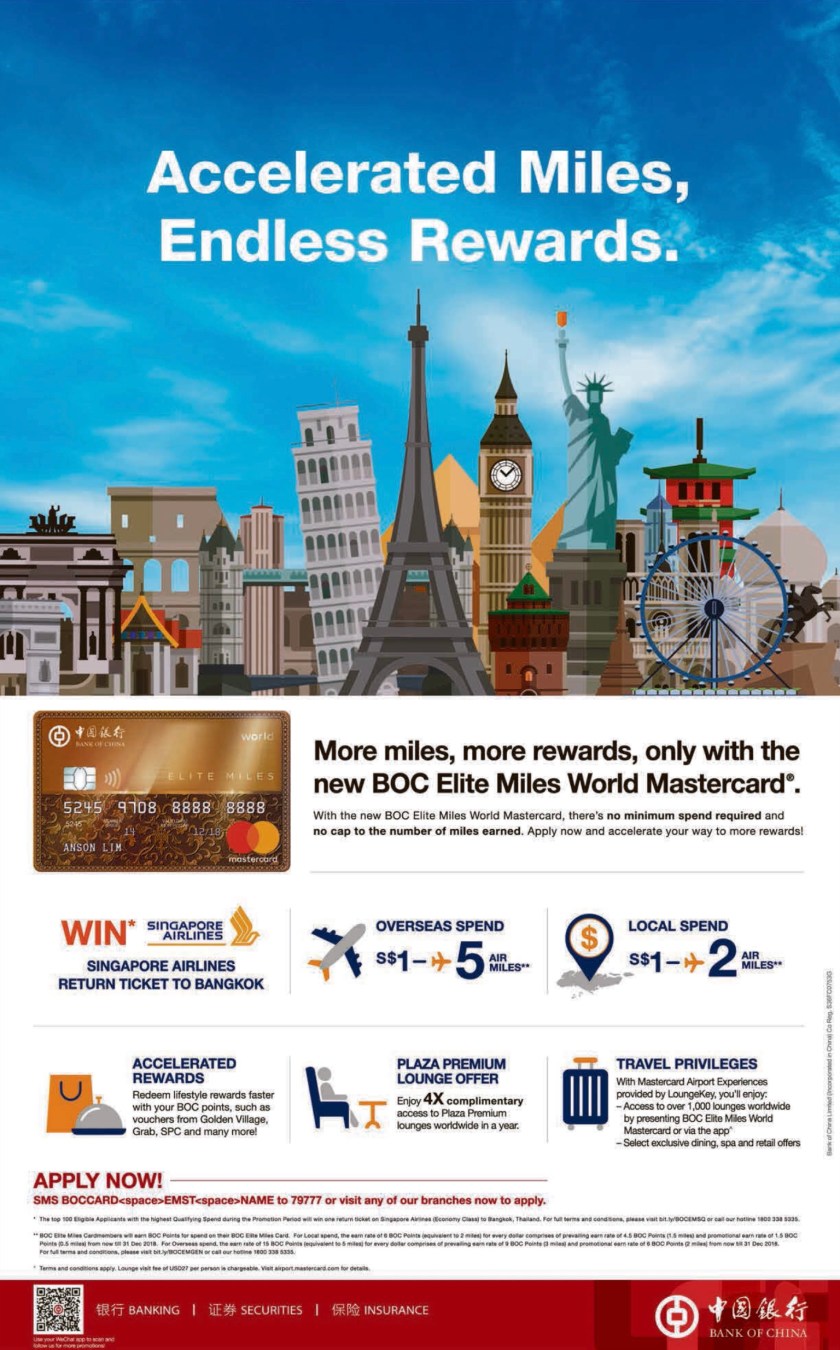
Banks are probably one of the last few advertisers who still believe and benefit from print ads in newspapers, because this caught my eye today:

C6BE6267-6493-494D-A028-3B9CAAA79E75

Bank of China is relatively new foreign retail bank operating in Singapore. They offer a very decent banking account offer for customers but in terms of credit cards, they have predominantly been offering in cash back cards.

Exceptionally high earning rates

So what is BOC Elite Miles card offering?

  • Local spend: promotional rate of 2 miles per dollar spent (usually 1.5 mpd)
  • Overseas spend: promotional rate of 5 miles per dollar spent (usually 3 mpd)
  • 4 complimentary entry to Plaza Premium lounge per year
  • And a chance to win Singapore Airlines return economy ticket to Bangkok

The promotional earn rates are valid for spend till 31 December 2018, but in any case these trump any promotions made by banks locally so far.

Miles credit card punters will be incredibly familiar that the market norm for Singapore is anything between 1 to 4 miles per dollar spent, or maybe up to 8 miles per dollar spent during exceptional promotion periods.

This is rather… alarming because in the long run this will not be sustainable. Why? For banks, they typically purchase the miles to use as rewards for their customers from airlines at rates that are typically lower than open market rates (i.e. what you pay if you buy miles directly from airlines as a member), but these are also not cheap for banks.

Also, given that banks only earn from finance charges and merchant fees (which are not great), you wonder what’s left after they factor in the costs of acquiring these miles from airlines.

What does this mean? Grab it while it’s too good to be true.

Now, the fine print

All points earned expire in less than 12 months

Update: BOC rewards points will last up to 18 months, with points earned between any programme year (from 1 July to 30 June) expiring a year from the last day of the programme year.

For illustration, see below:

B927FFFC-F6F8-41C4-A92C-76AA7A3DA03D.jpeg

Note that BOC will issue the BOC reward points in lieu of miles, but BOC reward points have a relatively short expiry: points earned within a 12-month period from 1 July to 30 June of the following year will expire on the last day of that period (i.e. 30 June). This means that you will have to set a reminder to redeem those points every year!

Confusing rewards points conversion rate

In the credit card terms and conditions, it states that:

Cardmembers are entitled to 9 BOC Rewards Points (equivalent to 3 Air Miles) per S$1 Overseas Spend and 4.5 BOC Rewards Points (equivalent to 1.5 Air Miles) per S$1 Local Spend.

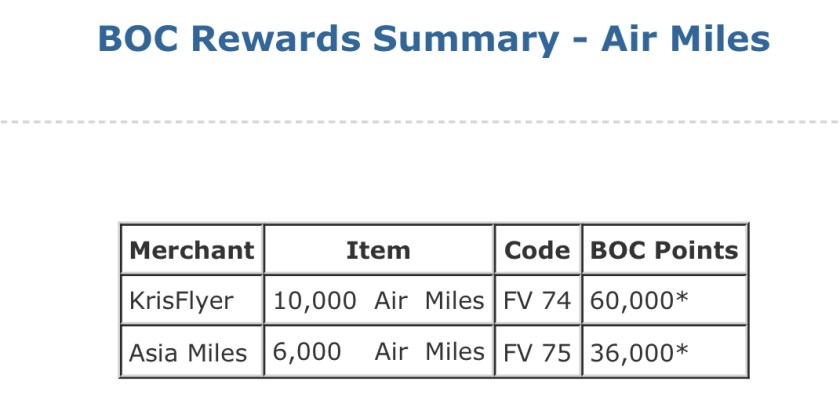
This is alright, until you do a deep dive into the redemption pages:

298680AF-DDCC-43C1-88D6-7696A9C9D889.jpeg

So is it 6 BOC points to 1 mile, or 3 BOC points to 1 mile? God knows.

Update: I called up BOC to clarify this, and apparently BOC points and BOC reward points are completely different things. So the advertised rate prevails, 3 points to 1 mile.

So… how do I apply?

The Bank of China website is rather 1G (under developed) at the moment, and so is their marketing. There’s no microsite for the card, only two bit.ly links that lead to PDFs of the card and promotion terms and conditions.

Also, when I walked into a Bank of China branch earlier today, the staff seem to have no clue about the new card as well and suggested that I call.

So if you ask me, I’ll say, take a bit of a wait and see attitude first. Or if you can stomach the risk, you can do as the ad says, SMS BOCCARD<space>EMST<space>NAME to 79777.

Also, you can find the registration link here, which was posted on their Facebook page.

This is not a sponsored post btw.