Category: Fly

  • Singapore Airlines is revising its redemption prices again, less than two years after the last time

    Singapore Airlines is revising its redemption prices again, less than two years after the last time

    Singapore Airlines will be increasing the redemption rates for all award tickets, as well as upgrades, from 24 January 2019. This increase will see Krisflyer members forking out anything from 2,000 miles to 15,000 miles more for their premium economy, business or first class ticket.

    For those who have longer term memories, the last revision was in March 2017 (yes we are in 2019, guys), where SQ famously removed its 15% online redemption discount, in return for absorbing fuel surcharges on its tickets.

    This time round it’s mostly grim. Economy class rates remained unchanged, but everything else is going up – both saver and advantage rates. We will take a look at the increases at the saver level, because, frankly who redeems at an advantage level unless you really need to travel?

    One great news for those who usually upgrade with their miles: SQ will now allow a two-class upgrade from Economy to Business for aircraft with the premium economy product. Previously this will not be possible.

    Premium Economy

    Premium Economy saver rates have gone up between 2,000 and 5,000 miles per way. If you are travelling from Southeast Asia to anywhere in Asia Pacific, you are likely to have to fork out an additional 2,000 miles each way.

    For ultra-long journeys, expect to pay 5,000 miles more. See below for some examples:

    Singapore to Premium Economy saver, each way (‘000 miles)
    Old New Change
    Hong Kong, Taiwan 22.5 24.5 +2 (8.8%)
    Japan, South Korea 32.5 34.5 +2 (6.1%)
    South Asia 30 32 +2 (6.6%)
    Australia (excl Perth, Darwin) 45 47 +2 (4.4%)
    Europe 62.5 64.5 +2 (3.2%)
    USA (West Coast) 65 68 +3 (4.6%)
    USA (East Coast, Houston) 70 73 +3 (4.3%)

    Business

    This is where the shit gets real. Business Saver rates have gone up between 1,500 and 11,000 miles each way. To show that inflation spares no one, every single city pair have gone up, including Zone 1 to Zone 2 fares, i.e. Singapore-Jakarta & Singapore-Kuala Lumpur flights.

    For very long flights like Australia to Europe services, travellers will now have to fork out about 22,000 miles more for a business class return flight. Under the old rules that would have given you a Singapore-Bangkok one-way business ticket. Ouch.

    Singapore to Business saver, each way (‘000 miles)
    Old New Change
    Indonesia, Malaysia 17.5 19 +1.5 (8.6%)
    Thailand, Vietnam 20 21.5 +1.5 (7.5%)
    Hong Kong, Taiwan 27.5 30.5 +3 (10.9%)
    Japan, South Korea 43 47 +4 (9.3%)
    South Asia 35 39 +4 (11.4%)
    Australia (excl Perth, Darwin) 58 62 +4 (6.9%)
    Europe 85 92 +7 (8.2%)
    USA (West Coast) 88 95 +7 (8.0%)
    USA (East Coast, Houston) 92 99 +7 (7.6%)

    First/Suites

    Of course, First and Suites are not spared, but then again if you have enough miles for redeeming a first class ticket, the increase really shouldn’t matter that much. The mileage required for redeeming a first class ticket have gone up between 2,500 and a cool 15,000 miles, depending on your city pair.

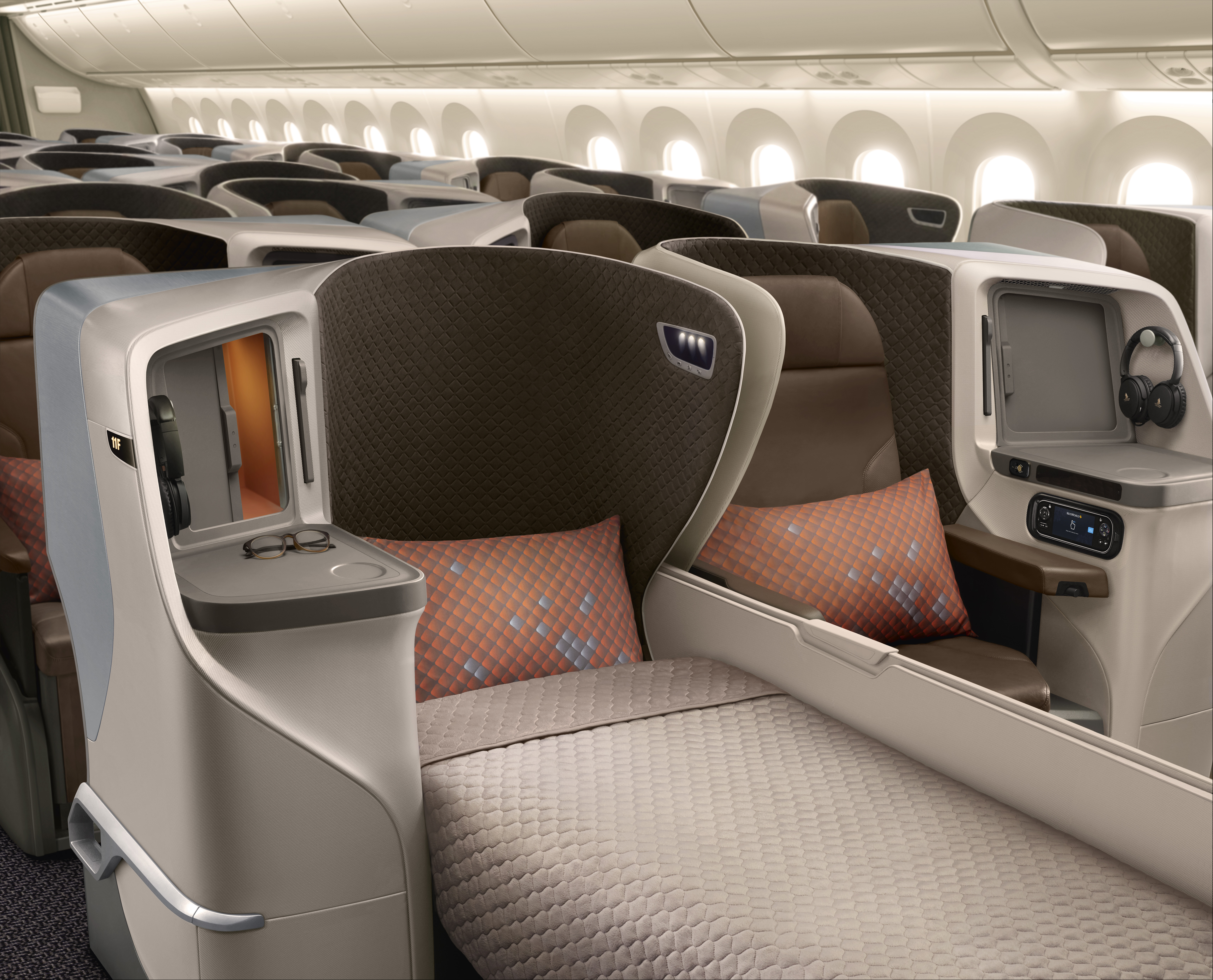
    Singapore Airlines A380 Suites
    Arriving into Frankfurt

    The shortest first class flight you can get is on Singapore-Jakarta for 25,000 27,500 miles which will let you have a taste of their famous Private Room at Changi Airport Terminal 3 before you head off south.

    If you are like me who like to save your miles for very long haul trips, be prepared to save even more miles now. The famous SQ11/12 Singapore-Frankfurt-New York service will now cost you a cool 132,000 miles each way, up from 120,000 miles. This is a far cry from the time when there was a 15% online discount, which will only set you back by 102,000 miles back before 2017.

    Here’s a look at some of the changes:

    Singapore to First saver, each way (‘000 miles)
    Old New Change
    Indonesia 25 27.5 +2.5 (10%)
    China (Beijing, Shanghai) 50 53 +3 (6%)
    Japan, South Korea 65 70 +5 (7.7%)
    Australia (excl Perth, Darwin), New Zealand 80 85 +5 (6.3%)
    Europe 115 125 +10 (8.7%)
    USA (East Coast, Houston) 120 132 +12 (10%)

    Upgrade awards

    I don’t normally encourage people to use miles for upgrades since you will usually have to purchase fairly expensive fares to be able to upgrade.

    There are however exceptions to this, for instance, if you are travelling for work and your company policy allows you to upgrade with your own miles.

    So what have gone up for upgrade awards? Generally, short haul flights are unaffected, the changes impact mid (anything further than Singapore-Hong Kong) and long haul flights. Increases are generally modest (1,000 to 2,000 miles each way) and tops off at 6,000 miles increase for Australia-USA flights, for a economy to business class upgrade award.

    The one good news that came out of it is that customers can now do an economy-to-business upgrade on flights with premium economy. This was previously not possible and customers wishing to upgrade to business would have to purchase a premium economy fare, to the dismay of many.

    No more waitlist within 14 days of travel

    Another good news that came out of today’s announcement was the confirmation of waitlisted flights 14 days before your flight. Previously there have been harrowing accounts of how flights were confirmed only a day or two before, but this will not longer be the case as SQ will no longer allow redemptions waitlisting within 14 days of departure.

    Final thoughts

    We didn’t see this coming. This increase certainly came very shortly after the last round, and the increases are a sign of things to come with Singapore Airlines’ transformation. While the increases are not dramatic, but the creeping and somewhat frequent changes should let you reconsider whether to stick to a single mileage programme, or hedge it with another.

    Bottomline is: don’t hoard your points. The longer you keep, the more value you lose.

    Of course, there are some bright spots, such as how Singapore Airlines have decided to make the Spontaneous Escapes a permanent feature, meaning you can enjoy last-minute redemption deals at 30% discount. Of course, this will heavily depend on what is unsold, almost akin to a bakery’s end-of-day discount sale.

    For the full changes and new award charts, see SQ’s website here.
  • SilkAir to operate daily services to Cairns from 2 June 2019

    SilkAir to operate daily services to Cairns from 2 June 2019

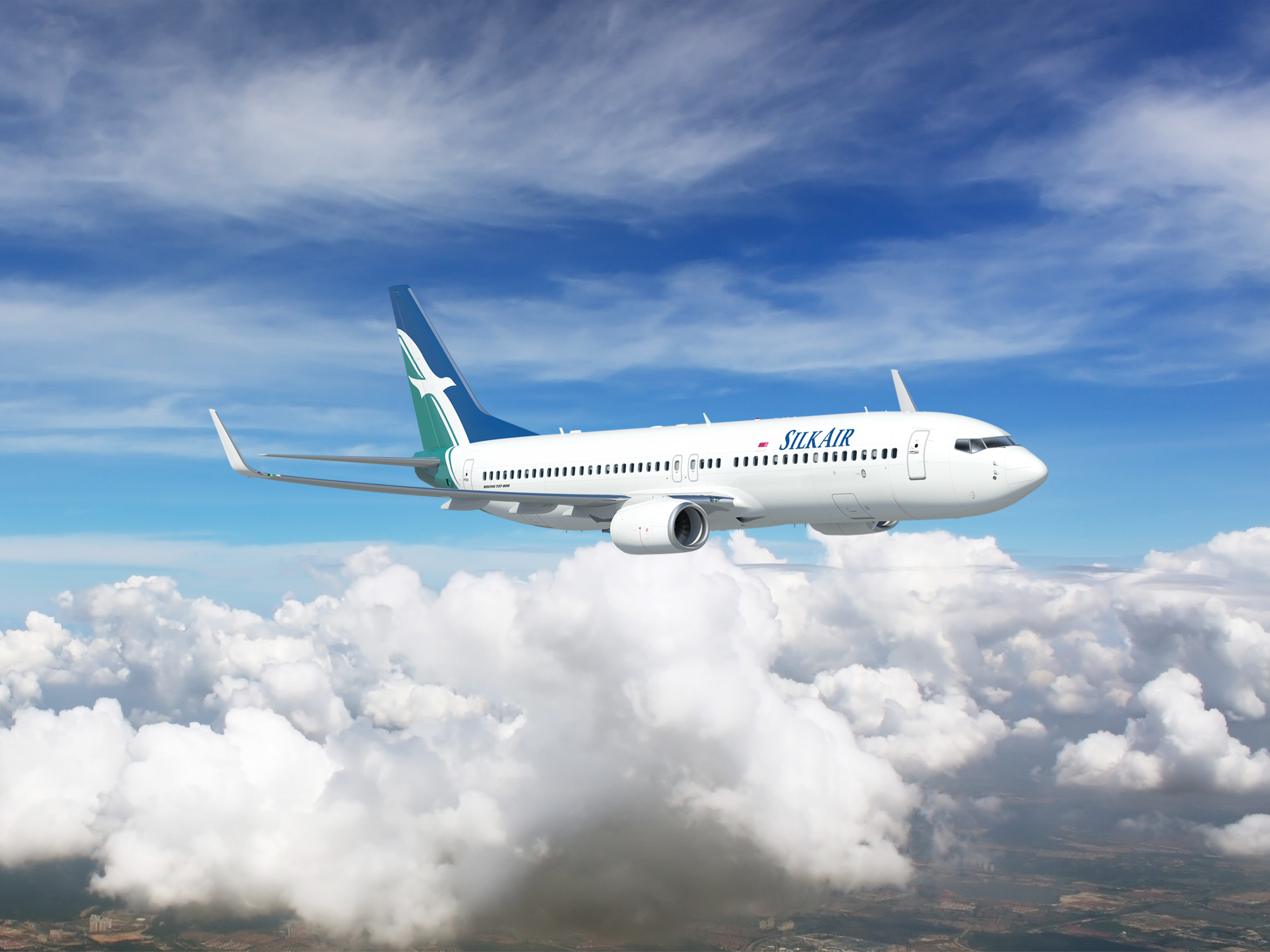
    After announcing a massive scrapping rationalisation of services which saw many of its destinations transferred to Scoot, SilkAir is certainly springing a surprise here: daily services to Cairns from June to October 2019, the better half of the Northern Summer season.

    Currently, SilkAir is operating five weekly services to Cairns. The additional services will be on Tuesdays and Sundays, operated with SilkAir’s latest Boeing 737 MAX 8.

    The full schedule is as below:

    RouteFlightDepartureArrivalFlight TimeDaysAircraft type
    SIN-CNSMI811011009556h 45mMon, Thu, SatBoeing 737 MAX 8
    SIN-CNSMI813084517156h 30mTue, Wed, Fri, SunBoeing 737 MAX 8
    CNS-SINMI812104515256h 40mMon, Thu, SatBoeing 737 MAX 8
    CNS-SINMI814181523056h 20mTue, Wed, Fri, SunBoeing 737 MAX 8

    SilkAir’s furthest destination

    At over 6 hours, Cairns is probably the furthest destinations on SilkAir’s network, even longer than the newly launched Hiroshima in Japan (that sits at 6 hours 15 minutes).

    That makes the flight an incredibly unattractive one, given that 6 hours is an awfully long time to be sitting in a narrowbody aircraft, and if you are up in the pointy end, an awful load of money to spend sitting on a recliner seat especially on the overnight services that departs on some days.

    SilkAir Boeing 737 MAX 8 Business Class

    You are probably better off flying to Brisbane and transferring onto a domestic service operated by Virgin Australia, whom Singapore Airlines owns partly.

    Apart from the northern city of Queensland, SilkAir also operate six weekly services to Darwin, also known as the Top End of Australia’s Northern Territory.

  • FLIGHT REVIEW: Japan Airlines Business Class Sky Suites III, Singapore – Tokyo (Haneda)

    FLIGHT REVIEW: Japan Airlines Business Class Sky Suites III, Singapore – Tokyo (Haneda)

    Japan Airlines / 4 Nov 18 / B777-200 / JL38 SIN-HND / Business Class / 11K

    I had to go to Shanghai for business at short notice, so routing was pretty difficult. Given flights into Shanghai was pretty full, I ended up booking myself on JAL on a slightly circuitous route, via Tokyo Haneda.

    I have travelled on JAL several years ago on a holiday, albeit in Economy, but was incredibly impressed with the comfort and space of the seat, and more remarkably the in-flight catering too.

    So this time round, I was equally excited to have a chance to try their business class product, in particular, the latest Sky Suites III.

    Japanese airlines have always been known to offer a great quality of service, synonymous with their culture of hospitality. However, despite that, they have never been as popular as some of the other Asian carriers such as Cathay Pacific and Singapore Airlines, which I can only imagine is due to its relatively uncompetitive pricing and less aggressive marketing activities outside of Japan.

    On the Boeing 777-300ER that I travelled on today, the business class section features a reverse herringbone layout of 1-2-1, all fitted with the Sky Suites III.

    Japan Airlines have got two key layouts to its business class cabins: the Sky Suite and the Sky Suite III. The Sky Suite is either a 2-3-2 configuration on the Boeing 777s or a 2-2-2 layout on the 787s. While all the seats boasts of unimpeded aisle access, this is achieved through the partitioning of the seats in a creative manner so that one does not have to jump over your seat neighbour, but instead walk out in a respectable manner.

    The Sky Suite III appears on most of the intra-Asia flights (and some Honolulu services), but the older Sky Suite features on most American services.

    You might be curious to know what happened to the Sky Suites II – they are exclusively on the Boeing 767s that Japan Airlines still operate to select destinations, but for the purpose of today’s review let’s forget about them.

    Japan Airlines business class – seat 11K

    Back to the Sky Suites III. At first glance, the seat is incredibly claustrophobic. There was hardly room for me to walk into my seat due to the way the seat was angled, and the way the pull-down table was fitted.

    The pull-down table was in a compartment in front of the seat, to the side of the in-flight entertainment screen. This creates a little bulk that juts out, restricted the passage in and out of the seat.

    What that means is that, whenever I want to get in or out of my seat, I’ll have to squeeze out of my seat sideways, which was certainly not without bumps in the middle of the night if I needed the bathroom.

    Once seated, the good news is that there’s plenty of legroom. Under the entertainment screen was a cubbyhole that forms part of your bed, and that hole extends quite deep in, I think I could let my six-month old baby sleep inside there, no problem.

    The seat itself isn’t very wide, but as most Japanese are pretty small in size, this is not exactly a problem.

    In-flight wifi instructions and rates

    It’s worthy to note that the flight offers in-flight wifi at a nominal fee starting at USD10.15 for an hour to USD18.80 for the entire flight, which was pretty standard for in-flight wifi services. I don’t usually log on to wifi in-flight (I like the feeling of being uncontactable, even if it’s for a few hours), but having this option is always good especially if you are supposed to stay contactable.

    If you are like me who prefers to read, there are also an array of reading materials from newspapers to magazines available at the galley for passengers to pick up. Unfortunately for me, most of them are in Japanese.

    Newspapers and magazines

    The service

    Despite the very late scheduled departure time out of Singapore, there is still a snack option for those who may be hungry.

    JAL’s in-flight dining is styled as BEDD Sky Auberge. I did some googling after getting off the flight but didn’t get any satisfactory answer as to what BEDD stands for. The only thing the marketing spiel mentioned was that the last D of BEDD stands for Dine, Delicious and Dream. Okay…

    Nonetheless, it’s heartening to know that Japan Airlines still offer two meal services (albeit one is a snack or refreshment), as Singapore Airlines have moved towards simply offering a single meal for the almost seven-hour flight.

    On menu for the late night snack today was a grilled chicken, as well as a chawanmushi, or steamed egg custard.

    I didn’t try any of those, and decided to head straight to bed.

    For breakfast, there was a breakfast order chit that was placed on my seat before I got there, asking if I wanted breakfast and my preferred choice of breakfast. While we were still on the ground, the cabin crew came around to collect those forms. I opted for a Japanese breakfast.

    About 90 minutes before landing, the cabin crew came around to wake passengers up for breakfast. My table was promptly set, before the crew came by with some water and juice.

    Shortly after, a very beautiful Japanese breakfast set was placed in front of me. It was probably the best breakfast I had in the air. Ever.

    Right in front of me was an assortment of fruits, chicken roll with burdock, tamago (egg), and grilled fish cake, Japanese pickles, and some simmered eggplant.

    The main grilled dish was a grilled salmon, accompanied with steamed koshihikari rice and miso soup. I couldn’t ask for more.

    I slowly savoured every single item, which was so delicately and immaculately presented, a total joy to see and to eat. The taste was on point, the rice was warm and fluffy, and the salmon tasted as though it was freshly prepared. It was indeed one of the finest meals I had on a plane.

    To wash off the meal, I had two coffees. For those who don’t know, JAL curate their own coffee collection, called the JAL Cafe Lines, where they work with a Japanese coffee master who recommends the coffee used in-flight.

    And with the end of the meal service, the cabin crew was very prompt to come around to keep everything in preparation for landing.

    Final thoughts

    All in all, my flight was probably close to my dream business class flight: excellent food, polite service, and a seat where most of the things worked. Japan Airlines is one of the airlines where the moment I got on, I have a strong sense that I was already there in Japan – the cuisine, the service, the environment was just so Japanese, and this worked for me.

    I like how the service was polite, seemingly genuine, and more importantly, perceptive. They know when to come around, and when to give you space.

    The seat may not be great, but it was good enough to sleep in. The cubby hole is actually incredibly important. With a lot of airlines now compacting business class seats in a similar fashion where the foot well extends into the seat in front of you, what is usually the case is that the holes are too narrow to fit different sleeping styles. In this case, the JAL seats work for me.

    The only shortcoming of the seat was probably the table. I’m thinking there must be a better place to store the fold-down table from, as it is a rather big bulge that eats into the seat space at the moment.

    While they do not offer perks such as pyjamas and offer only a small basic amenity kit, most times, these things can be mitigated by bringing along your own supplies.

    Having said that, I didn’t have a chance to check out the in-flight entertainment this time round, so that will remain a missing part of the puzzle as to whether this is the best business class I’ve ever taken.

  • SilkAir moving 17 services to Scoot ahead of merger

    SilkAir moving 17 services to Scoot ahead of merger

    SilkAir has announced that it will transfer 17 destinations to the low-cost subsidiary Scoot progressively, starting from April 2019. 

    In the same announcement, Scoot will be stopping its Honolulu service, barely a year after the inaugural service. It will also be giving up four other destinations that is currently served by SilkAir and Singapore Airlines.

    SilkAir to Scoot transfers

    The destinations SilkAir will be giving up to Scoot, along with the dates that will happen, are below:

    CountryCityDate
    LaosLuang Prabang, VientianeApril 2019
    ChinaChangsha, Fuzhou, Kunming, WuhanMay, June 2019
    IndiaCoimbatore, Trivandrum, VisakhapatnamMay – October 2019
    ThailandChiang MaiOctober 2019
    MalaysiaKota KinabaluDecember 2019
    IndonesiaBalikpapan, Lombok, Makassar, Manado, Semarang, YogyakartaMay – July 2020

    SilkAir has earlier this year transferred 6 other services – Hangzhou, Kalibo, Kuching, Langkawi, Palembang and Pekanbaru – to Scoot as well.

    Observers who are following the merger keenly will know that 14 of SilkAir’s current fleet of Boeing 737-800s will be transferred to Scoot progressively as well, while Singapore Airlines will take the Boeing 737 MAX-8 under its wings.

    I will assume that the transfer of the aircraft will go in tandem with the routes, otherwise Scoot has no other way to manage the extra flying without any new aircraft.

    Scoot to terminate 5 destinations

    Along with the SilkAir transfers, Scoot will also stop services to four destinations which are currently served by SilkAir and Singapore Airlines. They are: 

    • Bengaluru – May 2019
    • Shenzhen – June 2019
    • Kochi – October 2019
    • Chennai – May 2020

    Scoot has also announced that it will stop its Honolulu services by June 2019, citing poor demand. This is not surprising, given it’s not the first long haul low-cost service to be culled; Norwegian announced its exit from the Singapore-London market earlier this year.

    The stoppage of Honolulu services is definitely a dampener, given how Scoot has announced its intent to venture into longhaul route, which is an arguably tough market for low-cost carriers.

    What this means

    The bad news first: this means that Krisflyer members can no longer redeem tickets on the SilkAir network to these destinations after the transfer.

    Of course, you may use your Krisflyer miles to redeem for Scoot flights, but intuitively, you will know that’s not a great value for your Krisflyer miles and you will be better off spending cash on them.

    Also, these routes will also lose their business class product for a ScootBiz service instead, which is really more a premium economy product.

    The other bad news is that you will potentially enjoy much lower fares on these leisure destinations. This means that going to places like Wuhan will now be a lot more affordable, given that you are able to mix and match the add-ons you need for the flight.

    SilkAir traditionally had kept fares pretty high while offering an essentially a product which I call “budget plus”, given that it only provides check baggage allowance and meals as additional perks, for a much higher fare. 

    Where does that leave SilkAir?

    With the integration to begin only from 2020, SilkAir has got some time to embark on its refurbishment project it announced earlier this year, to fit the narrowbody Boeing 737s with lie-flat seats and seatback entertainment.

    SIA has earlier said that the integration of SilkAir into the mainline will only take place when there are sufficient aircraft being upgraded to the new product.

    SilkAir is also currently taking in the new and shiny Boeing 737 MAX 8s, although it remains to be seen whether they will be delivered in the SilkAir livery or in the Singapore Airlines colours.

    SilkAir also has a small number of A319s and A320s, which it said it will phase out in time.

    After the 17 routes are transferred to Scoot, that will leave Scoot with 32 destinations in 14 countries. Of the 32 destinations, 10 are currently served by SIA, so you are only looking at an additional 22 destinations that will be added to the SIA network after 2020 as well.

    While this is the largest lot of destinations to be transferred, I won’t be too certain as to whether SIA will do another round of transfer before the sunset of the SilkAir brand.

  • Qantas Black FLYDay Sale: Economy fares from S$399; Business class fares from S$1,999

    Qantas Black FLYDay Sale: Economy fares from S$399; Business class fares from S$1,999

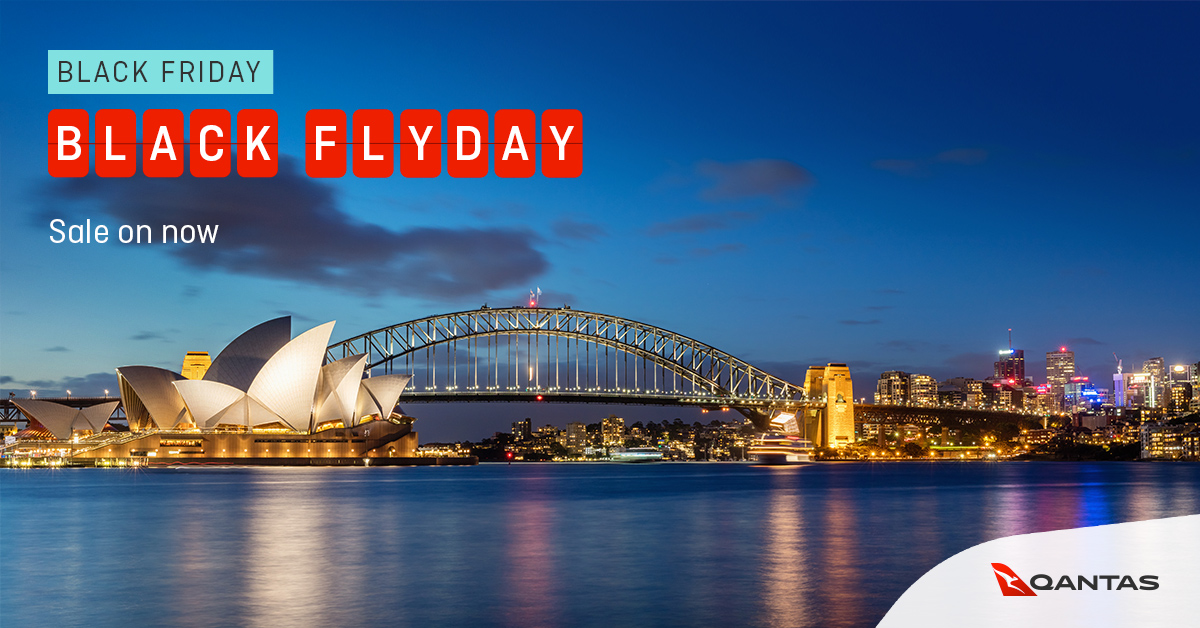
    Qantas is holding its Black Friday sale – called Black FLYDay – across Southeast Asia with very attractive all-in fares starting from S$399.

    Destinations include major cities in Australia and New Zealand, as well as London, San Francisco and Los Angeles.

    Sale begins Friday, 23 November 2018, at midnight and will run until 24 November 2018, 11.59pm, Singapore time.

    To book, visit qantas.com.

    Qantas Economy & Premium Economy sale fares (SGD)

    From Singapore toEconomyPremium EconomyTravel Period
    Perth399–24 Dec 18 – 31 Dec 18
    20 Feb 19 – 09 Apr 19
    01 May 19 – 30 May 19
    23 Jul 19 – 11 Sep 19
    Melbourne5391,399
    Sydney5691,399
    Adelaide, Brisbane569–
    Auckland, Christchurch,
    Queenstown, Wellington
    899–
    London999–15 Jan 19 – 21 Mar 19
    02 May 19 – 20 Jun 19
    Los Angeles, San Francisco1,099–14 Jan 19 – 28 Mar 19
    01 May 19 – 26 May 19
    14 Jul 19 – 01 Sep 19

    So if you have not planned your holiday for 2019, now’s the best time to think about it especially if you are planning on visiting Australia, New Zealand or London. I personally find going to USA via Australia a little bit of a detour, and the fares aren’t that great either (you could get SIA premium economy sale fares at that level).

    Exception business class sale fares

    Qantas is also running a Business class sale right after the Black FLYDay sale, starting from 25 November 2018.

    Qantas Business Suites – found on the A330 and B787

    The fares look very incredible, so I’ll be very curious as to how much availability are they putting out.

    Qantas Business Class sale fares (SGD)

    From Singapore toBusiness
    (one-way)
    Business
    (return)
    Travel Period
    Perth5991,749Depart between
    24 Dec 18 – 31 Dec 18

    Return by
    2 Feb 19
    Melbourne7991,999
    Sydney8492,299
    Brisbane9992,299
    Adelaide–2,89924 Dec 18 – 31 Dec 18
    13 Feb 19 – 13 Jun 19
    Auckland, Christchurch,
    Queenstown, Wellington
    –3,499
    London–5,62915 Jan 19 – 21 Mar 19

    The business class fares will be on sale between 25 November 2018 and 3 December 2018. All fares above are inclusive of all taxes, fees and carrier charges. To book, visit qantas.com.

    Best time for oneworld mileage runs

    Apparently there is no minimum stay required, so if you have nothing on between 24-31 December 2018, this might be the perfect time to do a mileage run.

    Qantas Frequent Flier members will get 7,800 points and 120 status credits for each sector. A return flight will earn you 240 status credits, a third of the 700 status credits required to achieve Gold.

    If you are a Cathay Pacific Marco Polo Club member, you will get 60 Club Points for each sector, which really isn’t that great given that you will need 600 points in a year to achieve Gold status.

    British Airways gives out 140 tier points per sector, which is pretty generous, but the only problem with BA is that you will need to take BA flights on top of racking up the tier points too.