Tag: Business Class

  • Review: Air China 777-300ER Business Class, Shanghai Hongqiao to Beijing (SHA-PEK)

    Review: Air China 777-300ER Business Class, Shanghai Hongqiao to Beijing (SHA-PEK)

    I was in China for a work trip earlier this month, and had a couple of days off before I had to head back home. While research where I could go, I stumbled across a fairly decent fare to Bangkok, in business class no less. So I booked myself on Air China.

    I tend to avoid Chinese carriers given its reputation, but at this price, I thought I’ll give it a try. Shanghai to Bangkok via Beijing in business came to about SGD590, a fare I couldn’t ignore. This routing also gave me a chance to try Air China’s domestic business class, which barely gets reviewed in English, so it seemed worth a proper look.

    In short, Air China’s 777-300ER business class is adequate for a Shanghai–Beijing hop, but nothing fancy. The crew was warm and the fare was excellent value, but the 2-2-2 seat is dated (this is what they use internationally too), privacy depends on who sits next to you, and the “wifi” won’t get you online.

    At a glance 6/10
    FlightCA1590
    RouteSHA → PEK
    DateNov 2026
    Departs08:55
    Arrives11:10
    Scheduled time2h 15m
    Aircraft777-300ER
    Seat15A · Business

    Verdict: A warm crew and a bargain fare, on a seat that’s best enjoyed without a neighbour. Pick a centre aisle seat, and bring your own entertainment.

    In this review

    Booking

    This was a cash booking: SGD590 (about USD460) for business class from Shanghai Hongqiao to Bangkok, connecting in Beijing. For two sectors in business on a full-service carrier, that’s a very good deal.

    I credited the flights to Singapore Airlines’ KrisFlyer rather than Air China’s own PhoenixMiles. The reason was very simple: I needed about 10,000 more Elite miles to reach KrisFlyer Elite Gold by the end of the month to make Star Alliance Gold, so this routing gives me the extra miles I’d need.

    KrisFlyer awards 125% of miles flown on every Air China business class booking class, so this is roughly what the ticket earned:

    EarnsSHA-PEKPEK-BKKTicket total
    KrisFlyer miles (and elite miles)8362,5753,411

    My flights

    The run home flew as follows:

    • CA1590 Shanghai Hongqiao (SHA) to Beijing Capital (PEK), business class, departing 08:55, arriving 11:10 (this review)
    • CA959 Beijing Capital (PEK) to Bangkok (BKK), business class

    About Hongqiao Airport

    Shanghai has two airports, and Hongqiao (SHA) is the closer of the two. Pudong International Airport (PVG) is the other, and is the one that more people are faimilar with.

    Hongqiao Airport sits about 13 km west of Shanghai’s People’s Square, and handled more than 50 million passengers in 2025, mostly on domestic flights. The airport comprises of two terminals:

    • Terminal 1 is the older, smaller one, and handles Hongqiao’s international and regional flights to Japan, South Korea, Hong Kong, Macau and Taiwan.
    • Terminal 2 opened in 2010, is far larger, and takes most domestic flights, including those of China Eastern, Shanghai Airlines, Juneyao and Air China. T2 is also linked to Hongqiao Railway Station and Metro Lines 2 and 10, so it’s an easy trip from the city or off a high-speed train.

    Note that the two terminals are not connected and sits on opposite sides of the airfield, so you should confirm your terminal before making your way to the airport. If you find yourself needing to transfer between terminals, you will need about 15-20 minutes either taking the shuttle bus, or by using Metro Line 10.

    Check-in and lounge

    At Hongqiao Terminal 2, Air China is located at check-in row A.

    Walking up to the row, there were hardly an passengers. Right before the check-in counters were a bunch of self check-in kiosks, where you could collect your boarding pass and print baggage tags.

    For business and first class passengers as well as Air China’s own higher tier members, there were also a premium check-in area, demarcated by a large red carpet. I walked up to a bank of four empty business class and premium check-in counters, got my bag checked and collected my boarding passes within minutes.

    Check-in row A, Shanghai Hongqiao Airport Terminal 2

    The security screening line is right behind the check-in rows A to D, a short walk from where I was. There is a dedicated security line for business and first class passengers located in the middle of the long row of security lanes, so be sure to look for it.

    Business class passengers can use Air China’s V3 First & Business Class Lounge, on the third floor of Terminal 2. I didn’t have time to visit the lounge on this trip, as boarding has commenced the moment I completed security screening.

    Boarding

    Today’s departure was from gate 46, an aerobridge gate. I got there at 8:30, 25 minutes before departure, and final call was already under way.

    Air China flies two versions of the 777-300ER. The aircraft I was travelling on today was the three-class version, with first class at the tip of the cabin.

    CabinTwo-class 777-300ERThree-class 777-300ER (this flight)
    First—8
    Business3642
    Economy356261
    Total392311

    I boarded through the front door, so I had a chance to walk through the first class cabin, with all eight seats empty as I passed through.

    The business cabin is located after the second set of doors, and at this time, there were a long line of economy class passengers filing into the cabin. I joined the crowd as I shuffled through the business cabin to get to my seat.

    The cabin and seat

    Air China’s three-class 777-300ER has 42 business class seats across rows 11 to 17, arranged 2-2-2. On this version of Air China’s 777s, the entire business cabin is located in a single section sans any dividers.

    Air China 777-300ER business class cabin layout (source: AeroLopa)

    Air China uses the Collins Aerospace Parallel Diamond seats, which are also used by some other carriers such as Royal Jordanian. This is not exactly a class-leading product, given that not all seats have direct aisle access.

    On this flight I was seated in 15A, a window seat on the left side of the cabin. I double checked with the check-in agent if I had a seat neighbour, and she had kindly confirmed that there was no one assigned next to me, although she did caveat that things may still change right up to boarding.

    Thankfully, the cabin wasn’t full, and the seat next to me stayed empty even after doors has closed.

    Travelling solo?If you are travelling solo, you are better off picking an aisle seat in the centre pair. Both centre seats open straight onto an aisle, so nobody has to climb over you mid-flight, and you won’t have to climb over anyone either. Plus, there’s a big chance you won’t get a seat partner if the cabin isn’t full.
    Air China 777-300ER business cabin

    While a 2-2-2 layout is not exactly the best layout for business class, one thing I noticed about the seat was how much space it offered in terms of legroom.

    You’d notice from the cabin layout that all seats are angled slightly to the side of the cabin. Seats A & C are angled towards the left, while all other seats are angled towards the right.

    The two seats in each pair sit parallel to each other, which is why AeroLopa calls this Collins Aerospace’s Parallel Diamond seat. The angle is there for your feet: when the seat goes flat, your legs slide into a small cubby tucked beside the seat in front rather than straight under it. That cubby is fairly snug, which is a trade-off for leaving a decent width for the seat itself, which measures about 21 inches wide. Even with a small foothole, the bed still stretches to about 6’4″ (193 cm), comfortable enough for most people.

    A very minor note: the A, H and L seats gets a slightly smaller foothole than the rest, so if this matters to you, be sure to select the C, D and J seats instead.

    Small foothole

    Each seat also comes with what seems like a decade-old in-flight entertainment screen (note: this is not a touchscreen), with a little shelf space right underneath. I found it particularly useful to stow my iPad whenever I’m not using it.

    Headphones and socket
    Air China business class headphones

    To the left of my seat was a little nook where the headphones were placed. The headphones came packed in a white plastic bag without any branding whatsoever. At the top of the nook was also where the IFE audio jack was.

    Right beside the headrest on the side of the seat shell was also a personal reading light, as well as controls for the light. I’d imagine this will come in useful for longer flights.

    Seat controls were located between each pair of seats. While not a modern-day touchscreen controls, they worked fairly efficiently despite signs of the buttons being worn out, presumably with age.

    Seat controls

    The literature pocket, as well as the in-flight entertainment system controls were right under the seat controls, to the side of the seat itself. Tray tables were located below the centre console between each pair of seats, and can be pulled out easily.

    Literature pocket, in-flight entertainment remote control
    Tray table, life vest

    Amenities

    Upon reaching my seat after boarding the aircraft, there was a pillow and blanket, a bottle of Tibetan spring water and a packet of nuts already placed at my seat.

    Air China 777-300ER business class seat pair

    On the floor was also a plastic-wrapped pair of bedroom slippers. Talk about warm service: a cabin crew came around to unwrap the slippers, and placed it at my feet. How many airlines have you seen done that for you?

    In-flight slippers

    Breakfast

    At 8:42, while we were still at the gate, the crew came round to take breakfast orders.

    There were no menus placed at the seat. Instead, the crew came around with copies of the menus, handed one to me to take a look, and told me to take some time to decide before she comes back.

    There were two choices: a Western breakfast and a Chinese one. The crew recommended the Chinese option, which, in my experience, is usually the less popular dish they’re trying to shift.

    I took the chance to take a snap of the menu (I don’t know why I felt guilty doing it):

    Air China business class breakfast menu

    There were several other pages detailing beverage options, but I didn’t manage to take photos of it.

    Minutes later, the same cabin crew came back and took my order of the Western breakfast option, as well as my drink option of a hot coffee with milk.

    Shortly after take-off, the meal service started at around 9:45am. Meal service was carried out by the crew tray by tray from the galley, instead of from the trolley. I wasn’t amongst the first to be served, but I eventually got my food at around 10.07am, which was a fairly decent wait.

    Air China Western breakfast

    The meal came out on a single tray, complete with the coffee I ordered. After delivering my tray, the crew returned again with a jug of milk to tip into my bowl of cornflakes, an item that I have not eaten in years.

    For what it’s worth, the potato cake was very delicious, although the pork sausage tasted more of fillers rather than pork. The omelette could do with a bit of ketchup, which was a missed opportunity in my opinion.

    Entertainment and Wifi

    As I have mentioned earlier, the seatback entertainment looked like it had flown in from the 1990s, but AeroLopa listed it as a Thales i5000 system introduced into service in 2011. To that point, I foolishly pressed on the screen thinking it was a touchscreen, but it turned out not to be.

    The content selection seemed decent when I browsed through the options. At a brief count, I reckon there was least 100 movies across different genres and languages. On a two-hour morning flight, I didn’t bother with it, except to put on the flying map.

    Now, let’s talk about the wifi: the name is a misnomer. I got excited when I saw that Air China offered, wifi, but when I clicked into it, I realised it’s a closed intranet for streaming the entertainment to your own device, with no connection to the World Wide Web. So for those who may be under the impression that there’s internet connection at 35,000 feet with Air China, please don’t be fooled.

    Arrival

    We touched down at Beijing Capital at 11:11, a minute behind the 11:10 schedule. Not bad, considering that we left Shanghai 26 minutes late.

    Unfortunately for us today, the flight landed at a remote stand, so we had to take a shuttle to the main terminal. For business and first class passengers, there were minibuses catered to bring us to the terminal, while the economy class passengers used the larger buses.

    Final thoughts

    Seat6.0
    Food6.0
    Drinks5.0
    Service7.0
    IFE & Wi-Fi3.0
    Value9.0

    Air China’s 777-300ER business class does the Shanghai–Beijing hop efficiently with little fuss.

    The crew was surprisingly warm, breakfast came promptly once we were airborne, and we landed on time despite a late start.

    The downsides were mainly the hard product: a dated 2-2-2 seat with hardly any privacy beside a stranger was the main bugbear I had, although this wasn’t felt as much when the cabin isn’t full. The entertainment system also needs an upgrade badly, and Air China should probably rename its “wifi” and call it in-flight streaming instead.

    All that being said, SGD590 with a 4-hour international sector included, though, is hard to beat.

  • Opinion: SIA’s new Business Class is generic, and that’s the problem

    Opinion: SIA’s new Business Class is generic, and that’s the problem

    It’s been two days since Singapore Airlines unveiled its next-generation cabins, and the internet has weighed in on the new business class seats. Hint: it wasn’t nice.

    Recap

    For those who haven’t been keeping up, Singapore Airlines unveiled its next-generation cabin products on 6 November 2026, billing the launch as the next chapter in its “end-to-end travel experience”. The most heated criticism online has been aimed at the new business class cabin.

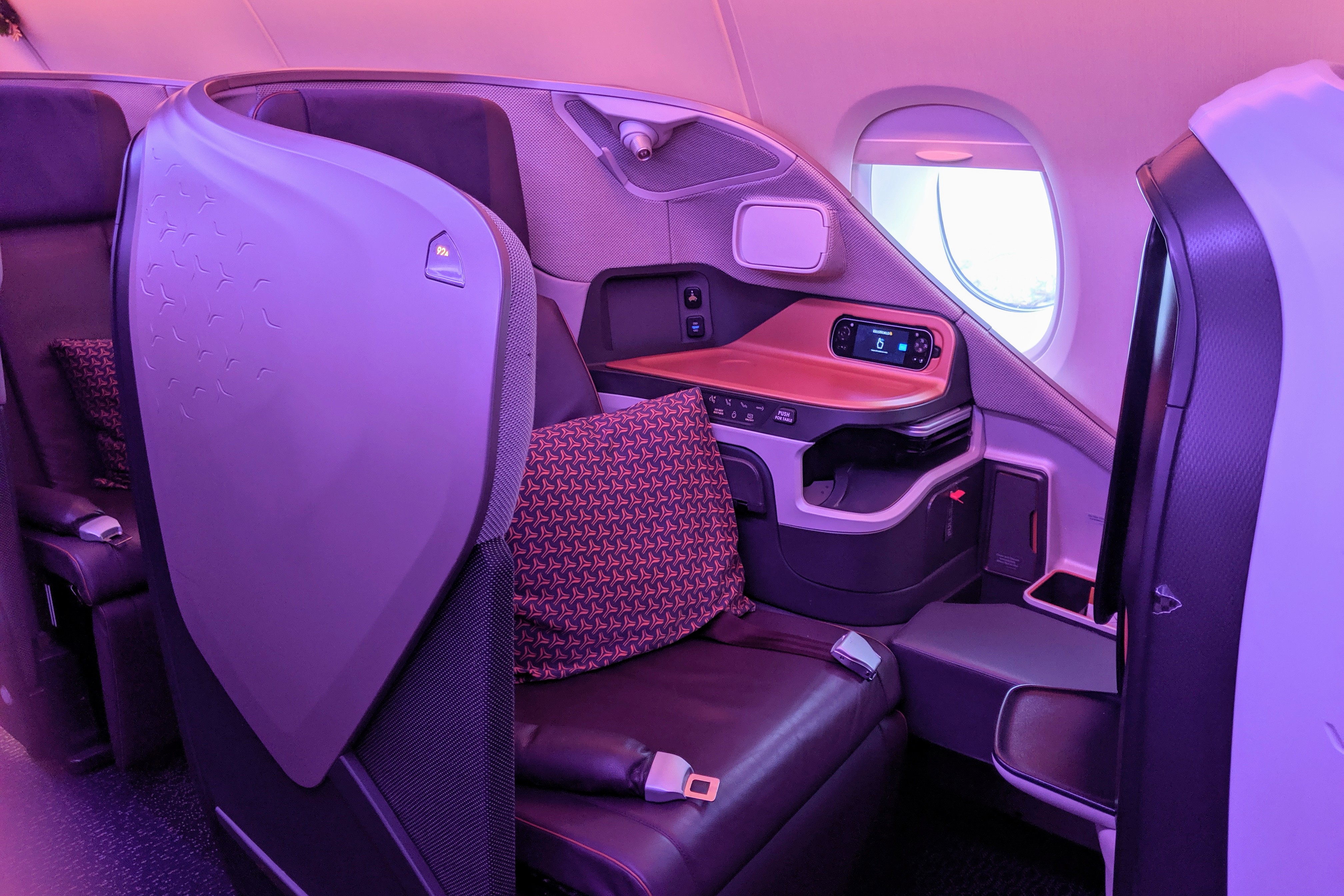
    A pair of Singapore Airlines next generation business class
    New Singapore Airlines Business Class (Image: Singapore Airlines)

    Here’s what most travel sites have said so far:

    • One Mile at a Time said it “looks like Scoot and Spirit Airlines had a baby”.
    • The MileLion said that after stepping out of First Class, “you might think you’ve wandered into an EV dealership”.
    • TheDesignAir said it “could belong to almost any airline pursuing a contemporary premium cabin”.
    • Head for Points said it “reminds me of a gaming chair”. On some Telegram channels, it’s been called “ScootPlus Plus”, and worse. Some have even re-rendered the seats in colours more befitting a new SIA product (oh, the powers of generative AI).

    I’m not going to mince my words: the seat is ugly. God knows why they chose yellow as an accent, or why a car-seat look, courtesy of BMW Group’s Designworks, was deemed aspirational for a world-class airline.

    But that’s only the start of the problem here.

    My view? SIA has stopped trying to be ahead of the race, and settled for being in the pack.

    I wasn’t at Friday’s launch, so I haven’t touched or sat in the mock-ups on display. This opinion is based on the coverage so far, and on what SIA has published.

    Why the yellow landed so badly

    The strength of SIA’s brand has been studied for decades, in classrooms and boardrooms alike. SIA’s consistency goes beyond the iconic Singapore Girl and its batik motifs, to its impeccable service and pack-leading cabins. Each time the airline launched a new cabin, you could count on a look you could pick out of a line-up: warm browns, creams and copper. Sometimes there were surprises, like a splash of orange, but usually tastefully blended with its brand assets: the batik motif, the kebaya, the midnight blue and gold livery.

    The new First Class, designed by PriestmanGoode, uses SIA’s brand assets very well. It’s soft blues warmed by leather and terracotta, with batik panels worked into the suite. Even the harshest critics like it. Ben Schlappig at OMAAT called it “warm and elegant without being outdated”.

    The new Business Class, designed by BMW Group’s Designworks, uses none of them. Mineral grey leather and dark shells, with accents in a bright yellow (or lime, depending on the light and who’s describing it): it looks like a cabin designed for a different airline altogether.

    The question is which one.

    As OMAAT pointed out, you won’t find this yellow on SIA’s livery or its uniforms. Gold comes closest (SIA’s bird logo is a golden yellow), but this particular shade of yellow-lime is usually reserved for the tarmac, in the form of hi-vis vests.

    So this isn’t just a matter of taste. First and Business look like they came from two different airlines, and only one of them looks like SIA.

    SIA has been here before

    SIA is like the hottest boy or girl in college: everyone loves to talk about their new outfit, and some will find something to hate whenever they can. This isn’t the first time the internet has been ablaze over its new seats, so for old times’ sake, let’s look at what the flak was about:

    Business seatWhat critics complained aboutWhat they said about the look
    2006 (777-300ER, A380)Too wide to reach both armrests; a bed the crew had to flip overNot an issue
    2013 (777-300ER, A350)A diagonal bed, a cramped corner footwell and a “rock hard” seatNot an issue
    2017 (A380)The same diagonal bed and offset footwell, and narrower than beforeIts designer said it kept “the same family of Singapore Airlines colours”
    2018 regional (787-10, A350 Medium Haul)Too narrow“Understated elegance, of high-end without the high-gloss”
    Singapore Airlines A350 ULR business class seat (Image: Singapore Airlines)

    If you recall, some of the reactions were brutal. One Executive Traveller reader called the 2017 A380 seat “the most terrible lying position in the history of aviation”. On Australian Frequent Flyer, a member said it was “hard to understand how SQ could get this design through any focus group”. The MileLion described the A350’s long-haul footwell as “a tiny pigeonhole”.

    Even the 2018 regional seat, which most reviewers liked, was criticised as a bit too narrow. If you’re familiar with the seat, you’ll know that getting in and out of it can be a challenge for larger passengers.

    Singapore Airlines B787-10 business class

    Going back over those past launches, every one of the complaints was about function: how you sleep, where your feet go, how wide the seat is. The look was never the problem. Executive Traveller’s David Flynn praised the 2018 regional cabin’s aubergine leather and copper accents, and MileLion loved its “handsome burnt orange interior”.

    13 years on, SIA has finally fixed the functional complaints: the new bed lets you sleep with your feet pointing straight ahead, and the footwell is no longer a pigeonhole.

    “We need to create online buzz,” someone may have said. So perhaps, just like this, the product and marketing teams decided that screwing with the colour palette would create just that.

    To be fair to SIA, it has ridden out seat criticism before. The 2013 seat drew complaints for years and still became its long-haul workhorse for well over a decade. People will criticise, but people still love the airline.

    But there’s a difference this time. A bad bed angle is built into a seat’s structure, and fixing it means a new seat. A bad colour is a choice, and trim is the cheapest thing on a seat to change.

    SIA’s response misses the point

    According to OMAAT, executives described the look as more modern and high-tech, aimed at a younger crowd.

    Ong Wah Li, SIA’s VP of product experience, said in a statement that “we do not subscribe to a fixed colour palette across our cabins”. SIA wanted the product to convey “a sense of sophistication and understated luxury”, she added.

    That answers a complaint nobody made. No one is asking SIA to use the same colours in every cabin. They’re asking why its most important cabin doesn’t feel like SIA. And “understated” is a hard word to defend for a lime-yellow stripe on a grey shell.

    Scootplus seats (Image: Scoot)

    The “younger crowd” reasoning is also strange: who exactly is this younger crowd? Aspirational travellers in their 20s? Young adults who reminisce about playing with lime-green slime as kids? Otakus who spend 12 hours a day in their gaming chairs playing World of Warcraft?

    The Business cabin of any national carrier is typically filled by corporate travellers and points collectors, and the gaming-chair look isn’t aimed at either. The group already has an airline built for younger, price-conscious travellers, and that’s Scoot: the very carrier this seat and its colours are now being compared to.

    That’s the tone-deaf part. Not the yellow in itself, but the sense that nobody at Airline House asked whether this looks like Singapore Airlines.

    The new seat is actually a good one

    Let’s talk about the improvements first. If you can look past the colour palette, the seat is a big step up from the current long-haul product introduced in 2013:

    • Doors on every seat, with 52-inch walls, just an inch lower than Qatar’s Qsuite
    • A straight bed. Today’s long-haul beds, on the 777-300ERs, A350s and A380s, are flat but diagonal, with your feet wedged into a cubby under the seat in front. The new one runs parallel to the aisle, with a bigger footwell.
    • Push-button bed mode, so no more standing in the aisle while the crew flips your seat over
    • Companion beds at selected centre pairs (two singles side by side, not a true double)
    • 4K screens, Bluetooth audio, wireless charging and USB-C
    Singapore Airlines business class in bed mode (Image: Singapore Airlines)

    On the strength of that list, there’s absolutely nothing Scoot (or low cost, for that matter) about it. Singapore Airlines joins a growing list of carriers with a door at every business class seat, and by most measures, this is an improvement over the current product.

    The weakness is in how it looks. It’s the same as judging people: no matter how smart or charismatic someone is, if they turn up dressed as a clown, that’s the first impression that sticks. And that’s why people are hating on this seat.

    SIA has long taken great pains to keep its seats ahead of its peers, in both form and function. Over the past decade or so, it has ceded that advantage. Peers have introduced newer and grander cabins: Etihad’s The Residence, a three-room suite that makes SIA’s Suites look like a studio apartment, and Qatar’s Qsuite, such an ingenious product that it remains tough to beat. Even British Airways, an airline not usually associated with innovation, put doors on every Business Class seat before SIA did.

    The insult therefore comes in the form of a perceived lack of effort: if SIA can’t come up with a truly innovative product that takes the world’s breath away, the least it could do is look classy. On both fronts, it has failed.

    About that Scoot joke

    The “ScootPlus Plus” joke goes beyond the yellow. Some commenters have also pointed out that SIA’s chief commercial officer, Lee Lik Hsin, is none other than Scoot’s former CEO.

    Let the facts speak for themselves. Lee is a career SIA executive. Before moving to the budget airlines, he was president of SIA Cargo and head of corporate planning, and held regional sales roles. He became Tigerair’s CEO in 2014, took over Scoot as well in May 2016, and merged the two. He returned to SIA as EVP Commercial in April 2020, and has been chief commercial officer since June 2023. Customer experience is part of his portfolio.

    While it’s easy to pile on him, bear in mind that, according to SIA, design work on these cabins began around 2018, while Lee was still at Scoot. Yes, Recaro, which builds the new seat, also supplied Tigerair’s A320neo seats in 2016, on Lee’s watch. But Recaro is one of the world’s biggest seat makers, and it also builds the Economy seats on JAL’s A350-1000s and Qantas’ Project Sunrise A350s. Most importantly of all, we don’t know who signed off the yellow. Pinning it on the man who used to run Scoot is a convenient joke, not a good argument.

    What’s more noteworthy was what Lee actually said to Reuters: “Our competitive advantage doesn’t derive from aircraft cabin product alone.”

    He’s right, and if you ask me, that one line explains this whole launch.

    SIA knows it no longer needs the best seat in the sky to fill its premium cabins. It has plenty else going for it: its extensive network, Changi Airport (named the world’s best airport again in 2026), its KrisFlyer frequent flyer programme, its soft product and, most importantly, well-established premium demand that has held up even as fares climb. So perhaps its strategy now is to build good-enough seats, rather than going over the top.

    After all, this is how every big full-service airline thinks now, so perhaps SIA is simply joining the fray.

    The layout everyone now uses

    Some readers may also wonder why SIA has gone with a staggered layout for its long-haul Business cabin.

    This 1-2-1 staggered layout isn’t new to SIA. It first introduced staggered seats in 2018, in the regional Business Class on its 787-10s, and later on its A350 Medium Haul aircraft. Single seats alternate between the window and the aisle, and the centre seats alternate between couples’ pairs and seats set apart. It was a clear break from SIA’s famously wide Business Class seats, and it looked fairly claustrophobic to some at first. SIA kept it for flights of up to about eight hours, and over time, customers have largely accepted it.

    Singapore Airlines B787-10 business class seatmap (Image: Singapore Airlines)

    The 2018 seat came from Stelia, and fellow Star Alliance carriers Turkish Airlines and Air India (on its ex-Vistara 787-9s) fly the same one.

    Other seatmakers have built seats around a similar layout. Qantas has flown a staggered Business Suite, built on Thompson’s Vantage XL, on its A330s and 787-9s since the mid-2010s. Recaro’s version flies with Iberia and Air China, on their A350s. Alongside the reverse herringbone, the staggered layout has become one of the standard ways to build a Business cabin.

    Eight years on, SIA has used the same staggered layout for its newest long-haul Business cabin. In doing so, it has effectively phased out its preference for wider seats, and in effect decided that its customers no longer need as wide a seat as past generations did.

    Is a 22 to 24-inch seat really too narrow for business class?

    Now let’s talk about seat width. The new Business seat is 22 inches wide on the A350s and 24 inches on the 777-9. At first glance, that looks like a downgrade from today’s 28-inch 2013 seat on the 777-300ERs and long-haul A350s. But let’s be real: the 2013 seat was the true outlier. Its diagonal bed borrowed space from the seat in front, which let the seat itself be wide.

    Here’s how the new seat’s width compares with other airlines’:

    Business ClassSeat width
    SIA 2027 (A350)22″ (A350) or 24″ (777-9)
    SIA 2013 (today)28″
    Cathay Pacific Aria Suite (777-300ER)21″
    JAL A350-100022″
    Qatar Airways Qsuite (current)21–21.5″
    Qantas Project Sunrise A350-1000 (2027)25″

    At 22 and 24 inches, it’s on par with other major carriers, and even generous by what’s on the market. For what it’s worth, the new seat is at least as wide as JAL’s and wider than Cathay’s latest Aria Suite.

    Cathay Pacific Aria Suite (Image: Cathay Pacific)

    Business Class is conventionally the money-maker on every flight. Newer features such as doors, taller walls and a straight bed all take up precious space, but SIA isn’t giving up seats to make room for them. The long-haul A350 keeps its 42 Business seats, the ULR goes from 67 to 70, and the 777-9 has 54 against the 777-300ER’s 48. At that density, something had to give, and it was width.

    As Executive Traveller’s David Flynn told Reuters, it’s “a solid and much-needed catch up to the competition, rather than a mighty leap ahead.” Perhaps that’s the real problem: SIA used to be the airline everyone else had to catch up with. Now it’s the one doing the catching up.

    The S$2 billion investment: where did it go?

    SIA is investing more than S$2 billion in its new cabins. Lee told Reuters that most of it goes on the premium cabins, which is a given, since First and Business seats cost far more each than Economy seats. The 777-9’s premium-heavy layout reflects that priority.

    Here’s the new seat distribution against the 777-300ER it will replace:

    Cabin777-300ER (today)777-9 (on order)Change
    First46+50%
    Business4854+13%
    Premium Economy2836+29%
    Economy184204+11%
    Total264300+14%

    On the 777-9, First Class gets six seats, up from four today. Business and Premium Economy add 14 seats between them. In all, premium seats (from Premium Economy to First) make up 32% of the cabin, up from 30% on today’s 777-300ER.

    On the A350s, the back of the plane barely changes. Both premium economy and economy cabins keep their current seats and hardware, meaning no 4K screens, no Bluetooth and no USB-C. Instead, they get new KrisWorld software, fresh upholstery and Starlink wifi.

    On the seven A350 ULRs, 36 premium economy seats (more than a third of the cabin) will come out to make room for four first class suites and three more business class seats. This is a no-brainer: premium economy between Singapore and New York often has Saver award space even at the last minute, and cash fares are often lower than on Asia–Europe flights.

    Singapore Airlines premium economy award availability tomorrow, 9 November 2026 (Image: Singaporeair.com)

    Some analyses so far have expressed disappointment that so little has been done for the lower cabins, with some A350s set to fly older products well into the 2030s. SIA simply shrugged off the criticism with a template PR response. As an SIA representative told MileLion: “We have decided not to upgrade Economy and Premium Economy, that’s our decision at this point”, adding “never say never”.

    None of this is unusual. It’s what every airline does.

    Let’s talk about Premium Economy: the real missed opportunity

    If anything at this launch deserves the word “tone-deaf”, it’s this cabin, not the yellow.

    The new premium economy is a 777-9 exclusive: 36 seats in a 2-4-2 layout, designed by Factorydesign and built by Collins Aerospace. On paper, it improves on today’s seat:

    • 40 inches of pitch, up from 38
    • 19 inches wide, with up to 9 inches of recline
    • a leg rest with an adjustable footrest, a four-way headrest and leather upholstery
    • a 16-inch 4K screen (OLED on 19 of the 31 aircraft), Bluetooth audio and USB-C
    Singapore Airlines next generation Premium Economy (Image: Singapore Airlines)

    What it doesn’t have is anything new. The controls are still manual, and there’s no shell, no privacy wings and no divider whatsoever between you and the person next to you, should you need one.

    Here’s how it compares with the premium economy seats SIA’s rivals have launched recently:

    Premium EconomyLayoutPitchWidthScreenPrivacy
    SIA 777-9 (new, 2027)2-4-240″19″16″ 4KNone
    SIA A350 (kept, 2015 seat)2-4-238″18.5″13.3″ HDNone
    Cathay Pacific 777-300ER (retrofit)2-4-240″21″15.6″ 4KWinged headrest
    EVA Air 787-9 (2025)2-3-242″n/a15.6″Privacy panels on the headrest
    JAL A350-1000 (2024)2-4-242″19″16″ 4KHard shell and divider
    Emirates A350 (new, 2026)2-3-2Up to 39″20″13.3″ 4KFull-height electric divider
    Korean Air 777-300ER (retrofit, 2025)2-4-239–41″19.5″15.6″ 4KWing-shaped seat sides
    Qantas A350-1000 Project Sunrise (2027)2-4-240″n/a13.3″8-inch winged headrest

    Three things stand out:

    • SIA’s new seat is the only one on the list with no privacy at all. Every rival has added something, from Cathay’s and Korean’s wings to JAL’s hard shell and Emirates’ full-height divider.
    • On the numbers, it holds its own. Its 16-inch 4K screen is the joint biggest, with JAL’s. Its 40-inch pitch and 19-inch width are mid-pack.
    • It’s behind on controls. JAL and Emirates have gone electric; SIA’s controls are still manual.

    SIA has improved everything about its Premium Economy except the one thing rivals are now competing on: personal space you don’t share.

    Premium economy has carved out a niche in recent years, with leisure travellers willing to splurge on an upgrade and companies starting to include it in their corporate travel policies. The cabin has grown on the 777-9, and it’s where many travellers end up when Business Class fares climb out of reach. A seat that felt genuinely private would have been a strong pitch to exactly those people.

    This was therefore the cabin to make a statement in, and SIA passed.

    The reality is that most SIA premium economy passengers may not see even this seat for years. The A350s keep their current one, with a 13.3-inch screen and no Bluetooth or USB-C. The new seat arrives only with the 777-9, and that delivery date is still up in the air.

    Final thoughts

    Is SIA’s new business class Scoot? No. It’s a good seat in the wrong clothes, and the clothes can be changed.

    Those who sat in the mock-ups at the launch found the seat comfortable. MileLion called it “comfortable — at least as comfortable as a seat can be for a 10-minute on-ground tour”, though it also said the renders are “a faithful representation of the colours”. As with all controversial new products, the proof of the pudding is when it takes to the air. Critics can be (and have been) wrong, and for all you know, it may look better in the air than on display.

    The truly troubling issue here, beyond the colour palette, is SIA’s focus for this launch. The new first class looks spectacular for the few who fly it. Business class has lost its shine and become the internet’s joke. And the new premium economy and economy cabins turn out to be a bit of a distraction: the airline has neither caught up with its competitors nor plans to retrofit the ageing seats on its A350s. I haven’t even touched on the 777-9’s 10-across economy, and that’s a story for another day.

    By any measure, this may be a sensible commercial plan, and SIA knows where its competitive advantage lies: average hardware with SIA’s service still beats most airlines, and most people book on schedule and price anyway. But SIA’s reputation was never built on being sensible. It was built on being the best.

    The worry isn’t that SIA has become Scoot. It’s that SIA has become ordinary.

  • Earn 50% bonus Krisflyer miles when you book a flexible business class ticket to Europe, USA

    Earn 50% bonus Krisflyer miles when you book a flexible business class ticket to Europe, USA

    Selected destinations only, fly between 1 March and 30 April.

    Singapore Airlines have launched a very interesting promotion, offering 50% extra miles for business class trips to select destinations in Europe and USA.

    Book a Business Flexi fare and enjoy 50% bonus miles

    The fares will have to be booked in Business Flexi fare (J, C, Z class), which are the three highest fare classes in the business cabin.

    Which routes are eligible for this bonus?

    Only the following destinations are eligible for the 50% bonus:

    • Europe: Amsterdam, Paris, Frankfurt, London, Munich and Zurich
    • USA: New York (Newark) and San Francisco

    Are Business Flexi fares worth it?

    Given that you are buying essentially a flexible fare which are typically more expensive, expect to shell out up to 50% more than the lite fare.

    Also, if you typically clock miles through corporate travel, your company travel policy may not allow you to buy into a higher fare class as required by the promotion, so be sure to check.

    For ease of comparison, here are some sample fares in April to all the destinations, based on a weekday departure and 7-days stay overseas:

    DestinationBusiness Lite fare (S$)Business Flexi fare (S$)Fare diffBase miles (based on Lite fare)Bonus miles (Flexi fare 20% bonus + 50%)CPM for bonus (S$)
    Amsterdam6,0398,5852,54616,33011,4310.222
    Paris5,4457,8372,39216,65811,6610.205
    Frankfurt5,9617,9261,96515,96811,1780.176
    London5,7078,6382,93116,90411,8330.248
    Munich6,0398,4392,40015,62610,9380.219
    Zurich5,9528,3522,40016,00811,2060.214
    Newark7,3419,7512,41023,82416,6770.145
    San Francisco6,7269,9513,22521,10014,7700.218
    San Francisco (via HKG)6,78610,0113,22521,27414,8920.217

    As exemplified above, the cost per additional mile ranges between 14.5 cents to 24.8 cents, which is a poor value. The 50% bonus miles also do not count towards elite status, so you won’t get your Elite Gold any faster with this promotion. While you will still get bonus miles for the extra spending on your credit card (e.g. clocking 4mpd on your OCBC 90N), that will bring down your CPM to about 11.6 cents, which is still an extremely high cost.

    Ironically, it’s actually cheaper to buy miles directly from Krisflyer, at a rate of USD40 (SGD56) per 1,000 miles block. At that rate, 12,000 miles will set you back by USD480 (SGD672), and you will also earn points on that spend if you use the right credit card (e.g. 3mpd on the DBS Altitude Visa).

    Final thoughts

    You should only do it if you are travelling on someone else’s money (e.g. your company), and that you are able to switch it up without forking out more money.

    You are better off deferring that additional spending, and set it towards another business class ticket in the future.

    This is obviously a very poor value promotion, which is of little to almost no value for leisure travellers who are spending their own money to get the extra miles. The incentive to up-sell to a better yielding fare class is just not there – especially when the fare difference is so large.

    Singapore Airlines might simply fare better if they had thrown in a one-time free visit to the first class lounge for this promotion, perhaps?

  • FLIGHT REVIEW: Singapore Airlines A380 Business Class (2017), Shanghai – Singapore

    FLIGHT REVIEW: Singapore Airlines A380 Business Class (2017), Shanghai – Singapore

    For my final leg home from Shanghai on a weekend trip, I took advantage of Singapore Airlines’ Spontaneous Escapes offer last month and redeemed a one-way business class seat from Shanghai to Singapore at 27,300 miles.

    The usual redemption rate is 39,000 miles each way in business class for PVG-SIN, so this was pretty good value.

    I’ve not tried Singapore Airlines’ latest business seat product that was launched in 2017, so I was looking forward to reviewing this seat.

    For those who are familiar with SIA’s Spontaneous Escapes, this is a monthly offer which offer select cabins on certain routes at a 30% discount for travel in the following month. SIA’s China services, including Beijing and Shanghai, tend to always be on offer.

    In this report:
    •  The airport
    • The aircraft
    • The seat
    • The service
    • Dining
    • In-flight entertainment and wifi
    • Final thoughts

    The airport

    SQ operates out of Terminal 2 at Shanghai Pudong International Airport, along with most other Star Alliance carriers including Air China, Thai Airways and United Airlines. Check-in was relatively fuss free, with three dedicated business class check-in counters, so there was hardly any queue.

    While there is not a dedicated immigration lane for business class passengers, there was one for security screening right after immigration. The immigration lines can get pretty backed up, so arrive early.

    Singapore Airlines does not have its own lounge in Pudong, so guests are directed to the Air China business class lounge.

    Singapore Airlines premium cabin customers use the Air China lounge at Shanghai Pudong airport

    The flight was scheduled to depart at 1625, and boarding commenced about half an hour earlier. As usual, passengers in suites and business class, as well as PPS members, were invited to board first.

    The aircraft

    Singapore Airlines deploy an assortment of aircraft on the four times daily Singapore-Shanghai service, including the Boeing 777-300ER, A380 and A330. The service frequency and aircraft type also varies during different times of the year depending on demand.

    For the A380, Singapore Airlines is currently undergoing a fleet refurbishment process to install their newest seats and suites. As such, SQ has three different variants at the moment for the A380, given it’s taking time to refurbish the fleet.

    Luckily for me, the A380 I was on today was the type with the latest seat products, including the new suites.

    On this configuration of A380, there are 6 suites, 78 business class seats, 44 premium economy and 343 economy class seats. The suites and business cabins are on the upper deck, while the premium economy and economy class seats are located on the lower main deck.

    The load today was pretty light. Out of 78 seats, the cabin was less than half full with about 34 passengers in business class. My choice of seat for the day was all the way at the rear, at seat 91D.

    Singapore Airlines refurbished A380 upper deck seat map

    The seat

    Singapore Airlines introduced this seat along with the new suites when they refurbished the aircraft in 2017, 10 years after taking in their first A380. In this new configuration, the business class seats and suites are located on the upper deck, with the six suites in front, and the 78 business class seats taking the rest of the upper deck.

    Singapore Airlines 2017 business class seat

    The good thing with it is that they can actually do concurrent boarding and disembarking of both decks, although that some passengers in premium cabins may not like that idea, given after all, they love the priority.

    The 78 business class seats are spread across three main cabins on the seat map, although in reality the rear two cabins are visually just one. The ‘mini cabin’

    Most passengers will like to be at the front of the cabin, but I figured that the rear will be rather empty given the light load. True enough, upon boarding, the cabin crew told me that there was only six passengers in the rear cabin, and I was free to change my seats if I so wanted to.

    My middle seat

    Now, the seat. The Singapore Airlines 2017 Business Class seats (2017J) measures 25 inches across, and can be fully reclined into a flat bed. In the bed mode, the bed runs about 78 inches head to toe.

    The seat also features a larger privacy shell so that you get more privacy from the aisle.

    Seats are pretty private, you won’t see your neighbours if you really don’t want to.

    At the time of its launch, Singapore Airlines also mischievously marketed the business class seats as best in class for couples travelling together, featuring a ‘double bed’ in the new business class configuration, as exemplified by this marketing imagery:

    Singapore Airlines A380 business class double bed (source: Singapore Airlines)

    However, the reality is that there are only three such pairs of seats available on each flight, which are seats D & G (middle seats) on the bulkhead rows of 11, 91 and 96.

    The only reason why they can be formed into a ‘double bed’ is because these are the only seats that has a full-width footrest area. The other seats all have a side cubbyhole, so when the seat is fully reclined into a bed, the footrest angles away from the middle.

    Ample legrest area in the bulkhead seats (Pictured: Seat 91D)
    Non-bulkhead seats have smaller legrests (Pictured: seat 92D)

    Even for three ‘double beds’, note that there is still a hard divider that can be drawn all the way down to bed-level when both are reclined into bed positions. However, the mattress topper will not be able to fully cushion the gap, you will still be able to feel it if you lie across it.

    Seat divider

    Note that seats 91D & G are bassinet positions, so they can’t be reserved in advance until 48 hours before the flight. Even then there is a chance you might be moved, if there’s a infant that pops up last minute.

    All of the seats have a side table that separates the seat from the aisle. While that means that the middle pair of seats are side by side, there is a retractable divider that you can put up if you are travelling alone.

    Side table

    Storage wise, the seat does have several spaces for you to store personal items around the seat. There is some space under the seat in front of you for a small suitcase or a backpack, so for most travellers there no need to use the overhead compartments.

    As for overhead storage, note that there are no overhead storage compartments for the middle seats, so if you need to stow something, it has to be above the window seats.

    There are no overhead storage space for middle seats

    At the back of the side table, there is a small compartment for storing personal , which is also equipped with a USB charging socket. If you need a power socket, it’s available in front of you just below or beside the IFE screen.

    Power socket for your use

    At the side of seat near the foot area is also a magazine rack, along with a bottle holder. There’s enough space to also stow a slim laptop if you wish.

    Magazine rack and bottle holder

    At the side of the seat just below the side table is a control panel for the seat. Unlike previous versions of SIA business class seats, the 2017 version is now fully control by electronics. The seat can be fully converted to a bed at a touch of button, although you can still trouble a cabin crew to do it for you if you prefer that personal touch.

    Electronic controls

    There is also a thin mattress topper and a blanket, although they are all rather thin, so that means that you will be sleeping on a firm bed.

    The service

    The service was rather attentive today, as the cabin was pretty empty. I was greeted by name, and the cabin crew also knew my preferences after I stated it once.

    When I boarded, the cabin crew quickly came around offering a pre-departure drink. Unfortunately they didn’t offer any champagne, so I settled for a sparkling water.

    After doors have closed, another cabin crew came around to take orders for a pre-meal drink. I opted for some decaf coffee given it was relatively late in the day, which was promptly brought to me right after take off. 

    Post-take off drink: decaf coffee

    Shortly after that, they brought around the famed Singapore Airlines canapes of lamb and chicken satay, which I thought signaled the start of the meal service.

    Canapes of satay

    Surprisingly, I was asked by the cabin crew at that point if I will like to have dinner at 6pm or 6.30pm, given it was rather early in the evening. I thought this was a very nice touch, rather than just assume that everyone wanted to eat right at the beginning of the flight.

    Dining

    Given the flight duration of five hours, there was only going to be a meal service for the flight. Soon enough, 6.30pm rolled by and the cabin crew came around to lay out the tablecloth and cutlery in preparation for dinner. I was offered a drink once again to go with my meal, and I decided on a red wine, the Chianti. 

    The SIA business class menu

    Now a bit about SIA’s menu: on their China-bound flights, there is one special menu available, Shi Quan Wei Mei, a special Chinese feast designed by a celebrity chef.

    According to the in-flight menu, each dish is made using locally sourced ingredients that are in season.

    The menu for Shi Quan Wei Mei reads as follow:

    Side Dish:
    Marinated Cucumber and Shimeiji Mushrooms

    Cold Appetiser:
    Red Pepper Pork Roll and Watercress Pine Nuts in Bean Skin

    Main Course:
    Prawns in Pickled Chilli Sauce
    with stir fried kai lan and purple sweet potato rice

    Dessert:
    Warm Soy Bean Milk with Tofu Skin and Pigeon Egg

    If Chinese food is not your style, there’s also the regular menu for your perusal:

    Canape:
    Singapore Chicken and Lamb Satay

    Appetiser:
    Salad of Smoked Salmon
    with grilled vegetables and herb vinaigrette

    Main Course: choice of
    Grilled Cumin Spiced Lamb Ribs with Lemon Thyme Sauce
    Sauteed Prawn in Tomato Coriander Sauce
    Wok Fried Chicken with bamboo shoots and chives, Chinese greens and fried noodles

    Dessert:
    Haagen Dazs Strawberry Ice Cream

    Selection of Cheese

    Fruit from the Basket

    Assorted Bread Rolls and Gourmet Breads

    Fine Pralines

    Coffee and Tea

    The appetiser was served up pretty swiftly. The smoked salmon wasn’t memorable, but I really enjoyed the grilled vegetables as they were pretty crunchy yet juicy. Not a fan of the leafy bits so I left those alone.

    And of course, the garlic bread is always such a treat.

    Salad of smoked salmon

    As I wasn’t particularly hungry, I went for the prawn for my main course. Usually I’m pretty skeptical of prawns as a main dish, given that sometimes that can mean only one single prawn, as mentioned in the menu.

    Sauteed Prawn in Tomato Coriander Sauce

    However, I was pleasantly surprised with the portions this time round. There was a hearty serving of de-shelled prawns, with a side of vegetables and couscous. The prawns were well flavoured and it’s still pretty substantial, despite being labeled as a low carb option.

    My empty plate was removed not too long after I was done, and I was again offered a refill of my wine, which I gladly accepted. The dessert of ice cream (one of my favourites) was also brought to me at this time.

    Haagen Dazs ice cream

    Unlike Cathay Pacific who serves the ice-cream in its original single-serve tub, Singapore Airlines scoops the ice cream into a bowl, and often garnish it with either biscuit crumbs or some sauce. Personally I actually prefer it to be in the tub, because for some reason when it is scooped out it tends to melt faster.

    In-flight entertainment and Wi-Fi

    Singapore Airlines equips the 2017 business class seat with an 18-inch Panasonic screen. As I was sitting at a bassinet-available seat, the screen was significantly higher than my eye level when I’m seated to cater space for the bassinet. If people behind me were to stand up, they will be able to see what I’m watching!

    My screen is clearly visible even from five rows back

    The KrisWorld IFE is pretty world-class, containing a good array of international selection. Note that Singapore Airlines have two IFE systems running through its entire aircraft fleet, and fortunately the A380s have the newer Panasonic ones with a far larger library, inluding over 300 movies and 700 TV shows.

    In terms of Wifi, Singapore Airlines offers them on the A350 and A380 fleets as well as select 777-300ER aircraft. In case you haven’t heard, Singapore Airlines now offers unlimited free wifi for its suites and first class passengers, and a reasonable 100MB allowance for passengers in business class, as well as its PPS members.

    Complimentary 100MB wifi for business class passengers

    If you need more than the 100MB given to you, you can purchase additional data limit at the following prices:

    • 30MB – USD3.99
    • 100MB – USD9.99
    • 200MB – USD15.99

    The prices are definitely not cheap, and SIA no longer offers time-based wifi access.

    I barely touched the in-flight wifi, as I usually prefer to stay disconnected when I’m flying. Having said that, this is a good consideration if you prefer to work on your flight, and 100MB is sufficient for basic email exchanges, or for your basic messaging apps.

    Final thoughts

    I must say I really enjoyed this flight and the seat was more than comfortable for this five-hour journey back home.

    The seat pretty much works for me. I personally prefer seats with electronic mechanisms, so that I can operate the seat myself without troubling a member of the crew. On previous versions of the business class seats that require manual handling, I often find myself waiting a tad too long for my seat to be converted into a bed.

    Fully reclined business class seat, all done by myself!

    While some critics may feel that the seat is a distinct departure from the generous width that SIA had in its previous generations of business class seats, I think they are sufficient and pretty within standards of many other airlines’ business class seats.

    If there’s one thing that’s lacking, it’s with the amenity kits. SIA is one of the few airlines that doesn’t provide an amenity kit for their business class passengers, although everything you need in the kit is either provided to you at your seat (e.g. eye shades and slippers), or available in the lavatories (e.g. toothbrush).

    The service was very attentive, given the relatively light load for the evening. The meal service was again impeccable, but the quality of food is a far cry from what it used to be, if you ask me. For instance, there are practically no choice for appetisers, dessert, or even the famous satay (what if I don’t eat mutton?).

    While I was initially a little hesitant in choosing a seat closer to the back of the plane, but I really liked how empty the cabin was. Even though this means you are one of the last few business class passengers to disembark when you arrive at your destination, but the privacy and attentiveness of the crew more than make up for it.


  • Cathay Pacific partners Bamford in enhancements to premium cabins

    Cathay Pacific partners Bamford in enhancements to premium cabins

    New collaboration the UK brand will see new amenity kits and bedding in first class and business class

    Cathay Pacific has refreshed its service offering in its first and business class cabins with a series of enhancements. In its PR, the airline promises the changes are geared towards “indulging passengers with an elevated premium travel experience”.

    Expectedly, the enhancements ride on the current wave of health and wellness focus by airlines, ranging from providing in-seat exercise videos to healthier options for in-flight menus.

    First class enhancements

    In first class, passengers will be treated with a personalised welcome note along with a hot towel and a glass of refreshing sparkling jasmine silver needle tea from their current tea partner, JING.

    I’m personally not a big fan of JING teas, but I’ll be curious to see how this sparkling tea will be like.

    New wellness dining in Cathay Pacific first class

    In the food department, Cathay Pacific cater a range of lighter (which are supposedly healthier) options for the main and breakfast meals as well as healthy alternatives such as superfood bowls and lighter protein side dishes. Notably, Cathay Pacific will provide cold-pressed juice from Hong Kong brand Bless for its most premium passengers.

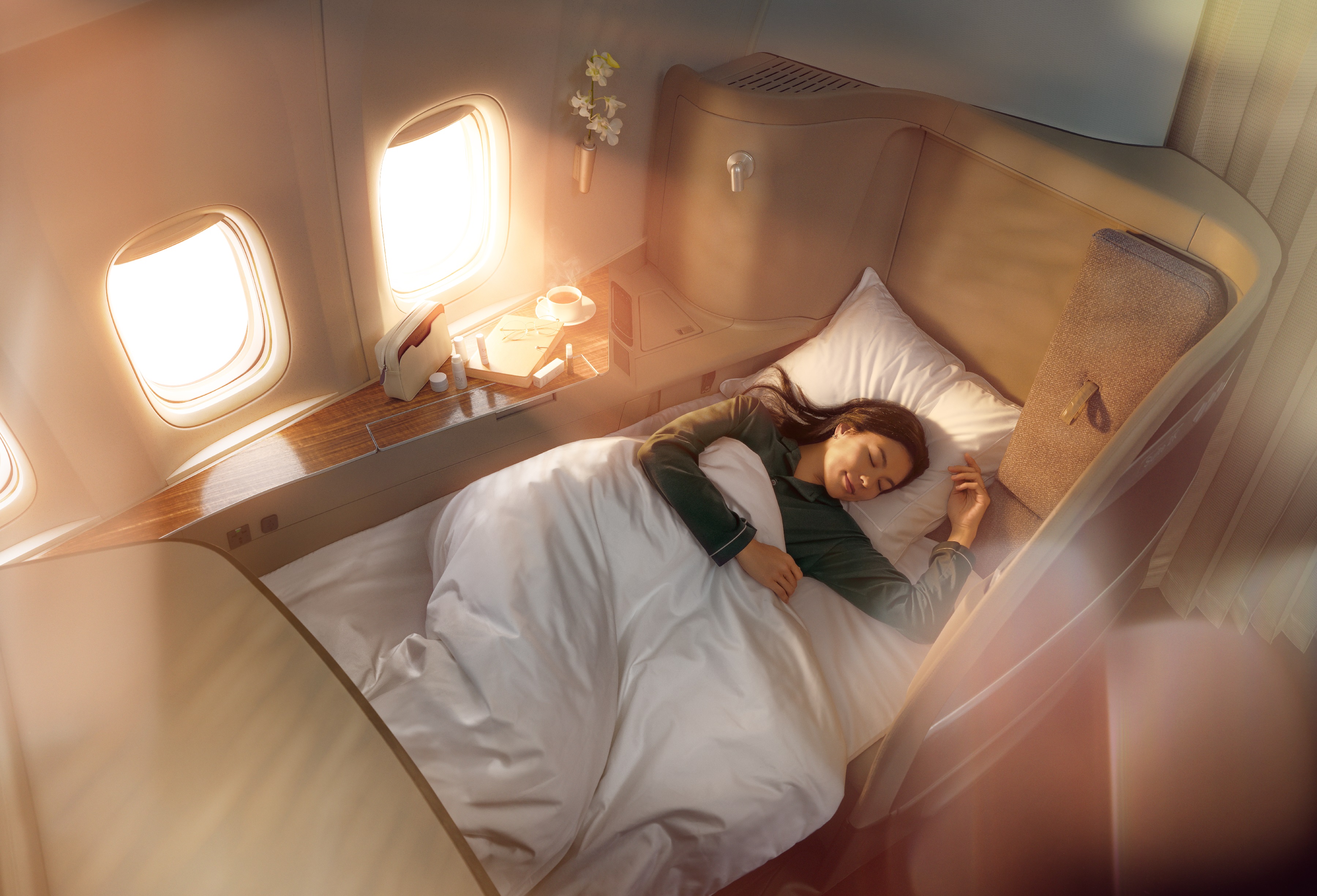
    For the ultimate comfort for first class passengers, Cathay Pacific will offer a cosy 600-thread-count, 100 percent sustainably sourced cotton mattress and duvet, as well as a soft full-size pillow in the cabin, all by Bamford. Coupled with a turndown service (essentially setting up your bed in the air), there’s also a pillow mist that promises to put you to sleep.

    Each passenger will also receive a Bamford amenity kit, which will include natural skincare products presented in glass bottles.

    Business class enhancements

    Cathay Pacific has also amped up the business class offering with some updates to its bedding.

    In terms of comfort, Cathay Pacific will be offering a soft mattress topper along with a larger, plusher sleeping pillow and premium-quality slippers. While the pillows have always been there, the mattress topper and slippers will be new to the cabin, which are very much welcomed additions. There will however still be no pyjamas offered to business class passengers.

    New mattress topper and Bamford amenity kits

    The business class amenity kits – only available on long-haul flights – will also be refreshed. The new amenity kits are unisex and also designed by Bamford, available in four colours and rotated around the year.