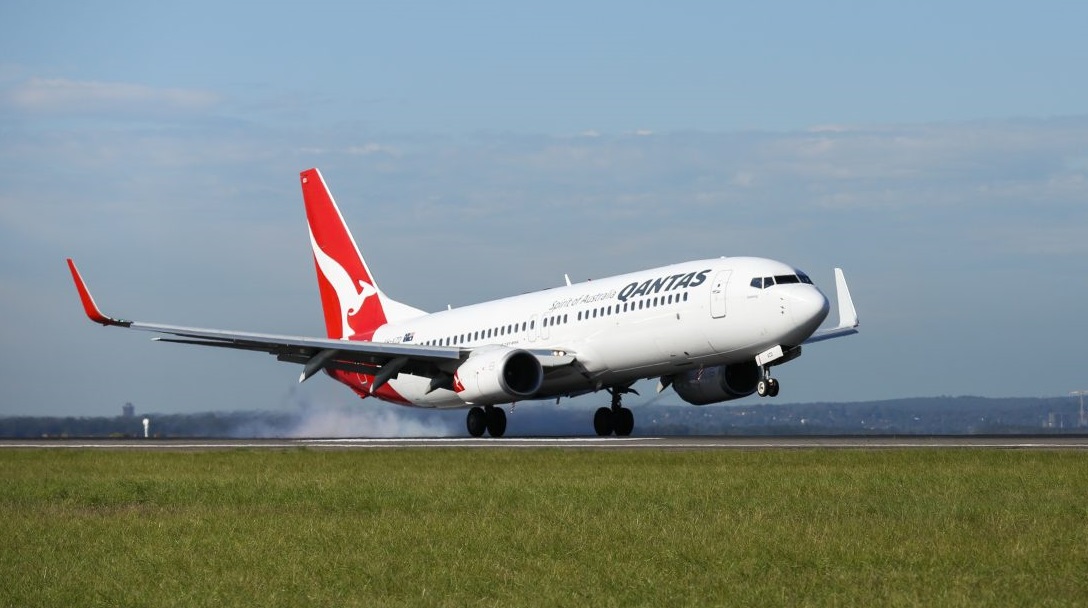
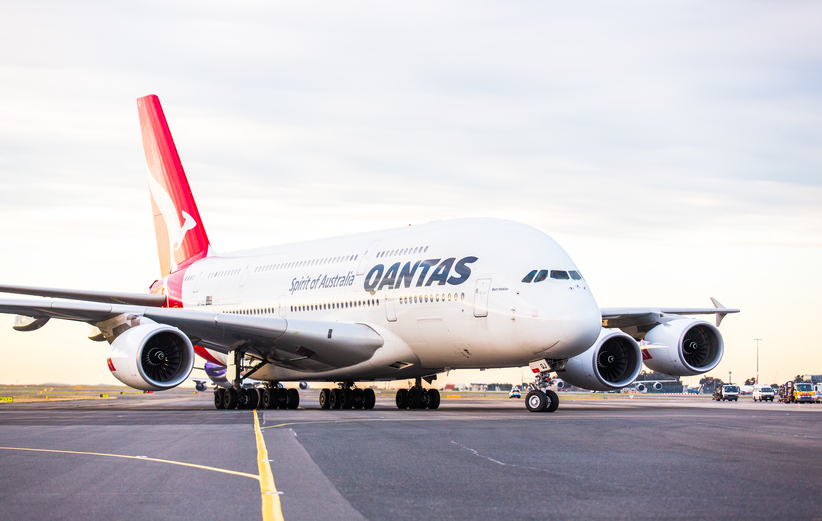
Qantas still operating minimum essential international links; seems to suggest opening up New Zealand travel first
Qantas today announced a further extension flight cancellations on most international services in June and July. Flights between Australia and New Zealand will however be cancelled up to end-June for now.
Before this, practically all flights up to end-May were cancelled, except for a handful of services to four international hubs for the most essential travel.
Domestic travel within Australia has also be scaled back to a bare minimum, as many states have imposed travel restrictions and isolation requirements. These reductions are also extended till at least end-June.
Qantas however has caveat that “some capacity can be added back in if domestic and Trans-Tasman restrictions ease in coming weeks”.
What does it mean for customers
Assuming you still have a booking for June and July (not sure why you are still holding on to hope for travelling now, but that’s another conversation), these flights will automatically be cancelled.
You will be contacted with an option to receive your credit, which can be used towards a next flights within 12 months.
Note that if you want a cash refund, they will charge you a refund fee so that’s not advisable.
Raising cash
Qantas Group announced the cancellation extensions today along with a loan announcement, having secured A$550 million in funding, with three of its wholly-owned Boeing 787-9 aircraft as collateral. This follows an earlier A$1.05 billion raised in March against seven of its dreamliners. Qantas has 11 dreamliners for now, which it bought with cash a few years ago.
Qantas has now a total of A$3.5 billion in short-term liquidity, including other un-pledged assets. It has also said that it is currently burning cash at about A$40 million a week, after all the cost reduction measures, including putting about two-thirds of its employees on leave. This means that even if the coronavirus situation persists, the airline will still have enough funds to last it through another 18 months based on current circumstances.
Australia, New Zealand thinking of forming travel ‘bubble’
The two largest countries in the Pacific has so far sealed off their borders for more than a month, with even movement within the country highly restricted.
Even as both countries work towards opening up their respective country’s economy and transport, both country’s leaders have also committed to working towards opening international travel between both countries at the same time.
Both countries have jointly announced last week working towards a “Trans-Tasman bubble” to boost tourism, trade and business ties, with Qantas CEO being optimistic in resuming flights to New Zealand ahead of other international destinations.
Only 3% of its usual schedule in operation for the month.
Singapore Airlines has announced their schedule for the month of May.
In this month, Singapore Airlines will only take off about 324 times – and that includes a single weekly return Silkair service to Chongqing.
In May, SIA will continue operating to the 15 cities in 13 countries, no change from the cities it operated to in April. These include Los Angeles, Shanghai, Sydney, London, Zurich, Frankfurt and a handful of Southeast Asia capitals.
This is the second month that SIA is operating a skeletal schedule. While SIA’s booking engine and GDS do show a ‘regular’ pre Covid-19 schedule in June, we would expect that this be pared down significantly, given that international travel restrictions are not showing any signs of easing up right now.
In the same announcement, Singapore Transport Minister Khaw Boon Wan did hint at closing Terminal 4 if all airlines adjusted or suspended operations.
The time should be now.
Cathay Pacific announced last week that it will be temporarily relocating to Terminal 1 since last Friday (10 Apr).
Announcement on Cathay Pacific’s website
With its lounge at Terminal 4 temporarily shut, this move does make sense.
Cathay Pacific still operating flights to Singapore
At the time of writing, Cathay Pacific did say that it will be operating three flights a week to Singapore. However, a quick look on its website showed that it was operating on average about two flights a week, with five more flights scheduled for the remainder of April.
From 10 Apr, Cathay Pacific will be using rows 12 & 13 of Terminal 1 for the few flights that it will be operating, until further notice. Eligible customers will be directed to the dnata lounge.
Terminal 4 likely to shut
With Cathay Pacific moving to Terminal 1, Terminal 4 is looking to be certainly shut, at least for a short while.
This makes perfect sense, given that Changi is looking at an all-time low passenger traffic and aircraft movements. The shuttering will allow Changi to consolidate operations to terminals 1 & 3, and save on operating the other terminals which are only seeing sometimes a single flight on any given day.
There are some other moving parts to consider though. With Terminal 2’s closing, some airlines will definitely be asked to move to Terminal 4, including Air India, Air India Express and Indigo, from 1 May. Of which, only Air India is still operating flights, so it remains to be seen whether they will be moving as originally planned, or moving to Terminals 1 or 3.
Final thoughts
We are definitely living in interesting times. While recent history has seen epidemics popping up every couple of years, Covid-19 has practically halted the world’s economy, with some analysts calling this the equivalent of the 1930s Great Depression.
The standstill of international air travel has resulted in the once-glamorous industry to fall off the cliff, with many jobs being put on hold, or even at risk of being lost as countries around the world continue to restrict travel for the sake of public health.
As recent as last year, I could never have imagined that a shining star like Changi Airport – the envy of many other airports in the world – will also see a day where not one, but two terminals suspending operations. This follows almost a decade of record-breaking passenger numbers every year.
Some analysts expect that air travel will remain low for as long as the next two years, and if the Covid-19 situation reports in every country is anything to go by, my bet is that most people are going to stay in their country for a long while.
Who knows what’s going to happen over the next couple of months, or even years?
Flights from Auckland, Hong Kong, London and Los Angeles to Australia will be available for those looking to return to Down Under
Qantas has announced a series of rescue flights to bring back Australians to Australia over the next few weeks.
Four cities are chosen: Auckland, Hong Kong, London and Los Angeles – arguably the most significant city for Australia in each continent – where there will be at least one flight a week.
Qantas said that these flights are mounted to facilitate essential travel as well as for Australians who with to return home. For those who wish to book, you will have to book direct on Qantas.com.
The fine print
Given that these flights are mounted under extraordinary circumstances, there are some caveats for these flights, which Qantas has listed on their page. In essence:
Only economy class seats will be available for booking.
There will be limited onboard food and beverage service – which we can presume
There will be no in-flight entertainment, as Qantas has suspended its licencing agreement with the supplier at the moment
No Qantas Frequent Flyer benefits will be given. This means that the flight will not earn status credits and Qantas points, nor will seats be bookable with points.
Seat selection is also unavailable to enable Qantas to allocate seats factoring in social distancing requirements.
Full schedule
The schedules and fares are as follow:
Sector
Dates of ops
Flight no.
Dep / Arr (flight time)
Aircraft
Fare (one-way, Economy)
HKG-BNE
15, 17, 22, 24 & 29 Apr; 1 & 6 May
QF98
1930 – 0615 (+1) 8h 45m
B787-9
HKD3499
HKG-MEL
18, 20, 25 & 27 Apr; 2 & 4 May
QF30
1930 – 0655 (+1) 9h 25m
B787-9
HKD3497
BNE-LAX
16, 23, 30 Apr
QF15
1000 – 0600 13h
B787-9
AUD749
LAX-BNE
17 & 24 Apr, 1 May
QF16
2230 – 0520 (+2) 13h 50m
B787-9
USD461
MEL-LHR
19 & 26 Apr, 3 May
QF10
1515 – 0505 (+1) 22h 50m
B787-9
AUD1335
PER-LHR
19 & 26 Apr, 3 May
QF10
1850 – 0505 (+1) 17h 15m
B787-9
AUD1335
LHR-MEL
22 & 29 Apr, 6 May
QF9
1210 – 1855 (+1) 21h 45m
B787-9
GBP721
BNE-AKL
16,18, 23, 25 & 30 Apr; 2 May
QF119
0925 – 1435 3h 10m
B787-9
AUD335
MEL-AKL
19, 20, 26 & 27 Apr; 3 & 4 May
QF151
1030 – 1535 3h 5m
B787-9
AUD335
AKL-BNE
16,18, 23, 25 & 30 Apr; 2 May
QF126
1715 – 1855 3h 40m
B787-9
NZD320
AKL-MEL
19, 20, 26 & 27 Apr; 3 & 4 May
QF156
1610 – 1805 3h 55m
B787-9
NZD320
Qantas has tentatively listed that it will be using the Boeing 787-9 Dreamliner to operate these flights, but I will imagine that it will deploy an aircraft that will best suit the demand closer to date.
For instance, for the Hong Kong and Los Angeles services, Qantas can possibly deploy the A380 if there’s a huge demand, while still maintaining a social distancing policy on the flight.
How do these fares compare?
Virgin Australia is also mounting some flights to Hong Kong and Los Angeles from its Brisbane base.
Virgin’s fare is somewhat comparable to Qantas’, with the biggest difference being about AUD100 between the two:
Sector
Qantas fare
Virgin Australia fare
Hong Kong to Brisbane
HKD3499
HKD2983
Brisbane to Los Angeles
AUD749
AUD855
Los Angeles to Brisbane
USD461
USD475
Unlike Qantas who is only selling seats on the Hong Kong to Australia sector, Virgin Australia is also selling flights from Brisbane to Hong Kong at AUD625, one way.
Comparing these to regular fares before COVID-19 consumed the aviation industry, the fares can be a little pricier than usual, given that you can get a return sale fare from Hong Kong to Australia from HKD3500.
But of course, these are extraordinary times, so the price is very reasonable for a rescue flight, and even more reasonable than the AUD1000 that Qantas originally wanted to charge passengers on its Wuhan rescue service back in January (this was later retracted when the government footed the bill).
Move will help to accelerate the upgrading works, will be completed by up to one year ahead of schedule
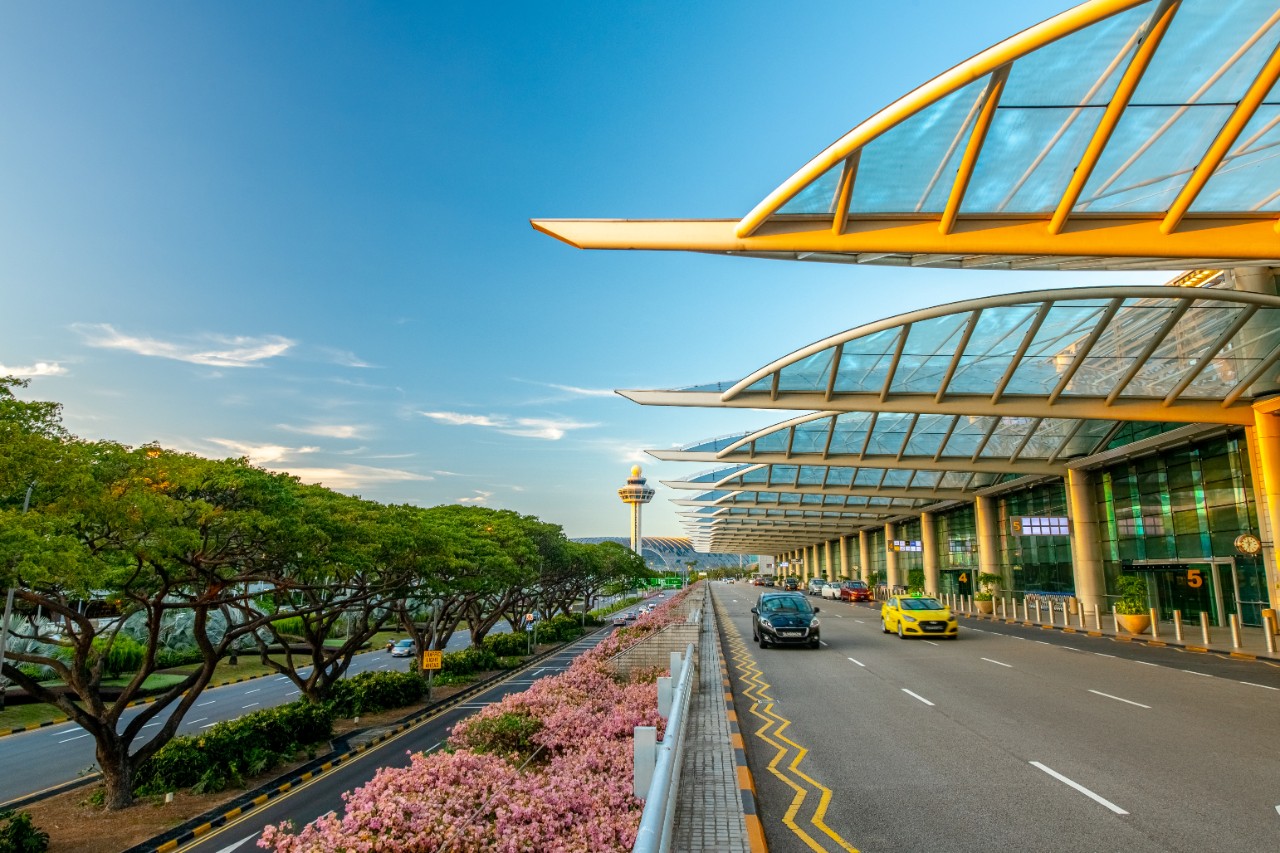
Singapore Transport Minister Khaw Boon Wan announced yesterday (6 Apr 2020) in Parliament that Singapore Changi Airport will shutter Terminal 2 1 May 2020 onwards for 18 months.
The airport operator does not think that traffic will return to its former levels for the rest of this year as a result of the coronavirus pandemic, as such, it only makes sense to do a full closure of the terminal to facilitate the previously announced upgrading works, which was slated for a 2024 completion.
Along with Terminal 2’s temporary closure, Changi Airport Group has also said that it may suspend Terminal 4’s if all the airlines operating out of the terminal suspend flights.
In view of the very small number of flights at Terminal 4 (T4), operations at the terminal have been scaled down considerably with a small number of aircraft boarding gates kept in use and shops allowed to close early after the last flight for the day. If the remaining airlines at T4 choose to suspend or adjust their flight schedule, CAG will also consider suspending operations at T4 temporarily but with the objective of restarting operations quickly when airlines confirm the resumption of flights.
Passenger traffic numbers at Changi Airport has fallen off a cliff since beginning of the year. In February, Changi recorded only 3.45 million, a drop of over 30% as compared to the same month in 2019. This is also the lowest monthly passenger traffic number since February 2011, which saw 3.39 million passenger movements.
This number is expected to further dive in March and April, given that air traffic has almost come to a grinding halt given all the border control measures many countries have enacted, with a third of the world in isolation or quarantine.
According to some sources, aircraft movements for March have decreased by up to 90% at Changi Airport. What this means is that passenger traffic for March should have collapsed, given that none of the flights were anywhere close to full. We will only know later this month when Changi Airport Group reveals the numbers.
Singapore Airlines and Silkair to consolidate at Terminal 3 from 8 April
With the upcoming closure of Terminal 2, Singapore Airlines and Silkair announced that it will consolidate all its flights to Terminal 3 from 8 Apr 2020.
With this move, Singapore Airlines has closed its Terminal 2 SilverKris lounge as well, leaving the Terminal 3 SilverKris business class lounge as the only SIA lounge opened worldwide for the time being. The other Singapore Airlines lounges in Terminal 3, including the Krisflyer Gold Lounge, the First Class Lounge and the Private Room, are also all temporarily closed.
Singapore Airlines SilverKris LoungeTerminal 3is the only lounge operating in the SIA network right now
Move of other Terminal 2 airlines to be announced later
While Changi Airport has announced the closure of the terminal from 1 May, the move of other airlines will only be announced later.
As Scoot has moved to Terminal 1 since late 2019, we suspect that most of the airlines will be moved to either Terminal 3 or 4, given that Terminal 1 airlines are also now ‘encroaching’ onto B gates in Terminal 3 and E gates in Terminal 2.
The following airlines are currently operating out of Terminal 2:
Air India (AI)
Air India Express (IX)
ANA (NH)
Ethiopian Airlines (ET)
Etihad Airways (EY)
Indigo (6E)
LOT Polish Airlines (LO)
Lufthansa (LH)
Malaysia Airlines (MH)
Royal Brunei Airlines (BI)
Sichuan Airlines (3U)
Swiss International Airlines (LX)
United Airlines (UA)
Most of these airlines have suspended services to Singapore for the time being, so moving them around will be relatively easier.
Update: Changi Airport has made a brief announcement on where these airlines will move to. The list has since been removed, so we are expecting more changes.
Terminal 2 upgrading to be accelerated
Changi Airport Group announced earlier that Terminal 2 is going to under major upgrading works, which started in Feb 2020.
The refurbishment works were originally going to take place while the terminal is still in operation, all the way through 2024. This was also the same process when Changi refreshed Terminal 1 years ago, in keeping the terminal operational while upgrading the building section by section.
With this closure, it is expected that the upgrading works will now be accelerated and completed up to a year earlier than the 2024 deadline.
The refreshed terminal will have more space and can accommodate up to 5 additional million passenger movements a year.
Artist’s impression of upgraded Terminal 2at Changi Airport
Final thoughts
This is no doubt a darker period for the airport, who have seen many years of record passenger numbers for the better part of the past decade.
It will be without doubt that this year will see significantly smaller number, which may be a blessing in disguise for Changi Airport, given that the increasing number of passengers handled each year slowly inched towards the maximum capacity.
During peak seasons, many passengers would have noticed particularly crowded terminals and long queues at check-in and at immigration. This slowdown will perhaps help to moderate growth a bit until Terminal 5 is ready in 2030, although I personally think this may be delayed given the current outlook.