Tag: Covid-19

  • Scoot flies to six cities in June

    Scoot flies to six cities in June

    Scoot recommences services to Guangzhou, Ipoh, Penang and Kuching

    Even as Singapore Airlines and Silkair retains a skeletal schedule in June, Scoot has decidedly expanded the number of destinations it will serve in June, serving as a signal for the early recovery of air travel volumes.

    After operating to only Hong Kong and Perth in the months of April and May, Scoot adds another four cities into the fold of destinations for June: Guangzhou in China, as well as Ipoh, Penang and Kuching in neighbouring Malaysia.

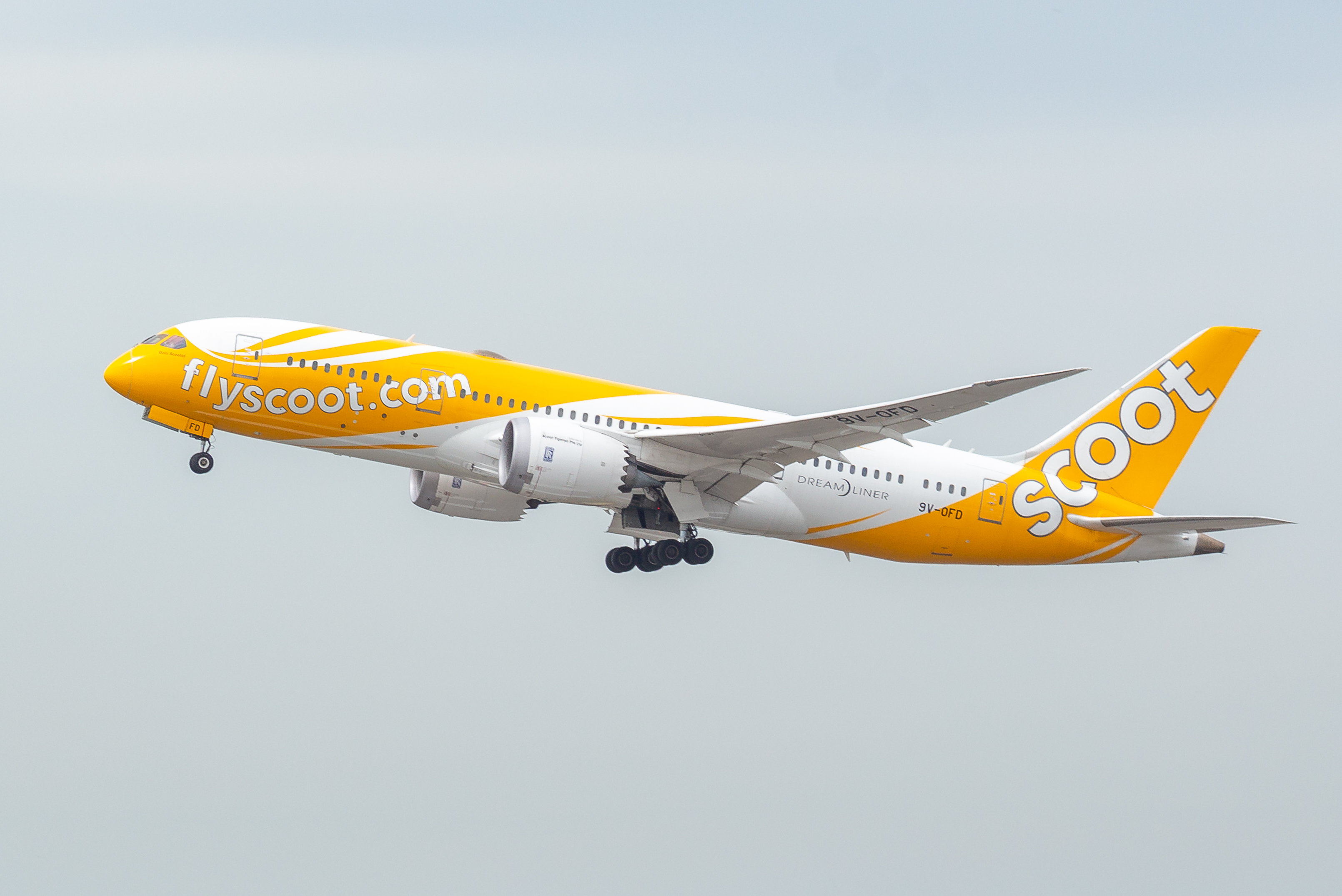
    Apart from the Boeing 787-9s that Scoot has been using for its Hong Kong and Perth flights, Scoot will also be bringing back some A320s for the Malaysian sectors.

    Scoot’s full schedule for June is as follow:

    SectorFlight no.Days of opsDepArrFlight timeAircraft
    Singapore – GuangzhouTR100Sun051509154hB787-9
    Guangzhou – SingaporeTR101Sun104014404hB787-9
    Singapore – Hong KongTR980Tue, Fri, Sun141518204h 5mB787-9
    Hong Kong – SingaporeTR981Tue, Fri, Sun192023153h 55mB787-9
    Singapore – IpohTR480Fri, Sun112012301h 10mA320
    Ipoh – SingaporeTR481Fri, Sun131014301h 20mA320
    Singapore – KuchingTR430Fri180519351h 30mA320
    TR434Sun204522151h 30mA320
    Kuching – SingaporeTR431Fri201521401h 35mA320
    TR435Sun22550030(+1)1h 35mA320
    Singapore – PenangTR424Sun143515551h 20mA320
    TR426Fri090010201h 20mA320
    Penang – SingaporeTR425Sun163518101h 35mA320
    TR427Fri1100123011h 30mA320
    Singapore – PerthTR8Tue120017105h 10mB787-9
    TR16Fri153020355h 5mB787-9
    TR8Sun120017005hB787-9
    Perth – SingaporeTR9Tue181023455h 35mB787-9
    TR17Fri21500315(+1)5h 25mB787-9
    TR9Sun180023205h 20mB787-9

    Needless to say, all other flights Scoot has previously scheduled will be cancelled. It remains to be seen if Scoot will continue to increase the number of destinations in the coming months, which is likely if the situation in Asia stabilises, and so it seems.

    For those still holding Scoot tickets

    For those who has previously booked Scoot flights on or before 15 Mar for travel up to 31 July, but for some reason has not canceled them, Scoot’s cancellation policy has been simplified and you have two options:

    • A 100% refund via the original method of payment, or
    • A 120% refund in Scoot vouchers, valid for 12 months.

    For a 100% refund to your original payment method, Scoot is advising of a wait of up to 14 weeks for processing.

    Instructions on how to manage your booking and more details on the cancellation policy can be found here.

    Should I take this as a sign to start planning to travel again?

    Short answer: no. The Singapore government announced on Friday 29 May that they are now in discussions with some countries on establishing ‘fast lane’ or ‘travel bubble’ arrangements, but I wouldn’t rejoice and go out to book my tickets just as yet.

    The criteria for these ‘essential travel’ will certainly be very tight, as the arrangement is mainly to facilitate business travel, and I may assume for urgent personal matters (such as funerals). The process for such travel will likely be an overtly onerous one, including testing at both departure and arrival points, requirement for movement reports and perhaps even quarantine requirements.

    The government has also categorically stated that mass travel will not be allowed for the time being, even as essential travel is being planned and facilitated.

    Scoot operating cargo-only services

    While most of us should not and will not be travelling yet, if you are just checking out Scoot’s schedule on their website you may notice that they seem to be flying way more than what is above. That’s because throughout the last few months, Scoot has been operating cargo-only flights using the passenger planes, including additional Thursday services to Perth; B787-9 services to Hangzhou, Guangzhou and other cities in China; A320 services to Kunming and a few others.

    In the good old days, one little known fact is that passenger aircraft also carry revenue-earning cargo in the belly hold, and as much as 75% of all the load under the passenger floor are such cargo. Since passenger traffic has almost come to a halt earlier this year, the drastic reduction in passenger flights meant that less cargo can be shipped around the world in the belly of these passenger planes. As a result, air cargo capacity has been severely limited, so many airlines are now either resuming services just to ferry cargo in their belly – and in some instances, on passenger seats – while some airlines even go to the extent of converting their passenger planes into temporary freighters by removing the seats.

    Cathay Pacific passenger aircraft filled with cargo

    Final thoughts

    This is definitely an encouraging sign on the early recovery of air travel, along with Changi Airport’s most recent announcement of allowing transit traffic to resume.

    While leisure travel may still be impossible in the next few weeks, there may be some hope that avid travellers could step on a plane as early as before the end of 2020, although this is highly dependent on how the world will look like then, and the hoops that travellers may have to jump through just to get into that economy class seat.
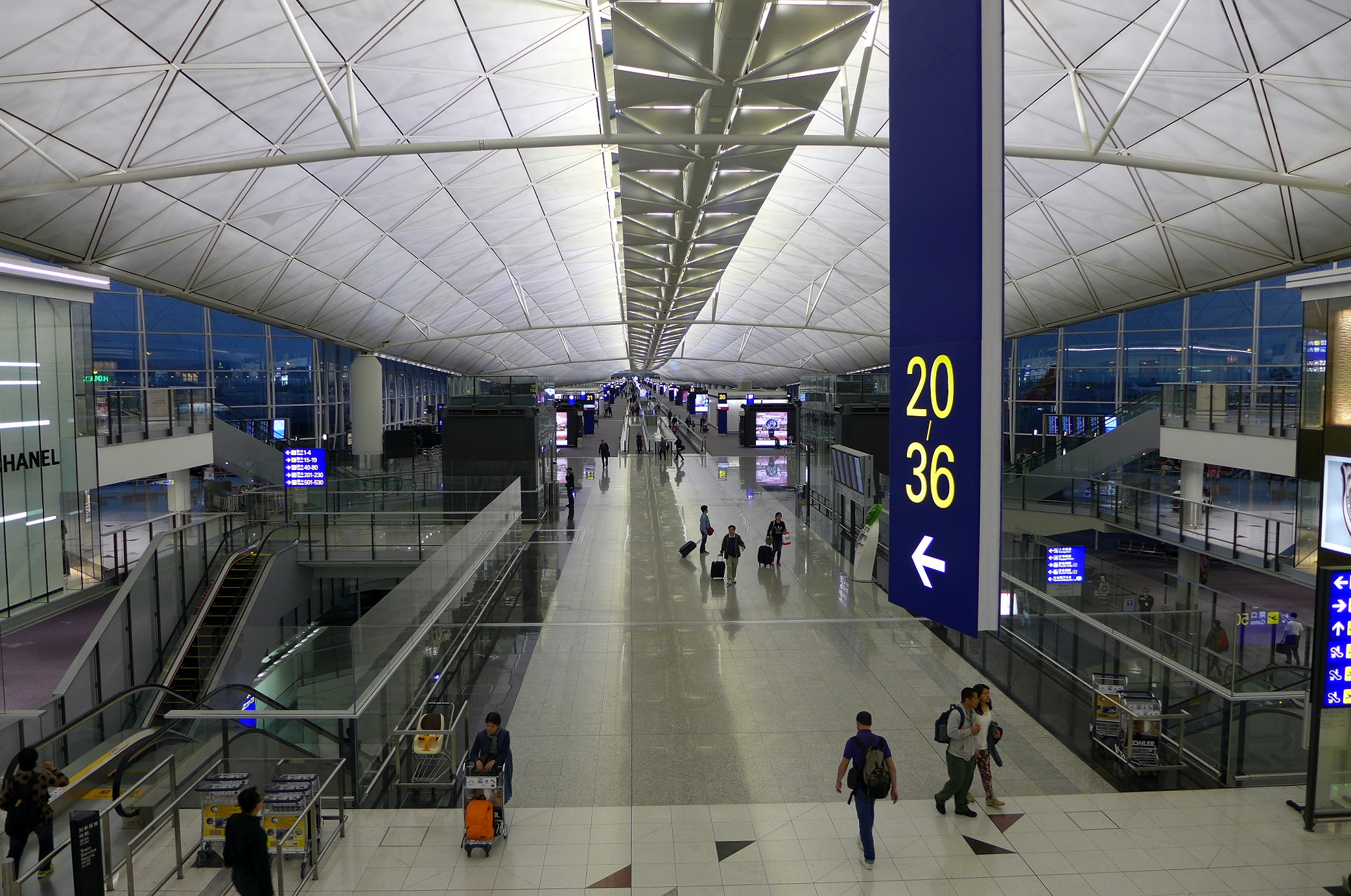
  • Hong Kong airport to accept transit passengers from 1 Jun

    Hong Kong airport to accept transit passengers from 1 Jun

    The airport joins Singapore in opening up air passenger transit traffic once again

    Hong Kong’s chief executive Carrie Lam announced on 26 May that transit services at Hong Kong International Airport (HKIA) will “partly resume” from 1 Jun.

    This announcement came weeks after Singapore announced a similar move to allow transit traffic from 2 Jun.

    Hong Kong implemented a ban on all non-resident visitors into Hong Kong, as well as transit passengers through HKIA since 25 Mar. All returning residents were also required to go to AsiaWorld Expo site for a compulsory Covid-19 test, before they were dispatched home to serve a 14-day self-quarantine.

    Cathay Pacific group to benefit

    Since the ban on transit passengers kicked in from 25 Mar, Cathay Pacific and Cathay Dragon collectively saw a drastic drop in passenger numbers, well over 99% compared to same period last year.

    Cathay Pacific, which has been hard-hit by the coronavirus pandemic, has since April operated to “a skeleton schedule” of barely a dozen destinations served by just a handful of flights per week.

    The reopening of transit lanes will allow Cathay Pacific and Cathay Dragon to purposefully open up routes via Hong Kong once again, especially as China is poised to be one of the first few countries to reopen its borders to a limited selection of countries.

    How will the transit experience be like?

    At the time of writing, there has been no details as to how the transit arrangements will be like, either from Hong Kong’s civil aviation authorities nor the airport.

    Neither is it announced if transit passengers will be required to take a Covid-19 swab as well. This in itself may not be practical if the transit time is only a few hours, given that it takes a while before the swab test results may be available.

    Don’t expect to be able to spend time in Cathay Pacific’s lounges in HKIA if you are passing through

    HKIA will have a slightly easier way of handling transit traffic, given that the airport’s layout has already segregated arriving and departing passengers.

    Some speculation online says that it is likely that transit passengers will not be able to enjoy transit facilities such as lounges or duty free shopping, and may be escorted to their next flights.

    Final thoughts

    Hong Kong has been cited internationally as one of the stellar examples of managing its Covid-19 situation, given that it has gotten its infection numbers under control, with the city recording a total of just over 1,000 cases with four deaths. Hong Kong is also reopening businesses cautiously, with crowd-pulling venues such as bars and clubs set to open this Friday (29 May).

    The reopening of the airport for transit traffic is a step in the right direction, as the sector prepares itself to reopen international air travel. While travelling in June may not be possible given many countries still have border control restrictions in place, this definitely paves the way for a new normal in air travel in the months to come.

  • Changi Airport to allow transit passengers again from 2 Jun

    Changi Airport to allow transit passengers again from 2 Jun

    The opening of transit facilities come after an all-out ban on transit and short term visitors into Singapore since 24 Mar

    Singapore earlier this week (19 May) announced that it will officially be ending its ‘circuit breaker’ on 1 Jun, and doing a slow re-opening of the domestic economy in a three-phase approach.

    Later in the evening, the Civil Aviation Authority of Singapore (CAAS) also issued a media release announcing that it will be allowing transit passengers through Changi Airport from 2 Jun as well, after local lockdown restrictions ease.

    Transit visitors banned since 24 Mar

    Since 24 Mar, Changi Airport has banned transit passengers on top of barring all short term visitors in order to combat the spread of Covid-19. Of course, with no more leisure visitors and the absence of transit passengers, Changi’s passenger movements fell drastically. In April alone, Changi Airport only handled 25,200 passengers, 99.5% lower than the previous year’s 5.58 million passengers.

    Changi will welcome transit passengers from 2 Jun

    According to the CAAS announcement, transit travellers will be allowed through Changi Airport once again, but subjected to a few arrangements:

    Firstly, airlines will need to submit proposals for transfer lanes through Changi Airport to CAAS. The proposals will be evaluated taking into account aviation safety, public health considerations, as well as the health of passengers and air crew.

    Next, strict protocols will taken. For instance, transit passengers will be required to ‘remain in designated facilities in the transit area’ and ‘do not mix with other passengers’ while in transit.

    I will be very interested to see how the airlines and Changi Airport manage this, given that the airport does not segregate arriving and departing passengers.

    I would imagine that this means that transit passengers will have to be somehow segregated from the arriving passengers, sorted according to their onward flights, and taken to a specific waiting room while waiting for the next flight.

    Given Changi’s unique arrangement of having gate hold-rooms, this can very well mean that passengers must proceed directly to their next flight’s gate hold-rooms to wait for their flights, which in all likelihood be a very long time away given how sparse flights are at this point in time.

    What this means for airlines

    While Changi Airport has long established itself as a premier air hub, realistically the only airlines that can take advantage of this latest developments are the Singapore-registered carriers, i.e. Singapore Airlines Group, and Jetstar Asia.

    There are a few other airlines, namely Emirates, Qantas, British Airways, who have operated fifth freedom flights out of Singapore, but given the current situation it will be highly unlikely they will resume these flights.  

    Back to Singapore Airlines Group. The flag carrier will continue its skeletal flight schedule through the month of June, and a check on its website also showed that flights via Singapore (e.g. USA to Jakarta via Singapore) is not possible at this time. So there is a small possibility that Singapore Airlines may add flights at the last minute, but highly unlikely given the incredibly low demand for travel at this time.

    Scoot, on the other hand, has expanded its destinations from just two in May (Hong Kong and Perth), to a bigger handful of six, including Ipoh, Kuching, Penang and Guangzhou.

    With this latest development, airlines can start to sell tickets via Singapore in the near term, which opens up a lot of potential given that many countries are working towards opening essential travel lanes. The transit facility may also potentially help Singapore offer other foreign governments help in repatriation flights, via Singapore of course.

    Final thoughts

    I can imagine why Changi Airport will want to reopen as soon as possible.

    For one, some other hubs in the region, such as Malaysia’s KLIA, have kept their transit facility open in spite of Covid-19 brewing within their borders. While these countries have also stopped allowing visitors into the country, transit facilities are still available to facilitate passengers who still need to travel for one reason or another.

    Therefore, by green-lighting this process at this juncture, this gives airlines – especially home carrier Singapore Airlines – sufficient time to put together a plan to facilitate safe transits without having to rush into it. The measures can also be designed in a phased manner: starting off with the tightest of them all, and subsequently loosened as the global Covid-19 situation stabilises, and when travel demand ramps up again.

    I don’t expect that the airport nor airlines will be able to benefit from this change in policy come June, but at least this sets wheels in motion for a new stream of transit passengers from July. If anything, this will help position Singapore Airlines to capture the transit share again when the world starts travelling again.

  • Changi Airport to shut Terminal 4 temporarily from 16 May

    Changi Airport to shut Terminal 4 temporarily from 16 May

    Not many airlines are operating there for now, anyway.

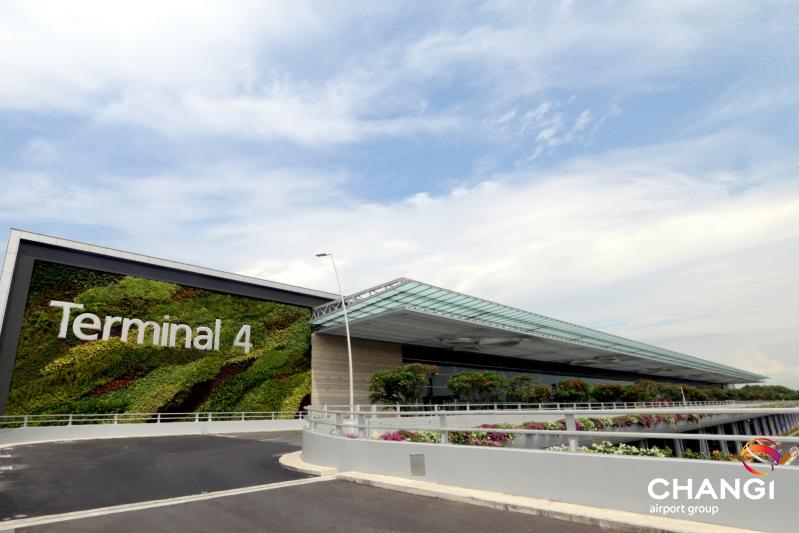
    Changi Airport today (12 May) announced that it will be suspending operations at Terminal 4 from 16 May until further notice.

    It said in a press release:

    Changi Airport’s terminal operations will be consolidated further to optimise resources in tandem with the sharp decline in flight movements because of the global Covid-19 pandemic. This move will enable Changi Airport Group (CAG) and its airport partners to continue to save on running costs such as utilities and cleaning.

    Changi Airport Group, press release dated 12 May 2020

    Earlier this month, Changi Airport shut Terminal 2 from 1 May for a period of 18 months to upgrade the aged terminal. This is the first time Changi Airport has closed off an entire terminal to facilitate upgrading works in its almost 40 years of operations.

    Where are T4 airlines moving to?

    Some time last month, Cathay Pacific has already moved to Terminal 1 at Changi Airport for its 2 to 3 flights each week. It has closed off its own lounge at Terminal 4 as early as February, so moving terminals wasn’t really a big deal.

    With Cathay operating out of Terminal 1 since mid-April, Terminal 4 was effectively… a ghost town. Before Cathay Pacific moved, there was still the occasional Juneyao Airlines flight, but this has seemed to be suspended for a while now.

    Korean Air seemed to have resumed a weekly service between Singapore and Seoul-Incheon, so it will have to move terminals as well.

    For those who are still interested to know in theory where are the T4 airlines moving to, all the airlines currently housed in T4 will be moving to T1 except for Vietnam Airlines, which will be in T3.

    The full table is below:

    AirlineTerminal
    AirAsia Group (AK/FD/QZ)1
    Cathay Pacific (CX)1
    Cebu Pacific (5J)1
    GoAir (G8)1
    Guangxi Beibu Airlines (GX)1
    Hainan Airlines (HU)1
    Korean Air (KE)1
    Regent Airways (RX)1
    Spring Airlines (9C)1
    Urumqi Air (UQ)1
    Vietnam Airlines (VN)3
    Vietjet (VJ)1

    To recap, this is the list of terminals that T2 airlines will be moving to as well, which was announced earlier:

    AirlineTerminal
    Air India (AI) – currently suspendedTBC
    Air India Express (IX) – currently suspendedTBC
    ANA (NH)1
    Ethiopian Airlines (ET) – currently suspended3
    Etihad Airways (EY)3
    Indigo (6E)TBC
    LOT Polish Airlines (LO) – currently suspended3
    Lufthansa (LH)TBC
    Malaysia Airlines (MH) – currently suspended1
    Royal Brunei Airlines (BI)1
    Sichuan Airlines (3U)TBC
    Swiss International Airlines (LX)TBC
    United Airlines (UA) – currently suspended3

    T4 shops, restaurants will be closed; shuttle bus suspended

    As a result of the closure, all shops and restaurants in T4 will be closed until operations in T4 resume.

    Terminal 4 shops (source: Changi Airport Group)

    The shuttle bus service currently connecting T4 to T3 will also be suspended, although public buses will still call at the terminal. Public carparks at T4 will remain open as well.

    Changi Airport has committed to working with its partners in spite of the current downturn, so that it “stands ready to restart operations at T4 as soon as a sufficient number of flights return to the terminal”.

    Apart from these changes, Changi Airport has also mentioned other reduced operational footprint in view of the exceptionally low passenger numbers.

    For instance, it said that it has closed seven finger piers at T1 and T3 until demand picks up. On the landside, it has also consolidated taxi stands at each terminal down from two to a single location each.

    Skytrain services between all terminals have also been suspended, and visitors are directed to use the connecting bridges if they in the public area, and simply walk through the B gates on the transit area.

    Changi Airport website

    Final thoughts

    The writing is on the wall. To be honest, I would have thought that Changi Airport would close off the terminal way earlier, given that Cathay Pacific has moved to Terminal 1 as early as last month.

    It’s a good call nonetheless, given that operating an ghost town empty terminal is not exactly prudent on the energy end. While it kind of keep shops and operations running and still provide some form of a job, but you can imagine how low morale would be for these people, who are working in the world’s best airport, but only to see virtually no passengers most days.

  • Qantas puts Project Sunrise on hold

    Qantas puts Project Sunrise on hold

    Non-stop flights from Sydney, Melbourne to London, New York will have to take a stop for now

    Qantas has suspended its plans for direct flights between Australia east coast to London and New York, also called Project Sunrise, due to uncertainty over travel demand even after Covid-19 fades.

    Project Sunrise was set to launch by 2023, but in a report by Executive Traveller, Qantas Group CEO Alan Joyce has confirmed that the project will be put on hold, for now.

    A350 orders put on hold

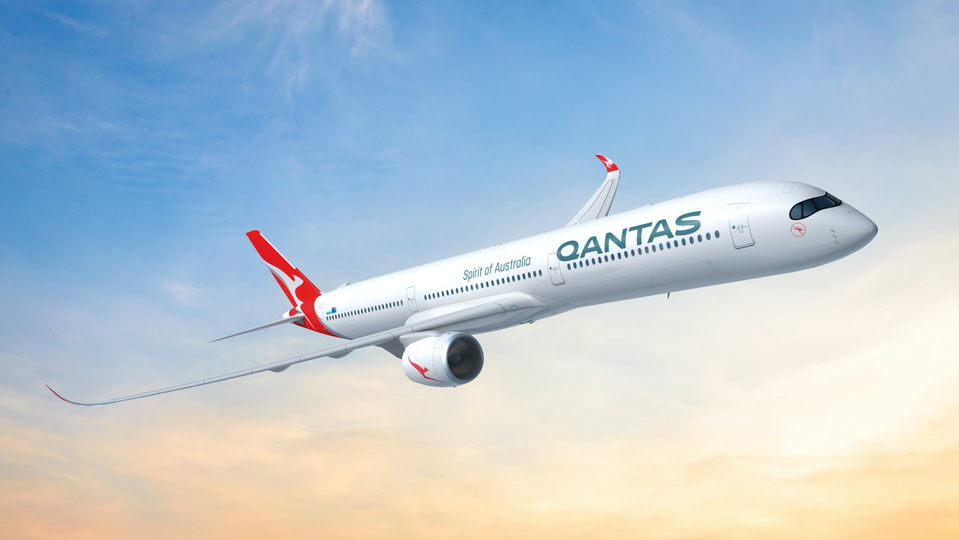
    Qantas has earlier announced that it would order 12 dedicated A350-1000 for this project. The final decision was meant to be made in March 2020, but of course in the face of Covid-19, this was quickly paused indefinitely. According to Executive Traveller, the dedicated fleet of up to 12 Airbus A350-1000 jets would have been “valued as high as $6.8bn (US$4.4bn) based on Airbus’ list price”,

    Qantas announced Project Sunrise proposal as early as August 2017, initially mapping out potential non-stop destinations such as New York, London and Rio de Janeiro from Sydney, Melbourne and Brisbane.

    Proposed routes for Project Sunrise (source: Qantas)

    The initial plan was ambitious: it was touted as a challenge to Boeing and Airbus to create an aircraft capable of flying full payload, both passenger and cargo, non-stop to these far-flung destinations, some with a flying time of up to 22 hours.

    This was followed by union negotiations, technical discussions with the plane makers and even research flights to see how these ultra long haul flights will affect passengers and crew. Eventually, the airline conceded that a full payload wasn’t possible, and would settle for slightly less for a ‘viable commercial payload’.

    In announcing the choice of the A350-1000, Qantas has also said that it will be configuring the aircraft in four cabins – first, business, premium economy and economy – as well as designing the seats in all cabins.

    Unfortunately, this also means that the new designs will be put on hold for a few years, until we see the project dawn again.