Closer ties will see both airlines expand codeshare arrangements, enhancements on frequent flyer programmes as well as maintenance, repairs and overhaul (MRO) services.
Singapore Airlines signed a Memorandum of Understanding with Malaysia Airlines earlier this week (27 June 2019) to ‘significantly step up cooperative ties’.
While the media release did not specify anything concrete (as with most MOUs), it broadly mentioned three areas of collaboration:
Expanding codeshare arrangements beyond the current Singapore-Malaysia services;
Enhancing both airlines’ frequent flyer programmes
Cargo
MRO services
All of the above are subject to government and regulatory approvals, and more details will be announced down the road when a proper agreement is signed.
Coming full circle?
If you are somewhat an avid fan of Singapore Airlines, you will know that the carrier has its roots in Malaysia-Singapore Airlines, or MSA. The joint airline was formed in 1966 as a collaboration between both Singapore and Malaysia governments after the independence of Singapore.
Regretfully (or perhaps fortunately to some), the partnership didn’t last very long before they went separate ways in 1972 owing to bilateral tensions as well as differing visions on the airline by both governments.
This partnership may seem like long time coming for many observers, but it’s highly unlikely that it will return to the MSA days in the near future.
Malaysia Airlines for one, has gone through a pretty rough patch in recent history. After suffering two fuselage losses within the same year (MH370 and MH17), the airline has been struggling to get back on its feet.
Despite numerous attempts and the change in several chief executives, Malaysia Airlines never did recover and is still loss-making. Today, it is largely funded by the Malaysian government. Most recently, Malaysian prime minister Dr Mahathir did suggest that it was studying whether it could “shut, sell or refinance” the airline.
So what’s next for customers?
For starters, Singapore Airlines’ customers can expect to see more codeshare services on Malaysia Airlines, particularly those out of Kuala Lumpur. As Singapore Airlines Group service practically all of Malaysia Airlines’ destinations, this shouldn’t be much of an issue for most Singapore-based customers.
The more critical piece is probably the frequent flyer piece. Singapore Airlines’ Krisflyer programme and Malaysia Airlines’ Enrich have fundamentally very different mechanisms for both earning and burning miles, so a collaboration will take some time to work out in order to ensure equity.
Both Singapore Airlines and Malaysia Airlines are also currently in different alliances, which limits the extent of earning miles on each others’ programmes. We will be looking out for developments on this front.
Continuing my journey from Ho Chi Minh City, the flight for the day is a short business class ride from Kuala Lumpur to Singapore with Malaysia Airlines.
The Kuala Lumpur to Singapore hop is an incredibly short one, typically the aircraft only cruises for less than thirty minutes before descending.
My ride today is on a Boeing 737-800, which Malaysia Airlines have plenty of. Between Singapore and all the Malaysian destinations it flies to, Malaysia Airlines only use the Boeing 737-800.
The aircraft
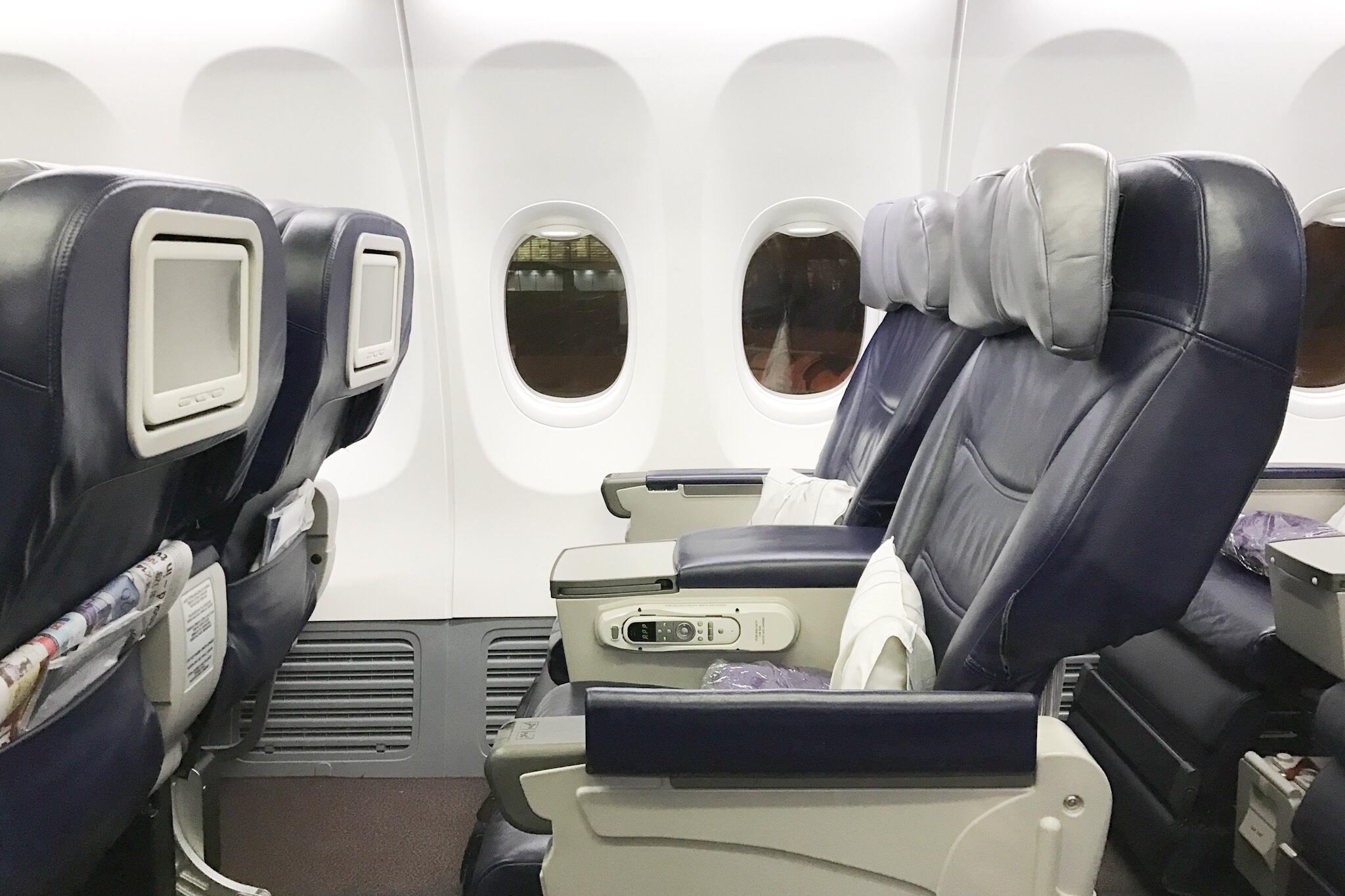
Malaysia Airlines’ Boeing 737-800 features 16 business class seats, laid out in a 2-2 configuration across four rows. In economy class, there are 144 seats, laid out 3-3 across 24 rows.
Malaysia Airlines B737-800 business class
The business class seats are recliners, which is perfectly fine for ridiculously short haul routes like mine. What you need to be aware of is that Malaysia Airlines also uses these narrowbody aircraft on some mid-haul route, including the Shanghai Pudong — Kuala Lumpur red eye service that I took some time ago, and also sometimes to Perth. So, always check the aircraft before you book.
Given that this was a ridiculously short flight with under an hour flying, one should not expect anything much.
The business cabin was only half full when the aircraft door was closed. Only when the economy class passengers were all boarded and the aircraft door was closed then a cabin crew came around to offer a pre-departure drink of either apple, orange or guava juice.
Pre-departure drink: orange juice
One thing to note in case you don’t already know this: Malaysia Airlines have taken off alcoholic beverages from all flights under three hours for a few years now, that effectively means all domestic service, as well as most of the regional services within Southeast Asia, no longer carry booze.
Shortly after I picked up the orange juice, the crew came around with a cold towel. Being pretty grossed out by the state of the cleanliness on my last flight, I used it to clean the armrests again.
Soon we were on our way. The moment we are at cruising height, the cabin crew around to offer a snack: a choice between a tuna sandwich, or a curry puff. I decided to go with the sandwich, which was quickly brought to me on a tray, with a piece of Beryl’s chocolate.
Spicy tuna sandwich
It was… alright. I also asked for a glass of sparkling water, which was promptly brought to me, along with the rest of the bottle.
After I was done with the sandwich and my drink, the cabin crew came around offering a choice of hot beverage, which I was pleasantly surprised at, given the short length of the flight. I opted for a green tea, which again, was brought to me rather quickly. I had at least another 15 minutes with the tea before it was being kept for landing.
Final thoughts
Given that this is an incredibly short flight, there really isn’t much to expect out of a flight like this. It’s ridiculous to expect anything to eat on a flight like this, and you are better off filling yourself up with food before or after your flight.
The cabin crew is extremely efficient, which isn’t hard to achieve with only half the business seats filled.
Spritzer sparkling water
The aircraft is incredibly old, but good enough for a short hop from Kuala Lumpur to Singapore. I generally have no issues with old aircraft, but what really bugs me is the state of cleanliness of the aircraft. Fortunately, this aircraft was a lot cleaner than the previous one I took from Ho Chi Minh City to Kuala Lumpur.
At the time of writing, a return business class ticket between Singapore and Malaysia is about S$700 from Singapore, or RM2,200 from Kuala Lumpur. If you are redeeming miles, that will set you back by at least 32,000 miles. No one should really be spending that kind of money or miles for a journey like this, and the only reason why you should fly this is if you are connecting on to somewhere else.
I was travelling from Ho Chi Minh City back home to Singapore, so decided to do a mileage run with a oneworld carrier given that I was trying to keep my frequent flyer status on Qantas for another year.
Having done some research, I realised that Malaysia Airlines was my best bet given that it goes via KL, as that gives me two sectors and a lot more points and status credits with Qantas Frequent Flyer than travelling on a direct flight.
Standby at airport: Go shows
I showed up way too early at Tan Sohn Nat International Airport for my 7.10pm flight, and wanted to check if I could standby for an earlier ticket. I had done it pretty often with Qantas in Australia, or to some extent with airlines in US as well, so I thought I could try.
While I tried to check in, I was told by the agent that the fare class for my ticket was ineligible for what they called ‘go shows’, and asked that I wait around to 4pm before my flight opens for check in. Obviously I wasn’t going to wait around for 2 hours to check my bag, so I asked to speak to the airport manager.
When I later spoke to the airport manager, he explained that their customer management system has recently been changed and they are no longer allowed to put people on a different flight from what was booked.
In summary, any sale tickets – whether in Business or Economy – will not allow you to show up for an earlier flight. From some online research the only exception seem to be out of Singapore.
Having said that, the airport manager made an exception to allow me to do an early check-in (they do not offer ECI at SGN), and invited me to head to the lounge early.
Security, immigration, lounge
Note that the airport only offers dedicated immigration counters for Sky Priority members, a Skyteam initiative, as Vietnam Airlines is an alliance members. Unfortunately that also means that all other airlines customers, including premium passengers, will have to join the general line. If you are an ASEAN passport holder, fortunately the dedicated counter queue tends to be shorter.
Once you have passed through immigration, you will see that there’s a dedicated business and first class security lane so feel free to use that.
The lounge that Malaysia Airlines uses at Tan Sohn Nat International Airport was the Saigonnais Lounge, a third-party lounge operated by Sasco, the airport operator. In fact, all the lounges at the international terminal are operated by Sasco.
Saigonnais Lounge, Tan Sohn Nat Airport International Terminal
The aircraft
After spending about three hours at the lounge, I finally head to the aircraft to start my journey.
My ride today is on a Boeing 737-800, which Malaysia Airlines have plenty of – 48 to be exact. MH typically uses the 737-800s for its domestic and regional services, some as far as Taipei, Shanghai and Perth.
Malaysia Airlines Boineg 737-800 Business class
MH was expecting to bring in some MAX 8 and MAX 10 from this year onwards, but given the recent incidents around the MAX variants it remains to be seen if that will still happen. At the time of writing, MH has yet to make any changes to their order.
Malaysia Airlines’ Boeing 737-800 features 16 business class seats, laid out in a 2-2 configuration across four rows. In economy class, there are 144 seats, laid out 3-3 across 24 rows.
The business class seats are recliners, which is perfectly fine for short haul routes. The seats come with 42 inches of pitch, offering plenty of legroom. The seat measures 21 inches across, wide enough for even a fairly big sized person.
Malaysia Airlines Boeing 737-800 business cabin with 16 seats
Be careful though, Malaysia Airlines also uses these narrowbody aircraft on some mid haul route, including the Shanghai Pudong — Kuala Lumpur red eye service that I took some time ago. So if you want to have a good rest, either avoid overnight services altogether on MH, or check the aircraft before you book.
The seat
The seat has got simple mechanical controls: one button to control the seat back recline, another one for the legrest. Both of these have to be set to the default position for take off and landing. Note that this is a recliner seat, while it has a considerable recline, these are not flat beds – don’t expect to sleep well on them.
The tray table is stowed in one of your armrest. In the middle armrest between each pair of seats, you will find the controller for your in-flight entertainment system.
Controller for in-flight entertainment system
As I was seated in row 1, the in-flight entertainment screen is also stowed under the middle of the pair of seats. To take out the screen, you will have to push it in first before it pops out. There was no instructions so I had to look around and fiddle with the screen before I could get it to come out, which was pretty frustrating.
The service
The cabin today was only about half full, so there was only about one person for every two seats. In the business cabin, there was two cabin crew, so the passenger to crew ratio was very good.
There was also a variety of newspapers being put in every magazine holder in front of the seat: you don’t really get a choice, but every seat seem to get a different newspaper so you can always swap with your seat neighbour if you wanted something else.
Pre-departure drink – no alcohol served
As a pre-departure service, I was offered a couple of guava, orange or apple juice. I went with the pink guava (I may have gotten this wrong) and was pleasantly surprised at how tasty it was. I was then offered a cold towel to refresh myself.
One thing to note: Malaysia Airlines have stopped serving alcoholic beverages on its flights under three hours for a couple of years now, so there was none available on this flight.
Soon we were on our way, and the cabin crew came around handing out menu cards.
Business Class menu cards
There was a simple dinner service on this short two-hour ride. Despite the short ride, there was three options available for the main course:
Ayam Panggang Madu (Grilled honey chicken)
Pad Gra Pow (Thai-style stir fried beef with rice)
Pan-Roasted Garoupa with Tomato and Chilli Jam
I went for the Ayam Panggang Madu, and everything was served on a single tray, including a side salad to start with, and an orange cake for dessert. One of the cabin crew also came around with a selection of breads. I decided to go with garlic bread which, to my disappointment, was cold.
Dinner service – Ayam Panggang Madu
While the meal didn’t exactly look very palatable, the surprise was in the cake: it was so delicious, and not too sweet, so I finished it all.
After the meal service, my tray was promptly cleared and I was offered a hot drink. Checking the menu, I decided on a Rooibos tea, which took a while to come. However, the tea was pretty heartening and in my opinion a good way to end off the flight in absence of a glass of wine.
Red Rooibos tea
In-flight entertainment
As I was in the bulkhead seat, the in-flight entertainment seat was stowed at the side of the seat. With no instructions on how to get it out, I struggled with the screen for a good while before figuring out to use it.
The screen is a touch screen, but for the germaphobes, there’s also a remote control stowed at the side of the seat.
In-flight entertainment screen needs to be upgraded
Given it was a short flight, I didn’t bother watching any shows. I scrolled through the selection, which wasn’t huge but pretty current. The screen was quite small for a business class cabin, and the resolution of the screen was quite bad as well. There was a pair of headphones that was dished out at the beginning of the flight, but again, it looked like they have been in use for the last decade.
Final thoughts
Malaysia Airlines has a fairly large fleet of Boeing 737-800s, so if you ever need a hop in Southeast Asia, there’s a good chance you will have to ride one of these.
Let’s face it: the business class product is not stellar on any Boeing 737s, including SilkAir’s (not until they get the flat beds). The other major issue with MH’s planes are the state of the cleanliness. While airplanes are rarely the cleanest place on earth, it’s really something else to have armrests as dirty as theirs.
On the service end, MH obviously fared much better. The Malaysian hospitality is warm, the food tasted good, and everyone was pretty attentive and proactive.
What I’m really unsure of is the removal of alcohol beverages on journeys under three hours.
Malaysia Airlines / 30 April 18 / B737-800 / MH PVG-KUL / Business Class
Tl;dr – It’s not too bad, but avoid red-eye flights under six hours at all costs. Product is dated but still acceptable, timing of the flight is absolutely horrendous. Also, catering out of Shanghai airports generally suck.
Malaysia Airlines B737-800 Business Class seats
In another one of my crazy business trips up to Shanghai, I made the mistake of planning to travel back to Singapore via Hong Kong during the Easter weekend when half the territory is going on holiday. True enough, I didn’t manage to get any seats out of Hong Kong, so I ended up booking myself on Malaysia Airlines via Kuala Lumpur and the only option available was a red-eye departure.
The flight departs from Shanghai Pudong airport at an ungodly hour of 2.30am, scheduled to arrive into Kuala Lumpur at a little over 8am.
Now, for those who are unacquainted with Shanghai airport, this is one of the worst hub airports I’ve ever been to. The astounding lack of good quality restaurants, lounges and shopping is even more stark now as compared to what’s available in town. The lack of customer service at almost all travel touchpoints – from check-in, security, immigration – coupled with standard long wait times makes this airport an undesirable one for me.
I left my hotel at about 12.30am for the 40-minute cab ride to the airport, and got to the kerb at about 1.15am. When I arrived at Terminal 2 – where Malaysia Airlines operated out of – the terminal was completely dark with only a handful of people within. You could have thought that the airport was closed, except that it’s not (it is technically a 24-hour airport).
Airport experience
Only three check-in counters were opened, and there were nobody in line when I got there. When I was checking in, the check-in agent was multitasking – checking me in while playing his mobile game. I let it go given that it’s really late at night and I know how tough is it to stay awake with nothing to do.
One of the best things about travelling during such zombie hours is the lack of queues. I swept through immigration and security checks in less than five minutes altogether, a new record for me in Pudong, so much so I had some time to check out the lounge.
The aircraft
I made my way to the gate at about 2am, half hour before departure. The gate was still not ready for boarding when I got there, and as usual lines has already formed up. A glance at all the tired faces, you could tell that everyone was waiting to get in their seats so they could sleep.
The choice of aircraft for this red-eye service was a Boeing 737-800, a narrowbody which holds 16 in business class and 144 in economy. Malaysia Airlines ply Kuala Lumpur-Shanghai twice daily, and uses an A330-300 on the day flight and this smaller aircraft on the overnight flight, a decision which baffles me.
16 business class seats in a 2-2 across configuration
Now a little bit about MH’s 737s. Malaysia Airlines has a relatively large fleet of about 52 of these birds, which they use primarily for domestic and regional services, and Shanghai was one of the furthest destinations they have for this fleet.
The 16 seat business cabin was laid out in a 2-2 across configuration, and featured recliner seats which was hardly ideal for a red-eye. Each seat measured 21 inch across and had a pitch of 42 inches.
Obviously there wasn’t any fancy controls to handle, apart from some mechanical buttons to control the seat back and leg rest.
The service
Given that this is a red-eye service that departs at a god-forsaken hour, I was bracing myself for grumpy cabin crew. Who wants to work through the night?
Fortunately for me there was no such thing. The crew was friendly, albeit a little quiet, but still very professional in the truly Malaysian hospitality.
Pre-departure drink, no alcohol served
In the front, there were two cabin crew including the inflight supervisor, who worked the business class while the rest were at the rear. When we first boarded, they quickly offered earphones and a choice of welcome drink of juice or water for pre-departure drinks. Consistent with other flight reports, no alcohol was offered on ground.
I noticed there was no newspapers distributed or offered to passengers when I was boarding and was wondering if that’s normal. When I got to my seat, I realised why – the newspapers were stuffed into the seat back pockets at random. I had a copy of The Star, while my neighbour had a copy of the New Straits Times. Given this was 2.30am I decided that it was a bad idea to be difficult and request for a Chinese newspaper for the sake of it.
Complimentary Malaysian newspaper
As a narrowbody, this means that while premium passengers get to board first and relax in their seats, they also end up being exhibits while the economy class passengers file through from the front door. Awkwardly that means your every move, whether you start getting comfortable and all covered up in your blanket, or having your pre-departure drink, is being observed by all 100 over passengers as they move pass you.
Soon enough, as the plane pushed back and took off on the 5-hour journey down south to Kuala Lumpur, the lights never came on and most of the cabin went to sleep.
I went up to the crew and asked for a glass of champagne, which they obliged. I supposed they were a little taken aback given that most passengers went straight to sleep, while this alcoholic (me) wanted some bubbly at an unearthly hour.
Feeling bad for having to open that bottle, I had a second round, before finally retiring for the night.
About 90 minutes before landing, the lights were turned on and breakfast service commenced. The sky was starting to light up as it was about 6.30am in the morning.
To start off breakfast, there was a side of fruits, yogurt and a choice of hot bread. I went for the croissant, which was surprisingly light and fluffy.
Signature Malaysian breakfast – nasi lemak
For mains, there was three options in Business – a western breakfast, an oriental option of dim sum, or the classic Malaysian choice of nasi lemak. Instinctively I went for the last choice, given my love for the dish. Unfortunately the rice was a little too moist and mushy for my liking, and lacking the distinct coconut aroma, but otherwise the curry chicken was good.
Overall the flight service was very acceptable, despite the choice of timing and aircraft. Understandably, given the economics of routes in and out of Malaysia, one can understand why Malaysia Airlines operates the B737 on many of its routes given the weak demand on many of the routes especially after 2014, despite very good prices.
Poor Malaysia Airlines’ reputation had taken a tremendous beating since the twin tragedy in 2014 and ticket prices have been consistently low since.
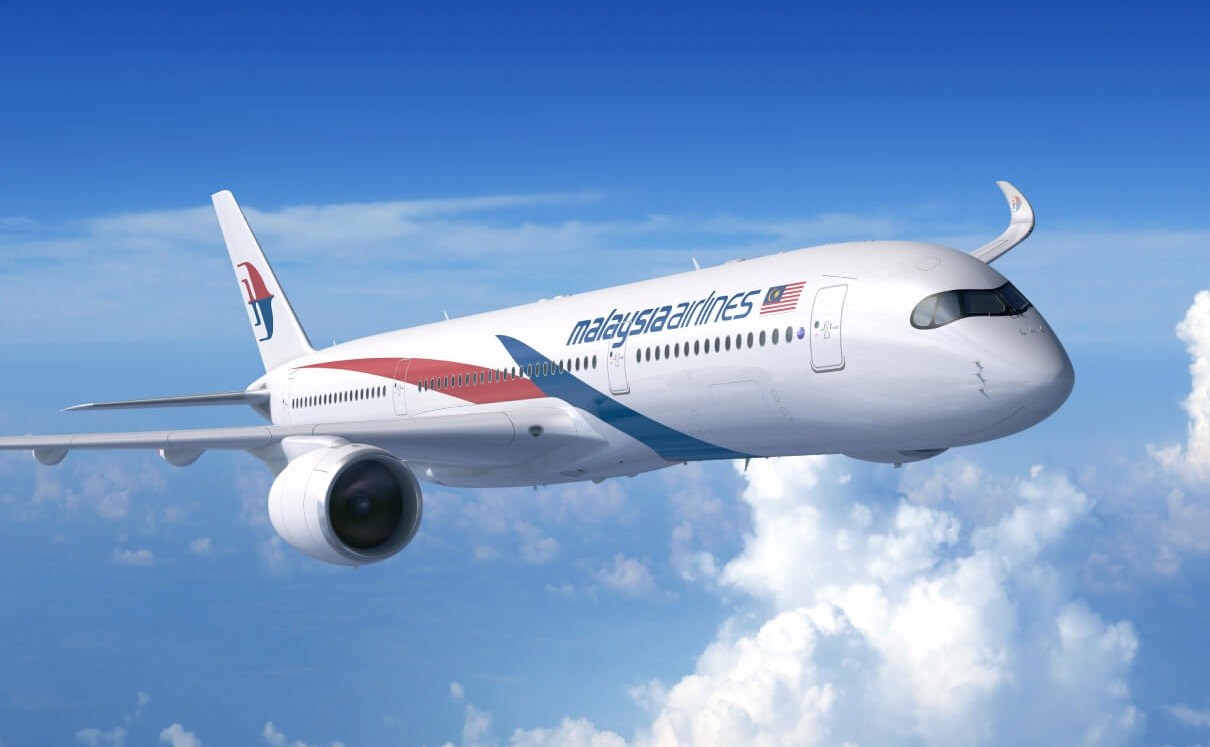
In what seem to be an uplift, it has most recently taken delivery of the A350 which has promised to offer a much better experience, including in-flight wifi, and will also start moving away from the A380 to better manage its commercial performance. Given the slow and steady shifts in the business I do look forward to much improvements in the product and the classic Malaysian hospitality that it has always strived to offer.