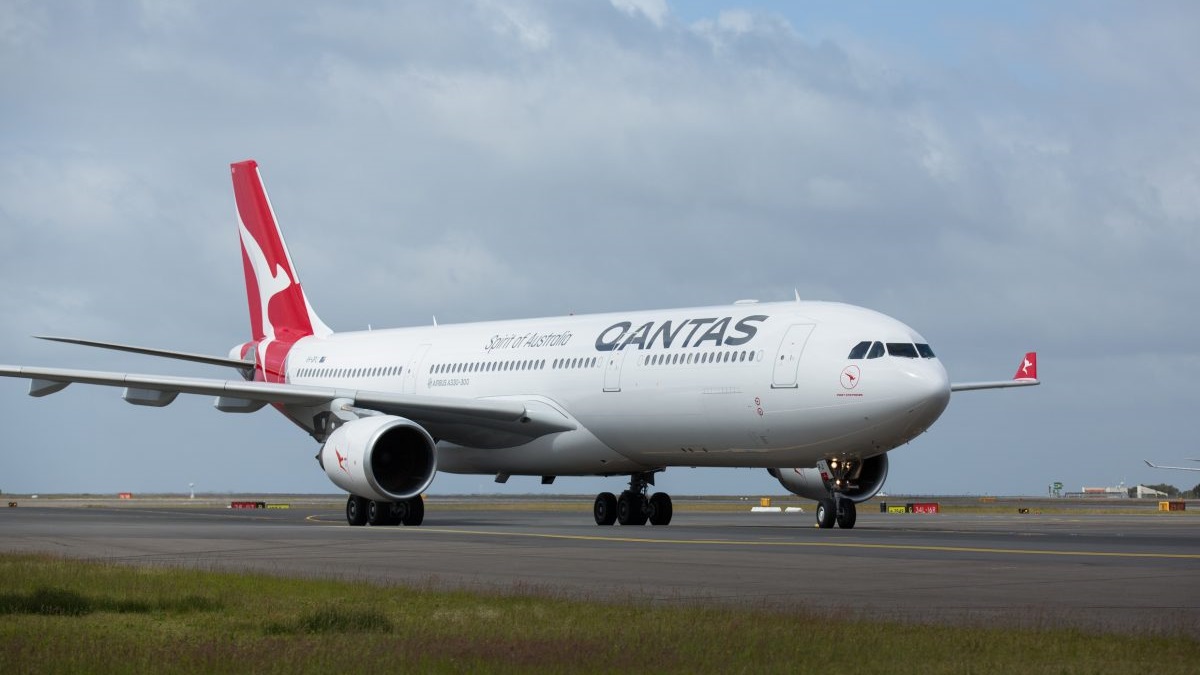
Tag: Qantas

  • Targeted offer: Get up to 25% more Qantas Frequent Flyer points when you transfer from credit card

    Targeted offer: Get up to 25% more Qantas Frequent Flyer points when you transfer from credit card

    Plus, get one status credit for every 5,000 points transferred.

    Qantas Frequent Flyer is now running a targeted promotion offering either 15% or 25% more points when you transfer them from your credit card to QFF. Plus, you will get 1 status credit for every 5,000 points transferred.

    The promotion runs from 1 Nov to 30 Nov.

    Details

    For those who have transferred credit card points to Qantas Frequent Flyer points before, you should have received an email for this promotion.

    Simply transfer points from your credit card rewards points to Qantas between 1 Nov and 30 Nov 9pm Singapore Time (12am AEDT), and the airline will add the bonus points after.

    The bonus comes at two tiers:

    • Under 299,999 Qantas points – 15% bonus
    • 300,000 Qantas points & above – 25% bonus

    The bonus points will be credited up to 15 days after the end of the promo period, i.e. by 15 December. All partial bonus points will be rounded up to the nearest whole point.

    In addition, Qantas is also offering status credits for transfer of points. For every 5,000 points transferred, members will receive 1 status credit, up to a maximum of 150 status credits (i.e. 750,000 points transferred).

    Note that this earning ratio is before factoring in the bonus points, so for instance if you are transferring 250,000 Citi ThankYou points to 100,000 Qantas points, you will only receive 15,000 bonus Qantas points and 20 status credits (not 23 status credits).

    This is one of the rare times where you can actually earn status credits without having to fly. While the status credits earned this way don’t count towards any loyalty bonuses, they still count towards lifetime status credits.

    According to Qantas, the points must be credited to QFF within the promotional period to qualify for the bonuses and status credits, so it’s best to transfer early if you want to take advantage of this promotion.

    Note: According to the terms and conditions, this is supposed to be a targeted promotion, so your mileage may vary.

    Which banks transfer to QFF?

    There are only four banks in Singapore that transfer to Qantas Frequent Flyer:

    BankTransfer Ratio
    American Express*450 MR points to 250 Qantas Points
    Citibank25,000 ThankYou points to 10,000 Qantas Points
    10,000 Citi Miles to 10,000 Qantas Points
    DBS5,000 DBS points to 10,000 Qantas Points
    Standard Chartered2.5 360° Rewards Points to 1 Qantas Point
    (min 2,500 360° Rewards Points)

    *excluding Singapore Airlines-branded cards

    Is this a good promo?

    Not really. Qantas has previously offered higher bonuses of up to 40% bonus for points transferred to QFF. Standard Chartered ran a limited offer that ended just last month, giving out 1,400 Qantas points for every 2,500 360° Rewards Points transferred.

    Another major problem with Qantas Frequent Flyer programme is the relative less appealing award rates and high surcharges for redemptions.

    For instance, these are the miles, fees and charges for redeeming a ticket for a one-way business class seat from Singapore to Sydney on various airlines & programmes:

    ProgrammeOperating AirlineMiles requiredSurchargeTaxesTotal
    Qantas Frequent FlyerQantas68,400S$128.20S$73.10S$201.30
    Asia MilesQantas61,000~S$145~S$73S$228
    British Airways Executive ClubQantas62,000N.A.N.A.S$103.40
    British Airways Executive ClubBritish Airways50,000
    (off-peak)
    N.A.N.A.S$331.63
    Singapore AirlinesSingapore Airlines62,000N.A.S$77.30S$77.30

    As you can see, Qantas charges the most number of points required on top of quite a hefty surcharge & taxes. While British Airways charges significantly less number of Avios required, the fees did stack up significantly, eroding any savings from using less miles. You get the best value out of Singapore Airlines in this instance, assuming if you already have the miles to begin with.

    Even with the transfer promotion, the savings is hardly worth the additional cash you have to dole out in fees. While you effectively save between 9,000-13,600 points (about 13% or 20% depending on how much bonus you received) for a Singapore-Sydney business class redemption, you will in return have to fork out an additionl $120+ if you compare it to a Singapore Airlines redemption.

    Taxes and fees for a Classic Rewards business class ticket on Qantas, Singapore to Sydney (one-way)

    One of the few upsides to having Qantas points is their use on Emirates. Emirates has most recent announced that it will no longer make its first class inventory available to most partners, reserving it for Emirates Skywards members only and the most strategic partners. Following that announcement, Qantas confirmed that the Emirates first class award tickets are still available to Qantas Frequent Flyer members, so this is where Qantas points are somewhat still relevant.

    Final thoughts

    This is one promotion that we think you shouldn’t lose sleep over. Since Qantas Frequent Flyer began expanding its transfer partners locally, there has always been some kind of promotion that offer bonus points on top of the base transfer ratios.

    In addition, Qantas points are only valuable in very specific circumstances. Qantas has culled most international flights until at leaast March 2021, so transferring them pre-emptively may also not be the best choice for now.

  • Qantas offers free status credits towards keeping status for another year

    Qantas offers free status credits towards keeping status for another year

    50% upfront status credit boost for the next year, more if your status is expiring in early to mid-2021.

    Qantas has extended a second lifeline to its frequent flyer members, after providing a one-year extension on all statuses earlier this year.

    This time round, Qantas will be giving members at least 50% of the status credits needed to retain their tier for another year. The precise number of status credits you’ll receive depends on the expiry date of your current status.

    Here are the details:

    Free 50% status credits

    Qantas Frequent Flyer Silver, Gold, Platinum and Platinum One cardholders with membership expiry dates between March 2021 and February 2022 (after the one-year extension given earlier) will be given 50% of the status credits needed to retain their tier.

    So that means you will receive the following status credits:

    • Silver members – 125 status credits
    • Gold members – 300 status credits
    • Platinum members – 600 status credits
    • Platinum One members – 1,800 status credits

    The free status credits will count towards reaching and keeping Silver, Gold, Platinum and Platinum One. On top of that, the status credits will also contribute towards reaching Lifetime statuses.

    However, the Status Credit Boost will not contribute towards any other bonuses including the Loyalty Bonus, Platinum Bonus Reward and Platinum One Bonus Reward.

    Members whose statuses are expiring between Mar and Jun 2021 would have already seen these status credits in their accounts, while those with an expiry between Jul 2021 and Feb 2022 will instead get their bonus in the first month of their new membership year (e.g. if your status expires Dec 2021, you will receive your 50% status credits in Jan 2021).

    When the Status Credit Boost will be credited into your account

    Note that to keep your status, you will still need to meet the four Qantas/Jetstar flight rule within the last twelve months of your status.

    Status Credit Support for some members

    When Qantas first extended all its elite members’ status in Feb 2020, no one saw that Covid-19 will persist for pretty much the rest of 2020. Some members are well into their free year of status, with no end of the travel drought in sight.

    To provide further support for some elite members who has less than a year left in their extended status membership year, Qantas will be providing a month-by-month status credit support of between 5 and 150 status credits for members whose status expire between Mar and Aug 2021. The number of months of support you will receive will also depend on when your status is expiring; needless to say, those with status expiring in March 2021 will receive way more help than those expiring in Aug 2021.

    The exact number of status credits provided each month will depend on your status:

    • Silver – 5 status credits
    • Gold – 15 status credits
    • Platinum – 50 status credits
    • Platinum One – 150 status credits

    The number of months of support provided will depend on your status expiry:

    • Mar 2021 – 6 months’ support
    • Apr 2021 – 5 months’ support
    • May 2021 – 4 months’ support
    • Jun 2021 – 3 months’ support
    • Jul 2021 – 2 months’ support
    • Aug 2021 – 1 month’s support
    Qantas Status Credit Support – eligible members by expiry dates and amount of support

    The first ‘payout’ for the support credits would have already been in your account earlier in July, and the last two tranches will be given in Aug and Sep.

    Final thoughts

    With no end in sight for Covid-19, updated support such as these are always a good gesture even as they struggle with their bottomline and managing a bleak future. Despite this, it’s a good sign that Qantas is thinking ahead to provide some level of certainty for its frequent flyer members.

    What I’ll like to see from Qantas is actually a policy update on the expiry of points. While it’s easy for Australians to keep on earning points through everyday spending within Australia, this policy will be very helpful for offshore members to retain their points.

  • Qantas slashes 6,000 jobs, including 180 at Jetstar Asia

    Qantas slashes 6,000 jobs, including 180 at Jetstar Asia

    Jetstar Asia will also be returning five aircraft, reducing fleet size to 13 aircraft.

    Qantas announced today its post-Covid-19 plans, which include a reduction in workforce as well as issuance of new shares to raise more cash for the airline. The airline is also targeting to reduce its cost by A$15 billion over the next three years.

    Key to this announcement was a 20% reduction in the Qantas workforce, translating to 6,000 jobs, and continuing to place another 15,000 employees on no-pay leave. Qantas will also be raising up to A$1.9 billion in equity through issuance of new shares.

    Three-year strategy

    Qantas Group announced a three-year plan to accelerate its recovery from the havoc that Covid-19 wrecked upon global travel. The plan is aimed towards future profitability, long-term shareholder value and to preserve as many jobs as possible.

    Qantas’ three-pronged approach can be outlined as follow:

    • Rightsize the Group’s workforce, fleet and other costs according to demand projections, with the ability to scale up as flying returns.
    • Restructure to deliver ongoing cost savings and efficiencies across the Group’s operations in a changed market.
    • Recapitalise through an equity raising to strengthen the Group’s financial resilience for recovery and the opportunities it presents.

    Given that Covid-19 has presented a challenge never seen before to most businesses, so Qantas has said that its plan is “designed to account for the uncertainty associated with the crisis, preserving as many key assets and skills as the Group can reasonably carry to support the eventual recovery“.

    Qantas sees that flying will be very much reduced over the next few years, so costs will have to correspondingly go down before flying recovers to pre-Covid-19 levels. Qantas is targeting to save A$15 billion over three years, achieved through the following:

    • Reducing workforce by at least 6,000 roles across all parts of the business
    • Continuing the stand down for 15,000 employees, particularly those associated with international operations, until flying returns
    • Retiring Qantas’ six remaining 747s immediately, six months ahead of schedule
    • Grounding up to 100 aircraft for up to 12 months (some for longer), including most of the international fleet
    • Deferment of A321neo and 787-9 fleet deliveries

    Qantas will suspend international services until at least mid-2021; A380s to be in storage until at least 2023

    According to Executive Traveller, Qantas will most likely suspend international operations until the middle of next year when a vaccine for Covid-19 is most likely available, except for a handful of countries where ‘green lane’ arrangements are in place.

    Qantas is also projecting that its international network will only reach 50% of what it used to be in the 2021-2022 financial year, and therefore there isn’t much use for the A380s as the traffic slowly recovers. As such, Qantas will be parking all of its 12 A380s in the Mojave Desert for at least three years, and a decision will be taken later as to whether all twelve will return to the skies.

    In the meantime, Qantas will be using its Dreamliners as the flagship workhorse as well as the A330s for its international services until the volumes are back, Qantas Group chief executive Alan Joyce reportedly said.

    Qantas is also bringing forward the retirement of all its Boeing 747s immediately, six months ahead of schedule. This also means that some services previously served by the jumbos will have to be replaced by smaller aircraft in due time, when these routes reinstate.

    Jetstar Asia to lose five aircraft and 180 staff

    Jetstar Asia will be reducing its 700-odd staff strength by more than a quarter, with the 180 jobs cut from across the business. It’s likely that the bulk of the cuts will come from crew, as Jetstar Asia will also be reducing its fleet size from 18 to 13.

    The smaller fleet will mean less flying in the foreseeable future, which will also mean that crew numbers can be reduced in tandem.

    With the reduction in flying, it’s likely that Jetstar will look to axe some routes. Jetstar was to launch Singapore-Colombo services on 1 July, which has now been postponed to mid-October. It remains to be seen if this route will still continue to start come October.

    Qantas international and Jetstar Asia flights grounded since March

    Both Qantas international and Jetstar Asia services were suspended since late March, after Covid-19 flared up in many countries resulting in border closures.

    Qantas was targeting to resume at least some international flights between Australia and New Zealand by July, but this was ruled out by New Zealand’s Prime Minister Jacinda Ardern who suggested that September was a more realistic timeframe.

    Australia’s Trade Minister Simon Birmingham has already earlier said that international visitors will unlikely to be admitted into Australia until 2021, thereby dashing hopes of a resumption of Qantas international services anytime soon.

    Final thoughts

    This is definitely not a good look, but certainly not unexpected as many major carriers – including Singapore Airlines and Cathay Pacific – have looked to reduce costs and raise fresh funds earlier this year.

    Credit to them for choosing to furlough staff when the crisis first hit, but as this proves to be a long-lasting shockwave for aviation, it seems like there’s not many options left apart from letting employees go, while trying to conserve and raise cash for the coming years.

    Closer to home, the reduction in Jetstar Asia’s operations will inevitably mean that customers will be looking at a reduced offering from low-cost carriers in the next few years, and likely, higher fares as travelling resumes in a post-Covid-19 world.

  • Qantas cancels all international services until end-October

    Qantas cancels all international services until end-October

    The Australian carrier is also set to mothball all its A380s.

    Qantas has extended the suspension of all international flights until 24 Oct 2020, excluding services to New Zealand.

    Flights to New Zealand has also been provisionally cancelled until end of June, although New Zealand’s Prime Minister Jacinda Ardern has earlier said that September was a more “realistic” timeframe for Trans-Tasman travel to resume.

    An internal note sent to employees by Qantas International CEO, Tino La Spina, also said that most staff engaging with international operations will continued to stood down until then.

    The international cancellations has already been reflected on Qantas’ website. Qantas is currently also not operating any international repatriation services nor charter flights.

    All Qantas A380s grounded; half of fleet tipped to go into long-term storage

    Executive Traveller earlier this week reported that Qantas is expecting its entire flagship Airbus A380 fleet will be grounded for a while.

    Qantas A380 at Los Angeles International Airport

    The A380s typically serve high traffic, slots-constraint air corridors, including Sydney-London via Singapore, as well as Sydney-Los Angeles and Sydney-Dallas Fort Worth.

    Qantas has earlier said in April that its A380 upgrade programme was still on track, but later reversed its position in May, saying that it will be pausing the upgrades as it reviews its fleet.

    Qantas Group chief executive Alan Joyce has said several times in the past months that the global demand for air travel will take years to recover and hence the airline has is undertaking the review to reshape the airline’s future around a post-Covid-19 travel landscape.

    For now, all 12 A380s that Qantas has under its fold will be stored, with six that are yet to be refurbished likely to be sent for long-term storage at California’s Mojave Desert, according to Executive Traveller.

    Qantas has not committed to whether it will return all 12 A380s to flying in the future, but if the fleet is indeed reduced, the six refurbished aircraft will be the first to take to the skies.

    Australia will probably not admit leisure travellers until 2021

    Australia’s trade minister Simon Birmingham has said earlier this week that the country is unlikely to reopen its border to international travellers until 2021. However, it’s looking at how it can to relax entry rules for students and other long-term visitors.

    What does it mean for Singapore?

    Simply put: don’t expect to step foot onto a Qantas flight, nor into a Qantas lounge in Singapore anytime this year.

    Qantas Singapore First Lounge, opened in late 2019

    While many are hopeful for another trip this year, given how countries has now started implementing laborious requirements including mandatory quarantine and pre- and post-travel tests, leisure travel just doesn’t seem anywhere near.

    As such, it’s unlikely that Qantas will send the A380s back into Singapore any time soon, nor continue its fifth-freedom service to London from Singapore. If at all, Qantas will likely serve Singapore as an end-destination with smaller aircraft such as the Airbus A330s and the Dreamliner Boeing 787-9s.

  • American Express adds Qantas as a redemption partner

    American Express adds Qantas as a redemption partner

    You can now convert your American Express Membership Rewards points to Qantas Frequent Flyer points

    American Express has added Qantas to its fold of frequent flyer programmes partners, the fourth Oneworld programme to be added. This latest addition will allow both its charge card and credit card members to convert their Membership Points into Qantas points.

    The details

    Cardholders with Membership Rewards (MR) points will be able to convert 450 MR points to 250 Qantas points. This conversion rate is similar to what Amex offers for other FFPs, including Krisflyer, Asia Miles and Emirates Skywards.

    For Amex Centurion or Platinum Charge cardmembers, the conversion rate is a preferential 400 points to 250 airline miles.

    Second widest range of conversion partners

    This brings the total number of transfer partners for Amex to nine partners, tied in the second spot with Standard Chartered. Citibank remains at top spot with the most number of redemption options for your credit card points.

    The full list of airline frequent flyer programme conversion partners for Amex is as follow:

    • British Airways Avios (Oneworld)
    • Cathay Pacific Asia Miles (Oneworld)
    • China Airlines Dynasty Flyer (Skyteam)
    • Eva Air Infinity Mileagelands (Star Alliance)
    • Emirates Skywards
    • Malaysia Enrich (Oneworld)
    • Qantas Frequent Flyer (Oneworld)
    • Singapore Airlines KrisFlyer (Star Alliance)
    • Thai Royal Orchid Plus (Star Alliance)

    But… should you convert your points to Qantas?

    The short answer: no.

    And the reason for that is not because Qantas has a bad programme inherently, but because of the way Qantas points are valued.

    Qantas structures its frequent flyer programme rather differently, so the value of a Qantas point is not within the same range as what you’d value a mile from most other programmes.

    I have long argued that the value of Qantas points should not be equated to other frequent flyer programmes for two reasons: first, the redemption award charts are always significantly higher than what other programmes charge for a similar trip; secondly, Qantas typically awards significantly more points for a flight segment than many other carriers would for a similar trip.

    Award chart

    Qantas uses a distance-based chart for flight awards, which is similar to many Oneworld programme, and you can refer to the full chart here. For simplicity sake, this is what Qantas and other Oneworld airlines charge for a one-way journey on Qantas from Singapore to Sydney:

    EconomyBusinessFirst
    Qantas Frequent Flyer25,20068,400102,600
    British Airways Executive Club20,75062,00082,500
    Cathay Pacific Asia Miles27,00061,00087,000
    Award rates for one-way ticket from Singapore to Sydney

    As you can see, Qantas comes up being the most expensive in the premium cabins across all carriers, requiring up to 25% more points than what the partners will charge. To add salt to the wound, Qantas slaps on a hefty charge for award tickets, further diminishing the value of the award. Fancy shelling out $350 in fees for an award ticket from Singapore to Sydney?

    Earn rate

    Now, to paint you another perspective, this is how many miles you will earn on the operating airline’s frequent flyer programme for a one-way flight from Singapore to Sydney.

    Note that both Qantas and British Airways offer bonus points for members with elite tiers, but we will exclude that for now.

    Airline / ProgrammeEconomy Saver
    (or equivalent)
    Economy
    (highest fare class)
    Business
    (lowest fare class)
    Business (flexible)First
    (lowest)
    Singapore Airlines / Krisflyer19563912489058687824
    British Airways / Executive Club9793916587497909790
    Qantas /
    Qantas Frequent Flyer
    260052007800845010400
    Earn rates for one-way trip from Singapore to Sydney

    In all cases, you easily earn over 30% more Qantas points than Krisflyer miles. Compared to BAEC, the number varies, but you are likely to benefit more if you are flying cattle class and if you don’t have status with BAEC.

    Having said that, Qantas doesn’t nab you as many points when you fly other oneworld airlines, but that’s a common practice.

    For instance, if you were to fly to Hong Kong on Cathay Pacific:

    Airline / ProgrammeEconomy Saver
    (or similar)
    Economy Standard
    (or similar)
    Economy
    (highest fare class)
    Business
    (lowest fare class)
    First
    (lowest fare class)
    Cathay Pacific /
    Asia Miles
    1,0001,8002,0002,5003,500
    British Airways / Executive ClubNone4001,6012,0012,402
    Malaysia Airlines /
    Enrich
    None7941,5881,9852,382
    Qantas /
    Qantas Frequent Flyer
    None1,0002,0002,5003,000

    While not fantastic, Qantas doesn’t come up too short – as compared to other oneworld members, it usually dishes out the most number of points for a similar itinerary.

    Final thoughts

    Transferring any credit card reward points to Qantas Frequent Flyer programme is a dead no for me, given the relative lower value of a Qantas point compared to many other programmes. Qantas probably know that its own currency is worth less than other airlines’ miles, but has always stuck to parity when it comes to conversion rates vis-a-vis other programmes.

    The best way to rack up Qantas points is in flying and not through credit card conversions, unfortunately. So this means that the programme is only useful insofar as frequent flyer programmes were originally designed for: rewarding those who actually fly.

    So if you find yourself heading Down Under pretty often, you will find yourself benefitting more from earning points by flying Qantas and placing your points with Qantas Frequent Flyer than those who rely mostly on credit card spending. If you do a lot of flying within Southeast Asia, you can also earn a fair number of points from flying Jetstar, especially if you buy bundles often. This is a much better proposition than trying to earn Krisflyer miles on Scoot flights.

    Having said that, there have been instances where banks run bonus rates for conversions, such as the DBS offers last year where you get up to 25% bonus. Where they happen, the programme may still offer good value.