Latest Posts

Emirates resumes flights to Singapore from 17 Jun

Emirates expands list of destinations served to 29 cities as UAE starts accepting transit passengers again

Middle East carrier Emirates will commence flights to an additional 16 cities starting 15 Jun, as the country starts opening up its airport to transit passengers again, paving the way for connecting passengers between Asia and the rest of the world.

At the height of the coronavirus situation, the airline maintained a handful of destinations from UAE, although these links mainly serve foreigners who with to leave UAE and return to their home countries.

Full list of destinations served from mid June

Since this week, Emirates has begun slowly reintroducing flights to some destinations, including Pakistan, the Philippines, with the largest lot of 16 other cities from 15 Jun. The full list of destinations that Emirates will serve after 15 Jun, is as follow:

Asia/AustralasiaMiddle EastEuropeAmericas
Currently
operating
Melbourne
Sydney
Frankfurt
London-Heathrow
Madrid
Milan
Paris
Chicago
Toronto
From 8 JunLahore
Karachi
Islamabad
From 11 JunManila
From 15 JunHong Kong
Jakarta
Kuala Lumpur
Seoul
Singapore
Taipei
Perth
Brisbane
BahrainAmsterdam
Copenhagen
Dublin
Manchester
Vienna
Zurich
New York JFK

Emirates operating to Singapore three times a week in June; more in July

From Singapore, Emirates will be operating three times weekly to Dubai, with the first flight departing Dubai for Singapore on 17 Jun, and returning on 18 Jun.

SectorFlight no.Days of opsDepArrFlight timeAircraft
Singapore – DubaiEK353Thu, Sat, Sun005004157h 25mBoeing 777-300ER
Dubai – SingaporeEK352Wed, Fri, Sat102522007h 35mBoeing 777-300ER
Emirates schedule between Singapore and Dubai, June 2020

In the month of July, this goes up to eight flights a week for the first half of the month, before bumping up to twice daily for the remainder of the month.

SectorFlight no.Days of opsDepArrFlight timeAircraft
Singapore – DubaiEK353See below005004157h 25mBoeing 777-300ER
EK355See below21400050(+1)7h 10mBoeing 777-300ER
Dubai – SingaporeEK354See below030515007h 55mBoeing 777-300ER
EK352See below092020557h 35mBoeing 777-300ER
Emirates schedule between Singapore and Dubai, July 2020

The dates which all the flights will be operating in July, as shown in the calendar below:

MonTueWedThuFriSatSun
12345
SIN-DXB
EK355

EK355
EK353
EK355
EK353
DXB-SINEK354
EK354

EK352
EK354
EK352

EK352
6789101112
SIN-DXBEK353
EK353
EK355

EK355
EK353
EK355
EK353
DXB-SINEK354

EK352
EK354
EK354

EK352
EK354
EK352

EK352
13141516171819
SIN-DXBEK353
EK353
EK355
EK353
EK355
EK353
EK355
EK353
EK355
EK353
EK355
DXB-SINEK354

EK352
EK354
EK352
EK354
EK352
EK354
EK352
EK354
EK352
EK354
EK352
20212223242526
SIN-DXBEK353
EK355
DXB-SINEK354
EK352
2728293031
SIN-DXBEK353
EK355
DXB-SINEK354
EK352

Emirates will be operating its Boeing 777-300ER to Singapore for the time being – at least until the end of July. While the aircraft does not have the famous in-flight bar or the first class showers found on the A380s, Emirates will be operating the newest versions of its 777s, featuring the brand-new first class suites.

Emirates Boeing 777-300ER new first class (photo: Emirates)

The downside to this aircraft is the seat configuration in business class, laid out in a 2-3-2 configuration, which means that there’s always a chance in getting a middle seat. Having said that, I highly doubt all the seats will be taken up during this time, so if I’m travelling during this period of time, I’ll be less worried about social distancing.

Not all destinations can be connected from Singapore – at least for June

Given the limited days of week that Emirates is operating into Singapore in June, connections are only possible to the following:

DestinationFrom SingaporeTo Singapore
Amsterdam1x weekly1x weekly (overnight connection)
Copenhagen1x weekly1x weekly (overnight connection)
Dublin1x weeklyNo connection
Frankfurt3x weekly3x weekly (overnight connection)
London-Heathrow3x weekly3x weekly
Paris3x weekly3x weekly (overnight connection)
Madrid1x weekly (7hr connection)1x weekly (7hr connection)
Milan2x weekly1x weekly (overnight connection)
Vienna3x weekly1x weekly (overnight connection)
Zurich2x weekly3x weekly (overnight connection)
Chicago1x weekly1x weekly (overnight connection)
New York JFK2x weekly2x weekly (overnight connection)
TorontoNo connection1x weekly (22hr connection)

The connections will significantly improve when July rolls around, with most connections available at least three days a week, although some long connection remains.

As you can see from the table above, the connections aren’t ideal in the few couple of weeks. Given Emirates’ scheduling of having all European flights departing Dubai in the mornings, you are looking at a minimum three-hour connection when you depart from Singapore. On the return flight it’s worse: practically every flight will require an overnight (at least 10 hours) connection in Dubai.

But then again, these services are meant for essential travel at the moment and not for mass travel, so if you really need to fly, the wait will matter not as much, but note that the Emirates lounges will be closed (at least for now).

Emirates suspended services to Singapore since March

The Middle East kingdom has banned visitors since mid-March, as well as forbidding citizens from travelling overseas.

Emirates has previously flew to Dubai four times daily, and also operates two daily fifth freedom services to Melbourne and Brisbane respectively. The Melbourne service was suspended on 22 Mar, while flights to Dubai was also suspended slightly more than a week later.

Unrelated to Covid-19, Emirates has applied last year to end the Singapore-Brisbane service on 30 Mar, but end date was brought forward to 14 Mar instead.

What to expect pre-flight and in-flight?

Emirates has also announced a comprehensive list of changes to its pre-, in- and post-flight experience, including:

  • Chauffeur drive: Emirates has suspended its chauffeur drive service around the world until July 2020.
  • Lounges: All lounges worldwide are closed until further notice.
  • In-flight meals experience:
    • Special meals: A limited range of special meals can still be pre-ordered online 48 hours before flight. No children’s meal will be available in economy.
    • Menu cards: A single-use menu will be provided in business and first; no menus in economy.
    • Meal service: While business class and first class will still get multi-course dine on-demand meal services, Executive Traveller has reported that meals will be pre-plated and served on tray, and some items such as bread and crackers will be plastic wrapped
    • Alcoholic beverage service: Welcome drink only in first class; no more cocktails in business and first class (mixed drinks still available); Only wine & beer available in economy.
  • Wifi: No free wifi for the time being. Wifi is still available for purchase.
  • Duty-free shopping: Not available
  • Children’s kit: Not available
  • Newspapers & magazines: Not available
  • Live TV: Not available

Final thoughts

The resumption of Emirates services to Singapore is yet another encouraging sign of recovery. I won’t hold my breath in waiting for the A380s to return, given that the Boeing 777-300ERs that Emirates is operating is good enough any day.

During this time, many airlines will understandably operate with significant modifications to their services in response to the threat of infection. While some changes – such as in-flight dining changes – erode the magical experience of flying even further, these changes are essential to instil confidence in air travel at least for now.

Having said that, my view is that this might be a good time for airlines to fully re-evaluate what’s truly necessary, even in premium cabins, and do their part in reducing waste in many areas, particularly around magazines, newspapers and even menu cards. In the long run, this episode might yield some positive results for airlines, customers and god knows, even the earth.

Qantas revises award chart upwards for Emirates flight redemptions

Qantas Frequent Flyers need to use more points to redeem seats on Emirates from 1 Sep 2020

Qantas has recently raised the number of Qantas points required for an award ticket on its long-time partner Emirates. From 1 Sep 2020, members will need up to 20% more points to book the same seat as before.

To be sure, Qantas did not revise any other award charts, but instead, moved Emirates from the Qantas Classic Flight Reward table to a seperate chart, the Partner Classic Flight Reward table. The latter chart is used for redemptions on oneworld partners, and requires more points for seats.

How much will it increase by?

If you are based in Asia, this how the adjustments will change the rate of one-way redemptions:

Singapore – Melbourne (on Emirates-operated flights)
Singapore – Dubai

ClassRedemption before
1 Sep 2020
Redemption on or
after 1 Sep 2020
Change
Economy25,20030,200+5,000
(+19.8%)
Business68,40075,000+6,600
(+9.6%)
First102,600107,700+5,100
(+4.8%)

Singapore-Rome (via Dubai)
Singapore-Paris (via Dubai)

ClassRedemption before
1 Sep 2020
Redemption on or
after 1 Sep 2020
Change
Economy37,60045,000+7,400
(+19.7%)
Business94,900104,500+9,600
(+10.1%)
First142,300149,800+7,500
(+5.3%)
Emirates A380 business class cabin

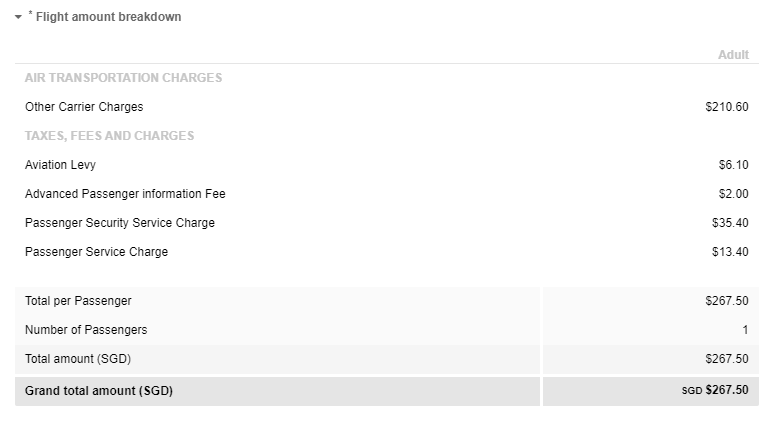
Qantas has a bad reputation for charging sky-high ‘additional carriers’ fees’ along with award tickets redemption for both its own tickets, as well as tickets on partner airlines.

Breakdown of additional fees and taxes for one-way Qantas Frequent Flyer award ticket on Emirates from Singapore to Milan

Emirates has most recently reduced its surcharges off award tickets, but it will remain to be seen if this savings will be passed on to Qantas Frequent Flyer members from 1 Sep when the higher award rates kick in.

Mixing Qantas and Emirates awards will cost you more

The move of Emirates from the Qantas chart to the partners’ charge will now mean that any itinerary with a mix of Emirates and Qantas flights will now use more points than before, as the Emirates leg and Qantas leg of the trip will be calculated separately.

For instance, if you were to redeem a trip from Singapore to Hobart in business class, travelling on Emirates from Singapore to Melbourne, and Qantas from Melbourne to Hobart:

Before 1 Sep: you will pay 68,400 points + fees for the entire one-way trip.

From 1 Sep: you will have to pay 75,000 points for the Emirates leg plus 18,400 points for the Qantas flight, and taxes for the entire one-way trip.

In points alone, you will need to fork out 18,400 or close to 25% more points.

Why the move?

This move here is perhaps another signal towards the slowly fading partnership between Qantas and Emirates, most possibly due to the latest developments.

A bit of history here: Emirates entered into a joint venture with Qantas back in 2013 when Qantas adjusted its Europe strategy. By joint venture, this doesn’t mean a new business, but instead, allows both airlines to legally cooperate and coordinate schedules, fares and other details without flouting competition laws.

Singapore-based readers will remember that this is also the year Qantas temporarily ended its London service from Singapore, as Qantas moved its offshore hub to Dubai, where it could leverage Emirates’ network to serve other destinations in Europe.

This worked out well for Qantas’ cost base, given that it can reduce its own footprint into Europe while still serving the needs of Australians who need to go between Australia and Europe. This partnership was one of the lifelines during that time, allowing Qantas to review and transform its business into a highly profitable one over the next few years.

In 2017, both airlines sought regulators’ approvals to renew the partnership for another five years, but this time round the realities are a little different. Qantas was on a streak of a few record-profit years by this time and was financially a lot more stable. While the partnership was renewed, Qantas moved its hub back to Singapore. More critically, Qantas also launched the much awaited Perth-London service in March 2018, a historic moment given its the first commercial non-stop UK-Australia service. This is another move towards less reliance on an Asian or Middle East hub for the Australian carrier.

Final thoughts

First things first: it would have been nice if Qantas had sent out any type of communication to its customer on this change, although some avid followers may argue that this point is moot, as availability on Emirates has been severely limited for a while now.

This move has effectively diminished the role of Emirates in the Qantas network from an important ally to just any other partner, which is such a pity. The Emirates experience has been a strong pull to earn and keep Qantas points, given that Qantas Frequent Flyer programme is one of the handful of FFPs that allow a redemption on Emirates since the Middle Eastern carrier is not affiliated with any global alliances.

For those who have been saving up points for a seat on Emirates, you have some time to lock in an award booking before 1 Sep, so do so quickly.

Singapore Airlines and Silkair ramp up capacity for June and July 2020

The carriers will operate over 800 flights to and from 27 cities over the next two months, up from the 15 cities served in May

In another encouraging news, Singapore Airlines and Silkair announced on Monday (1 Jun) that it will be expanding the list of destinations they will fly to in June and July.

Both carriers will operate to a total of 27 cities across 18 countries/territories.

Transit through Singapore still not possible yet

While this expanded network is a move towards allowing passengers to transit through Singapore in the near term, SIA has mentioned transit is still not possible for now until its plans for transfer procedures have been finalised.

(Photo: Changi Airport Group)

The Singapore aviation authority has earlier announced that transit passengers will be allowed through Changi Airport from today (2 Jun), subject to approvals of plans submitted by airlines on safe transfers of passengers.

The transit market will be critical to Singapore Airlines and Silkair, given that roughly a third of all passengers travelling through Changi are transit passengers, and most of these passengers will likely be carried by Singapore Airlines or Silkair.

Singapore Airlines schedule

In addition to the 14 destinations it served in May, Singapore Airlines will be adding the following destinations from June:

  • Adelaide
  • Amsterdam
  • Auckland
  • Barcelona
  • Brisbane
  • Christchurch
  • Copenhagen
  • Hong Kong
  • Melbourne
  • Osaka

The full schedules for Singapore Airlines (as of 1 Jun) is as follow:

Southeast Asia

SectorFlight no.Days operatingDepArrDurationAircraft
Singapore – Kuala LumpurSQ104Mon, Wed, Fri083009301hA350-900
Kuala Lumpur – SingaporeSQ105Mon, Wed, Fri102511351h 10mA350-900
Singapore – BangkokSQ976(Only in July)
Mon, Fri, Sun
160017252h 25mB787-10
Bangkok – SingaporeSQ979Mon, Fri, Sun183021552h 25mB787-10
Singapore – JakartaSQ966Mon, Wed, Thu, Fri, Sun183019201h 50mA350-900
Jakarta – SingaporeSQ967Mon, Wed, Thu, Fri, Sun201523051h 50mA350-900
Singapore – ManilaSQ910Mon*, Fri093013053h 35mA350-900
Manila – SingaporeSQ917Mon*, Fri141517553h 40mA350-900
Hanoi – SingaporeSQ175Fri123517053h 30mB787-10
Ho Chi Minh City – SingaporeSQ177Mon, Thu123015302hB787-10

*No service on 8 Jun; will operate once-off on 9 Jun

North Asia

SectorFlight no.Days operatingDepArrDurationAircraft
Singapore – SeoulSQ600Wed, Sat080015356h 35mA350-900
Seoul – SingaporeSQ609Wed, Sat164522006h 15mA350-900
Singapore – Tokyo NaritaSQ638Thu, Sat, Sun002508307h 5mB787-10
Tokyo Narita – SingaporeSQ637Thu, Sat, Sun101016207h 10mB787-10
Singapore – Osaka KansaiSQ622(From 12 Jun) Fri143022106h 40mA350-900
Osaka KansaiSQ623(From 12 Jun) Fri23250440(+1)6h 15mA350-900
Singapore – ShanghaiSQ830Mon093015055h 35mB787-10
Shanghai – SingaporeSQ833Mon165022205h 30mB787-10
Singapore – Hong KongSQ890(from 10 Jun) Wed, Thu, Sat072511203h 55mB787-10
Hong Kong – SingaporeSQ891(from 10 Jun) Wed, Thu, Sat122516203h 55mB787-10

Southwest Pacific

SectorFlight no.Days operatingDepArrDurationAircraft
Singapore – AdelaideSQ279(From 8 Jun) Mon23400755(+1)6h 45mA350-900
Adelaide – SingaporeSQ278(From 9 Jun) Tue091015107h 30mA350-900
Singapore – Brisbane (via Sydney)SQ288(From 9 Jun) Tue, Fri0935215510h 20m
(incl. 1 stop)
A350-900
Brisbane – SingaporeSQ288(From 9 Jun) Tue, Fri23000500+(1)8hA350-900
Singapore – MelbourneSQ237(from 8 Jun) Mon23550920(+1)7h 25mA350-900
SQ217(from 12 Jun) Fri111020357h 25mA350-900
Melbourne – SingaporeSQ238(from 9 Jun) Tue23500545(+1)7h 55mA350-900
SQ218(from 13 Jun) Sat093515257h 50mA350-900
Singapore – SydneySQ211(2, 5, 7 Jun only) Tue, Fri, Sun093519157h 40mB777-300ER
SQ231(from 8 Jun) Mon, Wed, Sun004510257h 40mA350-900
SQ288(From 9 Jun) Tue, Fri093519157h 40mA350-900
Sydney -SingaporeSQ232(1-8 Jun only) Mon, Wed, Sat110017307h 30mB777-300ER
SQ232(from 9 Jun) Mon, Tue, Thu121018408h 30mA350-900
Sydney – Singapore (via Brisbane)SQ288(From 9 Jun) Tue, Fri2025050010h 35m (incl. 1 stop)A350- 900
Singapore – AucklandSQ285(From 9 Jun) Tue000513409h 35mA350-900
SQ281From 12 Jun) Fri084522209h 35mA350-900
Auckland – SingaporeSQ282(From 10 Jun) Wed23200610(+1)10h 50mA350-900
SQ286(From 13 Jun) Sat1515220510h 50mA350-900
Singapore – ChristchurchSQ297(From 14 Jun) Sun23001240(+1)9h 40mA350-900
Christchurch – SingaporeSQ298(From 16 Jun) Tue0900155010h 50mA350-900

Europe

SectorFlight no.Days operatingDepArrDurationAircraft
Singapore – LondonSQ322Tue, Thu, Sat23300555(+1)13h 25mA350-900
London – SingaporeSQ317Mon, Thu, Sat11250730(+1)13h 5mA350-900
Singapore – FrankfurtSQ326(1-7 Jun only) Wed, Fri, Sun1155184012h 45mB777-300ER
SQ26(From 9 Jun) Tue, Thu, Sat23550645(+1)12h 50mA350-900
Frankfurt – SingaporeSQ325(1-8 Jun only) Mon, Thu, Sat20001425(+1)12h 25mB777-300ER
SQ25(From 11 Jun) Mon, Thu, Sat12300650(+1)12h 20mA350-900
Singapore – ZurichSQ346Wed, Fri, Sun0125081512h 50mB777-300ER / A350-900
Zurich – SingaporeSQ345Mon, Thu, Sat11450555(+1)12h 10mB777-300ER / A350-900
Singapore – AmsterdamSQ324(From 9 Jun) Tue, Sat23550715(+1)13h 20mA350-900
Amsterdam – SingaporeSQ323(From 11 Jun) Mon, Thu11150555(+1)12h 40mA350-900
Singapore – BarcelonaSQ388(From 11 Jun) Thu23350655(+1)13h 20mA350-900
Barcelona – SingaporeSQ387(From 13 Jun) Sat12050700(+1)12h 55mA350-900
Singapore – CopenhagenSQ352(From 18 Jun) Thu23500625(+1)12h 35mA350-900
Cophenhagen – SingaporeSQ351(From 20 Jun) Sat12200620(+1)12hA350-900

USA

SectorFlight no.Days operatingDepArrDurationAircraft
Singapore – Los AngelesSQ38Wed, Fri, Sun1940203515h 55mA350-900
Los Angeles – SingaporeSQ37Mon, Wed, Sat00050815(+1)17h 10mA350-900

Silkair schedule

Silkair will also expand its list of destinations beyond Chongqing, to also serve Cebu, Kuala Lumpur and Medan.

SectorFlight no.Days operatingDepArrDurationAircraft
Singapore – ChongqingMI972Mon070011354h 35mB737-800
Chongqing – SingaporeMI971Mon123517304h 55mB737-800
Singapore – CebuMI560(From 12 Jun) Wed, Fri103014003h 30mB737-800
Cebu – SingaporeMI559(From 10 Jun) Wed, Fri145018353h 45mB737-800
Singapore – Kuala LumpurMI324(From 13 Jun) Sat, Sun083009301hB737-800
Kuala Lumpur – SingaporeMI323(From 13 Jun) Sat, Sun102511251hB737-800
Singapore – MedanMI234(From 9 Jun) Tue, Thu074008001h 20mB737-800
Medan – SingaporeMI233(From 9 Jun) Tue, Thu084511051h 20mB737-800

Scoot’s schedule for June

Scoot has earlier announced its schedule for June, expanding its destination list to a total of six destinations:

  • Guanzghou
  • Hong Kong
  • Perth
  • Ipoh
  • Penang
  • Kuching

Singapore Airlines Group schedules for the rest of 2020

While Singapore Airlines continue to make its full originally planned schedule available for August 2020 and beyond, the airline is likely to make adjustments down the road, depending on what the global situation is like at that point in time.

Of course, while we hope for a full recovery of air travel, experts have warned that this is unlikely in the near term, and the volume of air travel is likely to only regain former levels by 2022 or beyond.

Final thoughts

This expanded schedule is definitely along way off SIngapore Airlines’ full schedule. Despite this new development, Singapore Airlines has pointedly said that this is still a 96% reduction off the same capacity last year, so the road to recovery is definitely long.

I’ll be interested to see what will the transfer/transit arrangements at Changi Airport be like, given that this step up in air services is a prelude to the transit traffic that SIA will want to court again.

Another thing that we will be watching out is how Singapore Airlines proceed with its plans to fold Silkair into the mainline, given that the integration was planned to begin this year.

In the meantime, Singapore has earlier announced that it will be exploring setting up travel ‘green lanes’, or ‘travel bubbles’ with some countries, which will help to facilitate ‘essential travel’. By ‘essential travel’, this points to the most important business travel or urgent personal travel, and excludes all mass market travel, so that means it may be a long while before anyone of us steps on an aircraft for a holiday.

Scoot flies to six cities in June

Scoot recommences services to Guangzhou, Ipoh, Penang and Kuching

Even as Singapore Airlines and Silkair retains a skeletal schedule in June, Scoot has decidedly expanded the number of destinations it will serve in June, serving as a signal for the early recovery of air travel volumes.

After operating to only Hong Kong and Perth in the months of April and May, Scoot adds another four cities into the fold of destinations for June: Guangzhou in China, as well as Ipoh, Penang and Kuching in neighbouring Malaysia.

Apart from the Boeing 787-9s that Scoot has been using for its Hong Kong and Perth flights, Scoot will also be bringing back some A320s for the Malaysian sectors.

Scoot’s full schedule for June is as follow:

SectorFlight no.Days of opsDepArrFlight timeAircraft
Singapore – GuangzhouTR100Sun051509154hB787-9
Guangzhou – SingaporeTR101Sun104014404hB787-9
Singapore – Hong KongTR980Tue, Fri, Sun141518204h 5mB787-9
Hong Kong – SingaporeTR981Tue, Fri, Sun192023153h 55mB787-9
Singapore – IpohTR480Fri, Sun112012301h 10mA320
Ipoh – SingaporeTR481Fri, Sun131014301h 20mA320
Singapore – KuchingTR430Fri180519351h 30mA320
TR434Sun204522151h 30mA320
Kuching – SingaporeTR431Fri201521401h 35mA320
TR435Sun22550030(+1)1h 35mA320
Singapore – PenangTR424Sun143515551h 20mA320
TR426Fri090010201h 20mA320
Penang – SingaporeTR425Sun163518101h 35mA320
TR427Fri1100123011h 30mA320
Singapore – PerthTR8Tue120017105h 10mB787-9
TR16Fri153020355h 5mB787-9
TR8Sun120017005hB787-9
Perth – SingaporeTR9Tue181023455h 35mB787-9
TR17Fri21500315(+1)5h 25mB787-9
TR9Sun180023205h 20mB787-9

Needless to say, all other flights Scoot has previously scheduled will be cancelled. It remains to be seen if Scoot will continue to increase the number of destinations in the coming months, which is likely if the situation in Asia stabilises, and so it seems.

For those still holding Scoot tickets

For those who has previously booked Scoot flights on or before 15 Mar for travel up to 31 July, but for some reason has not canceled them, Scoot’s cancellation policy has been simplified and you have two options:

  • A 100% refund via the original method of payment, or
  • A 120% refund in Scoot vouchers, valid for 12 months.

For a 100% refund to your original payment method, Scoot is advising of a wait of up to 14 weeks for processing.

Instructions on how to manage your booking and more details on the cancellation policy can be found here.

Should I take this as a sign to start planning to travel again?

Short answer: no. The Singapore government announced on Friday 29 May that they are now in discussions with some countries on establishing ‘fast lane’ or ‘travel bubble’ arrangements, but I wouldn’t rejoice and go out to book my tickets just as yet.

The criteria for these ‘essential travel’ will certainly be very tight, as the arrangement is mainly to facilitate business travel, and I may assume for urgent personal matters (such as funerals). The process for such travel will likely be an overtly onerous one, including testing at both departure and arrival points, requirement for movement reports and perhaps even quarantine requirements.

The government has also categorically stated that mass travel will not be allowed for the time being, even as essential travel is being planned and facilitated.

Scoot operating cargo-only services

While most of us should not and will not be travelling yet, if you are just checking out Scoot’s schedule on their website you may notice that they seem to be flying way more than what is above. That’s because throughout the last few months, Scoot has been operating cargo-only flights using the passenger planes, including additional Thursday services to Perth; B787-9 services to Hangzhou, Guangzhou and other cities in China; A320 services to Kunming and a few others.

In the good old days, one little known fact is that passenger aircraft also carry revenue-earning cargo in the belly hold, and as much as 75% of all the load under the passenger floor are such cargo. Since passenger traffic has almost come to a halt earlier this year, the drastic reduction in passenger flights meant that less cargo can be shipped around the world in the belly of these passenger planes. As a result, air cargo capacity has been severely limited, so many airlines are now either resuming services just to ferry cargo in their belly – and in some instances, on passenger seats – while some airlines even go to the extent of converting their passenger planes into temporary freighters by removing the seats.

Cathay Pacific passenger aircraft filled with cargo

Final thoughts

This is definitely an encouraging sign on the early recovery of air travel, along with Changi Airport’s most recent announcement of allowing transit traffic to resume.

While leisure travel may still be impossible in the next few weeks, there may be some hope that avid travellers could step on a plane as early as before the end of 2020, although this is highly dependent on how the world will look like then, and the hoops that travellers may have to jump through just to get into that economy class seat.

Hong Kong airport to accept transit passengers from 1 Jun

The airport joins Singapore in opening up air passenger transit traffic once again

Hong Kong’s chief executive Carrie Lam announced on 26 May that transit services at Hong Kong International Airport (HKIA) will “partly resume” from 1 Jun.

This announcement came weeks after Singapore announced a similar move to allow transit traffic from 2 Jun.

Hong Kong implemented a ban on all non-resident visitors into Hong Kong, as well as transit passengers through HKIA since 25 Mar. All returning residents were also required to go to AsiaWorld Expo site for a compulsory Covid-19 test, before they were dispatched home to serve a 14-day self-quarantine.

Cathay Pacific group to benefit

Since the ban on transit passengers kicked in from 25 Mar, Cathay Pacific and Cathay Dragon collectively saw a drastic drop in passenger numbers, well over 99% compared to same period last year.

Cathay Pacific, which has been hard-hit by the coronavirus pandemic, has since April operated to “a skeleton schedule” of barely a dozen destinations served by just a handful of flights per week.

The reopening of transit lanes will allow Cathay Pacific and Cathay Dragon to purposefully open up routes via Hong Kong once again, especially as China is poised to be one of the first few countries to reopen its borders to a limited selection of countries.

How will the transit experience be like?

At the time of writing, there has been no details as to how the transit arrangements will be like, either from Hong Kong’s civil aviation authorities nor the airport.

Neither is it announced if transit passengers will be required to take a Covid-19 swab as well. This in itself may not be practical if the transit time is only a few hours, given that it takes a while before the swab test results may be available.

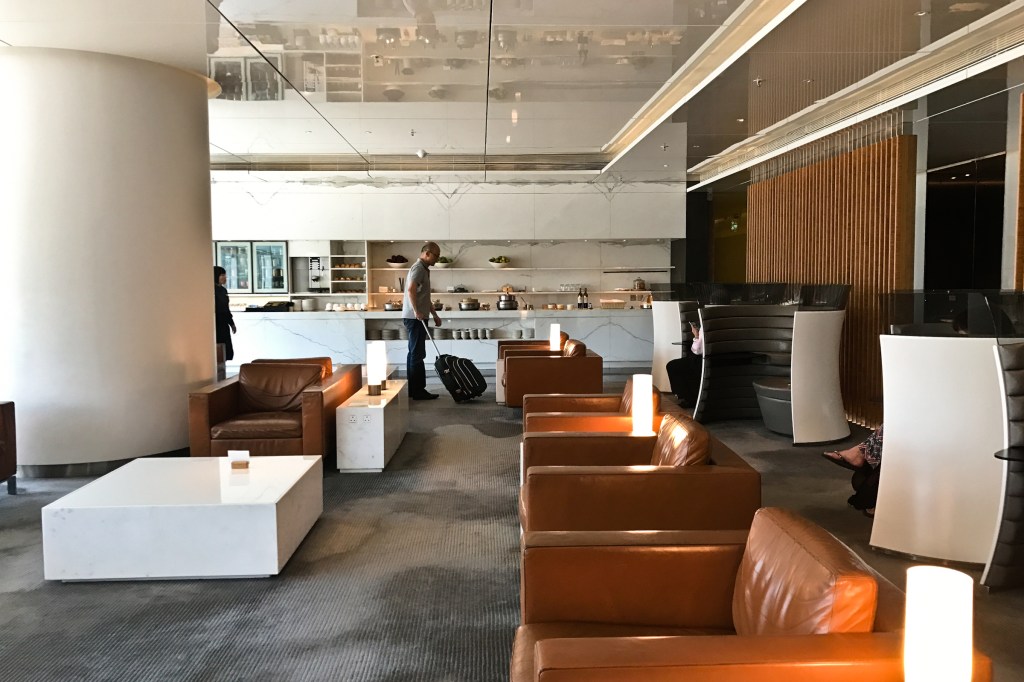
Don’t expect to be able to spend time in Cathay Pacific’s lounges in HKIA if you are passing through

HKIA will have a slightly easier way of handling transit traffic, given that the airport’s layout has already segregated arriving and departing passengers.

Some speculation online says that it is likely that transit passengers will not be able to enjoy transit facilities such as lounges or duty free shopping, and may be escorted to their next flights.

Final thoughts

Hong Kong has been cited internationally as one of the stellar examples of managing its Covid-19 situation, given that it has gotten its infection numbers under control, with the city recording a total of just over 1,000 cases with four deaths. Hong Kong is also reopening businesses cautiously, with crowd-pulling venues such as bars and clubs set to open this Friday (29 May).

The reopening of the airport for transit traffic is a step in the right direction, as the sector prepares itself to reopen international air travel. While travelling in June may not be possible given many countries still have border control restrictions in place, this definitely paves the way for a new normal in air travel in the months to come.