Latest Posts

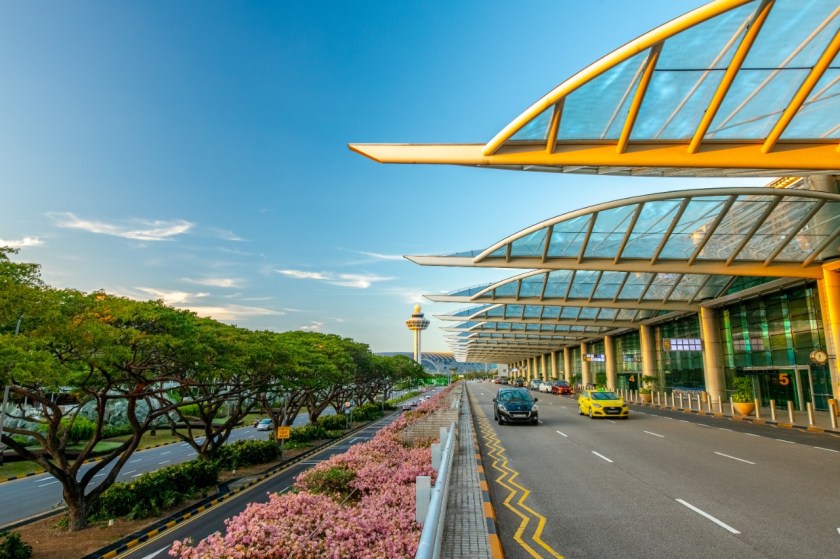
Commentary: What will happen to Changi Airport?

With major carriers at the airport almost zeroing their capacity, what are Changi’s options?

In the fight against Covid-19, Singapore has finally done in March what it has long been reluctant to do: shutting off its borders to visitors.

As an international and world renowned air hub, this was simply unimaginable in the past. Here in Singapore, we pride ourselves for being an open nation, where foreign tourists and businesses alike are welcome to spend and earn their money here.

Since the beginning of the year, Singapore has increasingly tighten the controls to keep the virus out. First it was a Stay-Home Notice (SHN) on visitors from select region, followed by a ban of visitors from certain regions, and the list of countries slowly expanded over the weeks.

These measures weren’t success enough, by the government’s standards, to keep the virus at bay, so the final gauntlet was dropped on Sunday when Singapore announced it will bar all short term visitors since 23 Mar. Subsequently, even long-term pass holders had to seek permission before setting off for Singapore, and anecdotally there are many instances where these workers are told to hold off their return to Singapore.

So as countries around the world shut their borders, Singapore had no choice but to do the same.

Home carriers reduce their capacity drastically

Since February, all three home-based carriers have been cutting their flights. First it was all flights to China, and as the virus spread across the world, more and more flights were cut.

In the latest moves, Singapore Airlines, Changi’s home carrier, announced a 96% cut to its originally scheduled April capacity.

This follows Scoot’s announcement of grounding all but two aircraft, to continue operating only about 1% of its capacity. The low cost carrier will only operate 26 flights between 22 Mar and 5 Apr.

Jetstar Asia, the smallest of the Singapore-based carriers, has thrown in its hat earlier in the month to say that it will ground all flights for three weeks from 23 Mar through 15 Apr. It probably had the foresight to see this coming, given the timing of its suspension.

In the first three months of 2020, Changi Airport reported a drop of 32.7% in passenger numbers, with most of the fall coming from February and March. This is likely to continue falling as nations hold out on closed borders.

Terminals are eerily quiet

If one takes a look at Changi Airport’s flight information, they are mostly blank.

Take 23 Mar, Monday, just before the all out ban on short-term visitors kicked in for example. Changi’s Terminal 4 has only seven scheduled flights on the Flight Information Display System (FIDS), and only one is operating – CX759 from Hong Kong. I wonder how many people were on that flight.

With the drop and virtually no visitors, one might expect that the hardest hit groups will include airside retail operators, ground handlers and other service providers.

At its peak of handling over 68 million passengers, Changi Airport depends on over 20,000 workers within the airport community to keep the airport running smoothly. Now that we are seeing just drips of passengers, one can imagine that many of these jobs will be at risk.

So with a dwindling number of flights, what are Changi Airport’s options to minimise the impact to its service providers and tenants?

Reduced footprint across all terminals

Up to last night, Changi Airport was still operating flights across all seven piers (A through G) across four terminals. One possibility is to restrict operations to one pier of each terminal, while cordoning off the other.

The layout of Changi Airport and the seamless connection across Terminals 1 to 3 may work against this option right now, but there can still be a meaningful way to do it.

For instance, Changi Airport could consider shutting off all the A gates in Terminal 3 and F gates in Terminal 2, while using the B & E gates respectively. Given’s Terminal 1’s seamless connection to Terminals 2 & 3, it may not be feasible to close off any parts of it.

By shutting off one pier in two of the terminals, Changi could look to park grounded aircraft at the closed off piers, and also close off one set of immigration counters at each terminal. This arrangement will also allow transit retail operators to reduce its footprint, and thereby reducing overheads during this period of time despite the rental relief that Changi has said to offer.

Consolidate ops in one terminal

If the low traffic is going to persist for a while, Changi Airport can also consider closing off one terminal, just as what London Heathrow is contemplating.

If that happens, this will likely happen to Terminal 4, given that it is now operating only 1 to 2 flights a day. Sources familiar with Changi Airport says that while this is being studied, it is very unlikely. This is because there is a possibility that airlines who are asked to move back to Terminals 1 to 3 – despite it being temporary – may not want to move back to Terminal 4 once the situation normalises, as Terminals 1 to 3 enjoys better land transport options and also a wider range of facilities, including the proximity to Jewel Changi Airport.

A terminal move is also a major undertaking both for airlines and the airport. Typically, airlines moving terminals will have to configure their check-in systems to the rows that they are working out of. Along with that, they may also have to move certain specialised equipment and signages, and sometimes, their office.

The obvious upside to this option is that as Changi Airport is currently upgrading Terminal 2, this will allow Changi Aiport to shut off Terminal 2 altogether and fast track the upgrading works, making this a fairly attractive proposition given that it is almost certain that traffic numbers will take time to go up again.

Final thoughts

While conserving resources to minimise ‘wastage’ is critical during this time, one must not forget that aviation is a very big part of the Singapore’s economy, accounting for about 5% of Singapore’s GDP.

The airport alone supports about 20,000 jobs, and with this virtual halting of traffic, many of these jobs are definitely at risk. On top of these jobs, there are also the non-aviation businesses, such as the retail outlets within the terminals that are at risk with a prolonged downturn.

While Changi Airport Group – the airport’s operator – has stepped in to offer rental waivers for its tenants, more can be done to help these businesses stay afloat, especially if the crisis prolongs.

Changi Airport Group’s consistently draw in an annual operating profit in excess of S$900 million, with net profit varying from year to year depending on other factors. Most of this would come from its non-aeronautical revenue, given that the aeronautical revenue is regulated and therefore can be presumed to not draw much of a profit.

While the company is a privately held corporatised entity, Changi Airport Group cannot take away from the fact that it is operating a national – if not global – institution. By extension, it has a national service role in keeping jobs and helping businesses stay afloat, especially when it uses the Singapore brand, and leverage many other Singapore brands operating on its premises when selling itself to the world. It has relatively deep reserves, and if there’s a time the reserves should be tapped on, the time is now.

Singapore Airlines cuts 96% of planned capacity as Singapore shuts borders to visitors

All but some essential routes will be axed

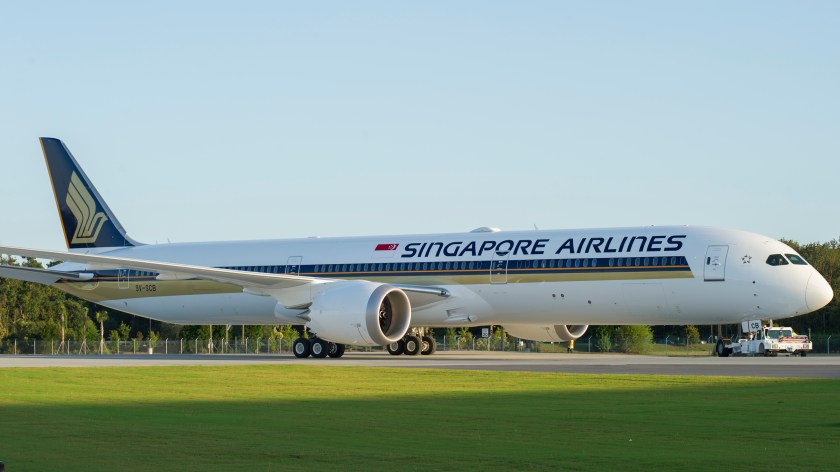
Following Singapore’s announcement over the weekend to bar all foreign visitors and even restrict long term visitors to come in, Singapore Airlines announced it will be cutting 96% of its scheduled capacity till end-April 2020, along with it, grounding 138 out of 147 aircraft.

This comes after Scoot suspended most of its network until late April, grounding 47 out of 49 aircraft.

Deeper cuts

Singapore Airlines have previously said it will cut its capacity by up to 50% just last week, after drastic measures put in by the Singapore government to place most travellers on 14-day Stay Home Notice (SHN).

With the latest tightening of Singapore’s border control, Singapore Airlines is definitely an inevitable victim of circumstances, with virtually zero

As of last Saturday after all in-bound travellers are required to serve 14-day SHN, only a mere 600 odd visitors entered the country – probably the lowest Singapore has ever seen in decades – and this number will be zeroed in the weeks ahead.

Flights to be operated

At the time of writing, Singapore Airlines have only updated its schedule up to 11 Apr. Between 29 Mar and 11 Apr, Singapore Airlines will only operate a handful of flights (presumably for repatriation purposes) to London, Los Angeles and Shanghai.

SectorFlight no.DaysDepArrFlight timeAircraft
SIN-LHRSQ30829 to 31 Mar0900154013h 40mA380-800
SIN-LHRSQ31829 to 31 Mar1235191513h 40mB777-300ER
SIN-LHRSQ32229 to 31 Mar23300555(+1)13h 25mA380-800
LHR-SINSQ31729 Mar to 1 Apr11250730(+1)13h 5mA380-800
LHR-SINSQ31929 to 31 Mar20501655(+1)13h 5mA380-800
LHR-SINSQ32129 to 31 Mar22051810(+1)13h 5mB777-300ER
SIN-LAXSQ3829 Mar2045214015h 55mA350-900
LAX-SINSQ3730 Mar00050815(+1)17h 05mA350-900
PVG-SINSQ83329 Mar to 11 Apr165022205h 30mB777-300ER

Interesting, the Singapore-Shanghai sector has been zeroed out, so it could be a case where the flight is only used for repatriation from Shanghai to Singapore.

No availability on SIN-PVG SQ830

Darker days ahead

In what seemed to be a pessimistic outlook in its press statement, Singapore Airlines said:

The SIA Group diversified its network and set up Scoot to spread its risks and cater to a wide range of passenger and market segments. However, without a domestic segment, the Group’s airlines become more vulnerable when international markets increasingly restrict the free movement of people or ban air travel altogether.

It is unclear when the SIA Group can begin to resume normal services, given the uncertainty as to when the stringent border controls will be lifted.

Singapore Airlines press release, 23 March

Measures taken by Singapore Airlines

Of course, with so many aircraft lying around, it’s easy to ask the airlines to put them through maintenance or upgrading, but given the current uncertainty that may not be the best idea too given the high cost of it.

Singapore Airlines has already announced plans to stabilise its financial position by cutting management salaries, as well as asking staff to go on no-pay leave.

The airline is also talking to Boeing and Airbus to defer the dozens of upcoming aircraft deliveries, which will ease its debt for a bit.

Final thoughts

The full schedule of the reductions is not out yet, but similar to other airlines who are still operating, we expect Singapore Airlines to still fly a nominal schedule to strategic links, including Indonesia, Malaysia, China, Australia.

It’s highly likely that all long-haul routes will be axed, although the airline may mount repatriation flights to some cities known to have a huge population of Singaporeans, such as London.

Cathay Pacific slashes 96% of capacity in April & May

The Hong Kong based airline will only operate three weekly flights each to 12 cities worldwide.

Following a major reduction of capacity since earlier this year, Cathay Pacific and Cathay Dragon has announced a further reduction of capacity.

All Cathay Pacific and Cathay Dragon flights are essentially cancelled, except for three flights a week to 15 cities around the world.

The cities are:

  • Singapore
  • Kuala Lumpur*
  • Bangkok
  • Jakarta
  • Manila
  • Ho Chi Minh City
  • Beijing*
  • Shanghai Pudong*
  • Tokyo
  • Taipei
  • New Delhi
  • Sydney
  • Los Angeles
  • Vancouver
  • London Heathrow

*operated by Cathay Dragon

The skeletal operations will last through May, after which Cathay Pacific will review the situation and make further announcements.

The reduction means a 96% reduction in capacity by the carrier.

As again, affected travellers (who is actually still travelling?!) will be reaccommodated on appropriate services, although I would reckon that may mean up to 2 days’ wait at the airport for your connecting flight!

The full schedule of this skeletal service is not out yet, but I will imagine they will not be regular (i.e. fixed days of ops each week).

Final thoughts

Cathay Pacific is definitely approaching rather differently from other airlines. While many others are amending their schedules day by day, Cathay’s decision to simplify their ops is commending, given that it provides for some certainty during this time of uncertainty.

Having said that, this is definitely still subject to change, although there really isn’t much room left to move. We can only hope that this is the rock bottom, and the only way to go is up.

Qantas to cut all international flights at least until end May 2020

Domestic services within Australia will also be reduced by 60%.

Qantas today announced that it will suspend all international services by the end of March until until May.

The carrier has earlier said it will slash its international services by 90%, but since the Australian government has announced tighter measures including a ban on arrivals of all non-residents into Australia, Qantas has dropped the gauntlet to axe all international services.

Earlier this week, cuts to 90 per cent of international flying and about 60 per cent of domestic flying were announced by Qantas and Jetstar. With the Federal Government now recommending against all overseas travel from Australia, regularly scheduled international flights will continue until late March to assist with repatriation and will then be suspended until at least the end of May 2020. As the national carrier, Qantas is in ongoing discussions with the Federal Government about continuation of some strategic links.

Qantas media release

The airline will ground over 150 aircraft, including all of its Airbus A380, Boeing 787-9 and Boeing 747 jets. The bulk of Qantas’ fleet, the Boeing 737-800, will be expected to operate only domestic services, which will also see a 60% reduction in schedule.

Seems like suspension will commence 26 Mar

A look at Expertflyer revealed that almost all international services operated by Qantas have been zeroed out from 26 Mar 2020.

Singapore’s seven daily services to Australia and UK – except QF2 to Sydney – have been zeroed from 26 Mar 2020 (Thu).

Singapore-Sydney services
Singapore-Melbourne services
Singapore-Brisbane services

Singapore’s QF1 service to London will operate its last flight on 25 Mar at 11.55pm, arriving into London Heathrow at 7.15am the next day.

The return service QF2 will leave London on 26 Mar, arriving into Singapore on 27 Mar. QF2 will be the last Qantas flight out of Singapore on 27 Mar at 7.15pm, arriving into Sydney next morning at 6.10am.

In the meantime, travellers going to Perth will be accommodated to the smaller Boeing 737 until 25 Mar, instead of the usual A330.

Similarly, Qantas will also be cutting off services to other parts of Asia, including Denpasar-Bali, Bangkok, Manila, Hong Kong and Tokyo from 26 Mar 2020.

Some ad hoc flights may be operated

In its communication, Qantas has said that it may operate some ad hoc services to maintain strategic links or those requested by the government for repatriation purposes.

These will be announced where necessary at a later date, upon discussion with the Australian Government.

All Qantas international lounges to close temporarily

Following the suspension of all international services, Qantas will also shutter all international business class and first class lounges in Australia and globally.

In Singapore, that means that following the previous announcement of the first class lounge closure, it seems like the business class lounge will also be shut for a while.

Qantas first class lounge and business class lounge will be temporarily closed

Qantas to extend frequent flyer status for a year

Given the extended period of time of non-flying, Qantas will also be extending the validity of all Qantas Silver, Gold, Platinum and Platinum One frequent flyers by a year.

Final thoughts

As the world grapples with Covid-19, these are indeed uncharted territory that many airlines are heading into. Qantas is not spared either.

Qantas Group CEO Alan Joyce has this to say:

“This is a very hard set of circumstances for our people, as it is for lots of parts of the community right now. No airline in the world is immune to this, with the world’s leading carriers making deep cuts to flying schedules and jobs. Our strong balance sheet means we’ve entered this crisis in better shape than most and we’re taking action to make sure we can ride this out.”

Alan Joyce, Qantas Group CEO

What should have been a celebratory year for Qantas as it turns 100 years old is now smeared with the effects of a deadly virus, which has reduced the airline to a domestic one for now.

Qantas to extend frequent flyer elite statuses by one year

As Qantas grounds 90% of its international flights over the next two months, frequent flyers will be relieved to hear that Qantas will be extending all current elite members’ status for another year.

In the current climate, this is a rather generous offer. Singapore Airlines earlier had only offered an extension for select members, and Cathay Pacific is only offering a relief tier points based on each member’s existing tier. Comparatively, Qantas’ offer is a far better one.

The details

Qantas will provide a 12-month extension on your current membership tier for all current Silver, Gold, Platinum and Platinum One members.

This offer also applies to members who on Status Hold, and those who has received complimentary Gold or Platinum memberships.

The extension does not come with any requirements at all, including the need to take four Qantas or Jetstar flights within a membership year.

However, if you have already requalified for your same status, or a higher status, for the next membership year, you will not get an extra 12 months of that new status.

For instance, if your membership year started in July 2019 (through June 2020) and you started the year as a Silver member, and between July 2019 and December 2019 you earned 700 status credits to become Gold during this membership year (which will expire in June 2021), you will not get an extension till June 2022.

All the status credits earned in the current year will continue to expire at the end of your membership year. They will not roll over to the new membership year, even though your status is extended for another year.

When will the extension be given?

Qantas will trigger the extension in two phases:

For those whose membership year expires between March and June, the extension will be done by 27 Mar 2020.

For all other members, the extension will be done by 9 Apr 2020.

What if my elite membership has just lapsed last month?

Tough luck. On record, Qantas is not offering any assistance for those whose status expired in February, but given that this has been a long-evolving situation, you can consider writing in to appeal.

Final thoughts

Qantas did take a while to come out with the policy on status extensions for its frequent flyers, but I’m glad they did offer a no-questions-asked one year extension for their members, despite ground their fleet and risking financial difficulties amidst the equivalent of grounding 150 jets.

Qantas’ model of basing membership years on their month of joining also poses a problem for some memberships, especially those whose membership year begins in March. If Covid-19 hangs around for more than half a year, an extension to March 2021 isn’t really going to help a lot, although Qantas did say that they may evaluate the situation before offering further assistance.

It’s very likely that the Covid-19 situation will hang around a little more, airlines are finding that they need help themselves first or else they risk going bust. So any up sides offered by the airlines for customers now is simply a bonus.