Latest Posts

LOUNGE REVIEW: Cathay Pacific Singapore Lounge, Changi Airport Terminal 4

The Hong Kong Singapore Lounge is one of the latest in the Cathay Pacific’s network, opened less than 18 months ago when Singapore Changi Airport opened its newest terminal, Terminal 4.

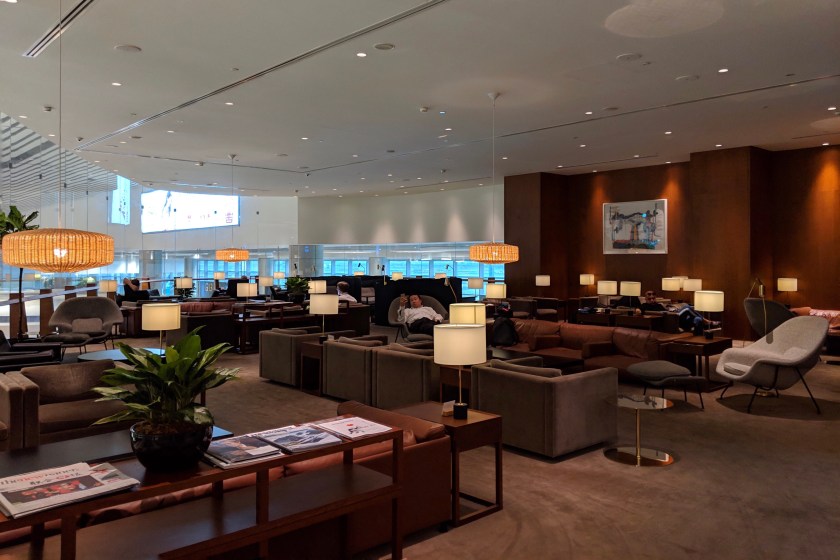
Being one of the major airlines operating out of Terminal 4 since the terminal opened back in 2017, the Cathay Pacific Singapore lounge is the only airline lounge at Terminal 4. It is a fairly cosy one, with 849 square metres of space and offering seats for over 200 customers at any point in time.

Who can access this lounge?

Apart from Cathay Pacific’s own business and first class passengers, Marco Polo Silver, Gold and Diamond members can also access the lounge when travelling on a Cathay Pacific flight out of Singapore. Oneworld sapphire and emerald members may also use the lounge as long as they are travelling on a oneworld-member operated flight on the same day, although I’m not sure if you should make the trek to Terminal 4 just for this lounge when the Qantas lounge at Terminal 1 is probably a better choice.

The lounge

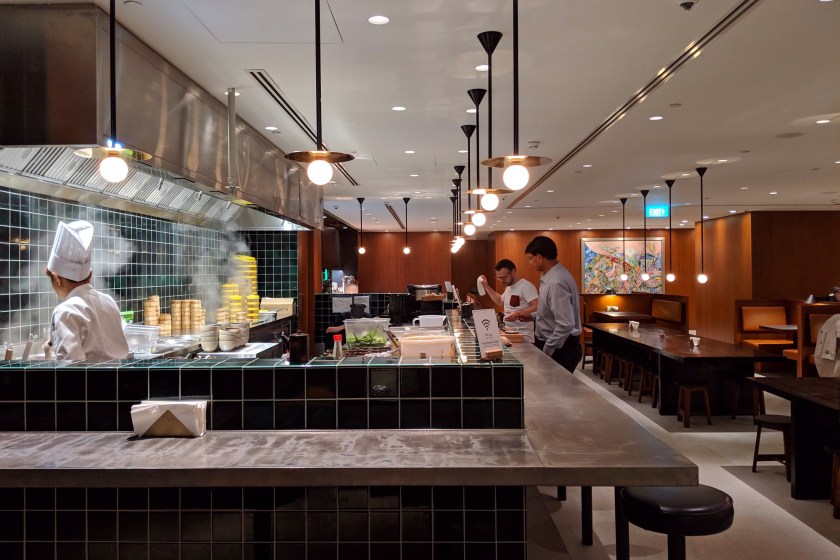
The Cathay Pacific Singapore lounge features two main seating areas. The first is at the noodle bar, with plenty of two and four-seater booths, along with bar seats at the noodle bar and a long communal table adorned with stools.

On the terrace overlooking the transit area of the terminal features several armchairs and coffee tables, perfect for a late night pre-departure drink. This is also where the self-service buffet area is placed.

Cathay Pacific brought its famous noodle bar to the Singapore lounge as well, which has become a perennial favourite for customers around the world.

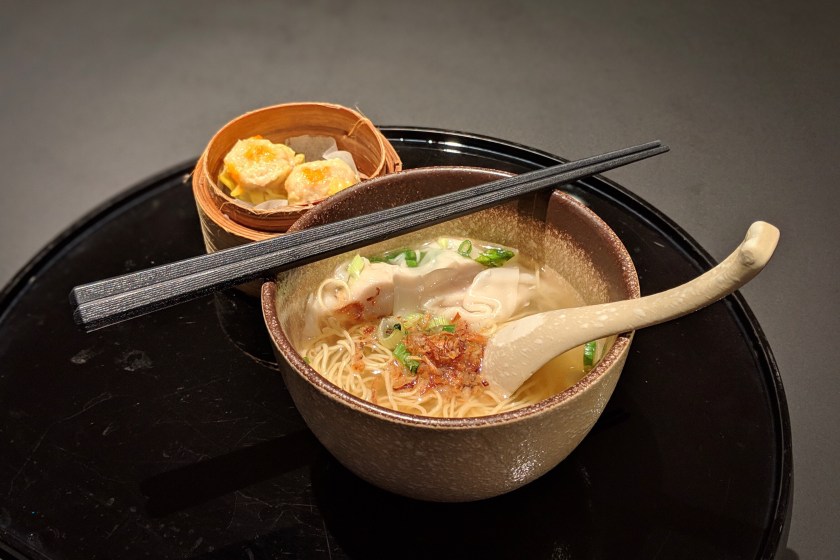
The noodle bar serves up small bowls of the signature Hong Kong Wanton Noodles, along with other type of cooked-to-order items that reflects the local culture. For instance, the Singapore lounge serves a version of laksa as well, similar to the Qantas Singapore lounge.

Another thing on offer was the steamed chicken dumplings (siew mai). While this is traditionally made with pork, I guess chicken may be a little more palatable to the diverse range of customers passing through.

On the buffet table was also the standard western breakfast offering, including scrambled eggs, bacon, sausages and also a Chinese favourite, rice porridge.

The lounge also offer a range of reading materials such as newspapers and magazines, although I didn’t really see anything picking something up to read while I was there.

The only difference between the Singapore lounge and the Hong Kong lounges is the absence of shower rooms, given that Cathay Pacific only flies to Hong Kong and Bangkok from Singapore. Also, no other oneworld airlines are operating from Terminal 4, so that lessens the need for shower rooms.

Final words

The Cathay Pacific Singapore lounge is probably one of the newest ones on its network. While fairly small when you compare it to the labyrinth in many of the Hong Kong lounges, this lounge contain many wins – such as the noodle bar – which sufficient catered to the needs of the customers.

I am a fan of Cathay Pacific’s lounges in Hong Kong, having been to several of them, including the Deck and the Wing business lounges. Cathay is known to provide a solid lounge product, with good space design, ample seating and very decent food. Of course, given its popularity, the lounges in Hong Kong International Airport are usually very packed, so it’s pretty refreshing to go into a less crowded Cathay Pacific lounge.

Singapore Airlines is revising its redemption prices again, less than two years after the last time

Singapore Airlines will be increasing the redemption rates for all award tickets, as well as upgrades, from 24 January 2019. This increase will see Krisflyer members forking out anything from 2,000 miles to 15,000 miles more for their premium economy, business or first class ticket.

For those who have longer term memories, the last revision was in March 2017 (yes we are in 2019, guys), where SQ famously removed its 15% online redemption discount, in return for absorbing fuel surcharges on its tickets.

This time round it’s mostly grim. Economy class rates remained unchanged, but everything else is going up – both saver and advantage rates. We will take a look at the increases at the saver level, because, frankly who redeems at an advantage level unless you really need to travel?

One great news for those who usually upgrade with their miles: SQ will now allow a two-class upgrade from Economy to Business for aircraft with the premium economy product. Previously this will not be possible.

Premium Economy

Premium Economy saver rates have gone up between 2,000 and 5,000 miles per way. If you are travelling from Southeast Asia to anywhere in Asia Pacific, you are likely to have to fork out an additional 2,000 miles each way.

For ultra-long journeys, expect to pay 5,000 miles more. See below for some examples:

Singapore to Premium Economy saver, each way (‘000 miles)
Old New Change
Hong Kong, Taiwan 22.5 24.5 +2 (8.8%)
Japan, South Korea 32.5 34.5 +2 (6.1%)
South Asia 30 32 +2 (6.6%)
Australia (excl Perth, Darwin) 45 47 +2 (4.4%)
Europe 62.5 64.5 +2 (3.2%)
USA (West Coast) 65 68 +3 (4.6%)
USA (East Coast, Houston) 70 73 +3 (4.3%)

Business

This is where the shit gets real. Business Saver rates have gone up between 1,500 and 11,000 miles each way. To show that inflation spares no one, every single city pair have gone up, including Zone 1 to Zone 2 fares, i.e. Singapore-Jakarta & Singapore-Kuala Lumpur flights.

For very long flights like Australia to Europe services, travellers will now have to fork out about 22,000 miles more for a business class return flight. Under the old rules that would have given you a Singapore-Bangkok one-way business ticket. Ouch.

Singapore to Business saver, each way (‘000 miles)
Old New Change
Indonesia, Malaysia 17.5 19 +1.5 (8.6%)
Thailand, Vietnam 20 21.5 +1.5 (7.5%)
Hong Kong, Taiwan 27.5 30.5 +3 (10.9%)
Japan, South Korea 43 47 +4 (9.3%)
South Asia 35 39 +4 (11.4%)
Australia (excl Perth, Darwin) 58 62 +4 (6.9%)
Europe 85 92 +7 (8.2%)
USA (West Coast) 88 95 +7 (8.0%)
USA (East Coast, Houston) 92 99 +7 (7.6%)

First/Suites

Of course, First and Suites are not spared, but then again if you have enough miles for redeeming a first class ticket, the increase really shouldn’t matter that much. The mileage required for redeeming a first class ticket have gone up between 2,500 and a cool 15,000 miles, depending on your city pair.

Singapore Airlines A380 Suites
Arriving into Frankfurt

The shortest first class flight you can get is on Singapore-Jakarta for 25,000 27,500 miles which will let you have a taste of their famous Private Room at Changi Airport Terminal 3 before you head off south.

If you are like me who like to save your miles for very long haul trips, be prepared to save even more miles now. The famous SQ11/12 Singapore-Frankfurt-New York service will now cost you a cool 132,000 miles each way, up from 120,000 miles. This is a far cry from the time when there was a 15% online discount, which will only set you back by 102,000 miles back before 2017.

Here’s a look at some of the changes:

Singapore to First saver, each way (‘000 miles)
Old New Change
Indonesia 25 27.5 +2.5 (10%)
China (Beijing, Shanghai) 50 53 +3 (6%)
Japan, South Korea 65 70 +5 (7.7%)
Australia (excl Perth, Darwin), New Zealand 80 85 +5 (6.3%)
Europe 115 125 +10 (8.7%)
USA (East Coast, Houston) 120 132 +12 (10%)

Upgrade awards

I don’t normally encourage people to use miles for upgrades since you will usually have to purchase fairly expensive fares to be able to upgrade.

There are however exceptions to this, for instance, if you are travelling for work and your company policy allows you to upgrade with your own miles.

So what have gone up for upgrade awards? Generally, short haul flights are unaffected, the changes impact mid (anything further than Singapore-Hong Kong) and long haul flights. Increases are generally modest (1,000 to 2,000 miles each way) and tops off at 6,000 miles increase for Australia-USA flights, for a economy to business class upgrade award.

The one good news that came out of it is that customers can now do an economy-to-business upgrade on flights with premium economy. This was previously not possible and customers wishing to upgrade to business would have to purchase a premium economy fare, to the dismay of many.

No more waitlist within 14 days of travel

Another good news that came out of today’s announcement was the confirmation of waitlisted flights 14 days before your flight. Previously there have been harrowing accounts of how flights were confirmed only a day or two before, but this will not longer be the case as SQ will no longer allow redemptions waitlisting within 14 days of departure.

Final thoughts

We didn’t see this coming. This increase certainly came very shortly after the last round, and the increases are a sign of things to come with Singapore Airlines’ transformation. While the increases are not dramatic, but the creeping and somewhat frequent changes should let you reconsider whether to stick to a single mileage programme, or hedge it with another.

Bottomline is: don’t hoard your points. The longer you keep, the more value you lose.

Of course, there are some bright spots, such as how Singapore Airlines have decided to make the Spontaneous Escapes a permanent feature, meaning you can enjoy last-minute redemption deals at 30% discount. Of course, this will heavily depend on what is unsold, almost akin to a bakery’s end-of-day discount sale.

For the full changes and new award charts, see SQ’s website here.

REVIEW: Hotel Indigo Katong, Deluxe King Room

In an attempt to complete the Double Points and More promotion (also known as the Acceleration promotion), I decided to spend the weekend at Hotel Indigo Katong.

Given it’s off city centre location, this hotel is definitely not my usual choice. Having read some pretty good reviews and also to meet the ‘Stay in two or more brands’ requirement, I decided to check the hotel out.

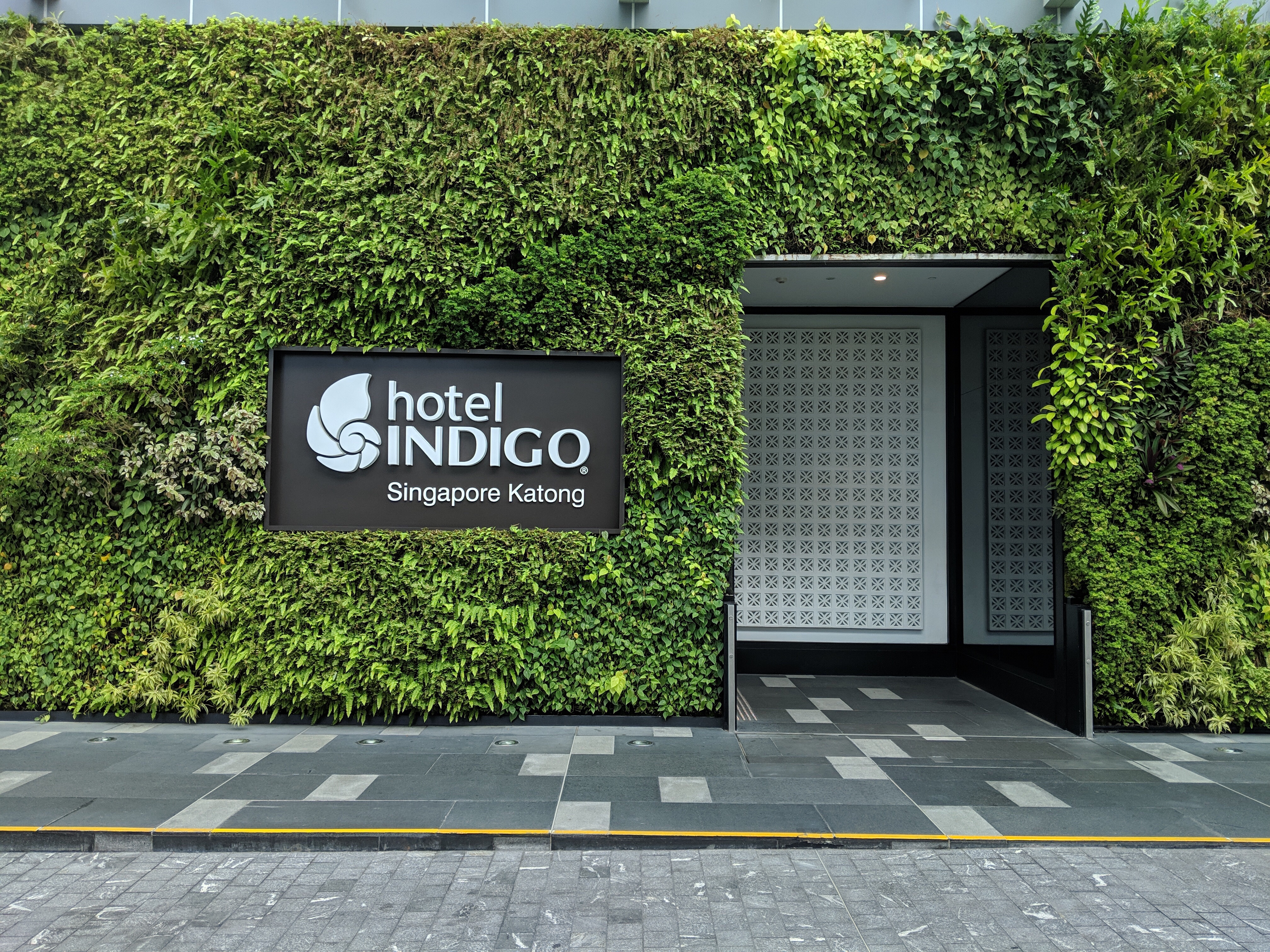
Back to the hotel. Hotel Indigo Katong is nested in the heart of Singapore’s peranakan enclave, Joo Chiat.

For those who are unfamiliar with the term, Peranakans are essentially what Southeast Asians refer to as Straits-born Chinese. They are descendants of Chinese immigrants who moved to the Malay archipalego a few centuries ago and developed their own mix of heritage and culture. One thing for sure, their food is incredibly elaborate and delightful.

The hotel is fairly new: built in 2016, the hotel is part of a rejuvenation plan which saw several new hotels pop up in the vicinity. The hotel is adjoined with Katong Square and Holiday Inn Express, all of which shares the same car park and driveway.

The first Hotel Indigo in Asia was launched in Bangkok back in 2015, with many others quickly sprouting out over the next couple of years, with a total of 14 properties across Asia right now.

Personally, the Hotel Indigo brand is an intriguing one – it seem a little odd-placed among IHG’s suite of hotels.According to IHG’s website:

Each hotel is as individual as its surroundings and is also a reflection of them. You can taste the local flavor on our menus and see it in the art and photography displayed on our walls. You’ll catch guests and neighbors hanging out in our bars, get great advice from our team members on what to see and do in the neighborhood, and be refreshed by just how relaxed and inviting it all feels.

While not expectedly high end, the brand seem to be placed differently in different cities. A quick google search will tell you that some Hotel Indigo properties are five-star hotels in Europe, but most of them will stay at a four-star standard and a handful lower than that.

The room

Hotel Indigo Katong has 131 rooms, all of which are similarly sized. There are only two main room types: the premier room and the deluxe room, each with either king or twin beds. Key difference between both rooms is that the premier rooms comes with a good view of the city (be sure to choose these rooms to avoid looking into the adjacent Holiday Inn Express Katong courtyard) and a nespresso machines, with some rooms having a bathtub (this is an add-on) for those who like a little in-room soak.

I booked myself into the Deluxe Room, and was lucky enough to be given a room with a view facing the neighbourhood, rather than the Holiday Inn Express courtyard.

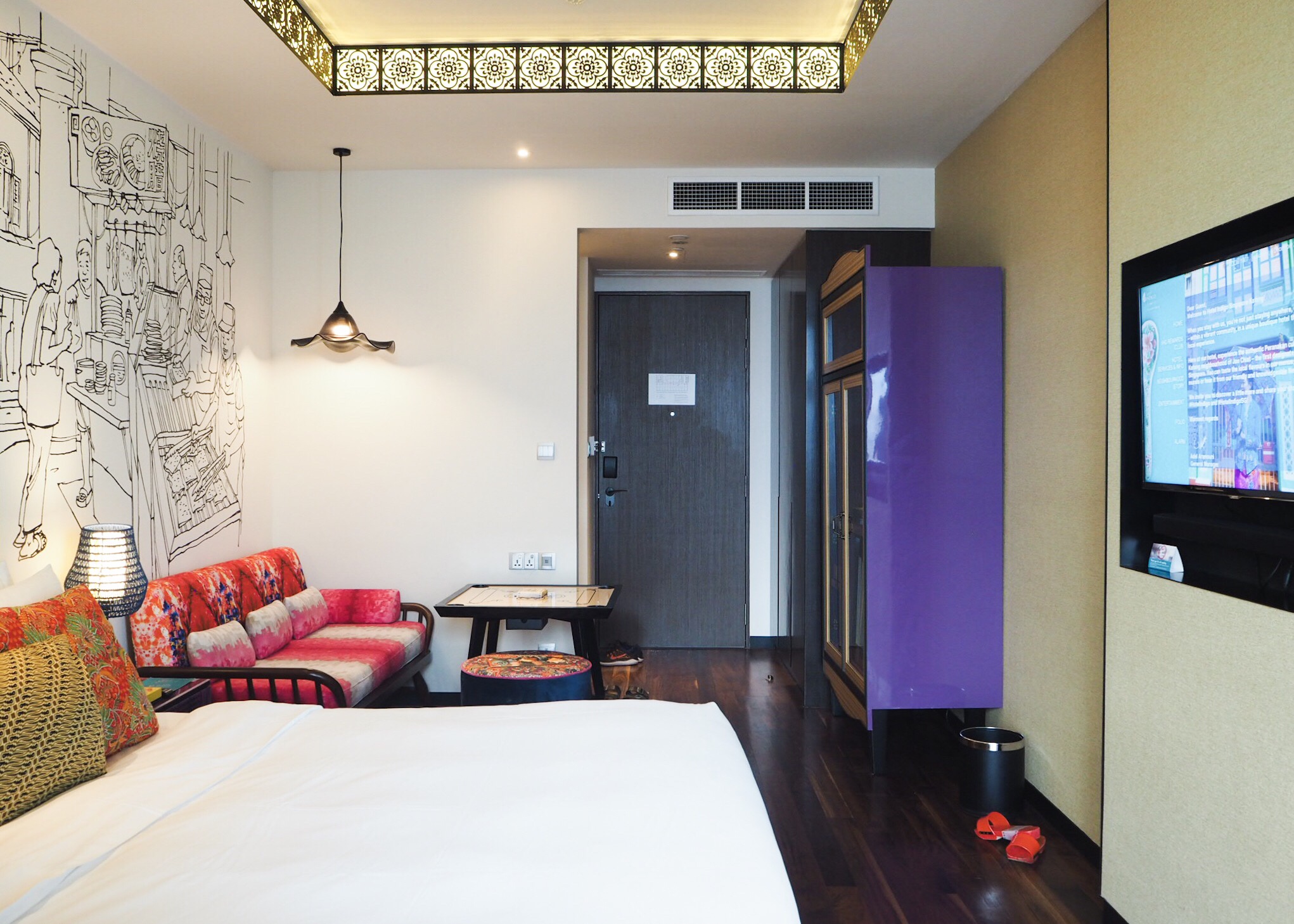
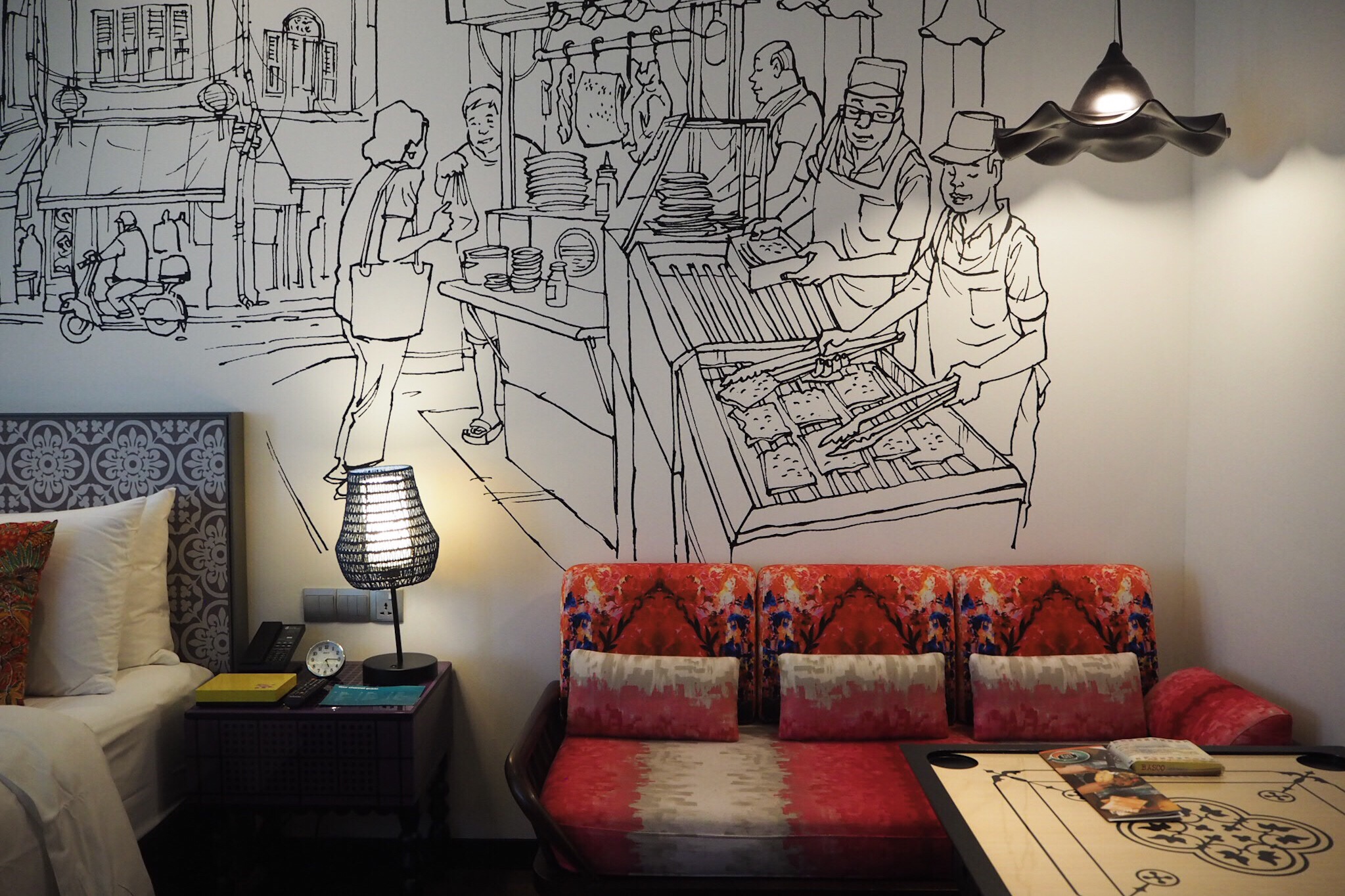
At 30 square metres, the premier view room I stayed in was fairly spacious for a new hotel. The room comfortably contained the king bed, a two seater sofa adjacent to a carrom board (when was the last time you saw one?) used as a coffee table, as well as a classic cupboard which opens up to contain the minibar and contained all the in-room refreshment amenities.

Flanked by the side of the entrance was the wardrobe, while the toilet is contained on the other side of the toilet.

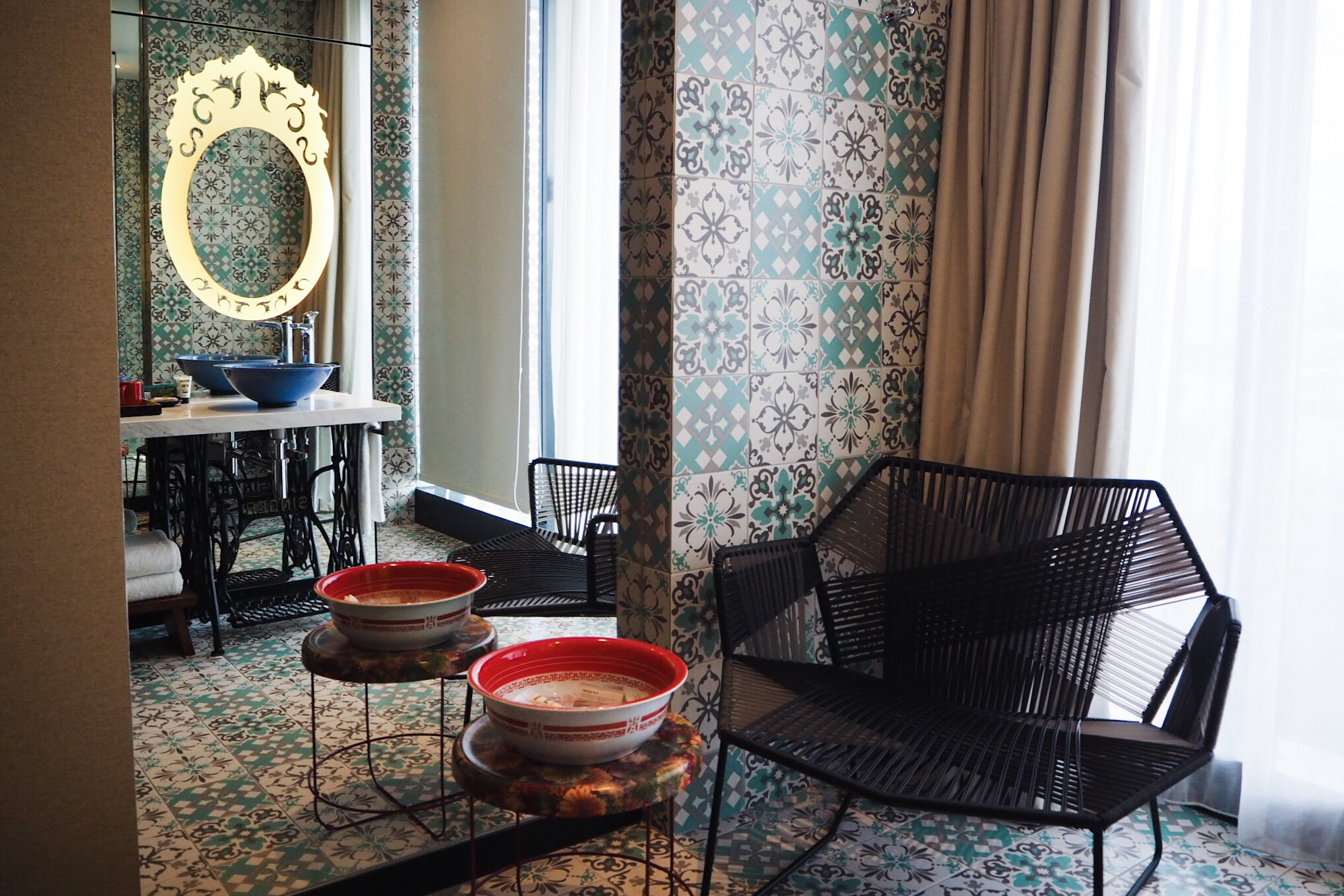
What’s different is that the bathroom is on the other end of the room against the window, with a sliding door that closes up the bathroom from the bedroom. You could opt to take a shower with full view of the street, although that’s incredibly unwise as the rooms are rather visible especially at night, given the relatively low height of the hotel and the distance from the main road.

Nonetheless, if you are one of those who are on the higher floor and have a bathtub, this makes for a very good and relaxing bath in the privacy of your room.

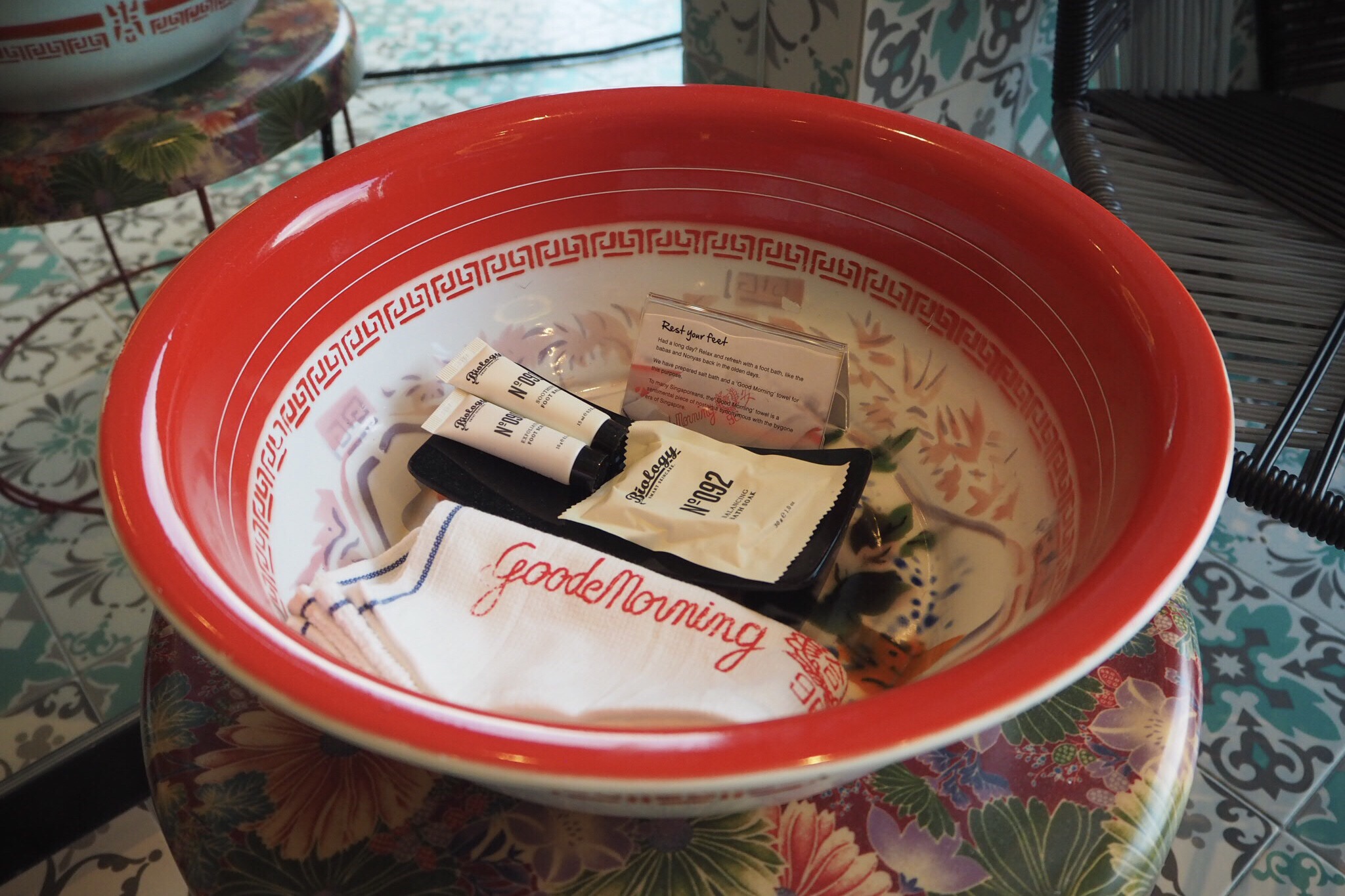
For rooms like mine without a bathtub, there will be a cosy armchair, along with a little pan and a very handy feet soaking kit, comprising bath salts, foot scrub and a Good Morning towel. Very thoughtful!

Hotel Indigo Katong uses Biology Skin amenities, an Australian brand that I have come across before while staying in Next Brisbane. I loved the smell of the amenities and it doesn’t leave me feeling too dry after a shower, so it’s one of those hotel amenities that I didn’t mind using.

The facilities

The hotel is fairly compact, given that it was redesigned from a former police station. Adjoined to Katong Square, a shopping mall, as well as the Holiday Inn Express Katong, do not expect full-service hotel facilities. After all, you are encouraged to go out and check out the neighbourhood (and there’s really a lot to see and do!).

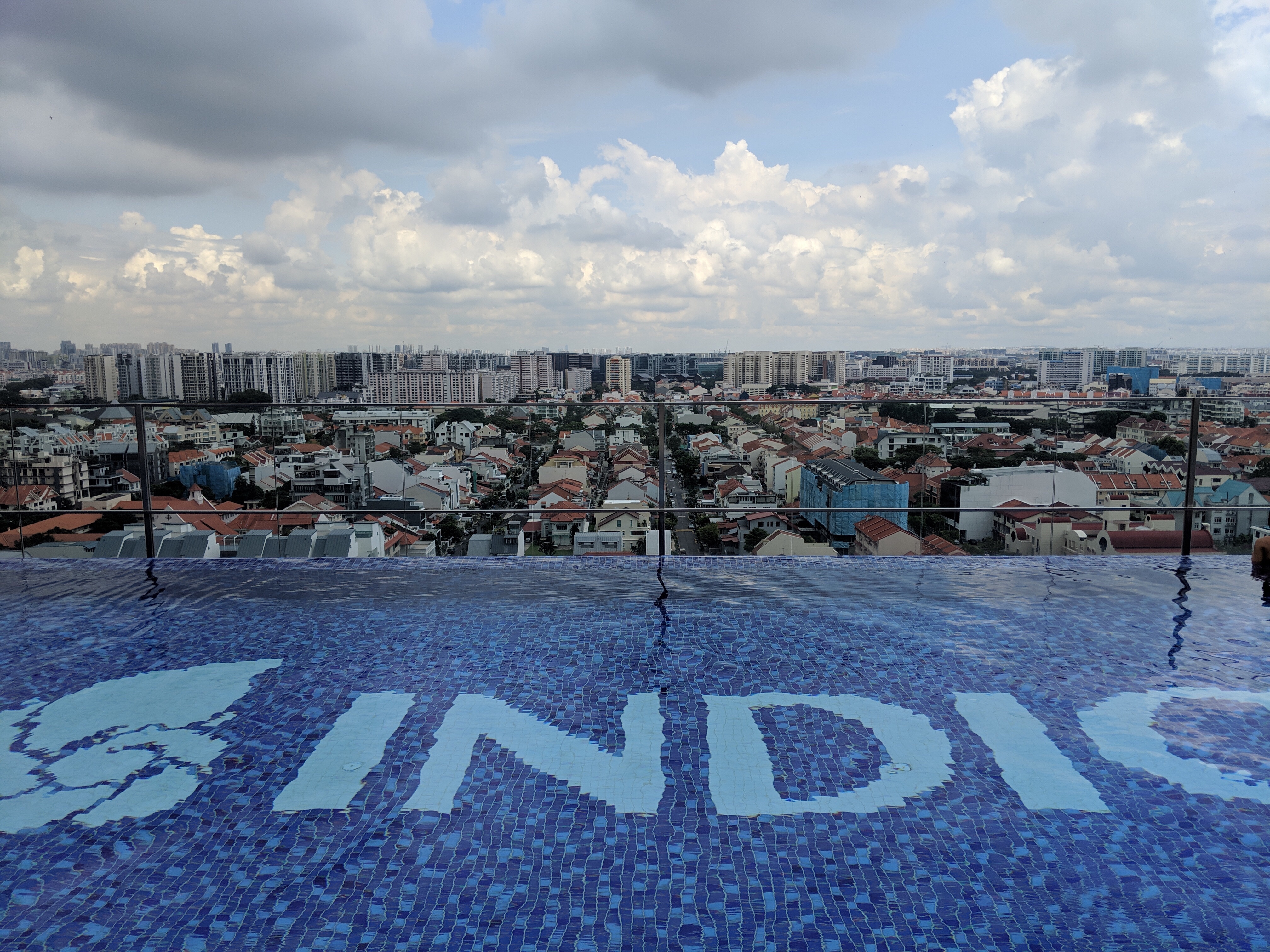
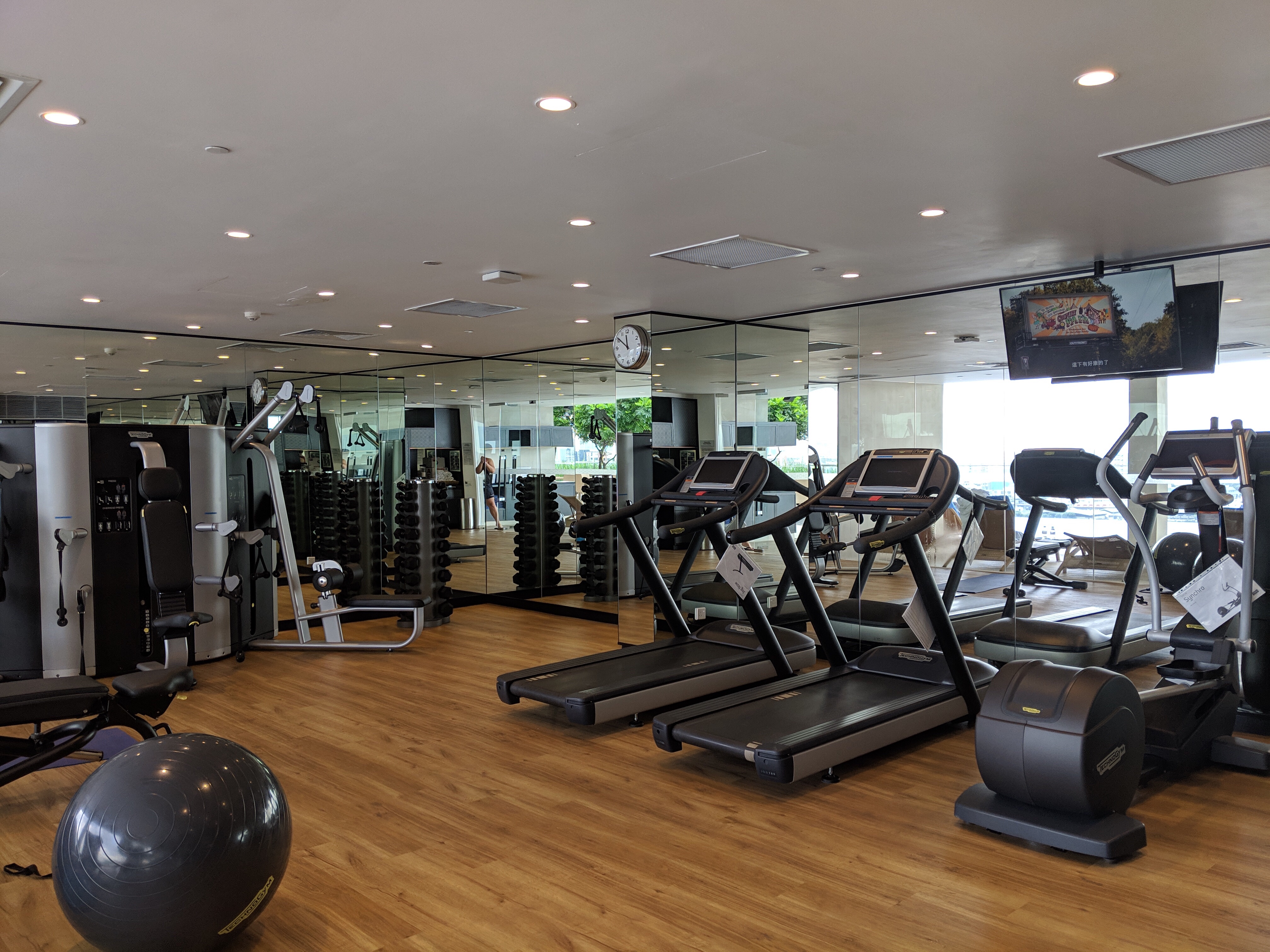
The hotel has a rooftop infinity pool, overlooking the Joo Chiat neighbourhood which is essentially an array of low-rise terrace houses and shophouses. On the same floor there’s a compact but very functional 24-hour gym.

While there isn’t a bar, the hotel is incredibly thoughtful: there is a counter with a menu, and a phone which links directly to the restaurant. You could place an order for a cocktail or some light bites, and they will be sent up to the pool to you not too long after. Now you can enjoy sunset by the pool with a glass of wine in hand.

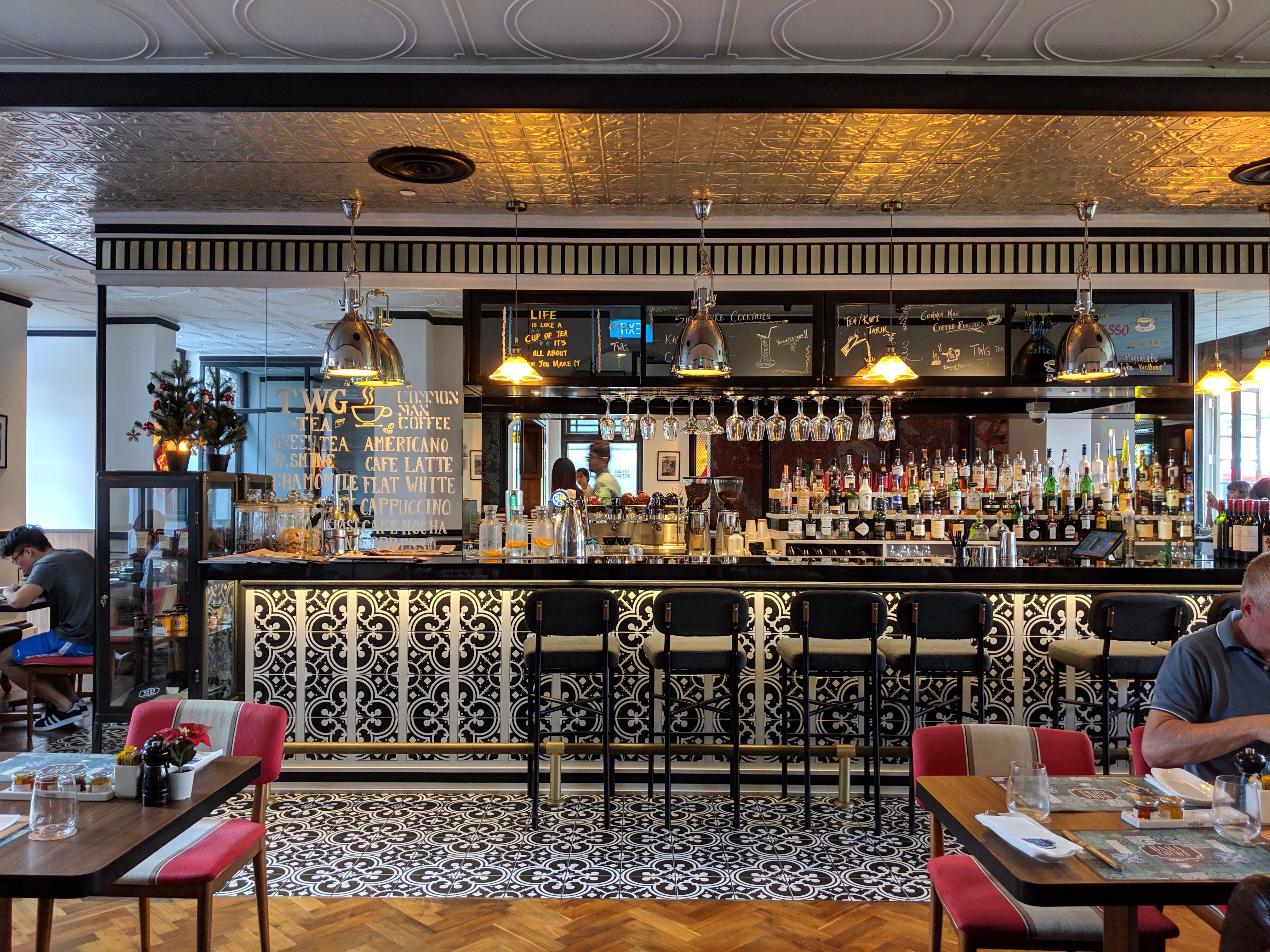
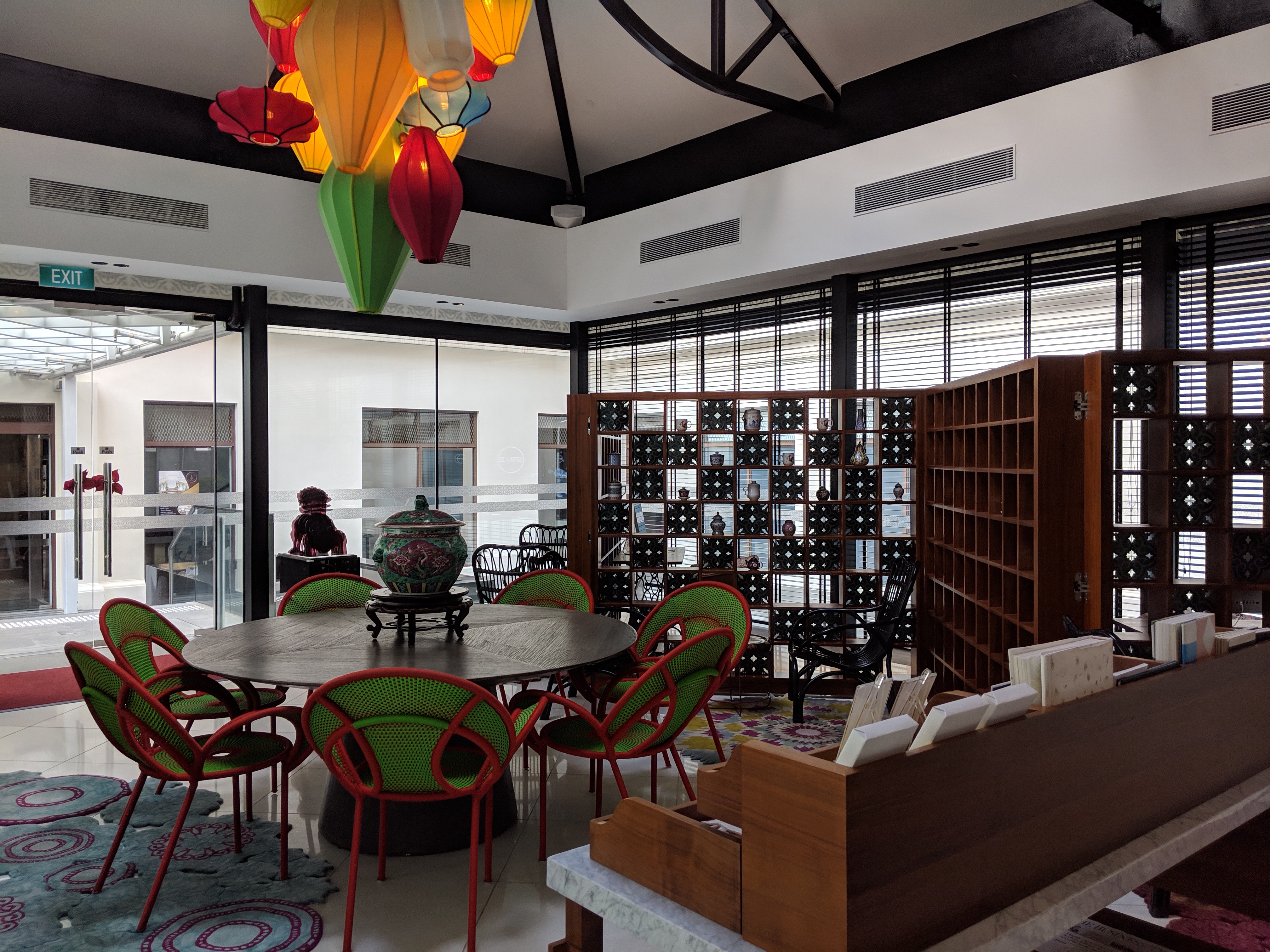
There is also a little pavilion by the lobby with some books and you could browse, or simply hang around if you need a space to work or to relax. While not exactly a lounge, it’s a very handy space to have, which is pretty lacking in hotels today. For a longer stay, I will imagine myself getting a coffee from the shopping mall next door and hanging out here to read for an hour or two.

Baba Chews

The hotel has a restaurant Baba Chews, which you might have guessed by now, serves Peranakan food. The Peranakans are (in)famous for their very elaborate cuisine, often requiring very extensive preparation and long cooking times for a very intense flavour and texture.

Baba Chews offers a modern take on the cuisine through its various menus, on top of the classics. On weekends, it offers a different brunch on Saturday and Sunday (see their website for the latest menus), with items such as Bibik-Bap rice bowl and ayam buah keluak burger on the menu. If you prefer to stay safe, go for dinner: you will find familiar items such as otah, beef rendang, chap chye on the menu.

While I didn’t try the food for dinner, Baba Chews was also the breakfast venue. The breakfast offering was primarily made-to-order items that you can order off a menu. Every day of the week, the menu also feature a couple of local dishes.

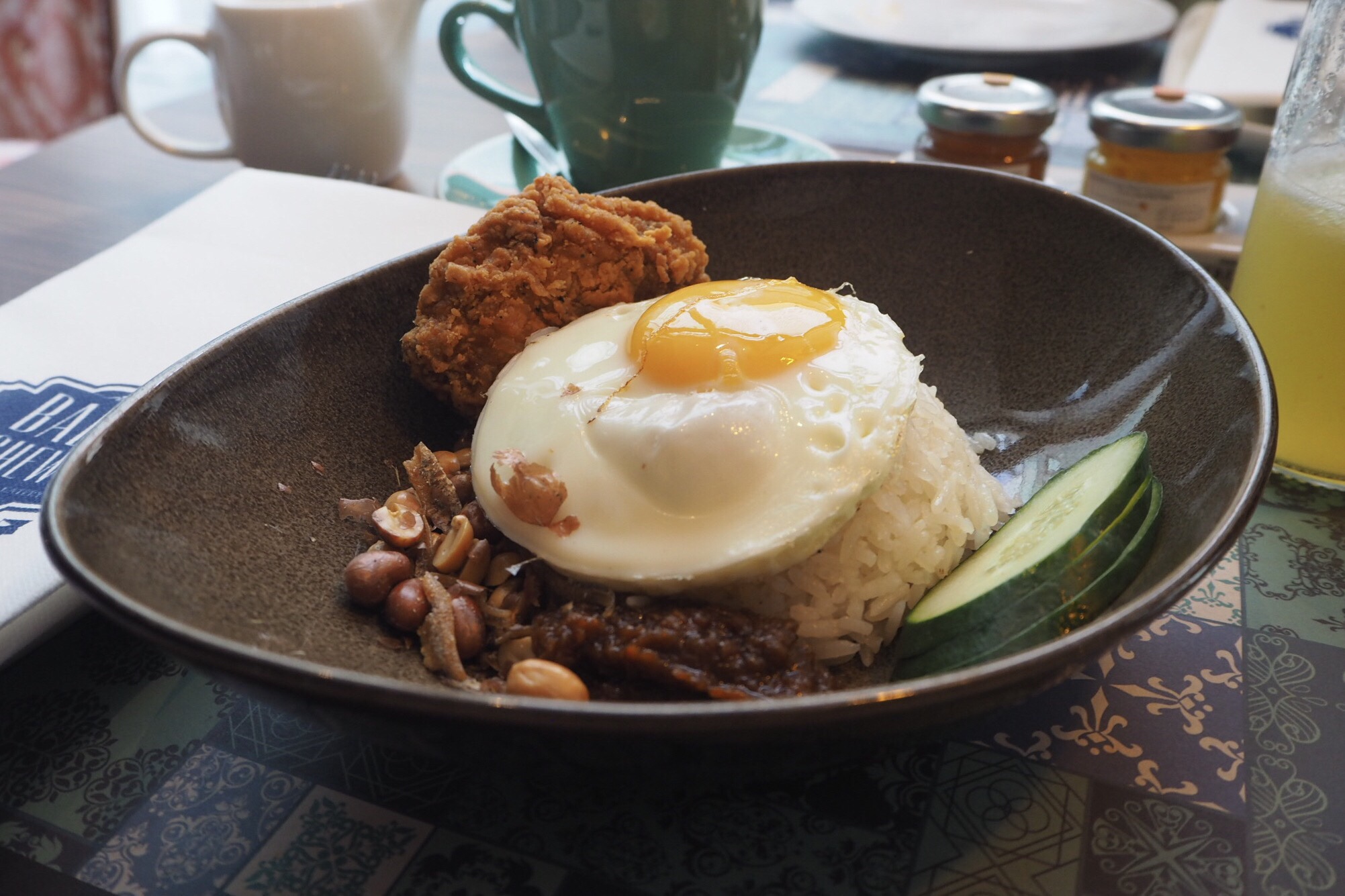
I was pretty happy that one of the special dish of the day was masi lemak, so I happily ordered a portion of that. Apart from nasi lemak, there was also Nissin noodles (instant noodles), as well as boiled dumplings on the menu for the day.

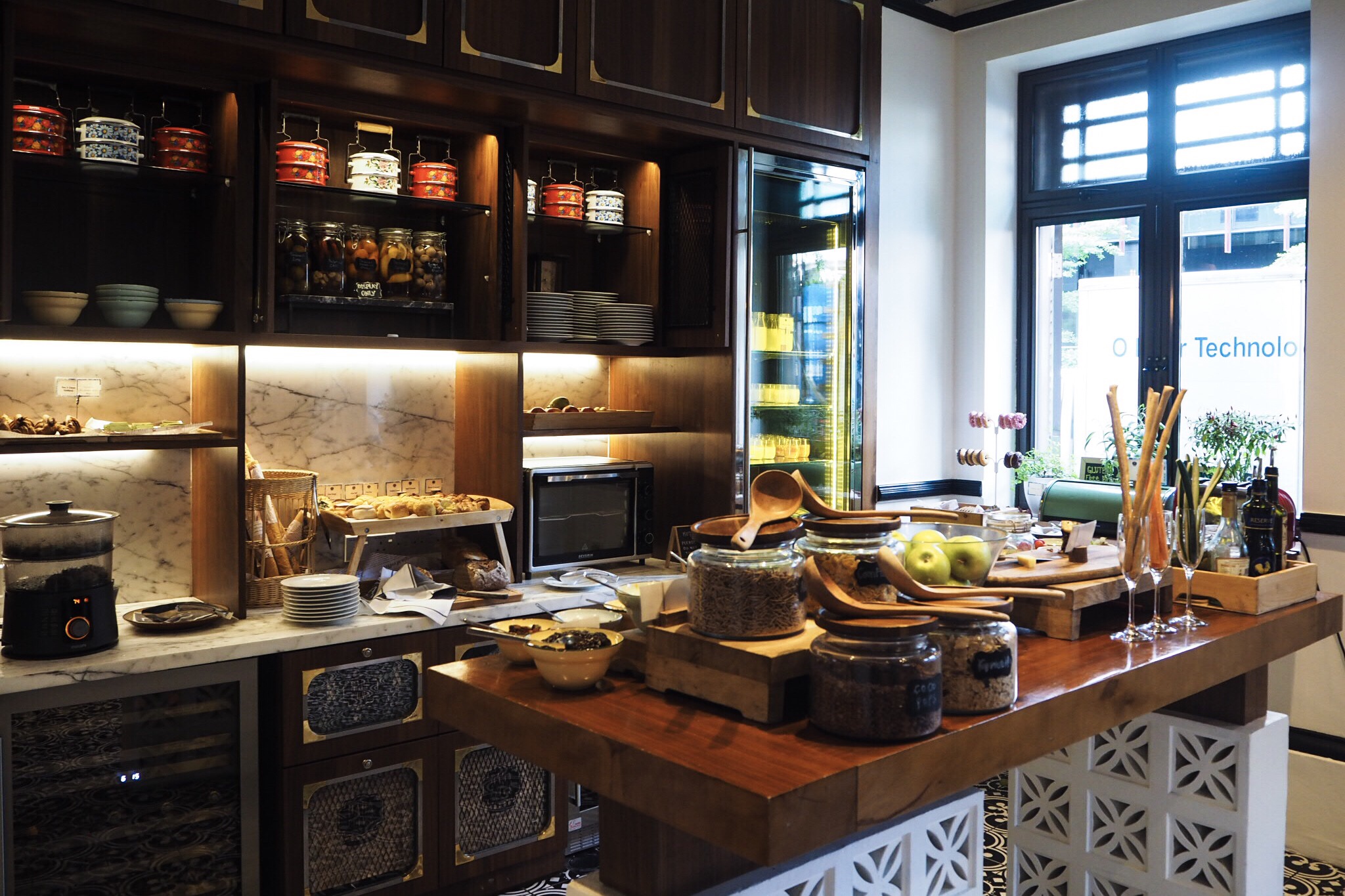
Beyond the menu, there was also a small continental buffet section, where you could grab pastries, fruits, cold cuts, cereals and yoghurts. The quality of the pastries is worth a mention, I found myself going back for seconds.

Final thoughts

Hotel Indigo Katong was a pleasant surprise. The rooms are thoughtfully designed, and I never felt claustrophobic in the room. While the hotel offers few amenities, I found it sufficient. For instance, while I usually prefer a hotel with a club lounge whenever I do a staycation in Singapore, I was perfectly okay that the hotel didn’t have one as there was plenty of bars nearby (you could get a S$40 bottle of wine and tapas at Wine Connection Bistro in the adjacent i12 mall) and even more dinner options.

Overall, Hotel Indigo Katong offers very good value for money: for most parts of 2018, entry level rates go for less than S$200 per night. Even without breakfast, Singapore is a place you won’t go hungry in: there’s plenty of food around you any time of the day and night.

While not in the heart of the city, the location was a good balance, with direct bus connection to both the city and the airport. I personally prefer this so that I can be away from the craziness of the city centre while being able to zip in and out of town quickly.

SilkAir to operate daily services to Cairns from 2 June 2019

After announcing a massive scrapping rationalisation of services which saw many of its destinations transferred to Scoot, SilkAir is certainly springing a surprise here: daily services to Cairns from June to October 2019, the better half of the Northern Summer season.

Currently, SilkAir is operating five weekly services to Cairns. The additional services will be on Tuesdays and Sundays, operated with SilkAir’s latest Boeing 737 MAX 8.

The full schedule is as below:

RouteFlightDepartureArrivalFlight TimeDaysAircraft type
SIN-CNSMI811011009556h 45mMon, Thu, SatBoeing 737 MAX 8
SIN-CNSMI813084517156h 30mTue, Wed, Fri, SunBoeing 737 MAX 8
CNS-SINMI812104515256h 40mMon, Thu, SatBoeing 737 MAX 8
CNS-SINMI814181523056h 20mTue, Wed, Fri, SunBoeing 737 MAX 8

SilkAir’s furthest destination

At over 6 hours, Cairns is probably the furthest destinations on SilkAir’s network, even longer than the newly launched Hiroshima in Japan (that sits at 6 hours 15 minutes).

That makes the flight an incredibly unattractive one, given that 6 hours is an awfully long time to be sitting in a narrowbody aircraft, and if you are up in the pointy end, an awful load of money to spend sitting on a recliner seat especially on the overnight services that departs on some days.

SilkAir Boeing 737 MAX 8 Business Class

You are probably better off flying to Brisbane and transferring onto a domestic service operated by Virgin Australia, whom Singapore Airlines owns partly.

Apart from the northern city of Queensland, SilkAir also operate six weekly services to Darwin, also known as the Top End of Australia’s Northern Territory.

FLIGHT REVIEW: Japan Airlines Business Class Sky Suites III, Singapore – Tokyo (Haneda)

Japan Airlines / 4 Nov 18 / B777-200 / JL38 SIN-HND / Business Class / 11K

I had to go to Shanghai for business at short notice, so routing was pretty difficult. Given flights into Shanghai was pretty full, I ended up booking myself on JAL on a slightly circuitous route, via Tokyo Haneda.

I have travelled on JAL several years ago on a holiday, albeit in Economy, but was incredibly impressed with the comfort and space of the seat, and more remarkably the in-flight catering too.

So this time round, I was equally excited to have a chance to try their business class product, in particular, the latest Sky Suites III.

Japanese airlines have always been known to offer a great quality of service, synonymous with their culture of hospitality. However, despite that, they have never been as popular as some of the other Asian carriers such as Cathay Pacific and Singapore Airlines, which I can only imagine is due to its relatively uncompetitive pricing and less aggressive marketing activities outside of Japan.
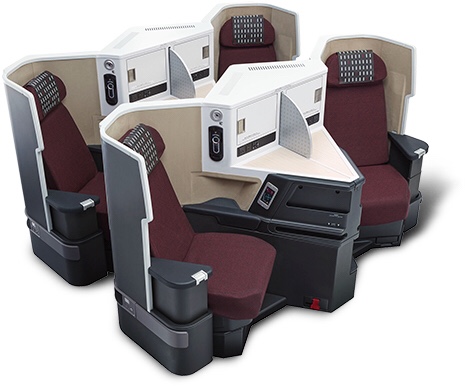
On the Boeing 777-300ER that I travelled on today, the business class section features a reverse herringbone layout of 1-2-1, all fitted with the Sky Suites III.

Japan Airlines have got two key layouts to its business class cabins: the Sky Suite and the Sky Suite III. The Sky Suite is either a 2-3-2 configuration on the Boeing 777s or a 2-2-2 layout on the 787s. While all the seats boasts of unimpeded aisle access, this is achieved through the partitioning of the seats in a creative manner so that one does not have to jump over your seat neighbour, but instead walk out in a respectable manner.

The Sky Suite III appears on most of the intra-Asia flights (and some Honolulu services), but the older Sky Suite features on most American services.

You might be curious to know what happened to the Sky Suites II – they are exclusively on the Boeing 767s that Japan Airlines still operate to select destinations, but for the purpose of today’s review let’s forget about them.
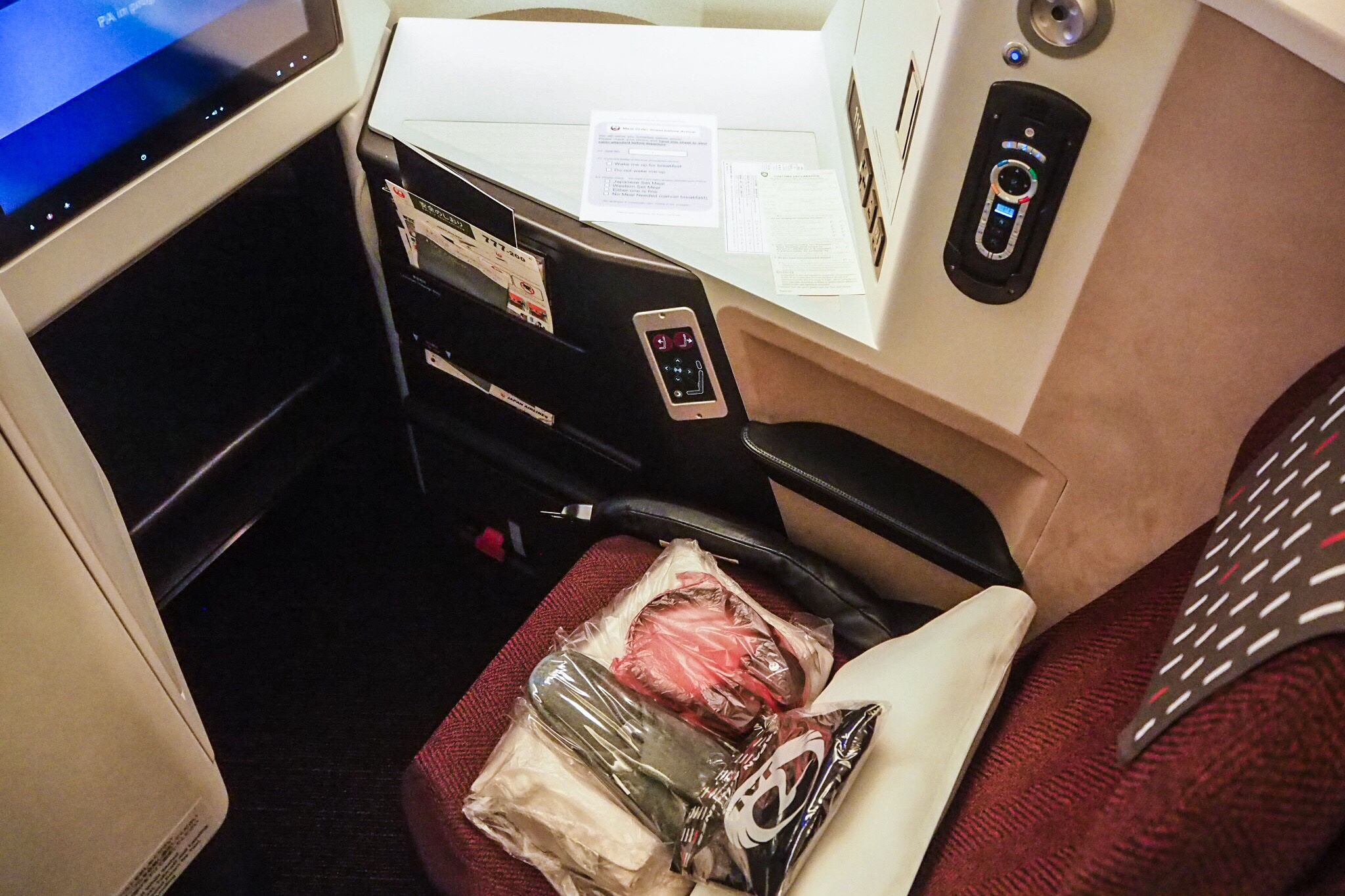
Japan Airlines business class – seat 11K

Back to the Sky Suites III. At first glance, the seat is incredibly claustrophobic. There was hardly room for me to walk into my seat due to the way the seat was angled, and the way the pull-down table was fitted.

The pull-down table was in a compartment in front of the seat, to the side of the in-flight entertainment screen. This creates a little bulk that juts out, restricted the passage in and out of the seat.

What that means is that, whenever I want to get in or out of my seat, I’ll have to squeeze out of my seat sideways, which was certainly not without bumps in the middle of the night if I needed the bathroom.

Once seated, the good news is that there’s plenty of legroom. Under the entertainment screen was a cubbyhole that forms part of your bed, and that hole extends quite deep in, I think I could let my six-month old baby sleep inside there, no problem.

The seat itself isn’t very wide, but as most Japanese are pretty small in size, this is not exactly a problem.
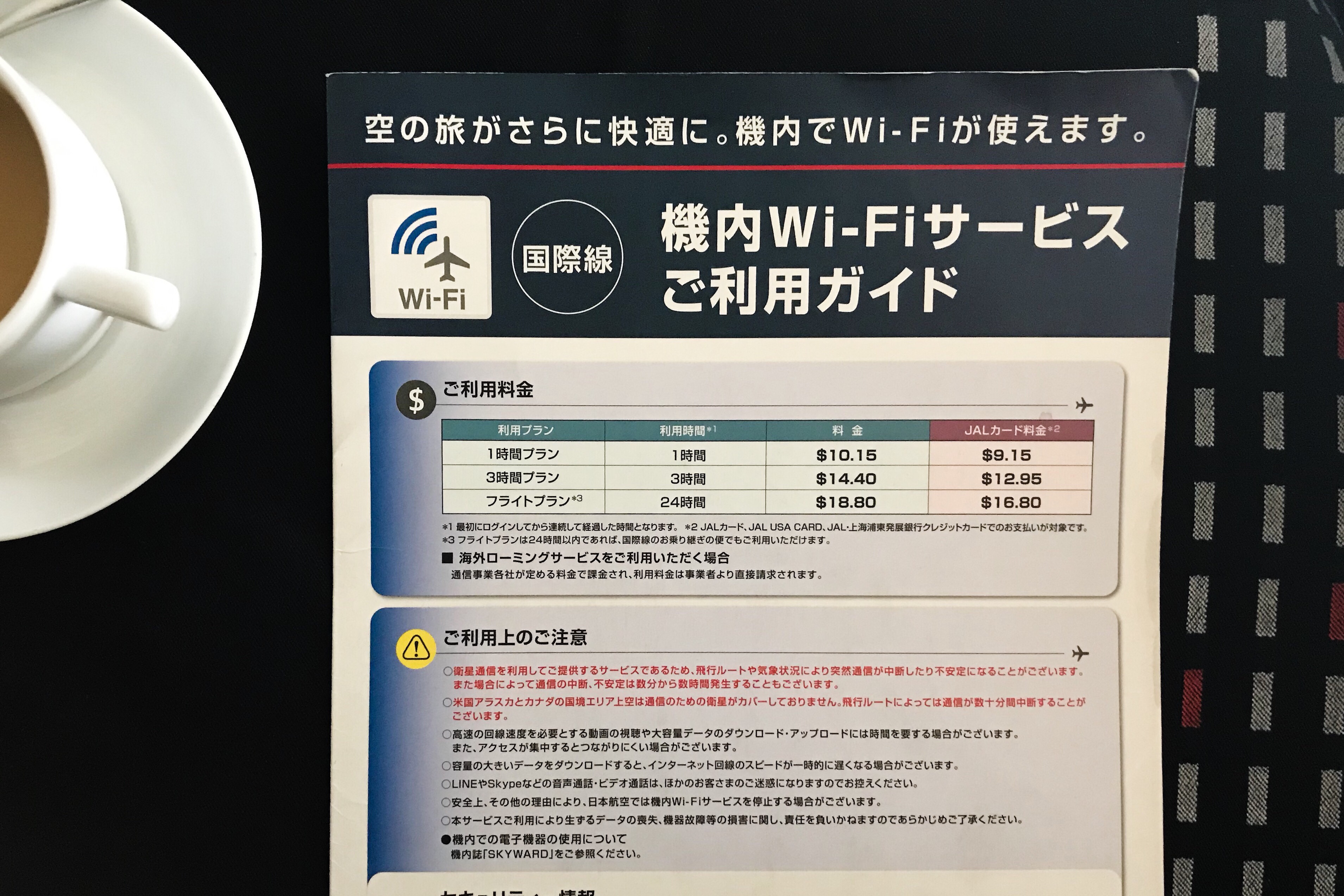
In-flight wifi instructions and rates

It’s worthy to note that the flight offers in-flight wifi at a nominal fee starting at USD10.15 for an hour to USD18.80 for the entire flight, which was pretty standard for in-flight wifi services. I don’t usually log on to wifi in-flight (I like the feeling of being uncontactable, even if it’s for a few hours), but having this option is always good especially if you are supposed to stay contactable.

If you are like me who prefers to read, there are also an array of reading materials from newspapers to magazines available at the galley for passengers to pick up. Unfortunately for me, most of them are in Japanese.
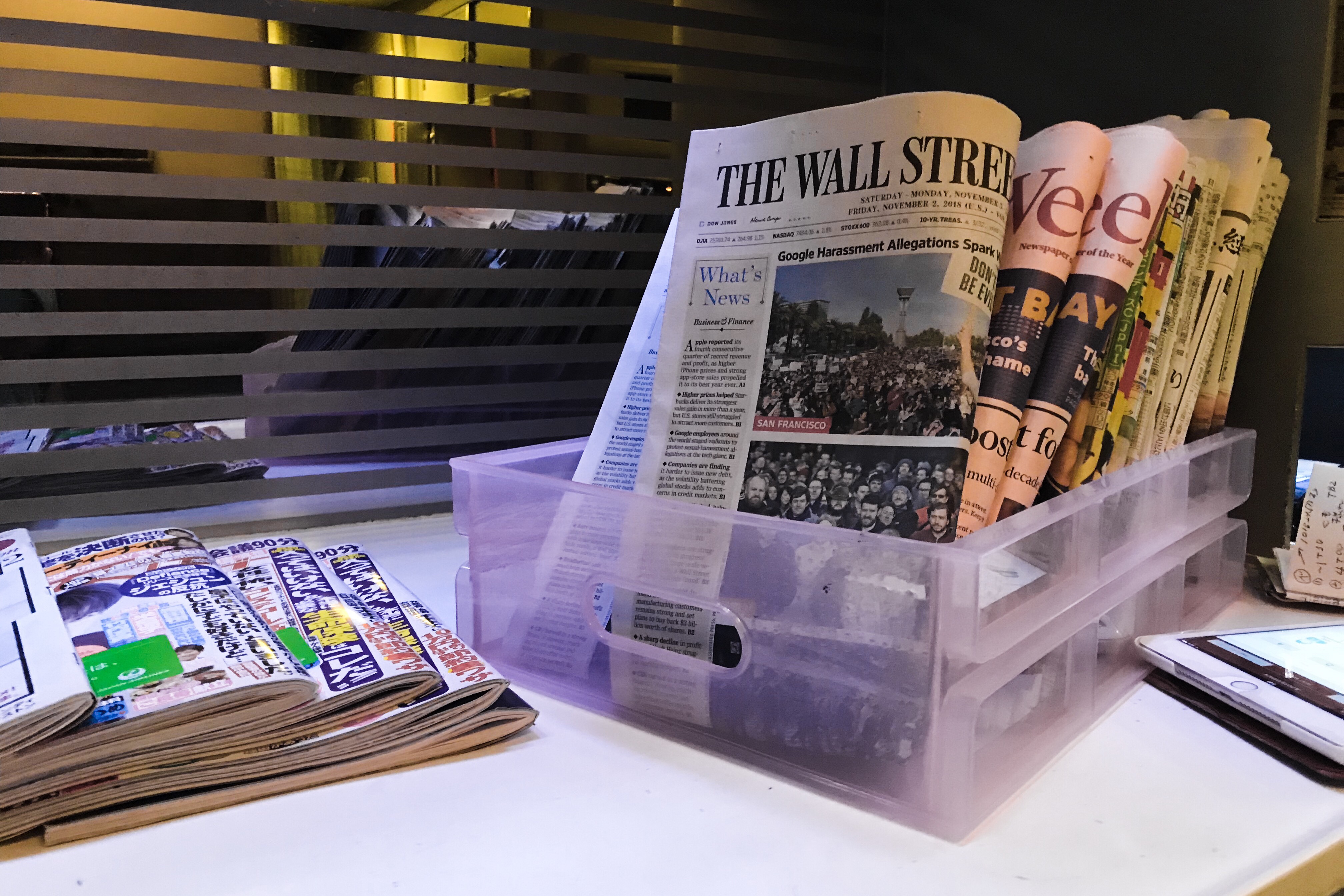
Newspapers and magazines

The service

Despite the very late scheduled departure time out of Singapore, there is still a snack option for those who may be hungry.

JAL’s in-flight dining is styled as BEDD Sky Auberge. I did some googling after getting off the flight but didn’t get any satisfactory answer as to what BEDD stands for. The only thing the marketing spiel mentioned was that the last D of BEDD stands for Dine, Delicious and Dream. Okay…
Nonetheless, it’s heartening to know that Japan Airlines still offer two meal services (albeit one is a snack or refreshment), as Singapore Airlines have moved towards simply offering a single meal for the almost seven-hour flight.

On menu for the late night snack today was a grilled chicken, as well as a chawanmushi, or steamed egg custard.

I didn’t try any of those, and decided to head straight to bed.
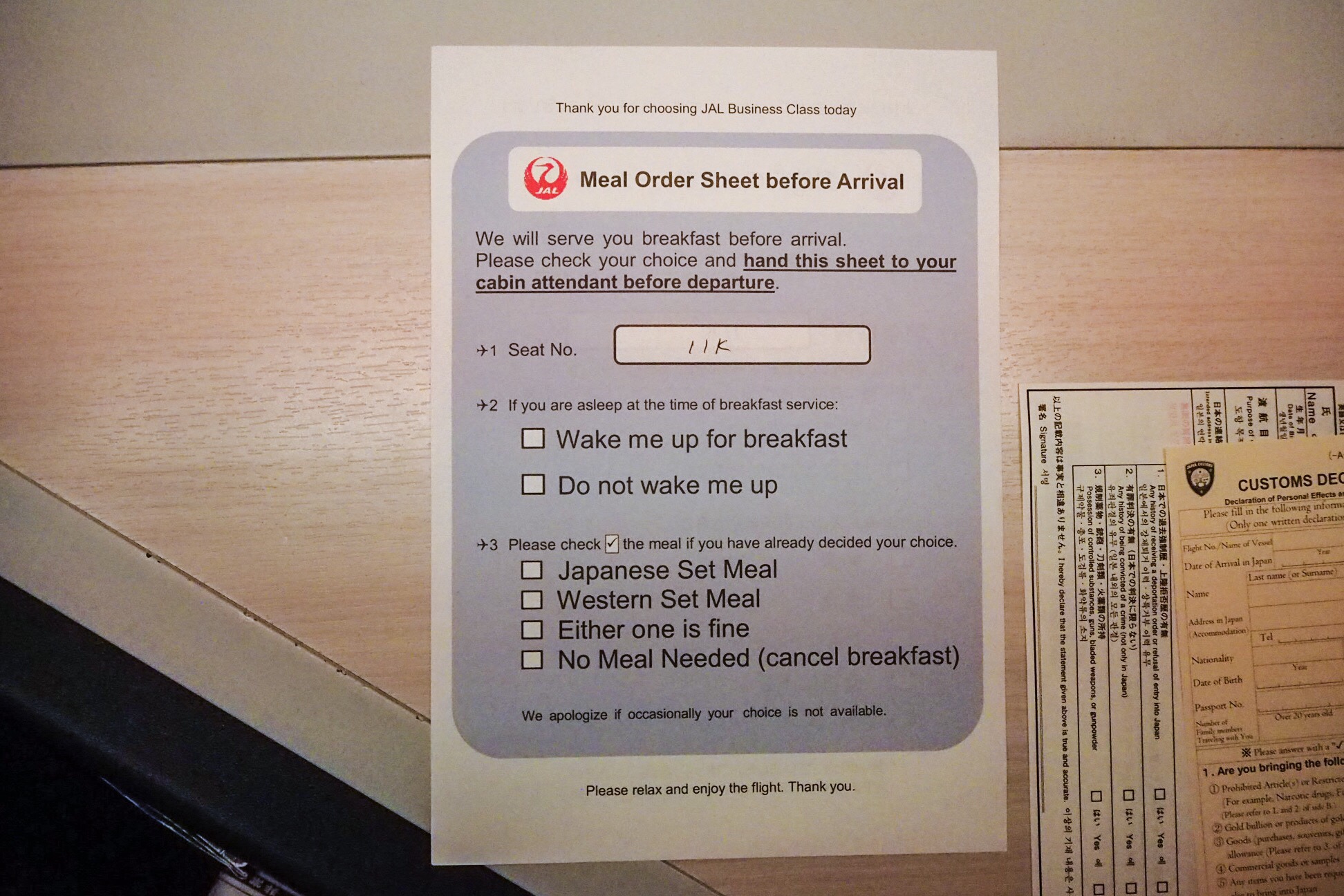
For breakfast, there was a breakfast order chit that was placed on my seat before I got there, asking if I wanted breakfast and my preferred choice of breakfast. While we were still on the ground, the cabin crew came around to collect those forms. I opted for a Japanese breakfast.

About 90 minutes before landing, the cabin crew came around to wake passengers up for breakfast. My table was promptly set, before the crew came by with some water and juice.

Shortly after, a very beautiful Japanese breakfast set was placed in front of me. It was probably the best breakfast I had in the air. Ever.

Right in front of me was an assortment of fruits, chicken roll with burdock, tamago (egg), and grilled fish cake, Japanese pickles, and some simmered eggplant.
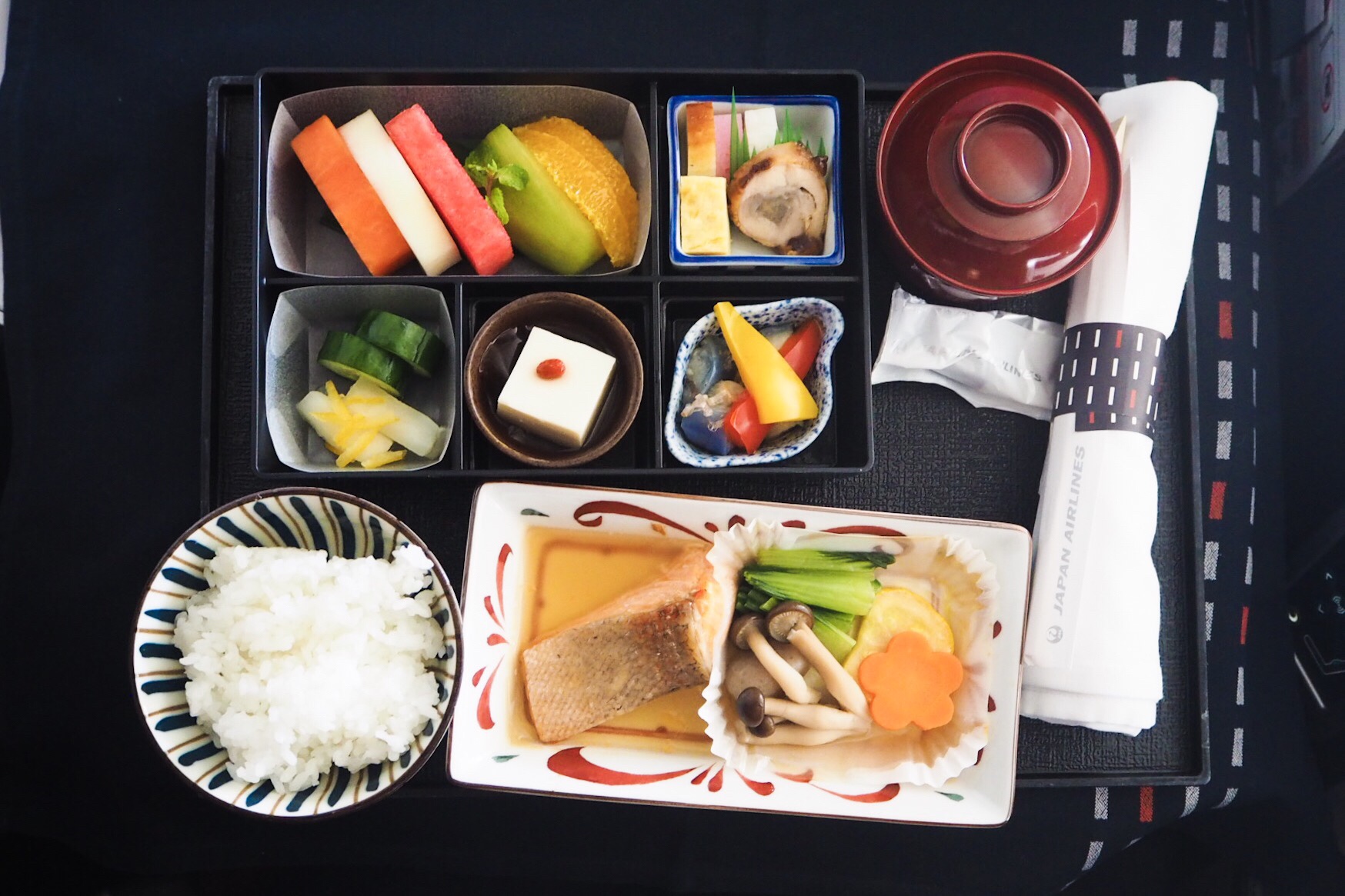
The main grilled dish was a grilled salmon, accompanied with steamed koshihikari rice and miso soup. I couldn’t ask for more.

I slowly savoured every single item, which was so delicately and immaculately presented, a total joy to see and to eat. The taste was on point, the rice was warm and fluffy, and the salmon tasted as though it was freshly prepared. It was indeed one of the finest meals I had on a plane.

To wash off the meal, I had two coffees. For those who don’t know, JAL curate their own coffee collection, called the JAL Cafe Lines, where they work with a Japanese coffee master who recommends the coffee used in-flight.

And with the end of the meal service, the cabin crew was very prompt to come around to keep everything in preparation for landing.

Final thoughts

All in all, my flight was probably close to my dream business class flight: excellent food, polite service, and a seat where most of the things worked. Japan Airlines is one of the airlines where the moment I got on, I have a strong sense that I was already there in Japan – the cuisine, the service, the environment was just so Japanese, and this worked for me.

I like how the service was polite, seemingly genuine, and more importantly, perceptive. They know when to come around, and when to give you space.
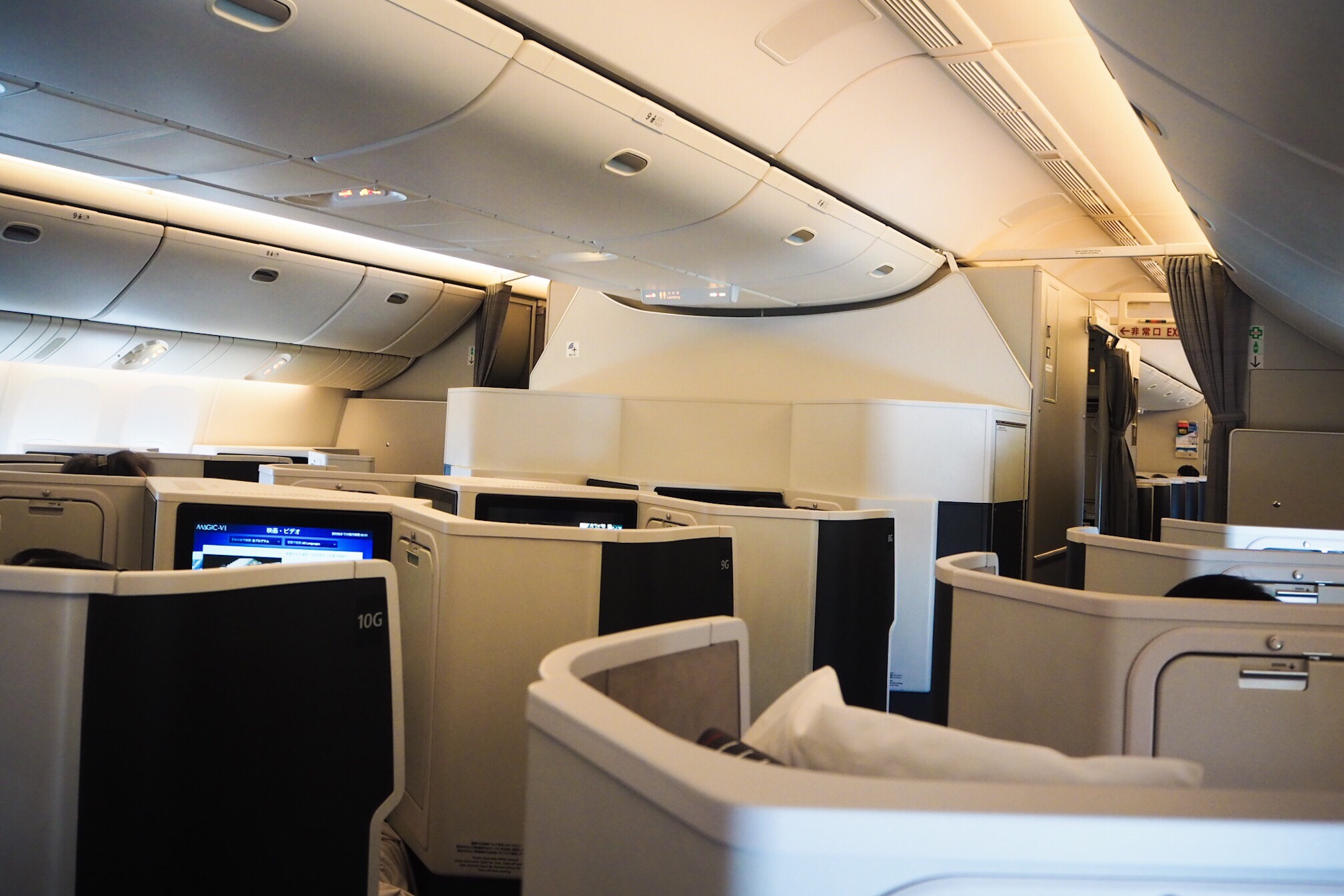
The seat may not be great, but it was good enough to sleep in. The cubby hole is actually incredibly important. With a lot of airlines now compacting business class seats in a similar fashion where the foot well extends into the seat in front of you, what is usually the case is that the holes are too narrow to fit different sleeping styles. In this case, the JAL seats work for me.

The only shortcoming of the seat was probably the table. I’m thinking there must be a better place to store the fold-down table from, as it is a rather big bulge that eats into the seat space at the moment.
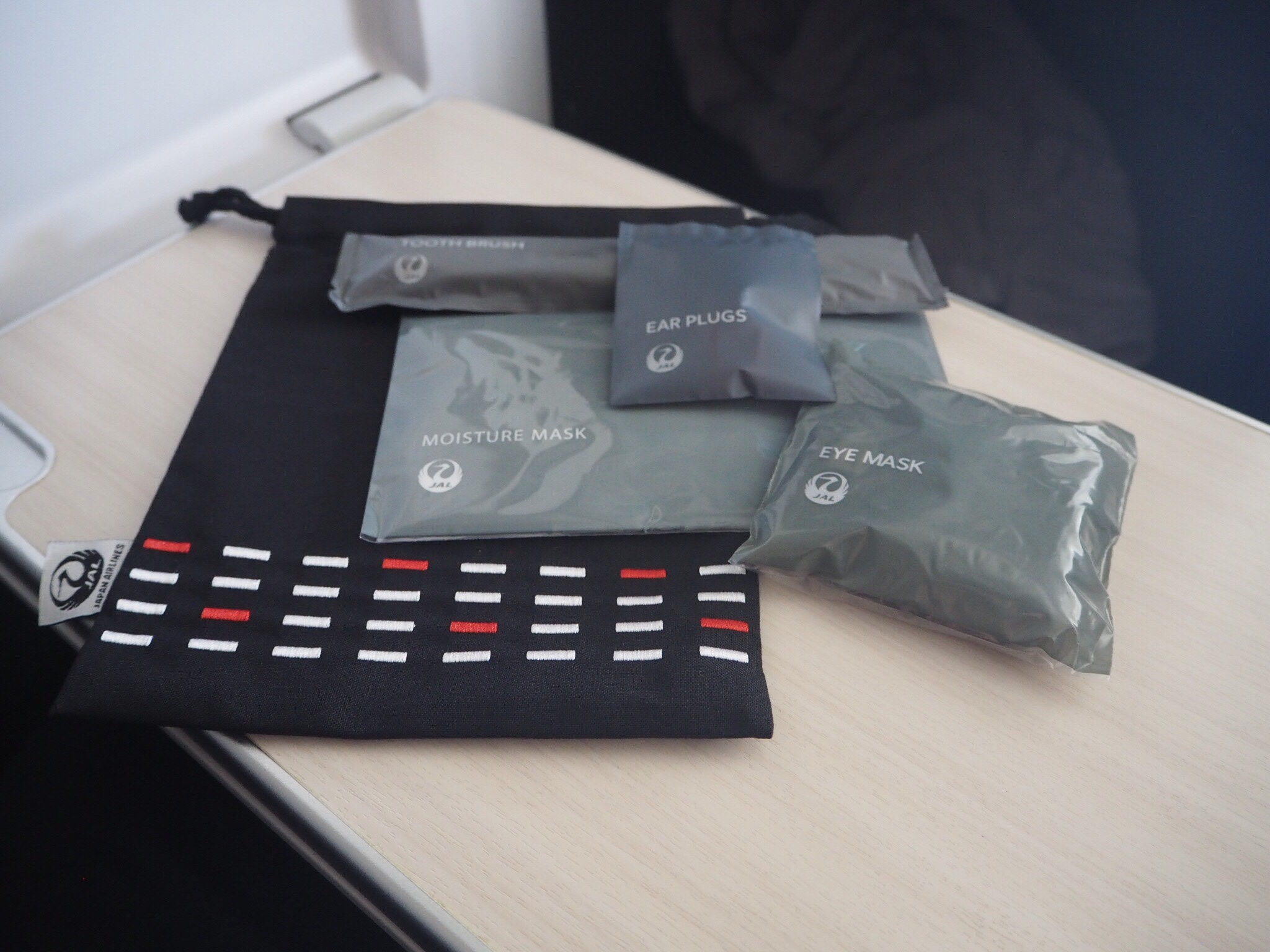
While they do not offer perks such as pyjamas and offer only a small basic amenity kit, most times, these things can be mitigated by bringing along your own supplies.

Having said that, I didn’t have a chance to check out the in-flight entertainment this time round, so that will remain a missing part of the puzzle as to whether this is the best business class I’ve ever taken.