Tag: Cathay Pacific

  • Singapore-Hong Kong leisure travel bubble to commence ‘soon’

    Singapore-Hong Kong leisure travel bubble to commence ‘soon’

    No quarantine required, but pre-trip Covid-19 tests and booking of ‘dedicated flights’ required if you want to go

    In a surprise move, Singapore newly-minted Transport Minister Ong Ye Kung announced on Thursday (15 Oct) that it has confirmed a travel arrangement with Hong Kong to allow ‘general travel’ for residents between both countries.

    The most salient point of this agreement is that there will be “no restrictions on travel purpose”, effectively making this the first leisure ‘green lane’ for Singapore and Hong Kong residents, since the COVID-19 closed most borders this year.

    Travellers will be subject to Covid-19 PCR testings that are recognised by both governments, but will not need to serve any isolation requirements nor be subjected to movement restrictions under ‘controlled itineraries’. Travellers can also only travel on dedicated flights that only serve travellers under this Air Travel Bubble (ATB) arrangement.

    No firm timeframe yet

    Both governments have not confirmed nor indicated any firm date to start the ATB flights. However reports have suggested that the bubble could comments in ‘weeks’, even though Hong Kong needs to go through a legislative process first.

    Airlines are gearing up, but not sure which will be ‘dedicated flights’

    Given the ‘dedicated flight’ requirement under the ATB agreement, you definitely shouldn’t be rushing to book any flight given that airlines will almost certainly need to no firm details of those services or the airlines involved at this stage.

    At present, there are about two flights a day between Singapore and Hong Kong:

    • Singapore Airlines is currently operating a daily service,
    • Cathay Pacific operates three services a week, while they are projecting to increase this to twice daily towards the end of year, and,
    • Scoot is operating three services a week at the moment.

    Since the announcement of the ATB yesterday, economy class fares on SIA has already gone up to about S$530-S$588, depending on when you want to fly.

    Our sense is that all three airlines will certainly offer these ATB dedicated flights, although it remains to be seen whether that means mounting additional services on top of those already published, or converting these existing frequencies to ATB-only passengers.

    In addition, it may be possible that Jetstar Asia may throw their name in the hat as well to offer ATB flights, given that low-cost carriers are already point-to-point carriers, so meeting the ‘dedicated flight’ requirement will be an easy feat by Jetstar Asia.

    It’s far too early to say whether these flights will be sold at a different fare level, or whether miles redemptions will be available for these flights. After all, Transport Minister Ong Ye Kung did mention that these fares will be a ‘commercial decision’, and that there will be a quota for the number of travellers allowed on these flights per day.

    Final thoughts

    This might just be the first sign of light in a very long tunnel of 2020.

    More importantly, the ATB, once began, will help to pave the way for similar arrangements with hopefully more countries, and giving a much needed reboot to tourism sector.

    According to analysts, the reopening of this very popular air sector between the two giant Asian financial hubs will provide a financial lift to both Cathay Pacific and Singapore Airlines, in a new silver lining for the aviation sector.

    In the meantime, if you really need to get some booking done to make yourself excited, why not check out the hotels in Hong Kong first?
  • Hong Kong airport to accept transit passengers from 1 Jun

    Hong Kong airport to accept transit passengers from 1 Jun

    The airport joins Singapore in opening up air passenger transit traffic once again

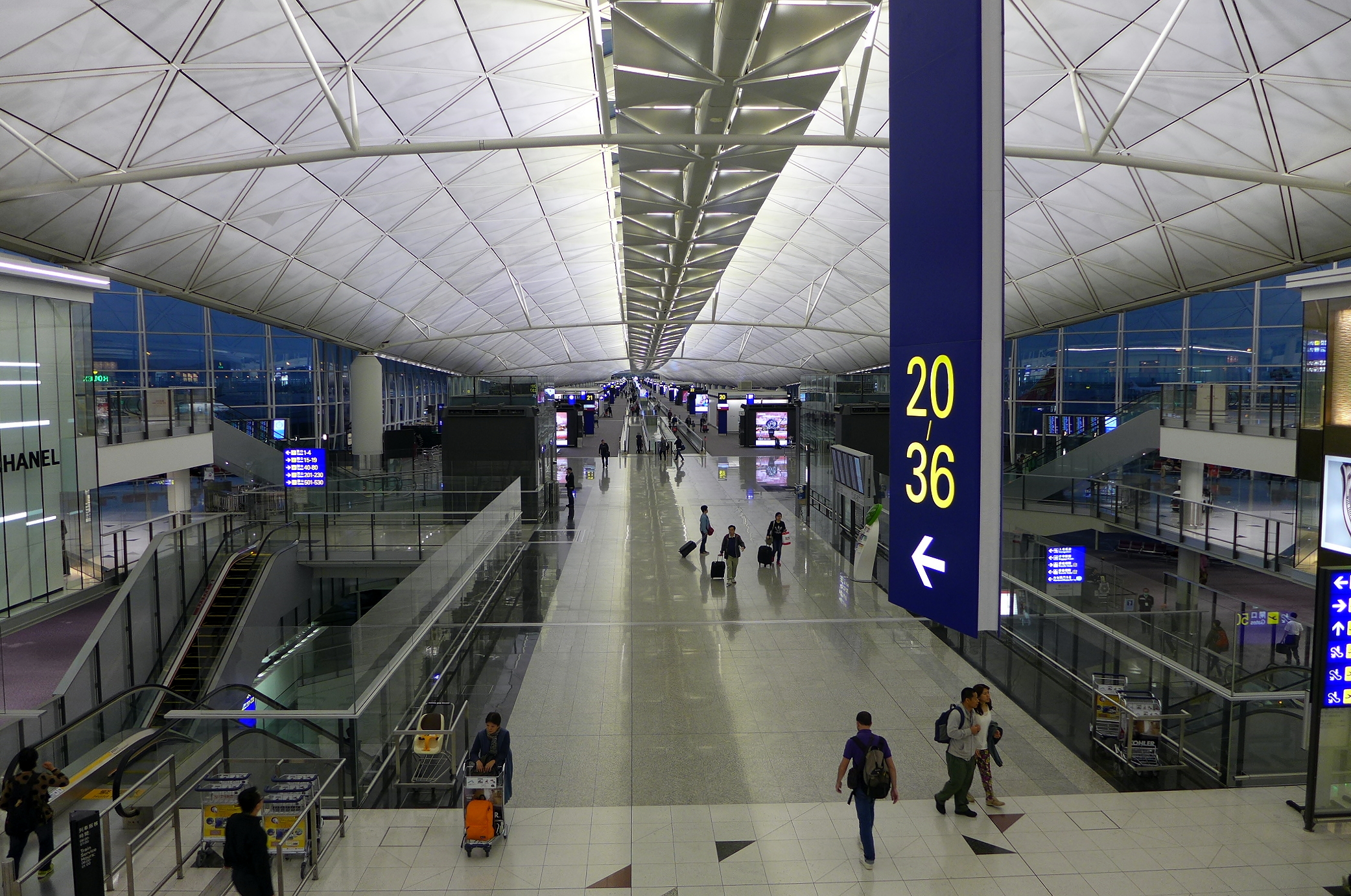
    Hong Kong’s chief executive Carrie Lam announced on 26 May that transit services at Hong Kong International Airport (HKIA) will “partly resume” from 1 Jun.

    This announcement came weeks after Singapore announced a similar move to allow transit traffic from 2 Jun.

    Hong Kong implemented a ban on all non-resident visitors into Hong Kong, as well as transit passengers through HKIA since 25 Mar. All returning residents were also required to go to AsiaWorld Expo site for a compulsory Covid-19 test, before they were dispatched home to serve a 14-day self-quarantine.

    Cathay Pacific group to benefit

    Since the ban on transit passengers kicked in from 25 Mar, Cathay Pacific and Cathay Dragon collectively saw a drastic drop in passenger numbers, well over 99% compared to same period last year.

    Cathay Pacific, which has been hard-hit by the coronavirus pandemic, has since April operated to “a skeleton schedule” of barely a dozen destinations served by just a handful of flights per week.

    The reopening of transit lanes will allow Cathay Pacific and Cathay Dragon to purposefully open up routes via Hong Kong once again, especially as China is poised to be one of the first few countries to reopen its borders to a limited selection of countries.

    How will the transit experience be like?

    At the time of writing, there has been no details as to how the transit arrangements will be like, either from Hong Kong’s civil aviation authorities nor the airport.

    Neither is it announced if transit passengers will be required to take a Covid-19 swab as well. This in itself may not be practical if the transit time is only a few hours, given that it takes a while before the swab test results may be available.

    Don’t expect to be able to spend time in Cathay Pacific’s lounges in HKIA if you are passing through

    HKIA will have a slightly easier way of handling transit traffic, given that the airport’s layout has already segregated arriving and departing passengers.

    Some speculation online says that it is likely that transit passengers will not be able to enjoy transit facilities such as lounges or duty free shopping, and may be escorted to their next flights.

    Final thoughts

    Hong Kong has been cited internationally as one of the stellar examples of managing its Covid-19 situation, given that it has gotten its infection numbers under control, with the city recording a total of just over 1,000 cases with four deaths. Hong Kong is also reopening businesses cautiously, with crowd-pulling venues such as bars and clubs set to open this Friday (29 May).

    The reopening of the airport for transit traffic is a step in the right direction, as the sector prepares itself to reopen international air travel. While travelling in June may not be possible given many countries still have border control restrictions in place, this definitely paves the way for a new normal in air travel in the months to come.

  • Covid-19: Cathay Pacific moves to Changi Airport Terminal 1 for now

    Covid-19: Cathay Pacific moves to Changi Airport Terminal 1 for now

    Terminal 4 should be shut by this week

    We wrote last week that Changi Airport will be temporarily closing Changi Airport Terminal 2 from May 2020 to October 2021 in view of the on-going Covid-19 situation.

    In the same announcement, Singapore Transport Minister Khaw Boon Wan did hint at closing Terminal 4 if all airlines adjusted or suspended operations.

    The time should be now.

    Cathay Pacific announced last week that it will be temporarily relocating to Terminal 1 since last Friday (10 Apr).

    Announcement on Cathay Pacific’s website

    With its lounge at Terminal 4 temporarily shut, this move does make sense.

    Cathay Pacific still operating flights to Singapore

    At the time of writing, Cathay Pacific did say that it will be operating three flights a week to Singapore. However, a quick look on its website showed that it was operating on average about two flights a week, with five more flights scheduled for the remainder of April.

    From 10 Apr, Cathay Pacific will be using rows 12 & 13 of Terminal 1 for the few flights that it will be operating, until further notice. Eligible customers will be directed to the dnata lounge.

    Terminal 4 likely to shut

    With Cathay Pacific moving to Terminal 1, Terminal 4 is looking to be certainly shut, at least for a short while.

    This makes perfect sense, given that Changi is looking at an all-time low passenger traffic and aircraft movements. The shuttering will allow Changi to consolidate operations to terminals 1 & 3, and save on operating the other terminals which are only seeing sometimes a single flight on any given day.

    There are some other moving parts to consider though. With Terminal 2’s closing, some airlines will definitely be asked to move to Terminal 4, including Air India, Air India Express and Indigo, from 1 May. Of which, only Air India is still operating flights, so it remains to be seen whether they will be moving as originally planned, or moving to Terminals 1 or 3.

    Final thoughts

    We are definitely living in interesting times. While recent history has seen epidemics popping up every couple of years, Covid-19 has practically halted the world’s economy, with some analysts calling this the equivalent of the 1930s Great Depression.

    The standstill of international air travel has resulted in the once-glamorous industry to fall off the cliff, with many jobs being put on hold, or even at risk of being lost as countries around the world continue to restrict travel for the sake of public health.

    As recent as last year, I could never have imagined that a shining star like Changi Airport – the envy of many other airports in the world – will also see a day where not one, but two terminals suspending operations. This follows almost a decade of record-breaking passenger numbers every year.

    Some analysts expect that air travel will remain low for as long as the next two years, and if the Covid-19 situation reports in every country is anything to go by, my bet is that most people are going to stay in their country for a long while.

    Who knows what’s going to happen over the next couple of months, or even years?

  • Cathay Pacific axes almost all fuel surcharges

    Cathay Pacific axes almost all fuel surcharges

    Fuel surcharge on most sectors to be removed for tickets issued from 1 May

    Cathay Pacific updated yesterday (14 Apr) that it will axe fuel surcharge on most tickets, with few exceptions.

    From 1 May, Cathay Pacific will remove fuel surcharges, better known as YQ within the industry, for all flights, except for select journeys from Japan and the Philippines. Note that this date applies for tickets issued from 1 May onwards, and not for tickets issued now for travel from 1 May.

    The details

    Cathay Pacific long had a fuel surcharge component that ranges around USD48.7 (~S$70) at present, with some exceptions.

    From 1 May, all fuel surcharges will be removed, except the following:

    For example, if you bought a ticket that starts from Tokyo to Sydney via Hong Kong, you will pay JPY2,000 (Tokyo to Hong Kong) + JPY7,300 (Hong Kong to Sydney) each way in fuel surcharge – and this will continue after 1 May.

    Wait, what is fuel surcharge?

    Fuel surcharge was a concept introduced back more than a decade ago when oil prices skyrocketed, so this gives airlines a bit of a cost relief by passing on these surcharges to the customers.

    Over the years, oil prices have moderated itself. In many countries, airlines are also required by law to advertise all-in fares, and pricing strategies have also gotten more complex and so many airlines such as Singapore Airlines and Qantas have simply removed the YQ component of the fare and folded them into the base fare instead.

    One Mile at a Time has a pretty long essay on fuel surcharge, which you can read more about here if you are interested.

    What does this mean for customers?

    In theory, this should mean you would be able to shave about USD48 (SGD70) off your fares per sector, but in reality you probably won’t feel a difference given that airlines have long been displaying ‘all-in’ fares, which will have these fuel surcharge included anyway.

    The key target group who will feel the impact of this will be those using their miles for award tickets, they will typically have to fork out in cash any additional charges, including airport fees and fuel surcharges. With the removal of this charge, they will simply be paying just the airport charges in most cases.

    Having said that, if you are using Asia Miles to redeem for other oneworld partner airlines such as British Airways who still has the fuel surcharges, these charges will still be passed on to you.

  • Cathay Pacific slashes 96% of capacity in April & May

    Cathay Pacific slashes 96% of capacity in April & May

    The Hong Kong based airline will only operate three weekly flights each to 12 cities worldwide.

    Following a major reduction of capacity since earlier this year, Cathay Pacific and Cathay Dragon has announced a further reduction of capacity.

    All Cathay Pacific and Cathay Dragon flights are essentially cancelled, except for three flights a week to 15 cities around the world.

    The cities are:

    • Singapore
    • Kuala Lumpur*
    • Bangkok
    • Jakarta
    • Manila
    • Ho Chi Minh City
    • Beijing*
    • Shanghai Pudong*
    • Tokyo
    • Taipei
    • New Delhi
    • Sydney
    • Los Angeles
    • Vancouver
    • London Heathrow

    *operated by Cathay Dragon

    The skeletal operations will last through May, after which Cathay Pacific will review the situation and make further announcements.

    The reduction means a 96% reduction in capacity by the carrier.

    As again, affected travellers (who is actually still travelling?!) will be reaccommodated on appropriate services, although I would reckon that may mean up to 2 days’ wait at the airport for your connecting flight!

    The full schedule of this skeletal service is not out yet, but I will imagine they will not be regular (i.e. fixed days of ops each week).

    Final thoughts

    Cathay Pacific is definitely approaching rather differently from other airlines. While many others are amending their schedules day by day, Cathay’s decision to simplify their ops is commending, given that it provides for some certainty during this time of uncertainty.

    Having said that, this is definitely still subject to change, although there really isn’t much room left to move. We can only hope that this is the rock bottom, and the only way to go is up.