This brings the number of cities approved for transit flights through Singapore to 19
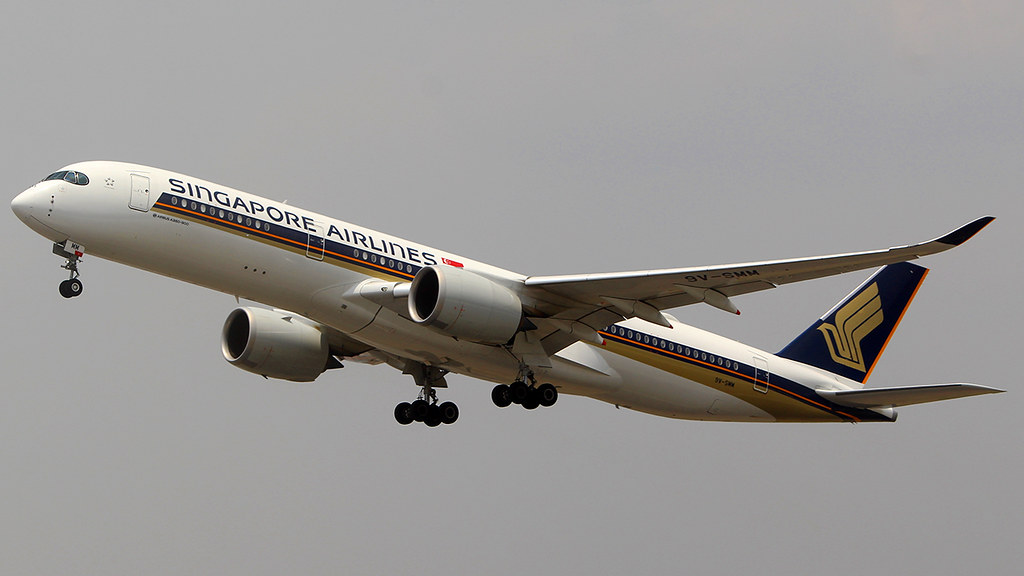
Singapore Airlines has begun allowing transit passengers originating from select European cities since Monday (29 Jun).
The approved cities are: London, Frankfurt, Amsterdam and Copenhagen. The airline group has also approved Taipei earlier this month, for passengers travelling on Scoot to and from the Chinese city.
Singapore Airlines and Silkair customers travelling from these cities will now be able to connect through Singapore onwards to other destinations within the SIA, Silkair or Scoot network, if the tickets are booked on a single ticket.
In line with the existing policies, customers will only be able to book return tickets provided both the origin and destination cities are on the approved list of cities for transit flights.
For instance, if you are travelling between Sydney and Frankfurt, you can now book return tickets from either cities. However, if you are travelling from Frankfurt to Bangkok, you can only book a one-way ticket.
Latest list of approved cities for transit flights
As of 29 Jun, the following cities are approved for transit flights via Singapore:
As of 23 Jun, these are the approved cities of origin where passengers are allowed to transit via Changi:
Scoot has also commenced services to Taipei and Surabaya, adding on to the list of cities that the airline group is now serving.
Final thoughts
The expansion of approved list of countries for transit flights via Singapore is definitely an encouraging view, even as the world still approaches international travel cautiously given the coronavirus situation.
This will held to bring back some of the traffic through Singapore, as airlines wait this pandemic out and start positioning themselves for mass market travel down the road.
Passengers from China, Japan, and South Korea can now transit via Changi
In another good turn of events, Singapore Airlines announced on 22 Jun that customers from China, Japan and South Korea can now travel via Singapore to any points on the SIA network, including destinations served by Silkair or Scoot.
Singapore Airlines has earlier commenced transit facilities for passengers travelling from Australia and New Zealand since 11 Jun.
Tickets for these new transit flights have been made on sale since 23 Jun (Tue) on the Singapore Airlines website.
Approved points of departure
As of 23 Jun, these are the approved cities of origin where passengers are allowed to transit via Changi:
Country
City
Served by
Australia
Adelaide
Singapore Airlines
Brisbane
Singapore Airlines
Melbourne
Singapore AIrlines
Perth
Scoot
Sydney
Singapore Airlines
China
Chongqing
Silkair
Guangzhou
Scoot
Shanghai
Singapore Airlines
Hong Kong SAR
Singapore Airlines / Scoot
Japan
Osaka
Singapore Airlines
Tokyo-Narita
Singapore Airlines
South Korea
Seoul-Incheon
Singapore Airlines
New Zealand
Auckland
Singapore Airlines
Christchurch
Singapore Airlines
Note that this list applies only for outbound journeys. For customers who wish to book return flights, both of the origin and destination must be on the approved list. For instance, customers who wish to fly from Sydney to Kuala Lumpur can only buy a one-way ticket, but customers who wish to fly from Sydney to Shanghai will be allowed to purchase return tickets.
The new Changi transit experience
In announcing the transit arrangements earlier in June for passengers from Australia and New Zealand, transit passengers will be herded to a transit holding area (THA) that is separate from passengers departing from Singapore.
Transit holding area for transit customers
In addition, Singapore Airlines is also seating transit passengers in a different zone on the aircraft from their point of origin, separate from other customers ending their journeys in Singapore.
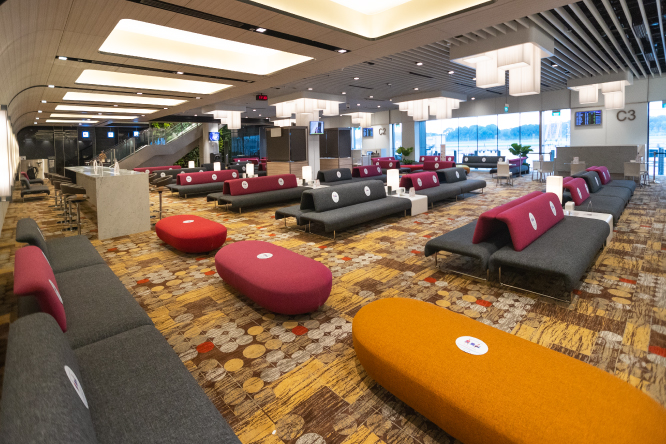
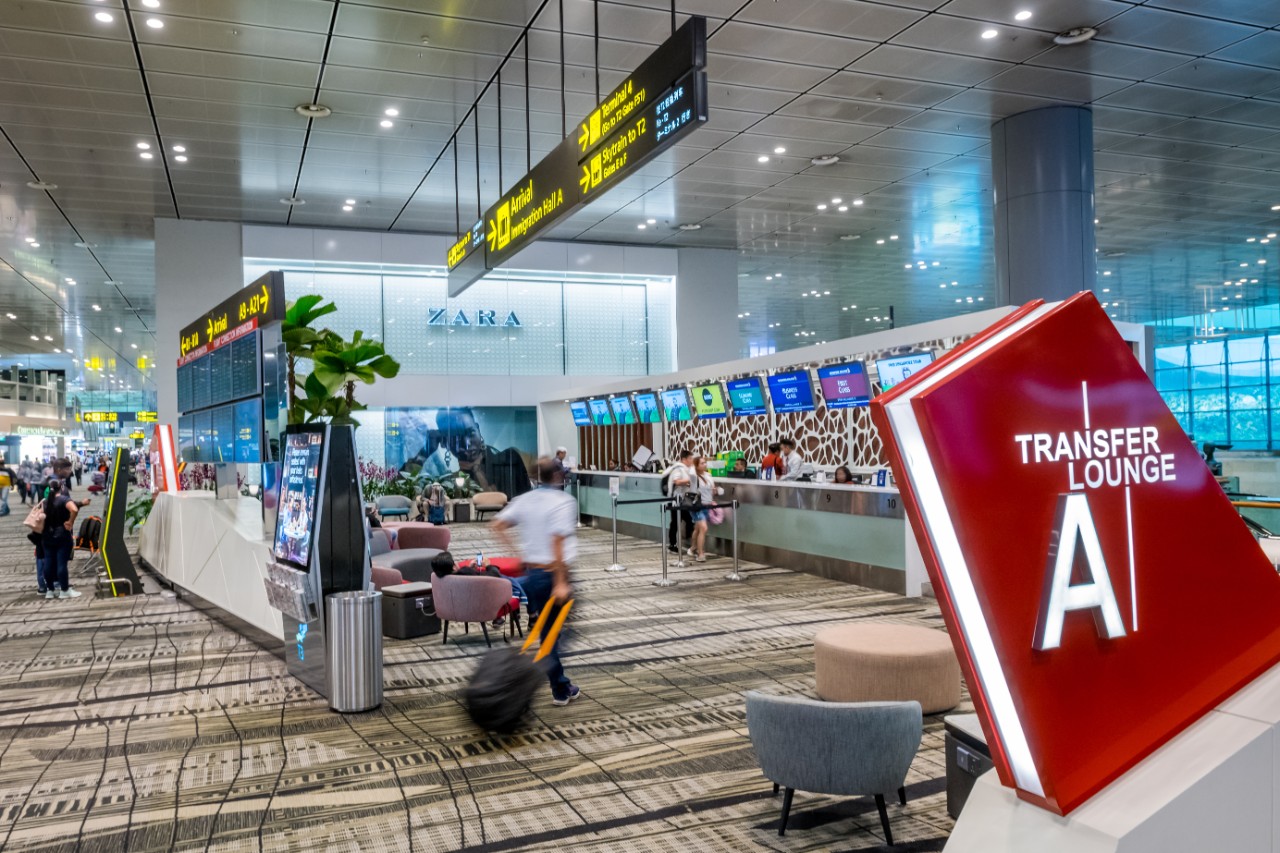
Once in Singapore, transit passengers will disembark last, after all the other passengers leave the aircraft. This group of passengers will be escorted to the nearest THAs located near A21 or at gate C3, by ground staff. Transit passengers will not be allowed to visit any shops, restaurants, lounges and any amenities along the way.
If the transit time is 75 minutes or less, customers wil lbe escorted directly to the departing flight’s gate hold-room.
There will be a temperature screening area at the entrance of all the THAs, and only authorised passengers and staff will be allowed into the THAs. Transit passengers should also note that they are required to wear a mask at all times, except when they are eating, drinking or smoking.
Note that premium passengers will still not be able to access the SilverKris lounge for now and will have their own dedicated area at the THAs, with free refreshments.
Changi Airport has published a video outlining the experience, which you can watch here:
New Changi Transit Programme
Transit hotel now open
Changi Airport’s transit hotel, Aerotel, located at Terminal 1 is now open for passengers with long layovers. Transit passengers who have made bookings should inform the Changi Experience Ambassador on duty for assistance, who will escort them to the hotel.
Aerotel, Singapore Changi Airport Terminal 1
Note that transit passengers who book a transit hotel room will be required to remain in their rooms the entire time of their stay, and will not be allowed to roam around the temrinal. Upon check-out, they will be escorted to either the THAs or their gates.
Final thoughts
CAAS has earlier told The Straits Times that “hundreds” of customers have transited via Changi Airport since transit traffic reopened to passengers in mid-June. With this expansion of the ‘white-list’ of countries, the number is expected to go up significantly, as global travel resumes in a steady fashion.
CAAS has also said that it is now assessing applications from other airlines on transit arrangements, so we can only hold our breathe and wait for other airlines to resume their flight via Changi Airport.
Of course, this transit arrangement is far from the original Changi experience, but in a time like this, being able to travel from point A to point B is certainly more essential than the transit experience. We will all yearn for the day where we can roam freely once again, but I guess we can only sit and wait for that day to arrive.
Transit via Singapore only applicable for customers travelling one-way from seven cities in Australia and New Zealand
Singapore Airlines announced Tuesday (11 Jun) that it has gotten regulatory approvals to facilitate transit journeys from a handful of cities in Australia and New Zealand.
Singapore authorities have earlier announced that it will allow transit passengers once again from 2 Jun, subject to regulatory approval of airlines’ plans to manage these passengers. The onus was on airlines to submit a proposal in managing to health risks and segregating transit passengers away from departing passengers.
Singapore Airlines transit-approved origin cities
Customers travelling from the following cities will be allowed to transit in Singapore:
Australia:
Adelaide
Brisbane
Melbourne
Perth (on Scoot)
Sydney
New Zealand:
Auckland
Christchurch
Note that the transit arrangement is only applicable one-way from Australia and New Zealand to any other SIA destinations. There is currently no transit arrangements for journeys via Singapore into Australia and New Zealand, so customers from anywhere else wanting to visit these two countries will have to find alternative routings.
New Transit Holding Areas
Singapore Airlines and Changi Airport has published their plans to manage these transit passengers, with the setup of dedicated Transit Holding Areas (THAs) to segregate transit and departing passengers.
One distinct feature of Changi Airport main terminals (1, 2 & 3) is the fact that departing, arriving and transit passengers all pour into the same transit area without segregation, as security screening are done only at the gate. This allows a seamless transit experience, allowing passengers who have just landed to pour directly into the transit area, without having to navigate through a labyrinth of walkways to get to a central security screening area.
With the setup of the THAs, this will no longer be possible.
The new transit experience
So how will the new transit experience look like?
The experience, in fact, begins at the departing city. Passengers who will be transiting in Singapore will be boarded first (regardless of cabin), and seated in a designated zone in their respective cabins on the aircraft away from the other passengers who are terminating their journeys in Singapore.
Once in Singapore, transit passengers will disembark last, after all the other passengers leave the aircraft. This group of passengers will be escorted to the THAs by ground staff. Transit passengers will not be allowed to visit any shops, restaurants, lounges and any amenities along the way.
There will be a temperature screening area at the entrance of all the THAs, and only authorised passengers and staff will be allowed into the THAs. Transit passengers should also note that they are required to wear a mask at all times, except when they are eating, drinking or smoking.
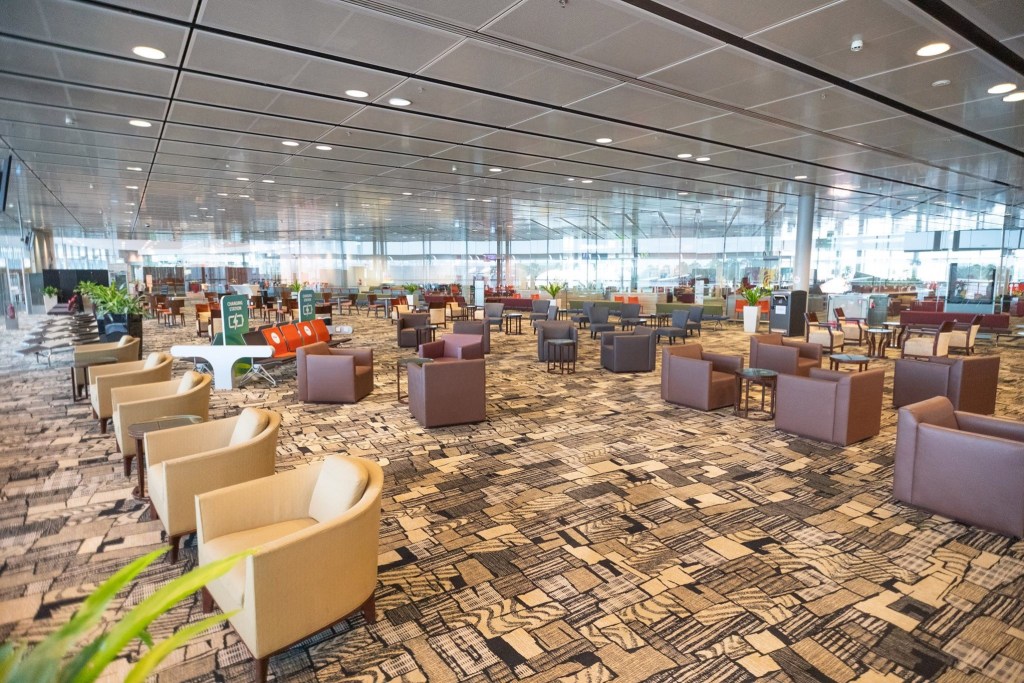
Based on photos published by Changi Airport, it seems like there are two THAs: one at A21, and one at C3 (ground floor gate holdrooms at gate C1).
Transit Holding Area (Gate C3)Transit Holding Area (Gate A21)
Once in the THAs, passengers will not be allowed to roam anywhere else within the airport.
The amenities within the THAs include:
Vending machines
Mobile food kiosks
Sleeping recliners
Restrooms
Wi-fi (complimentary across the airport)
Smoking room
Shopping concierge service
Customers who wish to shop may utilise Changi’s shopping concierge service to purchase cosmetics or other tax-free items. Unfortunately, the concierge will not be able to purchase duty-free alcohol products on behalf of customers.
Vending machines
Snooze areas
Customers who wish to order food and drinks from any of the airport restaurants, cafes or bars can also place their orders by scanning a QR code and ordering online. The orders will be brought to them.
What about lounges?
Changi Airport has left it to airlines to decide if customers can visit a lounge, and SIA has decided to set up a ‘lounge’ (kind of) within the THAs for their premium customers.
For premium passengers, including suites, first class, business class and PPS Club passengers on Singapore Airlines who are transiting in Singapore, they will not be allowed to visit the SilverKris lounge at Terminal 3. Instead, they will be directed to a premium waiting area at the THAs.
Premium passengers transit areaPremium passengers transit area
As you can see from above, Changi Airport has made some effort in sprucing up the area with armchairs and tables similar to some of the lounges’ offerings, although this is definitely far from the actual lounge experience.
SIA will also make complimentary food and beverages available for its premium customers, although no further details are available.
No limit to transit duration
Neither Changi Airport nor Singapore Airlines have imposed a maximum layover duration, so that means it’s technically possible to do a 23-hour layover if you will like to.
However, this new arrangement will require transit passengers to remain in the THAs at all times until their next flight. Note that all the transit hotels are closed at the moment, so passengers with long layovers should note that they have practically no other options.
All transit hotels, including Aerotel Singapore, are temporarily closed
Final thoughts
It is definitely yet another good step towards recovery, as details on how transit arrangements are unveiled by Singapore Airlines today. Of course, we will expect the airline to expand this arrangement to passengers travelling from other regions in time to come.
The transit arrangement is definitely far from ideal, but in the usual Changi fashion, you can trust the airport to still try their best to make the transit experience as comfortable as they can.
It’s hard to say if and when we will return to the previous ‘free-flow’ model where passengers are free to mix around. We are definitely moving towards a new normal, and this episode may perhaps nudge the airport into rethinking its airport experience and passenger flow model.
Later in the evening, the Civil Aviation Authority of Singapore (CAAS) also issued a media release announcing that it will be allowing transit passengers through Changi Airport from 2 Jun as well, after local lockdown restrictions ease.
Transit visitors banned since 24 Mar
Since 24 Mar, Changi Airport has banned transit passengers on top of barring all short term visitors in order to combat the spread of Covid-19. Of course, with no more leisure visitors and the absence of transit passengers, Changi’s passenger movements fell drastically. In April alone, Changi Airport only handled 25,200 passengers, 99.5% lower than the previous year’s 5.58 million passengers.
Changi will welcome transit passengers from 2 Jun
According to the CAAS announcement, transit travellers will be allowed through Changi Airport once again, but subjected to a few arrangements:
Firstly, airlines will need to submit proposals for transfer lanes through Changi Airport to CAAS. The proposals will be evaluated taking into account aviation safety, public health considerations, as well as the health of passengers and air crew.
Next, strict protocols will taken. For instance, transit passengers will be required to ‘remain in designated facilities in the transit area’ and ‘do not mix with other passengers’ while in transit.
I will be very interested to see how the airlines and Changi Airport manage this, given that the airport does not segregate arriving and departing passengers.
I would imagine that this means that transit passengers will have to be somehow segregated from the arriving passengers, sorted according to their onward flights, and taken to a specific waiting room while waiting for the next flight.
Given Changi’s unique arrangement of having gate hold-rooms, this can very well mean that passengers must proceed directly to their next flight’s gate hold-rooms to wait for their flights, which in all likelihood be a very long time away given how sparse flights are at this point in time.
What this means for airlines
While Changi Airport has long established itself as a premier air hub, realistically the only airlines that can take advantage of this latest developments are the Singapore-registered carriers, i.e. Singapore Airlines Group, and Jetstar Asia.
There are a few other airlines, namely Emirates, Qantas, British Airways, who have operated fifth freedom flights out of Singapore, but given the current situation it will be highly unlikely they will resume these flights.
Back to Singapore Airlines Group. The flag carrier will continue its skeletal flight schedule through the month of June, and a check on its website also showed that flights via Singapore (e.g. USA to Jakarta via Singapore) is not possible at this time. So there is a small possibility that Singapore Airlines may add flights at the last minute, but highly unlikely given the incredibly low demand for travel at this time.
Scoot, on the other hand, has expanded its destinations from just two in May (Hong Kong and Perth), to a bigger handful of six, including Ipoh, Kuching, Penang and Guangzhou.
With this latest development, airlines can start to sell tickets via Singapore in the near term, which opens up a lot of potential given that many countries are working towards opening essential travel lanes. The transit facility may also potentially help Singapore offer other foreign governments help in repatriation flights, via Singapore of course.
Final thoughts
I can imagine why Changi Airport will want to reopen as soon as possible.
For one, some other hubs in the region, such as Malaysia’s KLIA, have kept their transit facility open in spite of Covid-19 brewing within their borders. While these countries have also stopped allowing visitors into the country, transit facilities are still available to facilitate passengers who still need to travel for one reason or another.
Therefore, by green-lighting this process at this juncture, this gives airlines – especially home carrier Singapore Airlines – sufficient time to put together a plan to facilitate safe transits without having to rush into it. The measures can also be designed in a phased manner: starting off with the tightest of them all, and subsequently loosened as the global Covid-19 situation stabilises, and when travel demand ramps up again.
I don’t expect that the airport nor airlines will be able to benefit from this change in policy come June, but at least this sets wheels in motion for a new stream of transit passengers from July. If anything, this will help position Singapore Airlines to capture the transit share again when the world starts travelling again.
Not many airlines are operating there for now, anyway.
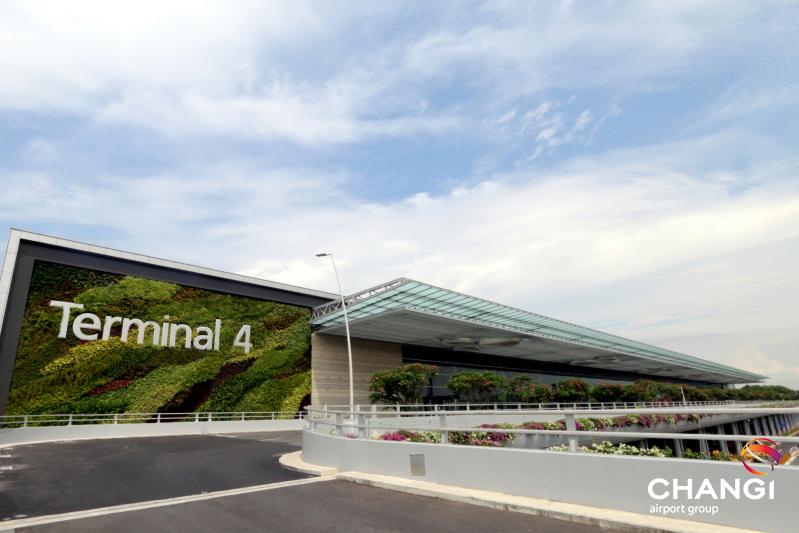
Changi Airport today (12 May) announced that it will be suspending operations at Terminal 4 from 16 May until further notice.
It said in a press release:
Changi Airport’s terminal operations will be consolidated further to optimise resources in tandem with the sharp decline in flight movements because of the global Covid-19 pandemic. This move will enable Changi Airport Group (CAG) and its airport partners to continue to save on running costs such as utilities and cleaning.
Changi Airport Group, press release dated 12 May 2020
Earlier this month, Changi Airport shut Terminal 2 from 1 May for a period of 18 months to upgrade the aged terminal. This is the first time Changi Airport has closed off an entire terminal to facilitate upgrading works in its almost 40 years of operations.
Where are T4 airlines moving to?
Some time last month, Cathay Pacific has already moved to Terminal 1 at Changi Airport for its 2 to 3 flights each week. It has closed off its own lounge at Terminal 4 as early as February, so moving terminals wasn’t really a big deal.
With Cathay operating out of Terminal 1 since mid-April, Terminal 4 was effectively… a ghost town. Before Cathay Pacific moved, there was still the occasional Juneyao Airlines flight, but this has seemed to be suspended for a while now.
Korean Air seemed to have resumed a weekly service between Singapore and Seoul-Incheon, so it will have to move terminals as well.
For those who are still interested to know in theory where are the T4 airlines moving to, all the airlines currently housed in T4 will be moving to T1 except for Vietnam Airlines, which will be in T3.
The full table is below:
Airline
Terminal
AirAsia Group (AK/FD/QZ)
1
Cathay Pacific (CX)
1
Cebu Pacific (5J)
1
GoAir (G8)
1
Guangxi Beibu Airlines (GX)
1
Hainan Airlines (HU)
1
Korean Air (KE)
1
Regent Airways (RX)
1
Spring Airlines (9C)
1
Urumqi Air (UQ)
1
Vietnam Airlines (VN)
3
Vietjet (VJ)
1
To recap, this is the list of terminals that T2 airlines will be moving to as well, which was announced earlier:
Airline
Terminal
Air India (AI) – currently suspended
TBC
Air India Express (IX) – currently suspended
TBC
ANA (NH)
1
Ethiopian Airlines (ET) – currently suspended
3
Etihad Airways (EY)
3
Indigo (6E)
TBC
LOT Polish Airlines (LO) – currently suspended
3
Lufthansa (LH)
TBC
Malaysia Airlines (MH) – currently suspended
1
Royal Brunei Airlines (BI)
1
Sichuan Airlines (3U)
TBC
Swiss International Airlines (LX)
TBC
United Airlines (UA) – currently suspended
3
T4 shops, restaurants will be closed; shuttle bus suspended
As a result of the closure, all shops and restaurants in T4 will be closed until operations in T4 resume.
Terminal 4 shops (source: Changi Airport Group)
The shuttle bus service currently connecting T4 to T3 will also be suspended, although public buses will still call at the terminal. Public carparks at T4 will remain open as well.
Changi Airport has committed to working with its partners in spite of the current downturn, so that it “stands ready to restart operations at T4 as soon as a sufficient number of flights return to the terminal”.
Apart from these changes, Changi Airport has also mentioned other reduced operational footprint in view of the exceptionally low passenger numbers.
For instance, it said that it has closed seven finger piers at T1 and T3 until demand picks up. On the landside, it has also consolidated taxi stands at each terminal down from two to a single location each.
Skytrain services between all terminals have also been suspended, and visitors are directed to use the connecting bridges if they in the public area, and simply walk through the B gates on the transit area.
Changi Airport website
Final thoughts
The writing is on the wall. To be honest, I would have thought that Changi Airport would close off the terminal way earlier, given that Cathay Pacific has moved to Terminal 1 as early as last month.
It’s a good call nonetheless, given that operating an ghost town empty terminal is not exactly prudent on the energy end. While it kind of keep shops and operations running and still provide some form of a job, but you can imagine how low morale would be for these people, who are working in the world’s best airport, but only to see virtually no passengers most days.