The much awaited first class lounge at Changi Airport Terminal 1 should open from the week of 18 November 2019
Finally we are very near to the fanfare: the Qantas Singapore First Lounge is expected to open this month, in November.
The airline has earlier said that the lounge will be opened in mid to late November. Based on sources, the lounge should be opened from 18 November 2019 if there are no hiccups.
Official opening on 2 December
Based on a report by Executive Traveller, the official opening date of the lounge is set to be on 2 December 2019, and Qantas Chief Executive Alan Joyce will be present to officiate the opening.
However, according to some sources, there seems to be a staff event over the weekend of 16 & 17 November as a trial before the doors are opened to customers on 18 November, Monday.
Ever since Changi welcomed the Kangaroo route back to hop via Singapore, the existing Qantas business lounge in Singapore has been perpetually crowded, which was a vast difference from its previously serene and peaceful existence.
First forward a year later, the lounge is almost ready to welcome guests. The 240-seater lounge will feature a restaurant-style dining area, a cocktail bar, showers and plenty of seating. Unlike the Sydney and Melbourne lounges, there will however not be a spa.
Seating area – Qantas Singapore First Lounge
Here are some things you might want to know:
Who can access the lounge?
Apart from First class passengers travelling on Qantas, Qantas Frequent Flyer Platinum, Platinum One members can also gain access to the exclusive lounge when travelling on Qantas or Jetstar. Fellow oneworld Emerald-grade members can also use the lounge as long as they are flying on a oneworld flight.
Where is the lounge located?
The lounge is located near the D gates, which is on the opposite side of the terminal from the existing Business class lounge. For reference, it is located near the dnata lounge and Peach Garden restaurant.
What are the lounge’s hours?
The current Business lounge operates from 3.30pm till midnight, so we expect that the First class lounge will follow a similar operating hours.
After more than 18 months since Qantas announced a refurbishment programme for its A380 fleet, the first of the refreshed birds is finally out of the factory and back in the skies.
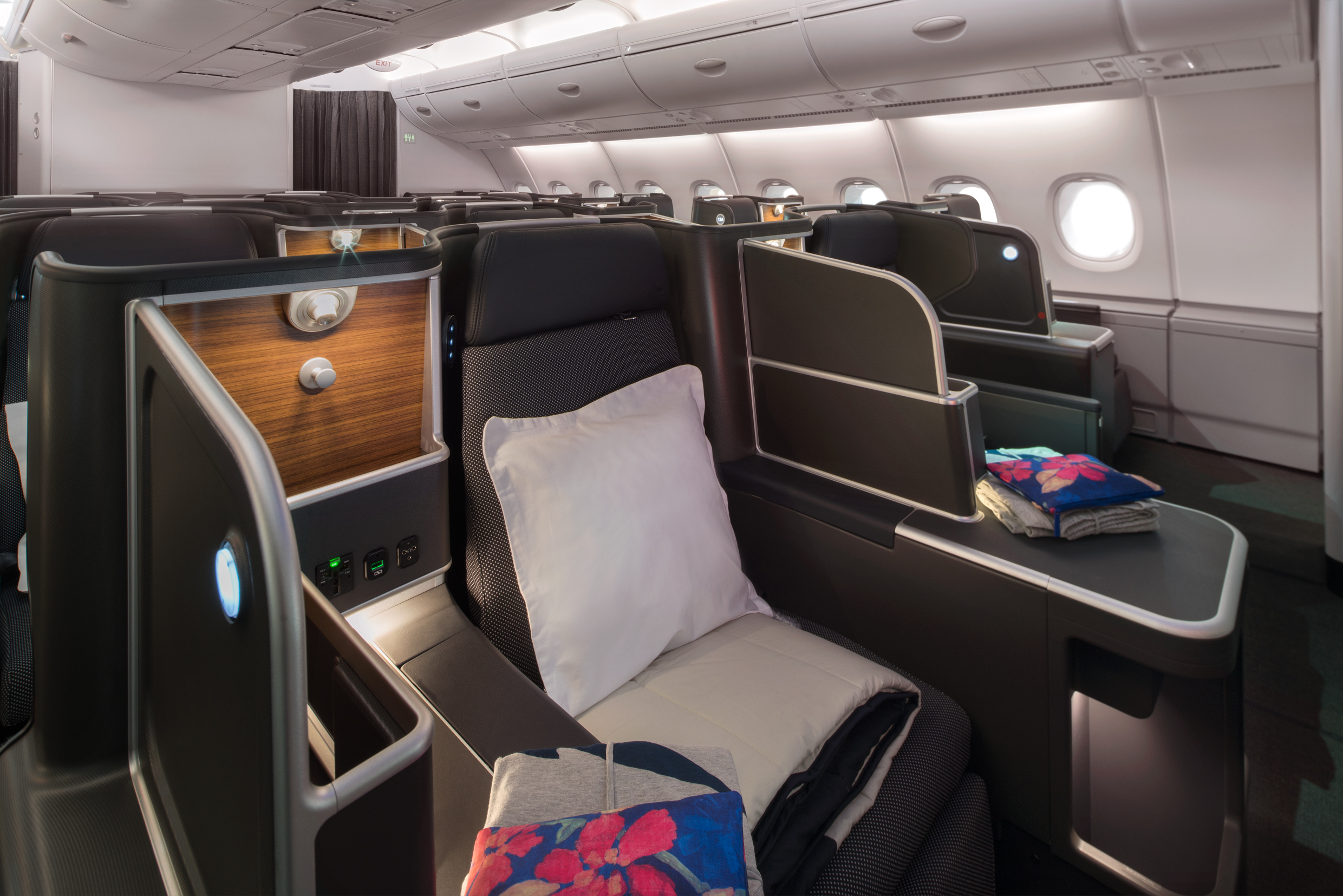
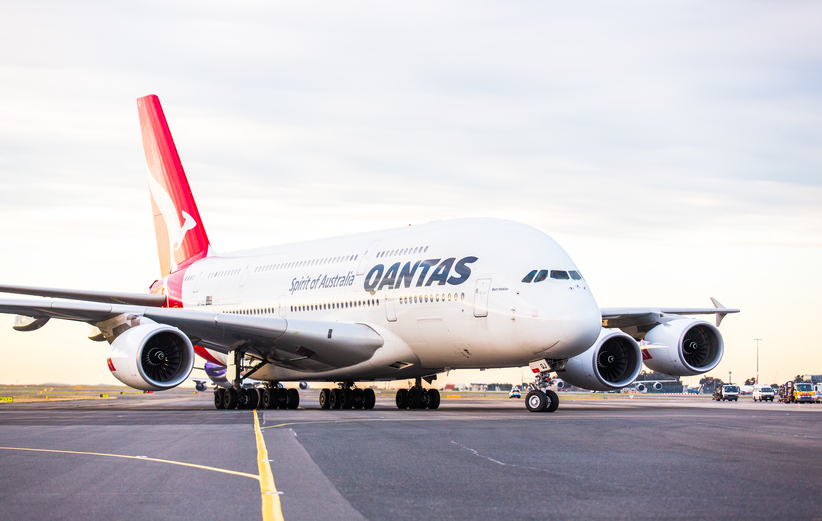
The first of Qantas’ twelve refurbished Airbus A380 will begin flying the flagship Sydney-Singapore-London route next week, following an extensive make-over which includes a modernisation of the first class cabin and installation of the airline’s latest business class seats, along with two new upper deck lounges.
What has changed?
The multimillion-dollar upgrade most significantly features an upgraded business class cabin featuring their flagship business suites, as well as their latest premium economy product. The upper deck is also now exclusively premium, with all economy class seats now moved to the lower deck. The on-board lounge has also been redesigned.
Don’t expect to see a brand new first class product on the Qantas A380 – which isn’t necessarily a bad thing given that the product actually works (see my review here!) and remains pretty luxurious even a decade after it was first rolled out.
Qantas A380 refreshed first class seat (photo credit: Qantas)
Marc Newson, the renowned Australian designer who came up with the original first class suites, once again worked with Qantas to refresh the 14 seats. The upgrades included a more comfortable contoured seat, as well as a larger video screen to replace the aging monitors.
In business class, the old Skybeds have now been upgraded to the 1-2-1 configuration business suites, which provides all 70 seats with direct aisle access in the upper deck.
Qantas business suites on the A380 (photo credit: Qantas)
The number of premium economy seats has also increased from 35 to 60, and upgraded to a new-generation premium economy cradle seat that is also on the Qantas Dreamliner fleet. The premium economy cabin is located on the upper deck, behind the business class section.
With all economy class seats now on the lower deck, all 341 economy class seats will get a light touch refresh, with the seat being re-upholstered and the in-flight entertainment screens being improved. The economy cabin is located behind the first class section.
Qantas A380 economy class (photo credit: Qantas)
The in-flight lounge on the upper deck has also gotten a refresh, to include some table space if you need to work or simply want to have a place to put your drink on. There’s also more seating as compared to the older lounge.
Business class lounge on the upper deck of the Qantas A380 (photo credit: Qantas)
Where will VH-OQK fly to?
Qantas Group CEO has earlier said that the refurbished aircraft will not be put on a single route, but instead deployed across several markets so there’s a little ‘delight and surprise’ for the customers.
According to Executive Traveller, the new aircraft will first fly as QF2 from London tonta seconoy Sydney via Singapore since yesterday (30 Sep). That means, it will depart tonight (1 Oct) from Singapore to Sydney.
Subsequently, it will do another round of Sydney-London-Sydney via Singapore, before going on elsewhere.
How to know if you are flying with the new or old configuration?
That’s pretty straightforward. To know if you are flying on the new or old aircraft, simply look at the seatmap particularly if you are flying in business class. If the layout is a 1-2-1 configuration, you are definitely getting the new aircraft.
If you need a detailed seat map, you can click here.
Qantas A380 upper deck seat map (for PDF version click here)
Timeline for other A380s
With the first aircraft fresh out of the upgrade factory, Qantas has said that two more aircraft are expected to be upgraded by the end of 2019, with the remaining nine to be completed before the end of 2020. By that time, the business class experience across its A330, A380 and Boeing 787-9 will be consistent, which will be a boost for its customers.
Back in June 2019, Qantas made a big announcement on how the Qantas Frequent Flyer programme was going to be ‘enhanced’, unlocking ‘more benefits’ for members.
It was a particularly interesting announcement insofar as the award charts are concerned: while the premium cabins (premium economy, business and first) redemption requirements are going up between 12.9% and 15% from 18 September 2019, those for economy have actually been reduced immediately since the announcement by up to 10%.
Of course, the increase comes with a slight decrease in the charges and fees you have to pay on top of the points, although it’s nowhere as low as what Krisflyer charges in terms of fees.
I want to fly business or first class. Is it worth redeeming now or later?
If you have plans to travel within the next year, it’s definitely better to redeem them now, even though the fees associated are higher now.
Qantas A380 first class suite (photo credit: Qantas)
For Singapore to any Australian destinations on the east (Brisbane, Melbourne, Sydney) on Qantas or Emirates, you will need to fork out 8,400 more points in return for a $100 savings in fees. So is that a better deal?
Generally, Qantas Points are valued at a significantly lower level than other frequent flyer programmes, given that you need more Qantas points than other frequent flyer programme points in general to redeem for a similar route and product. Given this, one Qantas point can be conservative valued at about 1.5 Singapore cent per point.
So 8,400 points will equate to about S$126, which is more than the S$100 that you will save in fees. Given that points are tougher to accrue, you are better off saving those points. And of course, Emirates business class is always an excellent option if you are headed to Australia, so I won’t think twice about using my Qantas points on them.
If you are flying on oneworld and other partner airlines, note that the points required are also going up by between 5 to 15%, so it’s also high time to make your award bookings before 18 September 2019.
What are Qantas Points good for then?
One of the most unique propositions of Qantas Frequent Flyer is the ability to earn points, status credits, as well as redeem flights on Jetstar. Redemptions on Jetstar services are even sweeter: the points required are lower, and you get free checked baggage allowances with it.
While redemptions on budget carriers are a strict no-no for some, this can be a sweet option if you are exploring a quick hop to some nearby destinations. For instance, a one-way Singapore to Bangkok itinerary will only set you back by 9,600 points each way. Plus, if you have Qantas frequent flyer gold or platinum, that affords you lounge access as well. That’s cheaper than the 12,500 Krisflyer miles you will need for Singapore Airlines economy class, each way.
Jetstar classic award redemption chart (source: Qantas.com)
The cancellation fees are also pretty competitive. For a classic flight reward, the refund fee is 6,000 points, while change fees are at 5,000 points. Given the most conservative valuation of Qantas points, they will equate to about S$90 and S$75 respectively. Comparatively, Singapore Airlines charges USD25 (S$35) for changes and a whopping USD75 ($105) for redepositing of miles if you decide not to use the ticket.
Qantas Frequent Flyer made a major announcement yesterday, unveiling some of the key changes in its programmes. Here are some of the things we thought you might want to know:
1. Redemption rates for premium classes are going upby up to 15%
From 18 September 2019, Qantas will be increasing the number of points required for award tickets and upgrades on premium economy, business and first class seats, while reducing the fees required for these seats internationally.
On average, the number of points required are going up between 12.9% and 15%, depending on class and the distance traveled.
The tables below are only for redemptions on Qantas, Emirates, American Airlines, Fiji and Airnorth services:
Zone
One-way distance
Premium Economy
Old
(‘000 pts)
New
(‘000 pts)
Increase
%
1
0 – 600
12
13.8
1.8
15.0
2
601 –
1,200
18
20.6
2.6
14.4
3
1,201 –
2,400
27
31.0
4.0
14.8
4
2,401 –
3,600
37
42.2
5.2
14.1
5
3,601 –
4,800
45
51.3
6.3
14.0
6
4,801 –
5,800
54
61.5
7.5
13.9
7
5,801 –
7,000
63
71.1
8.1
12.9
8
7,001 –
8,400
72
81.3
9.3
12.9
9
8,401 –
9,600
84
94.9
10.9
13.0
10
9,601 –
15,000
96
108.4
12.4
12.9
Zone
One-way distance
Business
Old
(‘000 pts)
New
(‘000 pts)
Increase
%
1
0 – 600
16
18.4
2.4
15.0
2
601 –
1,200
24
27.6
3.6
15.0
3
1,201 –
2,400
36
41.5
5.5
15.3
4
2,401 –
3,600
50
57.0
7.0
14.0
5
3,601 –
4,800
60
68.4
8.4
14.0
6
4,801 –
5,800
72
82.0
10.0
13.9
7
5,801 –
7,000
84
94.9
10.9
13.0
8
7,001 –
8,400
96
108.4
12.4
12.9
9
8,401 –
9,600
112
126.5
14.5
12.9
10
9,601 –
15,000
128
144.6
16.6
13.0
Zone
One-way distance
First
Old
(‘000 pts)
New
(‘000 pts)
Increase
%
1
0 – 600
24
27.6
3.6
15.0
2
601 –
1,200
36
41.5
5.5
15.3
3
1,201 –
2,400
54
62.2
8.2
15.2
4
2,401 –
3,600
75
85.5
10.5
14.0
5
3,601 –
4,800
90
102.6
12.6
14.0
6
4,801 –
5,800
108
123.1
15.1
14.0
7
5,801 –
7,000
126
142.3
16.3
12.9
8
7,001 –
8,400
144
162.8
18.8
13.1
9
8,401 –
9,600
168
189.8
21.8
13.0
10
9,601 –
15,000
192
216.9
24.9
13.0
For instance, a return Singapore to Sydney business class redemption will go up from 120,000 points to 136,800 points. On the other hand, the fees will reduce from an incredibly exorbitant $650+ to $450+ for a round trip redemption, saving you about $200 in lieu of more points.
Increase in points, reduction in fees
Similarly, redemptions on oneworld partner airlines are also going up between 5.3% and 15.5%. Some of the biggest rises are in the mid-haul zones, particularly between the 1,200-mile to 3,600-mile ranges where you see the increases at about 15%, making it particularly unattractive to use Qantas points on oneworld partners. For instance, a return trip in Business on Japan Airlines to Haneda will cost you 61,200 miles each way. Contrast this to Asia Miles where you only need 50,000 miles to redeem for the same itinerary, Qantas is surely not competitive.
Qantas has done a pretty good job spinning this as an ‘enhancement’ by saying that members will see “up to a 30 per cent increase in International Premium Cabin reward seats including during peak travel periods.” Whether that happens or not, remains to be seen.
2. Upgrade redemptions are also going up
Similar to many other airlines, Qantas offers upgrade awards using points for most fare classes (exception being Discounted Economy fares). You can even upgrade your award ticket if space is available.
Qantas will also be increasing the points needed for upgrades by up to 9% (you can find the full tables here).
For illustration, if you have purchased a Economy Saver fare from Singapore to Sydney and will like to upgrade it to Business using your points, you will have to fork out 54,500 points each way, up from 50,000 points previously.
Be reminded that using points to upgrade is rarely a value-for-points option, and should only be used in very specific situations, such as upgrading a free ticket.
3. Less points needed for economy class tickets
Probably one of the brightest spots in the announcements, Economy class prices will go down between 6 to 10%, for distances above 2,401 miles. That effectively excludes all domestic sectors in Australia and some international sectors to New Zealand from Australia.
On top of the reduction in points needed, the fees have also gone down slightly, so overall if you are one of those few who uses points for Economy class seats, this will be a boon for you. The changes are effective immediately.
Zone
One-way distance
Economy
Old
(‘000 pts)
New
(‘000 pts)
Increase
%
1
0 – 600
8
8
No change
–
2
601 –
1,200
12
12
No change
–
3
1,201 –
2,400
18
18
No change
–
4
2,401 –
3,600
22.5
20.3
-2.2
-9.7
5
3,601 –
4,800
28
25.2
-2.8
-10
6
4,801 –
5,800
35
31.5
-3.5
-10
7
5,801 –
7,000
40
37.6
-2.4
-6
8
7,001 –
8,400
45
41.9
-3.1
-6.8
9
8,401 –
9,600
55
51.2
-3.8
-6.9
10
9,601 –
15,000
60
55.2
-4.8
-8
4. Introduction of Lifetime Platinum, but you’ll probably never get it
One other major announcement was the introduction of Lifetime Platinum status, at a crazy level of 75,000 status credits.
Just so you have a sense of what it takes to achieve this, you will have to fly:
94 business class roundtrips between Singapore and New York via Sydney & LA
156 first class roundtrips between Singapore and London
300 business class roundtrips between Singapore and Sydney
1,250 roundtrips between Singapore and Bangkok on Jetstar with Starter Max bundle
3,750 discount economy roundtrips between Sydney and Melbourne
In short, crazy. For comparison, you will only require 7,000 and 14,000 status credits for lifetime silver and gold, so the leap to lifetime platinum is a huge and most likely impossible one unless you are truly a frequent flyer (i.e. spend half your life on a plane).
What is not changing
Amidst all these changes, most members can heave a sigh of relief that the basic structure of the programme isn’t changing, i.e. the tiers, the number of status credits required to attain each level, and the benefits associated to each tier.
I for one was a little anxious about the lifetime statuses, as many airlines have removed them over the years. While it’s good that Qantas has in fact gone in the other direction to offer a new but unattainable lifetime status, but it’s a good sign of commitment to fostering more loyalty in a business that often finds it hard to capture the allegience.
Qantas is currently running a special mid-year sale with a twist. For the first time, it is also offering its email subscribers an additional discount on top of the sale prices. The sale will end 26 June 2019, 11.59 pm.
All fare classes are on sale, and sale fares start as below:
Destination
Return fare from (S$)
Economy
Premium Economy
Business
First
Sydney
557
1431
2952
8123
Melbourne
555
1432
2952
6481
Brisbane
529
1685*
2952
8410*
Perth
424
N.A.
2001
N.A.
London
1070
2954
5537
11584
*Via Melbourne or Sydney; domestic class of service will be in Economy (for Premium Economy fares) or Business (for First class fares)
On top of Australia and London, there are also sale fares available to New Zealand. Of which, what’s notably attractive are fares to Wellington with return fares starting from $664.
Note that Qantas do add on surcharges for travel on weekends (typically Fridays, Saturdays, and Sundays) so fares may vary a little, depending on when you intend to fly.
If you are looking at ExpertFlyer.com for fare class availability, you should be look at O class for Economy, T class for Premium Economy, I for Business and A for First.
Sale fare to Wellington
Exclusive discounts for Red Email subscribers
On top of the sale, Qantas is also offering its email subscribers an additional discount on top of the sale. The discounts applicable are:
On return flights to Australia and New Zealand you’ll save an extra: Economy Class: 10% Premium Economy Class: 10% Business Class: 15% First Class: 30%
On return flights to London you’ll save an extra: Economy Class: 10% Premium Economy Class: 7% Business Class: 7% First Class: 7%
I did some search online for a sample fare to Melbourne and these are the price differences:
Economy class: $514 after the additional discount, savings of $41
Regular sale fare – Economy return to MelbourneRed Email exclusive fare – Business return to Melbourne
Business class: $2,532 after the additional discount, savings of $444
You will soon get the offer email in your inbox, which will lead you to a special booking page. Alternatively, you can try this link that I got from my email, and use the promo code “REWARD” to search the fares. Remember, sale ends 26 June 2019, 11.59pm.