This brings the number of cities approved for transit flights through Singapore to 19
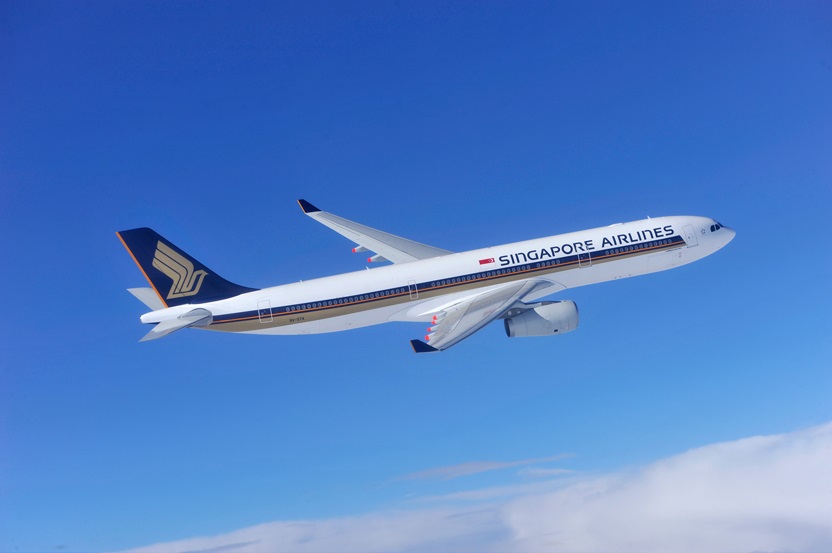
Singapore Airlines has begun allowing transit passengers originating from select European cities since Monday (29 Jun).
The approved cities are: London, Frankfurt, Amsterdam and Copenhagen. The airline group has also approved Taipei earlier this month, for passengers travelling on Scoot to and from the Chinese city.
Singapore Airlines and Silkair customers travelling from these cities will now be able to connect through Singapore onwards to other destinations within the SIA, Silkair or Scoot network, if the tickets are booked on a single ticket.
In line with the existing policies, customers will only be able to book return tickets provided both the origin and destination cities are on the approved list of cities for transit flights.
For instance, if you are travelling between Sydney and Frankfurt, you can now book return tickets from either cities. However, if you are travelling from Frankfurt to Bangkok, you can only book a one-way ticket.
Latest list of approved cities for transit flights
As of 29 Jun, the following cities are approved for transit flights via Singapore:
As of 23 Jun, these are the approved cities of origin where passengers are allowed to transit via Changi:
Scoot has also commenced services to Taipei and Surabaya, adding on to the list of cities that the airline group is now serving.
Final thoughts
The expansion of approved list of countries for transit flights via Singapore is definitely an encouraging view, even as the world still approaches international travel cautiously given the coronavirus situation.
This will held to bring back some of the traffic through Singapore, as airlines wait this pandemic out and start positioning themselves for mass market travel down the road.
Slight increase over June’s operations, but still down 94% from last year
Singapore Airlines and Silkair has updated its July flight schedules, operating to a total of 27 cities across 18 countries/territories. While this is no change from June, there are some favourable developments, including the commencement of transit traffic from select countries.
Singapore Airlines schedule
Singapore Airlines has not announced any ‘new’ destinations that it will be serving in July, but some notable observations for July schedules are as follow:
Auckland now sees three flights a week, up from two in the month of June
Flights to Manila are now possible, albeit only two services in the month of July
Scoot has resumed a weekly service to Taipei, and also planned some ad-hoc services to Surabaya towards the end of July
[Update 8 July] Silkair has removed its earlier planned services to Cebu, while Singapore Airlines will be commencing twice-weekly flights to Paris from 15 July. In addition, passengers will not be accepted on flights from Singapore to Melbournedue to government restrictions, although these flights are still operating.
The full schedules for Singapore Airlines for July are as follow:
Silkair has retained the same load of flights, serving Chongqing, Kuala Lumpur and Medan.
[Update 8 July] Flights to Cebu was originally planned, but subsequently cancelled.
Sector
Flight no.
Days operating
Dep
Arr
Duration
Aircraft
Singapore – Chongqing
MI972
Mon
0700
1135
4h 35m
B737-800
Chongqing – Singapore
MI971
Mon
1235
1730
4h 55m
B737-800
Singapore – Kuala Lumpur
MI324
Sat, Sun
0830
0930
1h
B737-800
Kuala Lumpur – Singapore
MI323
Sat, Sun
1025
1125
1h
B737-800
Singapore – Medan
MI234
Tue, Thu
0740
0800
1h 20m
B737-800
Medan – Singapore
MI233
Tue, Thu
0845
1105
1h 20m
B737-800
Scoot’s schedule for July
Scoot has further expanded its operations for July, adding the following cities to its fold:
Surabaya
Taipei
While these have been provisionally planned, Scoot has been known to adjust its schedules at the very last minute, most notably reducing its flights to Malaysia in June.
Final thoughts
This expanded schedule, while promising, is still a 94% reduction of its previously planned July schedule.
With transit arrangements now in place for 14 countries, it is expected that Singapore Airlines will continue to make progress on that front, even as it gradually expands the number of destinations it serves.
I’m also keen to see which other countries Singapore will set up travel ‘green lanes’ or ‘travel bubbles’, and hopefully bring back some level of leisure travel in the near term.
Jetstar Asia will also be returning five aircraft, reducing fleet size to 13 aircraft.
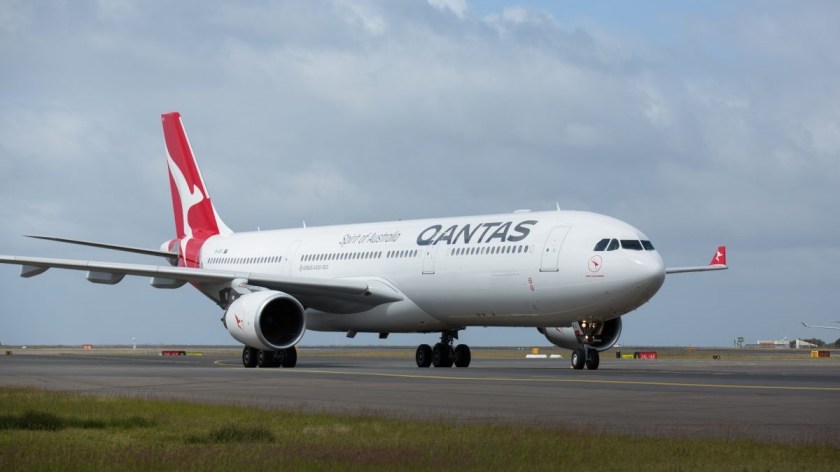
Qantas announced today its post-Covid-19 plans, which include a reduction in workforce as well as issuance of new shares to raise more cash for the airline. The airline is also targeting to reduce its cost by A$15 billion over the next three years.
Key to this announcement was a 20% reduction in the Qantas workforce, translating to 6,000 jobs, and continuing to place another 15,000 employees on no-pay leave. Qantas will also be raising up to A$1.9 billion in equity through issuance of new shares.
Three-year strategy
Qantas Group announced a three-year plan to accelerate its recovery from the havoc that Covid-19 wrecked upon global travel. The plan is aimed towards future profitability, long-term shareholder value and to preserve as many jobs as possible.
Qantas’ three-pronged approach can be outlined as follow:
Rightsize the Group’s workforce, fleet and other costs according to demand projections, with the ability to scale up as flying returns.
Restructure to deliver ongoing cost savings and efficiencies across the Group’s operations in a changed market.
Recapitalise through an equity raising to strengthen the Group’s financial resilience for recovery and the opportunities it presents.
Given that Covid-19 has presented a challenge never seen before to most businesses, so Qantas has said that its plan is “designed to account for the uncertainty associated with the crisis, preserving as many key assets and skills as the Group can reasonably carry to support the eventual recovery“.
Qantas sees that flying will be very much reduced over the next few years, so costs will have to correspondingly go down before flying recovers to pre-Covid-19 levels. Qantas is targeting to save A$15 billion over three years, achieved through the following:
Reducing workforce by at least 6,000 roles across all parts of the business
Continuing the stand down for 15,000 employees, particularly those associated with international operations, until flying returns
Retiring Qantas’ six remaining 747s immediately, six months ahead of schedule
Grounding up to 100 aircraft for up to 12 months (some for longer), including most of the international fleet
Deferment of A321neo and 787-9 fleet deliveries
Qantas will suspend international services until at least mid-2021; A380s to be in storage until at least 2023
According to Executive Traveller, Qantas will most likely suspend international operations until the middle of next year when a vaccine for Covid-19 is most likely available, except for a handful of countries where ‘green lane’ arrangements are in place.
Qantas is also projecting that its international network will only reach 50% of what it used to be in the 2021-2022 financial year, and therefore there isn’t much use for the A380s as the traffic slowly recovers. As such, Qantas will be parking all of its 12 A380s in the Mojave Desert for at least three years, and a decision will be taken later as to whether all twelve will return to the skies.
In the meantime, Qantas will be using its Dreamliners as the flagship workhorse as well as the A330s for its international services until the volumes are back, Qantas Group chief executive Alan Joyce reportedly said.
Qantas is also bringing forward the retirement of all its Boeing 747s immediately, six months ahead of schedule. This also means that some services previously served by the jumbos will have to be replaced by smaller aircraft in due time, when these routes reinstate.
Jetstar Asia to lose five aircraft and 180 staff
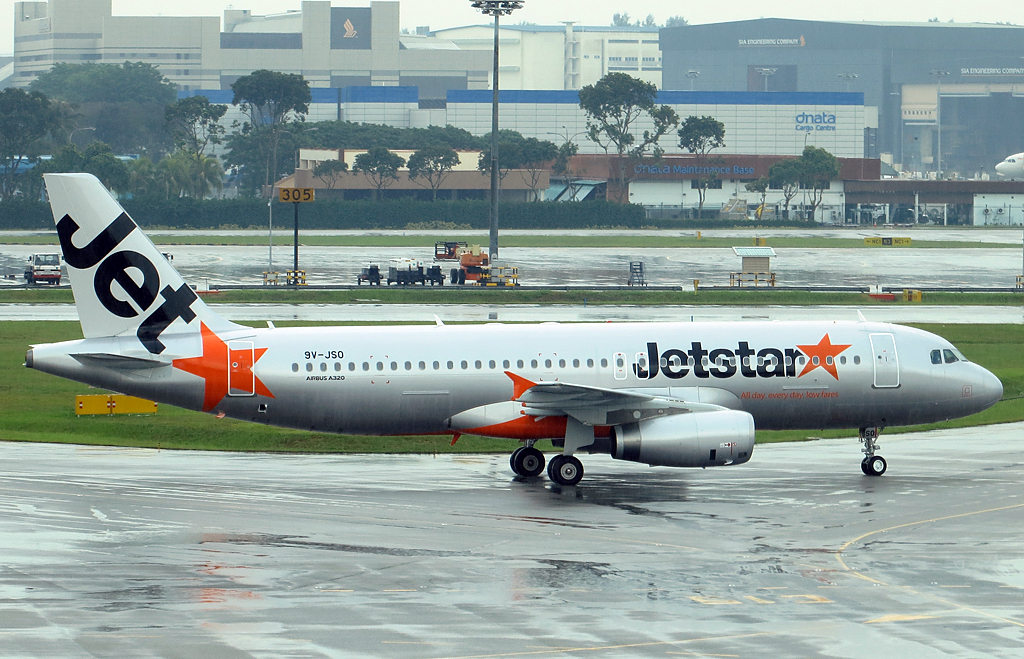
Jetstar Asia will be reducing its 700-odd staff strength by more than a quarter, with the 180 jobs cut from across the business. It’s likely that the bulk of the cuts will come from crew, as Jetstar Asia will also be reducing its fleet size from 18 to 13.
The smaller fleet will mean less flying in the foreseeable future, which will also mean that crew numbers can be reduced in tandem.
With the reduction in flying, it’s likely that Jetstar will look to axe some routes. Jetstar was to launch Singapore-Colombo services on 1 July, which has now been postponed to mid-October. It remains to be seen if this route will still continue to start come October.
Qantas international and Jetstar Asia flights grounded since March
Both Qantas international and Jetstar Asia services were suspended since late March, after Covid-19 flared up in many countries resulting in border closures.
Qantas was targeting to resume at least some international flights between Australia and New Zealand by July, but this was ruled out by New Zealand’s Prime Minister Jacinda Ardern who suggested that September was a more realistic timeframe.
Australia’s Trade Minister Simon Birmingham has already earlier said that international visitors will unlikely to be admitted into Australia until 2021, thereby dashing hopes of a resumption of Qantas international services anytime soon.
Final thoughts
This is definitely not a good look, but certainly not unexpected as many major carriers – including Singapore Airlines and Cathay Pacific – have looked to reduce costs and raise fresh funds earlier this year.
Credit to them for choosing to furlough staff when the crisis first hit, but as this proves to be a long-lasting shockwave for aviation, it seems like there’s not many options left apart from letting employees go, while trying to conserve and raise cash for the coming years.
Closer to home, the reduction in Jetstar Asia’s operations will inevitably mean that customers will be looking at a reduced offering from low-cost carriers in the next few years, and likely, higher fares as travelling resumes in a post-Covid-19 world.
Passengers from China, Japan, and South Korea can now transit via Changi
In another good turn of events, Singapore Airlines announced on 22 Jun that customers from China, Japan and South Korea can now travel via Singapore to any points on the SIA network, including destinations served by Silkair or Scoot.
Singapore Airlines has earlier commenced transit facilities for passengers travelling from Australia and New Zealand since 11 Jun.
Tickets for these new transit flights have been made on sale since 23 Jun (Tue) on the Singapore Airlines website.
Approved points of departure
As of 23 Jun, these are the approved cities of origin where passengers are allowed to transit via Changi:
Country
City
Served by
Australia
Adelaide
Singapore Airlines
Brisbane
Singapore Airlines
Melbourne
Singapore AIrlines
Perth
Scoot
Sydney
Singapore Airlines
China
Chongqing
Silkair
Guangzhou
Scoot
Shanghai
Singapore Airlines
Hong Kong SAR
Singapore Airlines / Scoot
Japan
Osaka
Singapore Airlines
Tokyo-Narita
Singapore Airlines
South Korea
Seoul-Incheon
Singapore Airlines
New Zealand
Auckland
Singapore Airlines
Christchurch
Singapore Airlines
Note that this list applies only for outbound journeys. For customers who wish to book return flights, both of the origin and destination must be on the approved list. For instance, customers who wish to fly from Sydney to Kuala Lumpur can only buy a one-way ticket, but customers who wish to fly from Sydney to Shanghai will be allowed to purchase return tickets.
The new Changi transit experience
In announcing the transit arrangements earlier in June for passengers from Australia and New Zealand, transit passengers will be herded to a transit holding area (THA) that is separate from passengers departing from Singapore.
Transit holding area for transit customers
In addition, Singapore Airlines is also seating transit passengers in a different zone on the aircraft from their point of origin, separate from other customers ending their journeys in Singapore.
Once in Singapore, transit passengers will disembark last, after all the other passengers leave the aircraft. This group of passengers will be escorted to the nearest THAs located near A21 or at gate C3, by ground staff. Transit passengers will not be allowed to visit any shops, restaurants, lounges and any amenities along the way.
If the transit time is 75 minutes or less, customers wil lbe escorted directly to the departing flight’s gate hold-room.
There will be a temperature screening area at the entrance of all the THAs, and only authorised passengers and staff will be allowed into the THAs. Transit passengers should also note that they are required to wear a mask at all times, except when they are eating, drinking or smoking.
Note that premium passengers will still not be able to access the SilverKris lounge for now and will have their own dedicated area at the THAs, with free refreshments.
Changi Airport has published a video outlining the experience, which you can watch here:
New Changi Transit Programme
Transit hotel now open
Changi Airport’s transit hotel, Aerotel, located at Terminal 1 is now open for passengers with long layovers. Transit passengers who have made bookings should inform the Changi Experience Ambassador on duty for assistance, who will escort them to the hotel.
Aerotel, Singapore Changi Airport Terminal 1
Note that transit passengers who book a transit hotel room will be required to remain in their rooms the entire time of their stay, and will not be allowed to roam around the temrinal. Upon check-out, they will be escorted to either the THAs or their gates.
Final thoughts
CAAS has earlier told The Straits Times that “hundreds” of customers have transited via Changi Airport since transit traffic reopened to passengers in mid-June. With this expansion of the ‘white-list’ of countries, the number is expected to go up significantly, as global travel resumes in a steady fashion.
CAAS has also said that it is now assessing applications from other airlines on transit arrangements, so we can only hold our breathe and wait for other airlines to resume their flight via Changi Airport.
Of course, this transit arrangement is far from the original Changi experience, but in a time like this, being able to travel from point A to point B is certainly more essential than the transit experience. We will all yearn for the day where we can roam freely once again, but I guess we can only sit and wait for that day to arrive.
The Singapore-Colombo launch is also postponed until 26 Oct
Jetstar Asia announced yesterday (18 Jun) that it will be cancelling all flights up to 31 Jul, except for the five weekly services that it has been operating in the past weeks.
In addition, the Singapore-Colombo service which was to be launched on 1 Jul will also be pushed back to commence from 26 Oct 2020.
As again, all impacted Jetstar Asia passengers will be offered a refund to the full value of their untraveled booking in the form of a travel credit voucher. Jetstar Asia has already announced an enhancement to its credit vouchers, extending the validity from the original six months to a year. The credit voucher can also be used in multiple bookings.
Note that passengers with a booking to/from the Philippines, Australia, Sri Lanka or Japan are requested to wait to receive a letter from Jetstar regarding available options, which will likely include a cash refunds as protected until local consumer laws.
Jetstar Asia services still operating
Since late April, Jetstar has been operating five weekly flights to three Southeast Asian cities: Bangkok, Kuala Lumpur and Malaysia. Owing to Thailand’s ban on international passenger flight arrivals, the Singapore-Bangkok service is a freight-only service until further notice.
Sector
Flight no.
Days of ops
Dep
Arr
Flight time
Aircraft
Singapore – Manila
3K761
Tue
0615
0955
3h 40m
A320
Manila – Singapore
3K762
Tue
1030
1415
3h 45m
A320
Singapore – Bangkok*
3K515
Wed, Sat
1045
1210
2h 25m
A320
Bangkok – Singapore
3K516
Wed, Sat
1250
1615
2h 25m
A320
Singapore – Kuala Lumpur
3K685
Thu
1250
1355
1h 5m
A320
3K663
Sun
0935
1040
1h 5m
A320
Kuala Lumpur – Singapore
3K686
Thu
1440
1545
1h 5m
A320
3K664
Sun
1120
1230
1h 10m
A320
Final thoughts
In the time where airlines are starting to ramp up services again, it’s rather intriguing as to why Jetstar Asia remains slow to resume service.
While loads will understandably be much lower as compared to pre-Covid-19 days, the airlines will need to take the first initiative to commence service, as a signal of recovery before consumers start booking flights.
If Jetstar continues to take such a conservative stance in resuming flight, I won’t be surprised if they pick up less than ideal loads and yields down the road, given that demand will probably not meet capacity in the foreseeable future.



 Shanescape